What Is the BSL Sign for "guideline"?
Unlocking effective communication within the British Deaf community often involves mastering specific vocabulary, and understanding the BSL sign for guideline opens up critical conversations about rules, instructions, and frameworks. This particular sign elegantly conveys the concept of a directive or an established course of action, serving as a cornerstone for discussing policy, recommendations, or structured advice. Learning how to sign guideline in BSL empowers individuals to express adherence to standards or to clarify expected conduct with precision and clarity. Grasping this sign enables a deeper engagement with discussions ranging from everyday procedures to complex organisational structures.
How to Sign "guideline" in British Sign Language - Step-by-Step
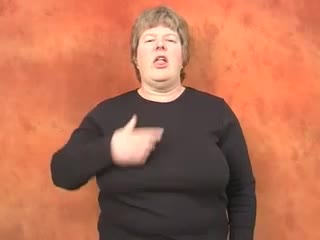
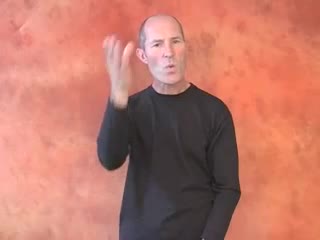
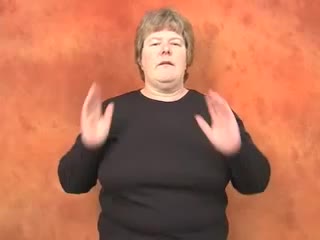
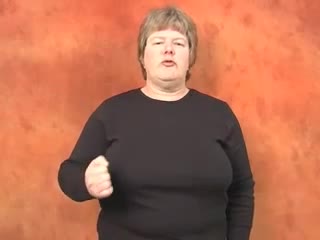
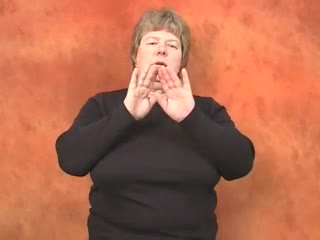
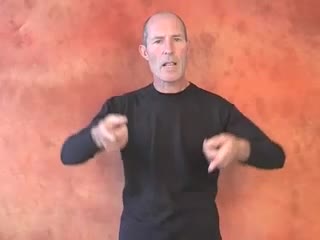
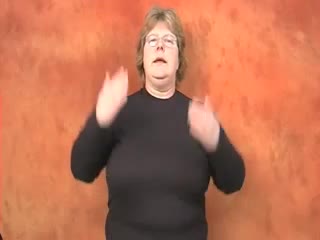
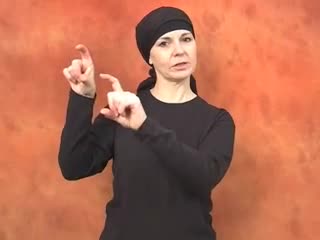
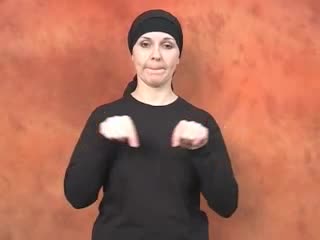
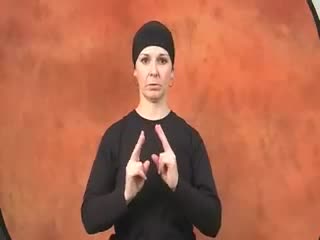
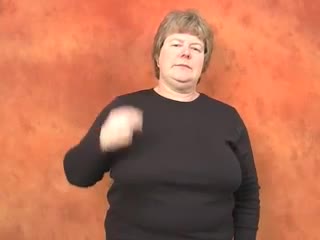
Executing the sign for "guideline" in BSL involves a sequence of precise actions, combining handshape, placement, movement, and non-manual features to articulate its specific meaning.
Step 1: Handshape
Begin by forming your dominant hand into a specific configuration: extend your index finger and middle finger straight and parallel, keeping them slightly separated. Your thumb should rest across your palm, lightly touching the base of your ring finger, while your ring finger and pinky finger remain gently curled into your palm. This creates a distinct two-finger-extended handshape, resembling a 'V' on its side or a 'track'.
Step 2: Hand Placement and Location
Position your dominant hand, maintaining the described handshape, initially in the neutral signing space directly in front of your chest, slightly to the side of your dominant shoulder. The palm should face downwards, with the extended fingers pointing forward and slightly angled towards the opposite side of your body. Your non-dominant hand remains relaxed at your side, not actively participating in this particular sign.
Step 3: Movement
From its starting position, move your dominant hand forward in a smooth, straight trajectory for a short distance, approximately 6 to 8 inches. As the hand reaches the end of this forward path, execute a subtle, downward flick or arc with the wrist, making a small, controlled downward motion with the extended fingers. This movement suggests both progression along a path and the establishment of a defined line or instruction. The motion should be deliberate yet fluid, performed only once.
Step 4: Facial Expression and Mouthing
The accompanying facial expression for "guideline" typically remains neutral or slightly thoughtful, conveying seriousness or clarity, consistent with the nature of rules or directions. Mouthing the English word "guideline" silently is crucial, as it provides vital phonetic information for the recipient, distinguishing this sign from other visually similar BSL signs and reinforcing the specific lexical item being conveyed. This non-manual feature enhances comprehension and ensures the precise meaning is communicated without ambiguity.
Step 5: Palm Orientation
Throughout the initial forward movement, the palm of your dominant hand should maintain a downward orientation. As the hand completes its forward motion and executes the slight downward flick, the palm's orientation may subtly shift to face slightly towards the body or remain generally downwards, reinforcing the sense of setting or defining a path. This consistent downward orientation helps to visually represent the concept of laying down a principle or marking a defined course.
"guideline" in BSL - Quick Reference Snapshot
- Handshape: Dominant hand, index and middle fingers extended parallel, thumb across palm, other fingers curled.
- Location: Neutral signing space, in front of dominant side of chest.
- Movement: Straight forward motion, followed by a slight downward flick/arc.
- Facial Expression: Neutral or thoughtful, with silent mouthing of "guideline."
- Dominant Hand: Used exclusively; non-dominant hand remains passive.
- Palm Orientation: Primarily downward, with a subtle shift during the final flick.
5 Memorisation Tricks for the BSL Sign "guideline"
- Visualise the "Track": Imagine your two extended fingers as a miniature train track or a path being laid out, moving forward to guide someone. The subtle downward flick at the end can represent the "line" being drawn or the specific point where the guidance ends, solidifying the visual link between the handshape and the concept of a defined path.
- Muscle Memory Drill: Practice the forward and flicking motion repeatedly without thinking about the word itself, focusing solely on the physical sensation of the movement. Execute the sign ten times consecutively, then rest, then repeat, allowing your dominant hand and wrist to internalise the precise trajectory and final subtle action, making the sign feel natural and automatic.
- Connect to "Direction" and "Rule": Think of the extended fingers as pointing a direction, and the subsequent flick as setting a boundary or a rule within that direction. This two-part conceptualisation links the physical action directly to the dual nature of a guideline – both showing a way and establishing a principle, reinforcing what is the sign for guideline.
- Distinguishing from "Path": Be mindful not to confuse this sign with "path" or "road" which often involve broader, sweeping movements or different handshapes. Remember that "guideline" has the specific two-finger handshape and the distinct, smaller flick, which differentiates it as a more abstract instruction rather than a physical route.
- Daily Life Practice: Whenever you encounter a guideline in your day, such as instructions for a recipe or a notice about parking rules, mentally perform the sign. Actively associate the physical sign with real-world examples, reinforcing the connection between the concept and the British Sign Language guideline.
Real-Life Situations to Use the BSL Sign for "guideline"
- Imagine discussing new safety procedures at work: "We need to follow the new safety guidelines carefully." (BSL structure might be: "WORK NEW SAFE GUIDELINE WE MUST FOLLOW CAREFUL.")
- When explaining school rules to a child: "These are the guidelines for using the computer lab." (BSL structure could be: "COMPUTER ROOM GUIDELINE THIS.")
- Suggesting a framework for a project: "Do you have any guidelines for the presentation?" (BSL structure would involve: "PRESENTATION GUIDELINE YOU HAVE QUESTION?") The question mark in BSL is often conveyed through a raised eyebrow and a slight forward lean.
- Discussing general principles for behaviour: "It's important to live by ethical guidelines." (BSL structure might be: "ETHIC GUIDELINE FOLLOW IMPORTANT.")
Top 3 Mistakes Learners Make Signing "guideline" in BSL
- Incorrect Handshape: Many beginners might use a single extended index finger or a flat hand, confusing it with signs for "point" or "line" in a general sense. This happens because the concept of a "line" is present, but the specific BSL sign for "guideline" requires two parallel extended fingers. The precise correction is to consciously ensure both the index and middle fingers are extended and slightly separated, maintaining the correct 'track' formation throughout the sign.
- Missing the Downward Flick: Learners often execute only the forward movement, omitting the crucial final downward flick or arc. This oversight results in the sign appearing incomplete or simply conveying "go forward" rather than "guideline." To rectify this, focus on making that small, definite wrist movement at the end of the forward trajectory, ensuring the sign concludes with the defining 'tick' that gives it its full meaning.
- Inconsistent Mouthing: Neglecting to mouth the English word "guideline" or mouthing an incorrect word can lead to confusion, especially for those who rely on lip-reading alongside the manual sign. This error stems from underestimating the importance of non-manual features in BSL. The solution involves diligently practicing mouthing "guideline" silently and clearly each time the sign is performed, integrating it as an inseparable part of the communication.
Fascinating Facts About the BSL Sign for "guideline"
- The iconic nature of this sign, with its forward movement and defining flick, visually represents the dual aspects of showing a direction and setting a specific boundary or rule. This elegant combination makes the sign highly intuitive for many learners, reflecting how to sign guideline in BSL effectively.
- While the core handshape and movement for "guideline" are widely understood across the BSL-using community, subtle regional variations might exist in the exact speed or emphasis of the final flick. However, the fundamental components remain consistent, ensuring broad comprehension of the guideline sign language.
- This sign does not appear to have a direct historical origin tied to the manual alphabet, but its form likely evolved from a combination of signs for "direction" and "line" or "rule," gradually coalescing into its current distinct representation. It exemplifies how BSL signs often develop through a process of conceptual blending.
- The precision required in both handshape and movement for this sign underscores the grammatical importance of subtle distinctions in BSL; a slight alteration could change the meaning to "path," "rule," or "instructions," highlighting the necessity of accurate execution when learning guideline British Sign Language.
- The inclusion of specific mouthing alongside the manual sign for "guideline" is a testament to BSL's rich linguistic structure, where non-manual features are not merely supplementary but integral to conveying precise lexical meaning and avoiding potential ambiguities.
"guideline" in Deaf Culture - Community and Identity
Within the Deaf community, the concept of a "guideline" often carries significant weight, particularly in discussions around accessibility, communication protocols, and the establishment of inclusive practices. Whether it refers to guidelines for BSL interpretation, rules for interacting with Deaf individuals respectfully, or internal community standards, the sign for "guideline" becomes a powerful tool for self-advocacy and cultural preservation. It underscores the community's proactive efforts to define its own terms of engagement and to educate hearing individuals on best practices. This sign facilitates crucial dialogues about maintaining Deaf spaces, ensuring BSL is recognised and respected, and articulating the expectations that foster a strong, connected, and empowered Deaf identity.
Example Conversations Using "guideline" in BSL
English: We must adhere to the new accessibility guidelines for the event. - BSL structure: EVENT NEW ACCESS GUIDELINE WE MUST FOLLOW.
English: Are there any specific guidelines for submitting the application form? - BSL structure: APPLICATION FORM SUBMIT GUIDELINE ANY QUESTION?
English: The doctor gave me some health guidelines to follow after surgery. - BSL structure: SURGERY AFTER DOCTOR ME HEALTH GUIDELINE GAVE ME FOLLOW.
English: It's important to establish clear guidelines for team communication. - BSL structure: TEAM COMMUNICATION CLEAR GUIDELINE SET IMPORTANT.
English: He ignored the safety guidelines and caused an accident. - BSL structure: HE SAFETY GUIDELINE IGNORE ACCIDENT HAPPEN.
Frequently Asked Questions: The BSL Sign for "guideline"
Is the BSL sign for "guideline" the same across all regions of the UK?
While the fundamental handshape and movement for the BSL sign for "guideline" are largely consistent across the United Kingdom, some minor regional nuances in speed or emphasis might occasionally be observed. Nevertheless, the core components of the sign are universally recognised, ensuring clear communication regardless of specific locale within the BSL-using community.
Are there any similar BSL signs that I might confuse with "guideline"?
Learners sometimes confuse "guideline" with signs like "rule" or "path" due to conceptual similarities. The sign for "rule" often involves the dominant hand tracing down the non-dominant palm, while "path" might use a broader, more expansive movement. Remember that "guideline" specifically employs the two-finger extended handshape and the distinct forward-then-flick motion, which sets it apart from these related but different signs, helping you learn guideline BSL accurately.
Is the BSL sign for "guideline" suitable for beginners?
Absolutely, the BSL sign for "guideline" is highly suitable for beginners. Its handshape is relatively straightforward, and the movement is intuitive, making it an accessible sign to master early in your BSL journey. Practicing this sign helps reinforce fundamental BSL principles of handshape, movement, and non-manual features, which is essential for what is the sign for guideline.
Can children easily learn and use the BSL sign for "guideline"?
Children can certainly learn and effectively use the BSL sign for "guideline." The clear visual representation of a path or instruction makes it comprehensible for younger learners. Incorporating this sign into everyday discussions about rules, instructions for games, or school expectations provides practical contexts for children to practice and internalise its meaning.
How does the BSL sign for "guideline" conceptually compare to "instructions" in BSL?
The BSL sign for "guideline" conveys a general principle, a recommended course of action, or a framework, often implying flexibility within a defined scope. In contrast, the BSL sign for "instructions" typically refers to more specific, step-by-step directions that must be followed precisely. While both relate to direction, "guideline" suggests a broader framework, whereas "instructions" implies detailed commands.
Signs That Pair Naturally with "guideline" in BSL
- RULE: Often signed by drawing the dominant 'R' or flat hand down the non-dominant palm. This pairs well as guidelines are often a type of rule or principle.
- POLICY: Signed by tapping the dominant 'P' handshape against the non-dominant palm. Policies frequently contain or are built upon specific guidelines.
- INSTRUCTION: Typically involves the dominant 'I' handshape making small, precise movements. Instructions are detailed directives, often derived from broader guidelines.
- PRINCIPLE: Signed with the dominant 'P' handshape moving downward against the non-dominant palm. Principles are fundamental truths or beliefs that form the basis of guidelines.
- FOLLOW: Signed by moving the dominant hand, often with an 'F' handshape or a flat hand, behind the non-dominant hand as it moves forward. One must often follow guidelines.
- FRAMEWORK: Signed by creating a rectangular shape with both hands. Guidelines often fit within a larger conceptual framework or structure.
Building Fluency: How to Practise "guideline" in BSL
Achieving fluency with the BSL sign for "guideline" requires consistent and mindful practice, integrating it into your regular learning routine. Begin by utilising a mirror to meticulously observe your handshape, movement, and palm orientation, ensuring each component aligns with the precise description provided, critically evaluating your execution of the BSL guideline sign. Subsequently, try to integrate this sign into short, spontaneous BSL conversations you construct in your mind, imagining scenarios where you would naturally use the word. Consider filming yourself signing "guideline" and then reviewing the footage; this objective perspective can reveal subtle errors or areas for improvement in your how to sign guideline in BSL technique. Actively seek opportunities to engage with Deaf individuals or experienced BSL users, allowing them to provide invaluable feedback on your production of the guideline sign language. Finally, remember the power of spaced repetition: practice the sign for "guideline" for a few minutes each day over several days, rather than intensely for one long session, to solidify it in your muscle memory and enhance your overall retention.