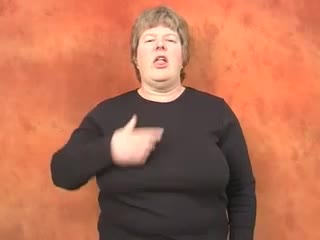
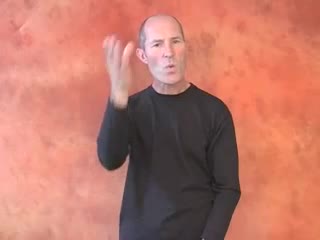
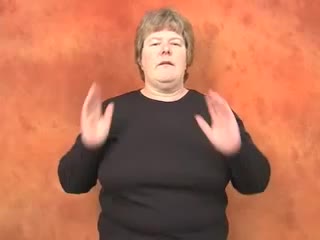
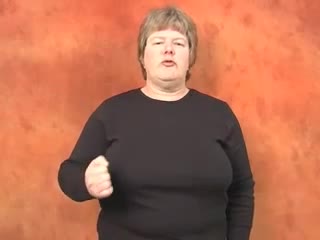
What Is the BSL Sign for "external wall"?
Learning the BSL sign for external wall opens up a world of practical communication about buildings and structures. This particular sign provides a clear visual representation of a crucial architectural element, helping you discuss everything from home repairs to urban planning. Understanding how to use the British Sign Language external wall sign effectively connects you to conversations about physical environments within the Deaf community. It’s a fundamental piece of vocabulary for anyone looking to deepen their expressive range in BSL.
How to Sign "external wall" in British Sign Language - Step-by-Step
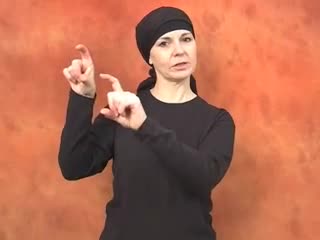
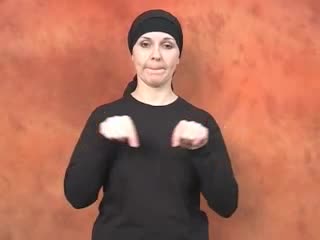
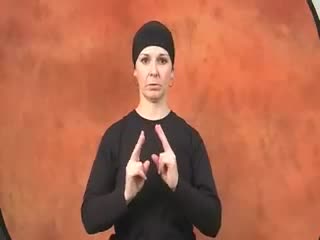
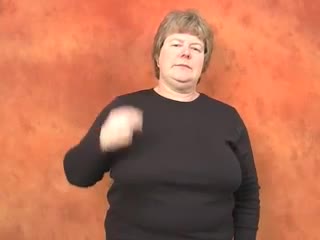
Mastering this sign involves a precise combination of handshape, placement, and movement, each element contributing to its distinct meaning.
Step 1: Handshape
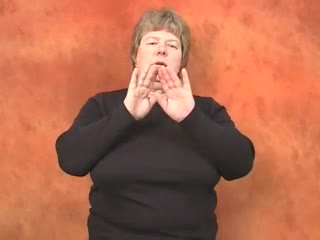
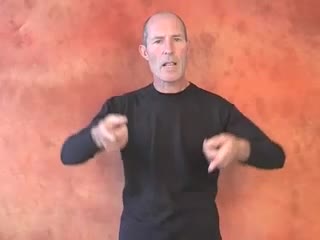
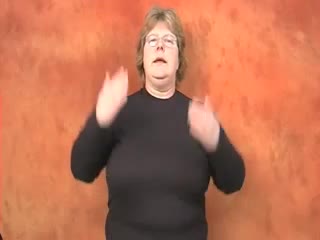
For the BSL sign for "external wall," you'll begin by forming a flat handshape with your dominant hand. Extend all four fingers straight and hold them tightly together, ensuring there are no gaps between them. Your thumb should be tucked neatly alongside the palm, not extended or spread. Picture a solid, flat surface, much like the smooth face of a building, and that's the precise handshape you're aiming for.
Step 2: Hand Placement and Location
You'll initiate this sign in the neutral signing space directly in front of your chest. Position your dominant hand with its palm facing inward, towards your body, and your fingertips pointing upwards. Keep your arm comfortably bent at the elbow, ensuring the hand is not pressed against your chest but floats a few inches away, ready for the upcoming movement.
Step 3: Movement
From its initial position, sweep your dominant hand deliberately outwards and slightly upwards, away from your body. The movement should be a single, smooth, and firm arc, extending horizontally about a foot or so from your starting point. Imagine you are visually defining the boundary of something, pushing a conceptual wall away from you, clearly delineating an outside surface. This action should feel definitive, not hesitant.
Step 4: Facial Expression and Mouthing
A neutral or slightly contemplative facial expression usually accompanies the sign for "external wall" in BSL. You might subtly furrow your brow, conveying a sense of definition or precision associated with structural elements. Crucially, you'll mouth the words "external wall" clearly as you execute the sign. This mouthing isn't merely a spoken word; it's an integral non-manual feature that reinforces the sign's lexical meaning and is a grammatical component of British Sign Language.
Step 5: Palm Orientation
The palm orientation for this sign shifts during its execution. You'll begin with your palm facing inward, towards your chest. As your hand sweeps outward and upward, the palm rotates smoothly, concluding the sign with the palm facing directly away from your body. This change in orientation is vital; it visually represents the concept of *externality*, clearly showing that the "wall" you're indicating faces the outside world.
"external wall" in BSL - Quick Reference Snapshot
- Handshape: Dominant hand, flat (fingers extended, together, thumb tucked).
- Location: Neutral space in front of the chest.
- Movement: Single, firm sweep outward and slightly upward.
- Facial Expression: Neutral to slightly contemplative, possibly subtle brow furrow.
- Dominant Hand: Used alone.
- Palm Orientation: Starts inward, rotates to face outward during movement.
5 Memorisation Tricks for the BSL Sign "external wall"
- Visual Mnemonic: Picture yourself pushing open a large, heavy door that forms part of a building's outer shell. The flat handshape is the door, and the outward sweep is the opening motion, vividly illustrating the idea of something being "external."
- Muscle-Memory Drill: Practice the sweeping movement ten times in a row, focusing intensely on the sensation of your hand defining that outward plane. Then, close your eyes and try to replicate the precise motion, letting the kinesthetic memory solidify the sign.
- Connection to Meaning: Think about the sign's movement as literally "pushing" the concept of a wall away from you into the external environment. This active separation of 'inside' from 'outside' strongly reinforces the core meaning of an external wall.
- Common-Confusion Tip: Be mindful not to confuse this sign with a simple "push" gesture; the deliberate upward arc and specific palm rotation are unique to "external wall." Your flat hand must clearly represent the surface, not just an action.
- Daily-Life Practice: Whenever you walk past a building, silently sign "external wall" while looking at its exterior. This constant, real-world association will naturally integrate the sign into your visual vocabulary and make it instantly recallable.
Real-Life Situations to Use the BSL Sign for "external wall"
- When discussing a renovation project, you might sign, "HOUSE EXTERNAL WALL NEED PAINT" to convey a specific area needing attention. Here, "external wall" acts as the direct object, clarifying which part of the house is being referred to.
- Asking about a building's construction, you could sign, "THIS BUILDING EXTERNAL WALL WHAT MATERIAL?" using topic-comment structure, with the sign precisely identifying the component in question.
- Describing damage, someone might sign, "STORM HIT, EXTERNAL WALL CRACK" to pinpoint the location of the damage, placing the sign within a narrative context to show cause and effect.
- You might use it to explain a design feature, like "ARCHITECT WANT EXTERNAL WALL CURVED" where the sign helps communicate a specific characteristic of the building's facade.
Top 3 Mistakes Learners Make Signing "external wall" in BSL
- Incorrect Palm Orientation: Many beginners keep their palm facing inward throughout the entire sign, which changes the meaning significantly, sometimes resembling a generic "push" or even "me." The correct rotation to palm-outward is critical for conveying "external" and defining the wall's surface. To fix this, consciously practice the palm rotation as a distinct part of the movement, imagining the wall facing the world.
- Insufficient Upward Arc: Some learners execute a purely horizontal sweep, missing the slight but important upward trajectory. This can make the sign feel flat or less definitive, losing some of its visual impact. When practicing, focus on feeling a gentle lift as your hand moves away, as if indicating the rising height of a wall, not just its width.
- Loose Finger Handshape: A common error involves allowing fingers to splay or bend slightly, rather than maintaining a rigid, flat hand. This compromises the visual representation of a solid "wall." Consistently practice forming a truly flat hand, fingers pressed firmly together, before initiating the movement. Think of your hand becoming a single, unyielding plane.
Fascinating Facts About the BSL Sign for "external wall"
- While the precise historical origin of this specific sign isn't widely documented, its iconic motivation is quite clear; the flat hand sweeping outwards powerfully mirrors the act of delineating a building's outer shell.
- Within the diverse BSL-using community, you might encounter slight regional variations in the speed or extent of the outward sweep, but the core handshape and direction generally remain consistent across Britain.
- This sign's reliance on a single, dominant hand makes it particularly efficient in conversation, allowing the non-dominant hand to be used for other grammatical markers or to hold context.
- The deliberate palm orientation shift from inward to outward is a classic example of BSL's spatial grammar, using directionality to convey concepts like 'internal' versus 'external' without needing additional signs.
- Interestingly, the distinct flat handshape for "wall" elements appears in many architectural signs across BSL, demonstrating a consistent visual logic for representing structural surfaces.
"external wall" in Deaf Culture - Community and Identity
Discussions about homes, buildings, and the spaces we inhabit are incredibly rich within Deaf culture, often carrying layers of meaning beyond mere description. An external wall isn't just a physical barrier; it can represent a boundary, a sense of belonging, or a connection to a specific community or institution. For many Deaf people, the architecture of Deaf clubs, schools, and community centres holds immense sentimental value, their external walls marking places of shared identity and cultural resilience. Using this sign allows for nuanced conversations about these important physical spaces, fostering a deeper connection and understanding within the community. It's a way to discuss the tangible structures that shape lives and support cultural gathering.
Example Conversations Using "external wall" in BSL
English: We need to check the external wall for any cracks. - BSL structure: TOPIC: EXTERNAL WALL, CHECK CRACKS NEED.
English: What colour should the external wall be painted? - BSL structure: EXTERNAL WALL COLOUR PAINT WHAT?
English: The architect designed a very strong external wall. - BSL structure: ARCHITECT DESIGN EXTERNAL WALL VERY STRONG.
English: Is the external wall insulated well against the cold? - BSL structure: EXTERNAL WALL COLD INSULATED GOOD? (with questioning facial expression)
English: That building's external wall has unique carvings. - BSL structure: THAT BUILDING EXTERNAL WALL CARVINGS UNIQUE.
Frequently Asked Questions: The BSL Sign for "external wall"
Is there a specific regional variation for the BSL sign for external wall?
While the core elements of the BSL sign for external wall - the flat handshape, outward sweep, and palm rotation - are largely consistent across BSL-using regions, some subtle differences in the exact speed or emphasis of the movement might be observed. These variations are minor and rarely impede understanding, so you'll be understood wherever you sign it.
Are there any similar BSL signs I should avoid confusing with "external wall"?
Yes, a common confusion might arise with the general sign for "wall" which often uses two flat hands to indicate a larger vertical surface or the sign for "push." Remember, the "external wall" sign distinguishes itself with its single hand, the deliberate outward sweep, and the crucial palm rotation from inward to outward, specifically signifying the *outside* surface.
Is "external wall" a good sign for BSL beginners to learn first?
Absolutely, learning the BSL sign for external wall is excellent for beginners! It’s a practical, visually intuitive sign that immediately expands your vocabulary for discussing everyday environments. Mastering it helps build a solid foundation in understanding BSL's spatial grammar and the importance of precise handshape and movement.
Can children easily learn and use the BSL sign for external wall?
Children pick up the BSL sign for external wall quite readily because of its clear visual representation. They often enjoy mimicking the outward sweeping motion. Encouraging them to sign it while pointing to buildings or drawing houses helps them connect the sign directly to the concept in a fun, engaging way.
How does the BSL sign for external wall compare to similar concepts in other sign languages?
Across different sign languages globally, signs for "wall" often share a visual iconicity, frequently involving flat handshapes. However, the specific nuances of hand placement, movement, and especially the non-manual features and palm orientation that convey "external" are unique to BSL's linguistic structure and cultural context, making it distinct from equivalents in other sign systems.
Signs That Pair Naturally with "external wall" in BSL
- BUILDING: This sign naturally complements "external wall" as it provides the overall context for where an external wall would be found, helping to specify structural discussions.
- HOUSE: Often used interchangeably or as a more specific type of building, "house" pairs well when discussing residential external walls and home maintenance.
- REPAIR: When an external wall is mentioned, the idea of "repair" often follows, making this a useful vocabulary partner for practical conversations about upkeep.
- PAINT: Discussing the aesthetics or maintenance of an external wall frequently involves "paint," providing a direct action or characteristic to associate.
- WINDOW: Windows are common features in external walls, so this sign helps to specify components within the broader structure, enhancing descriptive capabilities.
- COLOUR: Describing the "colour" of an external wall is a frequent topic, making this sign an obvious and useful pairing for detailed descriptions.
Building Fluency: How to Practise "external wall" in BSL
To truly embed the BSL sign for external wall into your active vocabulary, consistent and varied practice is key. Try using a mirror to observe your own handshape, movement, and crucially, your facial expression, ensuring you're hitting all the precise points. Integrate this sign into your daily BSL conversation by consciously seeking opportunities to describe buildings around you, whether you're at home or out walking. Filming yourself as you practice the sign allows for invaluable self-correction, helping you refine any subtle misalignments in your hand’s trajectory or rotation. Most effectively, find a Deaf conversation partner; they can offer real-time feedback and expose you to how the sign is used naturally in authentic BSL dialogue. Don't rush; spaced repetition over several days will solidify the sign in your muscle memory, making it feel completely natural over time.