What Is the BSL Sign for "epoxy resin adhesive"?
Unlocking the vocabulary of specialized terms in British Sign Language provides a powerful way to connect deeply within the Deaf community, especially when discussing practical projects or technical fields. The BSL sign for epoxy resin adhesive isn't just about combining chemicals; it embodies the very action of creating a strong, lasting bond. This particular sign elegantly captures the process of mixing two components and then applying a powerful, sticky substance. You'll find mastering the British Sign Language epoxy resin adhesive sign incredibly useful for conversations about DIY, construction, or intricate crafts, really broadening your communicative horizons.
How to Sign "epoxy resin adhesive" in British Sign Language - Step-by-Step
Let's break down the intricate motions that form this fascinating sign, guiding your hands through each precise step.
Step 1: Handshape
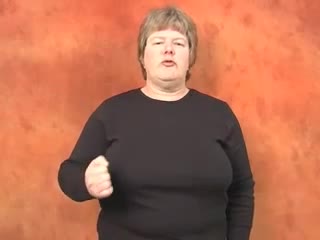
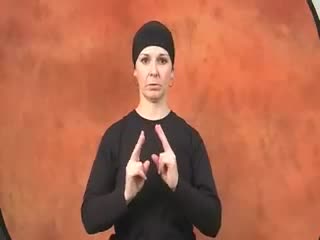
Begin by forming two distinct handshapes, one for each hand, representing the dual nature of an epoxy. Your dominant hand should create an 'A' handshape, where your fingers curl into a fist with your thumb resting alongside or slightly over your index finger, as if gripping a small stirring stick. Simultaneously, your non-dominant hand will adopt a loose 'S' handshape, with all fingers gently curled into a fist and the thumb resting over your knuckles, ready to act as the mixing bowl.
Step 2: Hand Placement and Location
Position both hands in the neutral signing space directly in front of your chest, roughly at solar plexus level. Your non-dominant hand, in its 'S' handshape, remains relatively stationary, acting as the container. Bring your dominant 'A' hand close to your non-dominant hand, with the knuckles of your dominant hand just above the knuckles of your non-dominant hand. Imagine they are poised for a mixing action.
Step 3: Movement
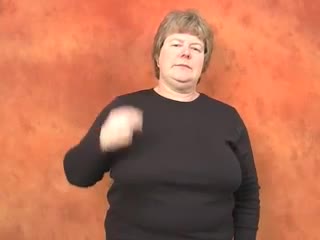
Now, execute a two-part movement. First, using your dominant 'A' hand, perform a small, circular stirring motion *within* the imagined 'bowl' of your non-dominant 'S' hand. Complete two or three quick, tight circles, mimicking the act of combining two liquids. Immediately following this, transition your dominant hand into a flat 'B' handshape, with your palm facing downwards. Sweep this dominant flat hand across your non-dominant hand (which remains in a flat 'B' handshape, palm up, now acting as the surface), moving from your non-dominant wrist towards your fingertips. This second movement depicts the spreading of the adhesive, concluding with a brief, gentle touch where your dominant palm 'sticks' to your non-dominant palm, signifying the bond.
Step 4: Facial Expression and Mouthing
Non-manual features are absolutely critical in British Sign Language, and for "epoxy resin adhesive," your facial expression should convey concentration and a slight sense of effort, reflecting the precise nature of applying such a strong material. Maintain neutral brows, perhaps with a subtle furrow as you perform the mixing and applying motions. When mouthing, clearly articulate "epoxy resin adhesive" silently or with a very soft voice, allowing your lip patterns to match the spoken English word. This critical element helps contextualize the sign for both Deaf and hearing communicators.
Step 5: Palm Orientation
During the initial stirring phase, your dominant hand's palm will face mostly towards your non-dominant hand, and your non-dominant palm will face slightly upwards, open to receive the mixing action. As you transition to the spreading motion, your dominant hand's palm shifts to face downwards, directly over your non-dominant hand, which turns palm-up to present a surface. The final moment of contact sees both palms facing each other, momentarily connecting to show the adhesive quality. This shift in palm orientation is key to distinguishing the mixing action from the spreading and bonding action.
"epoxy resin adhesive" in BSL - Quick Reference Snapshot
- Handshape: Dominant 'A' (stirring), then flat 'B' (spreading); Non-dominant 'S' (bowl), then flat 'B' (surface).
- Location: Neutral signing space in front of the chest.
- Movement: Small circular stirring with dominant hand over non-dominant, followed by dominant flat hand sweeping and briefly touching non-dominant flat hand.
- Facial Expression: Concentrated, slightly furrowed brow.
- Dominant Hand: Performs the stirring and spreading actions.
- Palm Orientation: Initially towards non-dominant, then downward for spreading, finally facing non-dominant for contact.
5 Memorisation Tricks for the BSL Sign "epoxy resin adhesive"
Learning a new sign can be tricky, but here are some clever ways to really make the BSL sign for epoxy resin adhesive stick in your mind.
- Visualise the "Two-Part" Mix: Picture yourself actually mixing two components together with a small stick in a cup. That initial 'A' hand stirring in the 'S' hand is a direct visual mnemonic for the "epoxy" part of the phrase, highlighting its two-part nature. This mental image directly anchors the first stage of the sign in a logical, memorable way.
- Feel the "Sticky Spread": After the mixing, consciously shift your focus to the feeling of applying something thick and sticky. The transition from the stirring to the flat hand sweeping across your other palm, ending with that slight stick, creates a strong muscle memory for the "adhesive" quality. Practise this motion slowly, really feeling the imagined stickiness between your palms.
- Connect to Creation: Think about the purpose of epoxy resin adhesive: it creates something new, strong, and lasting. Associate the sign with the satisfaction of mending a broken object or building something durable. This emotional connection to the word's meaning helps cement the sign's form in your memory, making it more than just a sequence of hand movements.
- Avoid Confusing "Mix" with "Glue": A common pitfall for learners is to oversimplify the sign into just "glue" or "mix." Remember, "epoxy resin adhesive" is distinct because it combines *both* actions. Ensure you execute the initial stirring *and* the subsequent spreading and sticking, as omitting either part changes the meaning entirely and loses the specificity of the sign.
- "DIY Project" Daily Practice: Integrate this sign into your daily thoughts whenever you see something being repaired or built. When you pass a construction site, or even just fix a broken toy, briefly perform the sign for "epoxy resin adhesive" in your head or with small movements. Regular, contextualised exposure, even mental, reinforces recall.
Real-Life Situations to Use the BSL Sign for "epoxy resin adhesive"
Knowing how to sign a word is one thing, but knowing when and how to weave it into a conversation in BSL brings it to life. Here are some practical scenarios for using "epoxy resin adhesive."
- Imagine you're discussing a home repair project with a Deaf friend: "My table leg broke, I need to use epoxy resin adhesive to fix it firmly." In BSL, you might sign "TABLE LEG BROKEN, I NEED EPOXY RESIN ADHESIVE FIX STRONG." The sign for "epoxy resin adhesive" would naturally slot in before "FIX" to specify the method.
- When explaining a craft technique in a workshop: "For this jewellery piece, we'll join the metal and stone with a strong epoxy resin adhesive." Here, your sentence structure might be "JEWELLERY PIECE, METAL STONE JOIN, USE EPOXY RESIN ADHESIVE STRONG." The sign helps clarify the type of bond.
- If you're asking about materials for a boat repair: "Do you have any marine-grade epoxy resin adhesive available?" A BSL translation could be "YOU HAVE MARINE-GRADE EPOXY RESIN ADHESIVE YOU?" using a raised eyebrow for the question marker at the end.
- Perhaps you are warning someone about safety: "Be careful, that epoxy resin adhesive is very strong and can irritate skin." You'd sign "CAREFUL, THAT EPOXY RESIN ADHESIVE VERY STRONG, SKIN IRRITATE CAN." The sign clearly identifies the substance requiring caution.
Top 3 Mistakes Learners Make Signing "epoxy resin adhesive" in BSL
It's completely normal to encounter a few bumps as you master new signs. Being aware of common missteps can really accelerate your learning for "epoxy resin adhesive."
- Omitting the "Mixing" Part: Many beginners, eager to convey the 'sticky' aspect, jump straight to the flat-hand sweeping motion, essentially just signing "glue" or "stick." This misses the crucial first step which represents the two-part nature of epoxy resin. The correction: Always begin with the dominant 'A' hand stirring over the non-dominant 'S' hand. This initial action is what differentiates "epoxy resin adhesive" from generic adhesives in BSL.
- Incorrect Palm Orientation for "Spreading": Another frequent error involves keeping the palm facing upwards during the sweeping motion, or having it face outwards. This can make the sign look like "paint" or an abstract "spread," losing the specific meaning of application onto a surface. The correct approach is for your dominant flat 'B' hand's palm to face downwards as it sweeps across your non-dominant flat 'B' hand (palm up), clearly showing the application of a substance *onto* a surface.
- Lack of Distinct "Stick" at the End: Some learners complete the sweeping motion but neglect the brief, gentle touch or 'stick' at the end. Without this final contact, the sign might only convey "spreading" or "applying," rather than the critical bonding property. Remember to allow your dominant palm to momentarily touch and 'stick' to your non-dominant palm, even for just a fraction of a second, to fully capture the adhesive quality.
Fascinating Facts About the BSL Sign for "epoxy resin adhesive"
Every sign in British Sign Language carries its own story and linguistic nuances; "epoxy resin adhesive" is no particularly different, offering intriguing insights.
- While a precise historical origin for this specific technical sign isn't widely documented, its structure is highly iconic. It directly mimics the physical actions involved in preparing and using the material, which is a common characteristic of signs for concrete concepts.
- Interestingly, because this is a more specialized term, you might encounter slight regional variations in the speed or emphasis of the two components of the sign within the UK Deaf community. Some might perform the mixing a little slower, others might give a more pronounced "stick" at the end, but the core handshapes and movements remain consistent.
- The sign's clear two-part structure (mixing and applying/sticking) makes it a beautiful example of indexicality in BSL, where the sign directly points to or represents the action or property of the object itself. It's not arbitrary; it's a visual representation of the process.
- Unlike some signs which are derived from the manual alphabet, this sign is not directly fingerspelled, nor does it incorporate a letter from the manual alphabet as its primary handshape. It's a fully formed conceptual sign, reflecting the complex nature of the material it describes.
- The sequential nature of the movements within this sign is linguistically significant. The mixing action must precede the application action to accurately represent the process of working with epoxy resin. Changing the order would alter the meaning, highlighting the grammatical importance of movement sequencing in BSL.
"epoxy resin adhesive" in Deaf Culture - Community and Identity
Understanding how a concept like "epoxy resin adhesive" fits within Deaf culture goes beyond mere translation; it touches on shared experiences and practical communication needs. In a world often designed for hearing people, the Deaf community, through its ingenuity and visual language, finds practical ways to discuss every aspect of life, from complex scientific topics to everyday DIY. When talking about making repairs, building models, or engaging in various crafts, the ability to clearly sign about specific materials like epoxy resin adhesive fosters independence and ensures full participation in these activities. It allows for detailed discussions about projects, sharing of knowledge, and collaborative problem-solving, reinforcing the community's self-reliance and its capacity to adapt and thrive. The existence of such a precise sign underscores the richness and comprehensive nature of BSL, ensuring that no topic is out of reach for a fluent signer, connecting individuals through shared practical understanding and cultural exchange.
Example Conversations Using "epoxy resin adhesive" in BSL
Let's look at how you might incorporate the sign for "epoxy resin adhesive" into different conversations in British Sign Language.
English: I need to buy some epoxy resin adhesive for my next project. - BSL structure: This sentence uses a straightforward subject-verb-object order, with "I" followed by "NEED BUY," then the specific material, and finally "PROJECT NEXT." The sign for "epoxy resin adhesive" is placed clearly.
English: Have you ever used epoxy resin adhesive before? - BSL structure: Here, you'll use a question structure, possibly starting with "YOU EVER USE," then the sign for "epoxy resin adhesive," concluding with "BEFORE?" and a raised eyebrow to mark it as an interrogative.
English: The instructions say to mix the two parts of the epoxy resin adhesive carefully. - BSL structure: This example follows a topic-comment structure, perhaps "INSTRUCTIONS SAY, EPOXY RESIN ADHESIVE TWO PARTS MIX CAREFUL." The sign integrates naturally within the descriptive phrase.
English: This type of epoxy resin adhesive dries incredibly fast, so work quickly! - BSL structure: You might sign "THIS TYPE EPOXY RESIN ADHESIVE DRY VERY FAST, SO WORK QUICK!" The sign provides the specific context for the speed warning.
English: We decided not to use epoxy resin adhesive because it's too permanent for this temporary fixture. - BSL structure: This uses negation and reasoning: "WE DECIDE NOT USE EPOXY RESIN ADHESIVE, WHY? TOO PERMANENT, FIXTURE TEMPORARY." The sign is presented, then its suitability is questioned.
Frequently Asked Questions: The BSL Sign for "epoxy resin adhesive"
Is there a common regional variation for the BSL sign for "epoxy resin adhesive" in the UK?
While the core components of the sign (mixing and applying) remain largely consistent across the UK, you might observe subtle regional differences in the vigour or speed of the movements. Some areas might emphasize the 'stickiness' more strongly with a slightly longer final contact, but the fundamental handshapes and sequence are typically understood universally among BSL users.
Are there any similar signs in BSL that I should be careful not to confuse with "epoxy resin adhesive"?
Yes, learners sometimes confuse parts of this sign with general "glue" or "mix." The sign for generic "glue" often involves just showing two surfaces sticking, while "mix" can be a broader stirring motion. Remember, "epoxy resin adhesive" uniquely combines the specific two-part mixing action *followed by* the adhesive application, so ensure both stages are distinct to avoid miscommunication.
Is the BSL sign for "epoxy resin adhesive" suitable for beginners learning British Sign Language?
Absolutely! While it's a compound concept, the sign is very iconic, meaning it visually represents the actions involved. This makes it quite intuitive and accessible for beginners. Breaking it down into the two clear stages of mixing and applying makes it manageable to learn even early in your BSL journey.
Can children learning BSL use the sign for "epoxy resin adhesive" in their conversations?
Certainly! Children who are learning BSL, especially those engaging in crafts, building, or even helping with repairs, can readily use this sign. Its visual nature makes it easy for young learners to grasp, and it helps them communicate precisely about materials in their play and learning environments.
Does the sign for 'adhesive' change based on the type of adhesive, or is "epoxy resin adhesive" a unique sign?
"Epoxy resin adhesive" is quite a specific sign that combines the concept of "epoxy" (mixing two parts) with "adhesive" (sticking). Generic "adhesive" or "glue" signs might be simpler, focusing just on the sticking action. The sign for "epoxy resin adhesive" is distinctive because it integrates the full process, making it a unique and precise term within BSL.
Signs That Pair Naturally with "epoxy resin adhesive" in BSL
Building your vocabulary systematically means connecting related signs. Here are some BSL signs that naturally complement "epoxy resin adhesive," helping you expand your communicative toolkit.
- FIX: This sign is essential because "epoxy resin adhesive" is primarily used for repairs and joining. They belong together as you'll often sign "use epoxy resin adhesive to FIX."
- BUILD: Many construction or craft projects involve "BUILDing" things, making this sign a natural partner. You might use the adhesive for assembling components.
- STRONG: Given the powerful bonding properties of epoxy, signing "STRONG" is a common descriptor alongside "epoxy resin adhesive," emphasizing its durability.
- MIX: While the epoxy sign includes mixing, the general sign for "MIX" is useful for other contexts or to elaborate on the mixing process if needed.
- DRY: After applying any adhesive, waiting for it to "DRY" is crucial. This sign often follows discussions of application, forming a logical sequence.
- TOOL: Epoxy resin adhesive is a material, but you often need "TOOLs" to apply it, such as spatulas or brushes, making this a relevant pairing.
Building Fluency: How to Practise "epoxy resin adhesive" in BSL
Achieving fluency isn't just about knowing individual signs; it's about making them feel natural and effortless. For "epoxy resin adhesive," here's how to really build your confidence. Start by using a mirror to observe your handshapes and movements. Pay close attention to the transition from the stirring 'A' hand to the spreading flat 'B' hand; ensuring this flow is smooth will make a huge difference. Try incorporating the sign into everyday thoughts: if you see someone gluing something, mentally (or physically, if you're alone!) practise the sign. Filming yourself can provide invaluable feedback, allowing you to catch any subtle misalignments or hesitations you might not notice otherwise. Most importantly, seek out opportunities to engage with the Deaf community or other BSL learners. Using "epoxy resin adhesive" in actual conversations, even simple ones, will cement it in your active vocabulary. Remember, spaced repetition over several days, rather than intense cramming, will help this sign truly stick with you. Keep practising, and you'll soon find yourself signing it with complete ease!