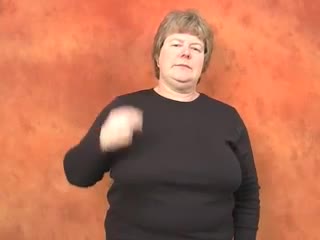
What Is the BSL Sign for "drill stop"?
Imagine the precision needed when drilling a hole just so deep, and no further – that's the ingenious purpose of a drill stop. This essential tool ensures accuracy and prevents over-drilling, a critical safety measure in many practical tasks. When we talk about the British Sign Language drill stop, we're not just conveying a simple object; we're signing about control, exactness, and purposeful limitation. Mastering the BSL sign for drill stop opens up a practical vocabulary for discussing DIY, construction, or even educational workshops, allowing you to clearly communicate about specific tools and their functions within the Deaf community. This sign provides a direct, visually intuitive representation of the tool's action, making it highly memorable for learners.
How to Sign "drill stop" in British Sign Language - Step-by-Step
Let's break down the exact sequence for this precise and functional sign, guiding your hands through its meaningful action.
Step 1: Handshape
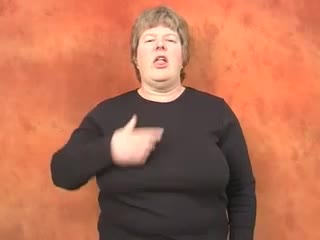
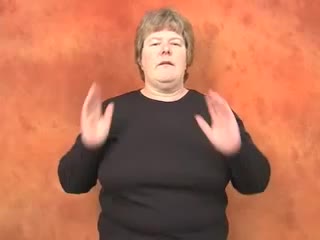
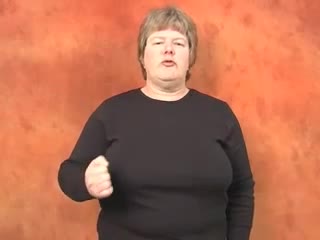
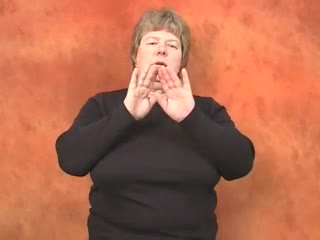
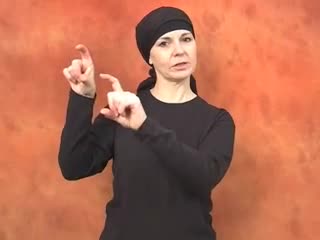
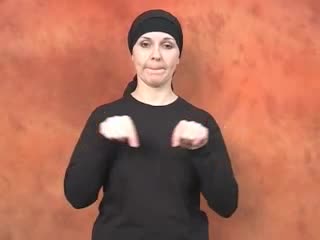
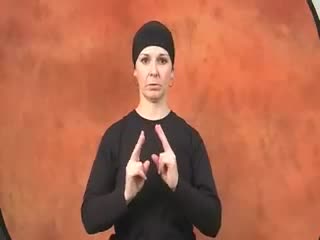
For this sign, your dominant hand will form a closed fist, with your index finger extended downwards, pointing straight ahead. Picture your thumb resting comfortably along the side of your fist. Meanwhile, your non-dominant hand adopts a flat, open handshape; ensure all fingers are held together and extended, with your thumb tucked in alongside the palm.
Step 2: Hand Placement and Location
You'll position your dominant hand, with its extended index finger, above your non-dominant hand. Hold your non-dominant hand with its palm facing towards your dominant hand, fingers pointing slightly upwards and away from your body, creating a 'surface' or 'barrier'. The space between your dominant index finger and your non-dominant palm should initially be a few inches, ready for the action.
Step 3: Movement
Initiate a swift, controlled downward movement of your dominant hand, bringing the extended index finger directly towards the centre of your non-dominant palm. Crucially, the movement should halt abruptly just before your index finger makes contact with your non-dominant palm. This sharp, definitive stop visually mimics the drill bit hitting its depth limiter. The movement is singular and decisive, not repeated.
Step 4: Facial Expression and Mouthing
A neutral, focused facial expression usually accompanies the sign for "drill stop" in BSL, reflecting the precision and practicality associated with the tool. You'll naturally mouth the words "drill stop" or simply "stop" as you perform the sign. Mouthing is an integral non-manual feature in British Sign Language, providing crucial linguistic information that complements the manual sign and helps distinguish it from similar concepts or signs.
Step 5: Palm Orientation
Throughout the sign, your dominant hand's palm will generally face inwards or slightly towards your body, with the extended index finger pointing downwards. Your non-dominant hand's palm will orient towards your dominant hand, creating a clear stopping surface. Maintaining these precise palm orientations is vital because they visually communicate the interaction between the drill bit and its depth-limiting collar, making the meaning immediately clear.
"drill stop" in BSL - Quick Reference Snapshot
- Handshape: Dominant hand forms a fist with an extended index finger; non-dominant hand is flat and open.
- Location: Dominant hand positioned above the non-dominant hand, in neutral space.
- Movement: Dominant hand moves downwards precisely, stopping sharply before touching the non-dominant palm.
- Facial Expression: Generally neutral and focused.
- Dominant Hand: Performs the primary action, representing the drill bit.
- Palm Orientation: Dominant palm faces inwards; non-dominant palm faces the dominant hand.
5 Memorisation Tricks for the BSL Sign "drill stop"
- Visual Mnemonic: Picture your extended dominant index finger as the drill bit itself, plunging downwards, and your non-dominant flat hand as the solid material or the stop collar preventing it from going too deep. This imagery directly relates the sign's form to its function.
- Muscle-Memory Drill: Practice the sharp, decisive downward movement of your dominant hand, focusing on the abrupt stop just above your non-dominant palm. Repeat this action ten times, really feeling the muscle engagement in your arm and wrist, helping to embed the motion physically.
- Connection to Meaning: Think about the word "stop" while you perform the sign. The sudden cessation of movement is the most crucial part of this sign, directly reflecting the tool's purpose of halting a drill at a specific depth. Consciously link the physical stop with the concept of a "drill stop."
- Common-Confusion Tip: Be careful not to let your dominant hand actually *touch* your non-dominant palm, as that might imply a different action like "hit" or "reach." The key is the near-miss and the abrupt halt, signifying the *limitation* rather than a full impact.
- Daily-Life Practice Idea: Whenever you see a drill or think about DIY tasks around your home, perform the sign for "drill stop" silently to yourself. Imagine you're explaining its use to someone, integrating the sign into your everyday mental vocabulary.
Real-Life Situations to Use the BSL Sign for "drill stop"
- You might use this sign when asking a friend if they have the specific tool you need for a carpentry project: "Do you have the BSL sign for drill stop?" This shows you're looking for that exact piece of equipment.
- During a workshop, you could demonstrate the importance of safety by signing, "Always use a drill stop to prevent damage," illustrating the protective aspect of the tool.
- If you're explaining instructions for assembling furniture, you'd sign, "We need to set the drill stop carefully for these screws," emphasizing precision in the task.
- Should you be discussing the contents of a toolbox, you might sign, "My drill stop is missing; I can't find it anywhere," using the sign within a negative statement to express absence.
Top 3 Mistakes Learners Make Signing "drill stop" in BSL
- Incorrect Movement Execution: A frequent error involves letting the dominant index finger actually make contact with the non-dominant palm, or performing a soft, lingering touch instead of a sharp, sudden stop. This mistake alters the core meaning; the sign needs to convey a definite *limit* without impact, so practicing that precise, abrupt halt just before contact is essential for correctness.
- Inaccurate Handshape for the Non-Dominant Hand: Some learners might curl their non-dominant fingers or spread them apart, rather than keeping them flat and together. The non-dominant hand must present a clear, flat surface, acting as a defined barrier or target for the dominant hand's stopping motion, so maintaining a rigid, flat handshape is paramount.
- Neglecting Mouthing: Beginners sometimes focus solely on the manual components and forget to mouth "drill stop" or "stop" while signing. While the manual sign is clear, incorporating the correct mouthing significantly enhances comprehension and ensures the specific term "drill stop" is accurately conveyed, as mouthing is a crucial part of BSL grammar.
Fascinating Facts About the BSL Sign for "drill stop"
- The sign for "drill stop" displays strong iconic motivation; its form directly mirrors the action of a drill bit being halted by a collar, making it intuitively understandable even to new learners.
- While core vocabulary signs often have ancient roots, technical terms like "drill stop" are often more recent additions to British Sign Language, evolving as new tools and concepts enter common usage.
- Though the fundamental concept remains consistent across BSL regions, you might encounter subtle stylistic variations in the speed or exact height of the 'stop' within different local Deaf communities.
- This sign is an excellent example of a compound action, combining the conceptual elements of 'drilling' (implied by the extended index finger) with 'stopping' (the abrupt halt against the non-dominant hand).
- Unlike many signs that derive from or relate to the manual alphabet, the BSL sign for "drill stop" is wholly conceptual and iconic, relying purely on visual representation rather than finger-spelled letters.
"drill stop" in Deaf Culture - Community and Identity
Within Deaf culture, clear communication about practical tasks and tools like a drill stop empowers individuals to participate fully in home improvement, vocational training, and everyday life. When someone signs about a drill stop, it’s a moment of shared understanding, whether they're discussing a DIY project, a job in carpentry, or teaching a skill. BSL provides the means to articulate these specific, often technical, concepts with precision, fostering independence and confidence within the Deaf community. This ability to convey complex ideas visually strengthens connections and ensures that everyone has access to the information needed to navigate a hearing-centric world successfully.
Example Conversations Using "drill stop" in BSL
English: I need a drill stop for this project. - BSL structure: TOPIC-COMMENT: PROJECT, DRILL STOP, ME NEED.
English: Do you have a small drill stop? - BSL structure: QUESTION: DRILL STOP, SMALL, YOU HAVE?
English: The drill stop is over there, on the shelf. - BSL structure: SPATIAL REFERENCE: DRILL STOP, (point over there) SHELF, ON.
English: Please pass me the drill stop. - BSL structure: IMPERATIVE: DRILL STOP, PASS ME, PLEASE.
English: This drill stop will ensure the correct depth. - BSL structure: EXPLANATION: DRILL STOP, THIS, DEPTH, CORRECT, WILL ENSURE.
Frequently Asked Questions: The BSL Sign for "drill stop"
Are there regional variations for the British Sign Language drill stop?
While the core concept and action of the sign for "drill stop" remain consistent across the BSL-using community, you might occasionally observe slight regional differences. These variations could manifest in minor stylistic nuances, such as the exact distance between the hands or the speed of the downward movement, but the fundamental structure will be recognisable.
What signs are commonly confused with the BSL sign for drill stop?
Learners sometimes confuse "drill stop" with the general sign for "stop" or even signs related to "measure" or "limit" if the precise handshapes and movement aren't clearly articulated. Remember that "drill stop" specifically incorporates the downward, controlled motion towards a barrier, making it distinct from more abstract concepts of stopping or measuring.
Is learning the BSL drill stop sign suitable for beginners?
Yes, learning the British Sign Language drill stop is perfectly suitable for beginners because it's a highly iconic sign, meaning its form directly represents its function. The visual clarity makes it relatively easy to grasp and remember, providing a rewarding addition to a novice signer's practical vocabulary.
Can children learn to sign drill stop in BSL easily?
Absolutely, children can pick up the BSL sign for "drill stop" quite readily, especially if they are involved in hands-on activities or learn through visual examples. Its clear, action-based nature appeals to young learners, making it an accessible and fun sign to incorporate into their growing BSL vocabulary.
Is the sign for drill stop similar to other technical tool signs in BSL?
You'll find that many technical tool signs in BSL often employ similar iconic principles, where the sign visually represents the tool's primary action or appearance. While "drill stop" has its unique form, this method of creation is a common thread that helps link and make sense of various tool-related signs within British Sign Language.
Signs That Pair Naturally with "drill stop" in BSL
- DRILL: This sign, often mimicking the action of operating a drill, naturally complements "drill stop" when discussing power tools. They belong together because you usually talk about one in the context of the other.
- SCREW: Signing "screw" (often a twisting motion) frequently follows or precedes "drill stop" in conversations about fastening or assembly, connecting them through the common task of securing objects.
- MEASURE: The sign for "measure" (often an action across a flat surface) connects to "drill stop" through the concept of precision and achieving exact dimensions in construction or craftwork.
- TOOL: "Tool" (a general sign often involving a dominant hand 'T' or a broad sweeping motion) groups well with "drill stop" as it provides the overarching category for this specific item.
- WORK: The sign for "work" (typically two 'S' handshapes tapping together) naturally pairs with "drill stop" when discussing any kind of labour, project, or task where the tool would be used.
- ACCURATE/PRECISE: These signs, conveying exactness, align perfectly with "drill stop" because the tool's entire purpose is to ensure highly accurate drilling depths.
Building Fluency: How to Practise "drill stop" in BSL
To truly embed the BSL sign for drill stop into your signing repertoire, start by practicing the handshapes and movement in front of a mirror; pay close attention to the precise, abrupt stop, ensuring your index finger halts just above your non-dominant palm. Next, try to integrate this sign into short, imagined BSL conversations about DIY or construction tasks you might undertake, mentally placing it within different sentence structures. Filming yourself performing the sign can offer invaluable feedback, allowing you to objectively review your technique and refine any subtle movements. As you grow more confident, seek out opportunities to engage with Deaf signers; a conversation partner will provide real-world context and gentle corrections, making your learning experience incredibly rich and authentic. Remember, consistent, spaced repetition over several days will solidify the sign in your muscle memory, moving you closer to true fluency.