What Is the BSL Sign for "close-boarded fence"?
Picture a sturdy, private boundary, those vertical wooden panels standing shoulder to shoulder, and you're already halfway to understanding the visual genius behind the
BSL sign for close-boarded fence. This isn't just a basic noun; it's a wonderfully descriptive piece of communication that immediately conjures an image for your conversation partner. Learning the
British Sign Language close-boarded fence sign unlocks a straightforward yet essential descriptor for your environment, helping you articulate the specifics of a garden, a property line, or any outdoor enclosure. It represents a common feature in the British landscape, making it a highly practical sign to master for everyday discussions.
How to Sign "close-boarded fence" in British Sign Language - Step-by-Step
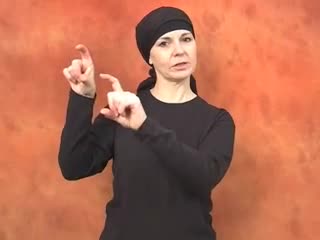
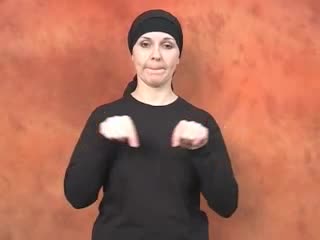
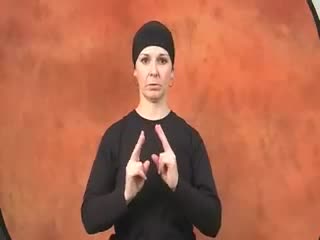
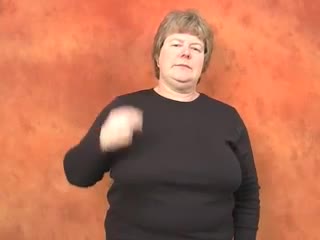
Mastering this sign involves a precise sequence of hand movements, placement, and expression, all working together to vividly depict the sturdy, unbroken barrier of a close-boarded fence.
Step 1: Handshape
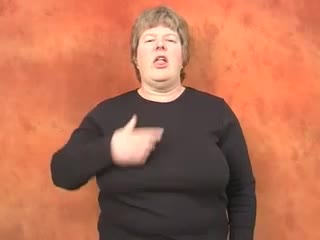
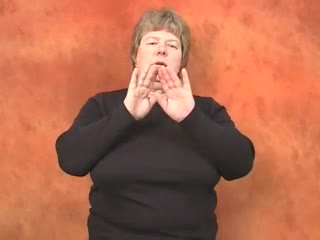
You'll begin with your dominant hand forming a flat handshape. Extend all your fingers straight and press them tightly together, ensuring there are no gaps between them. Your thumb should be tucked neatly alongside your palm or resting firmly against the side of your index finger, creating a solid, flat surface. Think of your hand as a single, uniform wooden plank, ready to join its neighbours.
Step 2: Hand Placement and Location
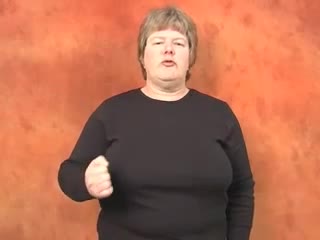
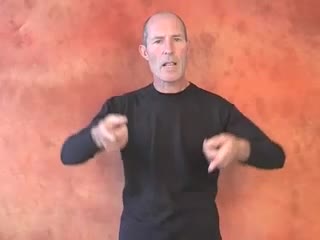
Position your dominant hand in the neutral signing space directly in front of your body, roughly at chest or upper abdomen height. It should be slightly to the dominant side, ready to create the fence's visual expanse. There's no involvement of your non-dominant hand for this specific sign; your dominant hand takes centre stage, illustrating the singular yet repetitive nature of the fence.
Step 3: Movement
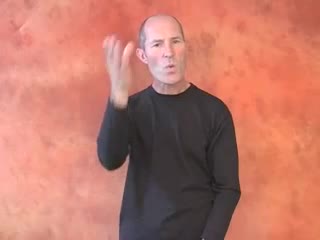
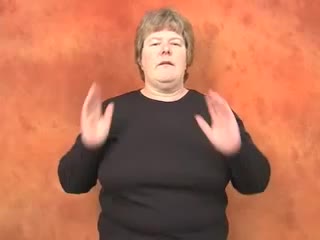
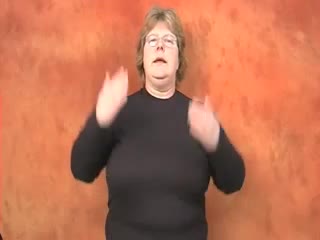
From your starting position, move your dominant hand in a series of short, firm, upward vertical strokes. You'll complete approximately three to four distinct strokes, each one representing a single board of the fence. As you finish each upward stroke, slightly shift your hand a little further to your dominant side before initiating the next vertical motion. This sequential, side-by-side movement builds the impression of multiple, closely packed planks forming a continuous barrier.
Step 4: Facial Expression and Mouthing
For a straightforward noun like this, a neutral facial expression is generally appropriate and expected. Your eyebrows remain relaxed, and your mouth adopts a calm, natural position. However, it's very common in BSL to mouth the English word "close-boarded fence" as you sign it. This mouthing acts as an important non-manual feature, aiding clarity, especially for hearing learners, and reinforcing the specific English term being conveyed, though the sign itself is visually clear for Deaf users.
Step 5: Palm Orientation
Throughout the movement, your palm should primarily face forward, directly away from your body and towards your conversational partner. This orientation directly mimics the flat, outward-facing surface of a fence panel. Maintaining this forward-facing palm ensures that the visual representation of the fence remains clear and unambiguous, accurately showing the structure's front.
"close-boarded fence" in BSL - Quick Reference Snapshot
- Handshape: Dominant hand flat, fingers together, thumb tucked.
- Location: Neutral signing space in front of your dominant side.
- Movement: Series of 3-4 short, firm, upward vertical strokes, shifting slightly sideways between each.
- Facial Expression: Neutral, often accompanied by mouthing "close-boarded fence".
- Dominant Hand: The primary hand used for the sign.
- Palm Orientation: Palm faces forward throughout the movement.
5 Memorisation Tricks for the BSL Sign "close-boarded fence"
Learning new signs effectively means engaging your memory in multiple ways, and this specific sign lends itself beautifully to visual and kinetic cues.
- Visualise the Planks: Imagine your flat dominant hand as one single, smooth wooden board. As you execute the upward strokes and slight sideways shifts, literally picture yourself "drawing" each individual plank of the fence, one after another, tightly packed together. This direct visual link to the object makes the sign's form unforgettable.
- Embrace the Muscle Memory: Repeat the motion of making three or four firm, deliberate upward strokes, shifting slightly each time. Focus on the feeling in your wrist and forearm; the distinct, separate movements for each "board" should become a natural, flowing sequence, etching the sign into your physical memory through consistent repetition.
- Connect to the Concept of Privacy: Think about why someone might choose a close-boarded fence – for privacy and solidity. The solid, flat handshape and the continuous, unbroken movement perfectly reflect this sense of an opaque, robust barrier. This conceptual link helps you recall not just the sign's mechanics, but its implied purpose.
- Distinguish from a General Barrier: Many learners initially use a broader, more generic "wall" or "barrier" sign. Remember that the "close-boarded fence" sign specifically uses individual, distinct vertical strokes to convey the plank structure, unlike a continuous sweep for a solid wall. Pay attention to the discrete upward motions to avoid generalisation and maintain specificity.
- Integrate into Your Environment: Whenever you see a close-boarded fence in your daily life, whether it's outside your window or on a walk, sign the word immediately. This constant, real-world reinforcement connects the sign directly to its referent in your surroundings, making it highly salient and easier to retrieve when needed in conversation.
Real-Life Situations to Use the BSL Sign for "close-boarded fence"
Understanding the practical applications of a sign is crucial for building fluency and confidence in British Sign Language. Here are some everyday scenarios where you'll find yourself reaching for the
close-boarded fence sign language.
- Perhaps you're discussing garden improvements with a friend, and you want to ask, "Do you think a close-boarded fence would look good along our boundary?" Here, the sign for "close-boarded fence" would be incorporated into a question structure, potentially with a raised eyebrow for the interrogative non-manual feature.
- You might be giving directions to a new visitor, explaining, "You'll see my house just past the tall, dark close-boarded fence on the left." In this context, the sign would be accompanied by spatial indexing, indicating the fence's position relative to other landmarks, and possibly a slightly exaggerated height to convey "tall."
- A neighbour could be complaining about damage, signing, "My close-boarded fence blew down in the recent storms, it needs urgent repair." This demonstrates the sign's use within a topic-comment grammatical structure, where the fence is the subject of discussion, followed by its state or action.
- Imagine you're describing your childhood home to someone and you explain, "We had a really old close-boarded fence around our back garden, perfect for climbing!" Here, the sign helps paint a vivid picture of a personal memory, using descriptive adjectives to enrich the narrative.
Top 3 Mistakes Learners Make Signing "close-boarded fence" in BSL
Every learner encounters hurdles, and recognising common pitfalls is a powerful step towards signing accurately and confidently. Here are the frequent errors we often see with the
BSL close-boarded fence sign and how to correct them.
-
Using a Curved or Loose Handshape: Many beginners inadvertently sign with a slightly curved hand or with fingers separated, rather than keeping them tightly pressed together. This dilutes the visual impact of a solid, flat plank. The correction is simple: consciously flatten your hand, ensuring your fingers are straight and firmly joined, and your thumb is secure against your side. This creates the unmistakable solid panel that characterises a close-boarded fence.
-
Performing a Single, Continuous Sweep: Instead of the distinct, individual strokes that represent separate boards, some learners make one long, continuous sweeping motion. While a sweep might indicate a general barrier, it misses the "close-boarded" specificity. To correct this, focus on articulating each upward vertical stroke as a separate, firm action, shifting slightly sideways after each, as if you're marking out individual planks with precision.
-
Lacking Repetition for the "Fence" Aspect: Sometimes, learners perform just one "plank" motion and then stop, expecting it to represent an entire fence. While context can sometimes clarify, for unambiguous communication of a "fence," the repetitive nature of multiple planks is key. Make sure to execute those three or four distinct, side-by-side strokes. This repetition is crucial for conveying the expanse and continuity of a fence rather than just a single panel or post.
Fascinating Facts About the BSL Sign for "close-boarded fence"
Signs often hold more depth and history than initially meets the eye, and the
learn close-boarded fence BSL journey reveals some intriguing aspects of its form.
- This sign is a prime example of iconicity in BSL; its form directly mirrors the physical characteristics of the object it represents. You're not just signing a word; you're physically drawing the vertical planks of a close-boarded fence in the air, making it incredibly intuitive and visually compelling.
- While the core handshape and movement are widely understood across the UK, there can be subtle regional variations. For instance, some signers might use a slightly faster or slower repetition, or a marginal difference in the sideways shift between strokes, though the fundamental visual remains consistent.
- The sign often functions as a classifier in BSL, allowing you to not only name the fence but also describe its size, shape, and placement. You might modify the height of your strokes to show a tall fence, or perform the sign across a wider space to indicate a long one.
- Its clear visual motivation means it's one of those signs that can be understood even by someone with minimal BSL experience if they are observing carefully, thanks to its strong resemblance to the real-world object. It’s a testament to BSL's inherent expressiveness.
"close-boarded fence" in Deaf Culture - Community and Identity
While a "close-boarded fence" might seem like an ordinary object, its sign, like all descriptive signs in British Sign Language, plays a vital role in how Deaf people articulate and share their lived experiences. The ability to precisely describe one's environment – from the type of boundary around a garden to the structure of a building – is fundamental for clear communication within the Deaf community. These visual details become shared points of reference, enabling rich storytelling, practical instructions, and deep connections through a common visual language. When you sign "close-boarded fence," you're not just conveying a word; you're participating in a culture that values vivid, spatial, and inherently visual descriptions of the world around us. This shared vocabulary for common elements helps to build a collective understanding of spaces and experiences, strengthening the bonds of identity within the Deaf community.
Example Conversations Using "close-boarded fence" in BSL
Putting signs into context is the best way to grasp their utility and integrate them into your active BSL vocabulary. Here are five varied examples using the
what is the sign for close-boarded fence expression.
English: We need to get that old close-boarded fence repaired soon. - BSL structure: Topic-comment order, with "old" modifying "fence" and "repair" following as the action needed.
English: Did you notice the beautiful new close-boarded fence around their property? - BSL structure: Question marked by facial expression (raised eyebrows) and a spatial reference for the property's boundary.
English: The high close-boarded fence gives us complete privacy in the garden. - BSL structure: Adjective (high) modifying the noun, followed by the consequence (privacy) in a clear cause-and-effect relationship.
English: Can you help me paint the close-boarded fence this weekend? - BSL structure: Request for help, with "paint" being the action and "fence" as the object, often using a forward lean for the question.
English: They decided to replace the broken hedge with a sturdy close-boarded fence. - BSL structure: Contrast between two objects (hedge and fence), and the description of the fence as sturdy, indicating choice and quality.
Frequently Asked Questions: The BSL Sign for "close-boarded fence"
We know you'll have questions, and we're here to provide clear, helpful answers as you continue to
learn close-boarded fence BSL.
Are there regional variations for the BSL sign for close-boarded fence?
While the core concept of individual vertical planks is consistently signed, you might observe slight regional differences in the British Sign Language community, such as variations in the exact number of strokes performed or the speed of the movement. However, the fundamental handshape and the iconic representation remain widely recognisable across the UK.
Is the BSL sign for close-boarded fence suitable for beginners?
Absolutely, this sign is an excellent one for beginners! Its highly iconic nature means it visually represents what it means, making it intuitive to grasp and relatively easy to remember. It’s a fantastic example of BSL's direct and expressive communication style.
How does the BSL sign for close-boarded fence differ from a general 'wall' sign?
The British Sign Language close-boarded fence sign specifically emphasises the individual, vertical planks through its distinct, separate upward strokes, portraying a constructed wooden barrier. A general 'wall' sign, in contrast, often uses a continuous, broader hand movement to represent a solid, unbroken surface, distinguishing the materials and construction.
Can children learn the BSL sign for close-boarded fence easily?
Children typically pick up highly visual and iconic signs like this one with remarkable speed. Their natural inclination to mimic and their strong visual learning abilities make the
close-boarded fence British Sign Language sign particularly accessible and engaging for young learners.
What makes the British Sign Language close-boarded fence sign unique compared to general fence signs?
The specific handshape and repetitive, vertical movement of the British Sign Language close-boarded fence sign are designed to vividly represent the tightly packed, distinct wooden boards. This precision distinguishes it from more generic 'fence' or 'barrier' signs, which might employ different handshapes or movements to convey concepts like chain-link or open railings.
Signs That Pair Naturally with "close-boarded fence" in BSL
Building your BSL vocabulary effectively involves understanding how signs connect and cluster together conceptually. Here are some signs that naturally complement the
BSL sign for close-boarded fence.
- GARDEN: Fences are almost synonymous with gardens, making this an obvious and frequent pairing for describing outdoor spaces.
- HOUSE: Many houses feature fences as part of their property boundaries, so discussing homes often brings up this descriptive sign.
- BUILD / CONSTRUCT: Fences don't appear by magic; they're built, so these verbs naturally follow or precede the fence sign when discussing its creation.
- REPAIR: Fences, especially wooden ones, often require maintenance, making the sign for "repair" a common companion when discussing upkeep.
- PRIVATE / PRIVACY: A key reason for choosing a close-boarded fence is to enhance privacy, so these signs are conceptually linked and frequently used together.
- BOUNDARY: Fundamentally, a fence defines a boundary, so this abstract noun often accompanies the specific sign for "close-boarded fence" to clarify its function.
Building Fluency: How to Practise "close-boarded fence" in BSL
Consistent, targeted practice is your best friend on the journey to BSL fluency, and integrating the
BSL sign for close-boarded fence into your routine will solidify your learning. Begin by standing in front of a mirror and meticulously practising the handshape, placement, and movement, ensuring each vertical stroke is distinct and firm. Don't just go through the motions; consciously visualise the fence planks forming as you sign, connecting the physical action to the meaning. Try integrating this sign into daily BSL conversations by describing your surroundings: point out a fence you see and sign it, or talk about needing a fence in your own garden. A powerful technique involves filming yourself signing and then reviewing the footage; this provides invaluable self-feedback on your handshape, movement, and facial expression. Most importantly, seek opportunities to use the sign with Deaf BSL users; their feedback will be the most authentic guide to your progress. Remember, spaced repetition over several days will embed this sign deeply into your long-term memory, making it second nature when you need it most.