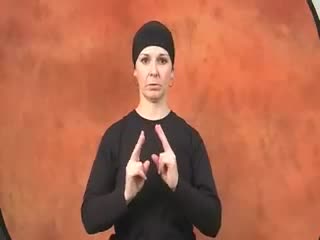
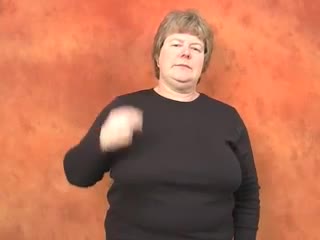
What Is the BSL Sign for "circular saw blade"?
Imagine the powerful, precise action of a circular saw, its sharp edge ready to make a clean cut. That's precisely the imagery the British Sign Language sign for "circular saw blade" captures in its elegant, descriptive form. This particular sign brings to life the spinning motion and the flat, circular nature of the blade itself, becoming an instantly recognisable concept within visual communication. You'll discover how the BSL sign for circular saw blade isn't just about conveying a word; it's about depicting an object's function and form. It's a fantastic example of how British Sign Language circular saw blade signs often draw on the visual world around us, allowing for rich and immediate understanding.
How to Sign "circular saw blade" in British Sign Language - Step-by-Step
Let's break down this visually descriptive sign into its components, ensuring you master each nuance as if you're holding the tool itself.
Step 1: Handshape
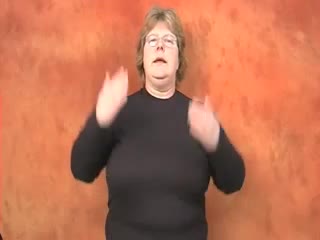
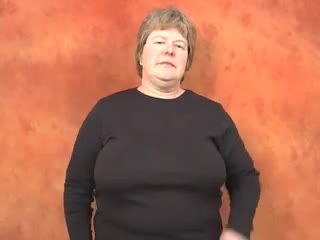
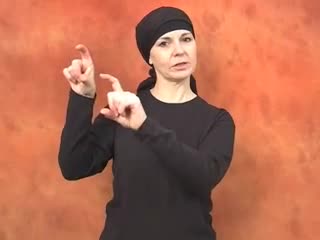
For this sign, you'll primarily use your dominant hand. Start by forming a flat handshape, keeping all your fingers held together and extended straight. Your thumb should rest neatly alongside your palm, not sticking out. Picture your hand as the flat, circular body of the saw blade itself, poised for action.
Step 2: Hand Placement and Location
You'll position your dominant hand in the neutral signing space directly in front of your body, usually slightly to the side of your dominant shoulder. Your hand should be held out a comfortable distance, neither too close to your chest nor too far away. This placement allows for clear visibility and sufficient room to execute the movement.
Step 3: Movement
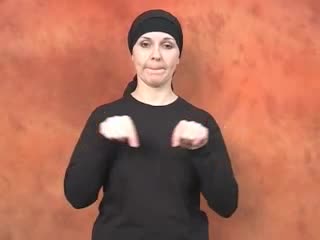
Once your hand is in position, you'll perform a distinct, repetitive movement. From your wrist, begin rotating your entire hand rapidly in a small, tight circle. This circular motion directly mimics the spinning action of a circular saw blade. Execute this rotation two or three times quickly, maintaining the flat handshape throughout.
Step 4: Facial Expression and Mouthing
While the sign itself is quite descriptive, your facial expression should remain neutral and attentive, reflecting the focus often associated with using such a tool. You'll also naturally mouth the words "circular saw blade" as you perform the sign. Mouthing these words is an integral non-manual feature in British Sign Language; it provides crucial phonological information, distinguishing signs that might otherwise look similar and aiding in clearer communication for both Deaf and hearing signers.
Step 5: Palm Orientation
Your palm orientation for "circular saw blade" generally faces forward or slightly downward, depending on the perceived angle of the cutting action. This directionality is important because it visually represents the flat plane of the blade itself. A consistent palm orientation helps convey the object's form effectively, ensuring your audience immediately understands you're referring to a flat, rotating surface.
"circular saw blade" in BSL - Quick Reference Snapshot
- Handshape: Dominant hand flat, fingers together, thumb alongside.
- Location: Neutral signing space, in front of dominant shoulder.
- Movement: Rapid, small circular rotation from the wrist, repeated 2-3 times.
- Facial Expression: Neutral, focused.
- Dominant Hand: Used alone.
- Palm Orientation: Generally forward or slightly downward.
5 Memorisation Tricks for the BSL Sign "circular saw blade"
- Visual Mnemonic: Picture your flat hand not just as *a* blade, but *the* blade of a circular saw. As you make the sign, imagine the blade spinning at high speed, ready to cut. Connecting the physical handshape directly to the object will cement the visual in your mind.
- Muscle-Memory Drill: Grab a frisbee or a large, flat plate. Hold it in the same position you'd sign "circular saw blade" and gently rotate your wrist, feeling the circular motion. This tactile reinforcement helps your hand and arm remember the exact movement, even without the actual sign.
- Connection to Meaning: Think about the *function* of a circular saw blade: it spins to cut. The BSL sign perfectly embodies this action. Every time you sign it, consciously recall that the circular movement *is* the spinning, and your flat hand *is* the blade, making the abstract sign concrete.
- Common-Confusion Tip: Be mindful not to let your fingers splay or curl inward; the 'flat' aspect of the handshape is crucial. Many beginners accidentally relax their fingers, making the sign look like a general "spinning" motion rather than specifically a flat blade. Keep those fingers tight and together!
- Daily-Life Practice: The next time you see a tool, whether in a DIY store, on TV, or even in a picture, try to sign "circular saw blade" immediately. This spontaneous practice, linking the sign to real-world objects, makes recall much faster and more natural in conversation.
Real-Life Situations to Use the BSL Sign for "circular saw blade"
- You're discussing a DIY project with a Deaf friend, perhaps describing the tools you need. You might sign, "I need to buy a new [circular saw blade] for the wood." The sign fits perfectly into the topic-comment BSL grammatical structure, with "new" potentially preceding the noun.
- Explaining a workshop incident where a blade broke. You'd use the sign in context: "The old [circular saw blade] snapped suddenly." Here, the sign acts as the subject of the sentence, followed by the verb.
- Asking a question about specific equipment. Perhaps you're at a hardware shop and want to inquire about different types. You could sign, "Do you have a smaller [circular saw blade]?" In BSL questions often involve raising eyebrows and tilting your head slightly, placing the sign at the end of the question.
- Referring to safety equipment for power tools. You might advise someone, "Always wear safety glasses when using a [circular saw blade]." This sign integrates smoothly into instructional or warning statements, emphasising caution around dangerous tools.
Top 3 Mistakes Learners Make Signing "circular saw blade" in BSL
- Incorrect Handshape: A frequent error involves letting the fingers splay or slightly curl, turning the flat hand into more of a '5' handshape or a slightly cupped hand. This changes the visual representation from a sharp, flat blade to something more general, like a spinning disc or even just a hand gesture. To correct this, consistently practice keeping your fingers pressed tightly together and extended, maintaining that crucial flat profile of the blade.
- Insufficient or Exaggerated Movement: Some learners might make the circular rotation too small and hesitant, making it unclear, while others might make it too large and sweeping, losing the precision of a saw blade. The correct movement is a quick, tight rotation from the wrist, replicating the specific mechanical action. Focus on keeping the circle small and controlled, driven by the wrist rather than the entire arm.
- Omitting or Incorrect Mouthing: Forgetting to mouth "circular saw blade" or mouthing a different word entirely can cause confusion, as mouthing is an essential non-manual feature in British Sign Language. While the sign itself is iconic, reinforcing it with the correct mouth pattern clarifies the specific term. Always remember to mouth the words clearly alongside your manual sign, ensuring complete linguistic information is conveyed.
Fascinating Facts About the BSL Sign for "circular saw blade"
- Many BSL signs for tools, including "circular saw blade," are highly iconic, meaning their form directly resembles the object or its action. This particular sign clearly illustrates the spinning motion and flat shape, making it very intuitive for new learners and highly descriptive in conversation.
- While core BSL signs are widely understood across the UK, there can be subtle regional variations in speed or size of movement for some tool signs. However, the fundamental handshape and circular motion for "circular saw blade" remain remarkably consistent, a testament to its strong visual motivation.
- The motivation behind this sign is purely indexic; it points directly to the characteristic spinning function of the blade. It's not derived from fingerspelling or a historical abstract concept but is a direct visual echo of the object itself.
- Unlike many signs that evolve from older forms or contact with other languages, signs for modern tools like a "circular saw blade" often emerge more recently, driven by the need to describe new technologies and equipment accurately within the visual language.
- The precision required in the handshape and movement for "circular saw blade" underscores the linguistic importance of even subtle manual features in British Sign Language. A slightly altered handshape or movement can shift the meaning to a different type of blade or simply a general spinning object.
"circular saw blade" in Deaf Culture - Community and Identity
Tools and practical skills hold significant value in many communities, and the Deaf community is no exception. Signs like "circular saw blade" are more than just vocabulary; they enable detailed discussions about hobbies, home improvement, and professional trades, fostering a shared understanding of practical knowledge and craftsmanship. Engaging with these signs allows Deaf individuals to fully participate in conversations about their work, projects, and even potential dangers, ensuring safety and skill transfer. It helps build a sense of collective capability, where describing complex tasks visually becomes a point of shared pride and efficiency. This sign, therefore, facilitates practical communication, strengthens communal bonds around shared interests, and supports independence within the Deaf community.
Example Conversations Using "circular saw blade" in BSL
English: We need a new circular saw blade for cutting this timber. - BSL structure: Topic-comment order, with "new" often appearing before the noun in BSL contexts.
English: Has the circular saw blade been sharpened recently? - BSL structure: Question formation with raised eyebrows and the sign "sharpen" modifying the blade.
English: Be careful, that circular saw blade is very sharp! - BSL structure: Emphasis on "careful" and "sharp," with the sign for "very" intensifying the adjective.
English: Which size circular saw blade do you recommend for plywood? - BSL structure: Interrogative pronoun "which" or "what" preceding the noun, with spatial indexing for sizes.
English: He accidentally touched the spinning circular saw blade. - BSL structure: Verb "touch" followed by "accidentally," with the sign for "spinning" modifying the blade, showing sequential action.
Frequently Asked Questions: The BSL Sign for "circular saw blade"
Is there any regional variation for the BSL sign for circular saw blade?
You'll find that for "circular saw blade," the core handshape and the distinct circular wrist movement are remarkably consistent across different regions where British Sign Language is used. While some older or more abstract signs might show greater regional variations, this particular iconic sign for a modern tool tends to be quite uniform, ensuring wide understanding. Any subtle differences you might observe would likely be in the speed or emphasis of the movement, rather than a fundamental change to the sign's structure.
Are there any similar BSL signs I should avoid confusing with "circular saw blade"?
Yes, there are a few. You'll want to be careful not to confuse "circular saw blade" with a general sign for "spin" or "rotate," which might use a similar circular motion but often lacks the specific flat handshape. Also, distinguish it from signs for other tools like a "drill" (which might involve a forward-and-back or screwing motion) or a "knife" (which has a different handshape and cutting action). The key distinguishing feature here is the combination of the flat handshape *with* the specific wrist rotation for the blade.
Is the BSL sign for circular saw blade suitable for beginners to learn early on?
Absolutely, this is a fantastic sign for beginners! Its iconic nature means it's visually logical and easy to remember, making it an excellent example of how BSL captures meaning through form. Learning "circular saw blade" early helps build confidence in understanding descriptive signs and introduces the concept of non-manual features like mouthing, making it a valuable addition to any budding sign language learner's vocabulary.
Can children easily learn and use the BSL sign for circular saw blade?
Yes, children pick up this sign quite readily because it's so visually clear and dynamic. Kids often enjoy mimicking actions, and the spinning motion of the blade is engaging. When teaching children, you might exaggerate the movement slightly or pair it with a sound effect (if appropriate) to make it even more memorable and fun, though remember to always encourage the correct BSL mouthing.
How might a sign for "circular saw blade" in another sign language compare to the BSL version?
It's fascinating to consider how different sign languages might represent "circular saw blade." While many sign languages share iconic characteristics, the precise handshapes, locations, and movements can vary significantly. Another sign language might use a different handshape to represent the blade, perhaps a 'C' hand for the saw's body, or they might incorporate a two-handed sign to show the blade cutting through material. The BSL sign's focus on the singular spinning blade is quite specific to its linguistic structure.
Signs That Pair Naturally with "circular saw blade" in BSL
- SAW (verb): This sign, typically a sawing motion with a flat hand or 'V' handshape, naturally links with "circular saw blade" as it describes the action the blade performs.
- WOOD: You'll often be cutting wood with a circular saw blade, so this sign (often a 'W' handshape moving across the non-dominant hand) forms an essential contextual pair.
- CUT: The general sign for "cut" (often a 'V' handshape slicing through the air or another hand) is a direct consequence of using a circular saw blade.
- TOOL: Signing "tool" (often two 'T' handshapes tapping together or a 'G' handshape tapping the palm) provides the broader category for a circular saw blade.
- SHARP: Describing the blade's quality using the sign for "sharp" (often a 'G' handshape touching the non-dominant palm with a sharp, quick movement) is a natural follow-up.
- DANGER/CAREFUL: Since circular saw blades are potent tools, signs like "danger" (often an open hand flapping near the head) or "careful" (two 'F' handshapes moving slowly) often accompany discussions involving them.
Building Fluency: How to Practise "circular saw blade" in BSL
To truly embed the sign for "circular saw blade" into your active BSL vocabulary, a multifaceted approach works wonders. Start by practicing in front of a mirror, paying close attention to your handshape and ensuring your fingers stay tightly together – this self-correction is invaluable for mastering the precise form. Try to integrate the sign naturally into your daily thoughts; if you see a piece of wood, imagine needing a circular saw blade and sign it mentally or physically. Filming yourself signing the word, then watching it back, can highlight subtle areas for improvement you might otherwise miss. Beyond solo practice, actively seek out opportunities to use the sign with a Deaf conversation partner; their feedback will be the most authentic and helpful for refining your execution and context. Remember, spaced repetition over several days will help solidify this sign in your long-term memory, making you feel more confident and fluent with every spin of that imaginary blade.