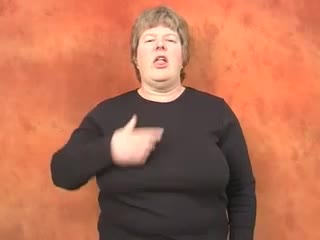
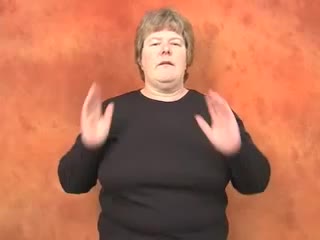
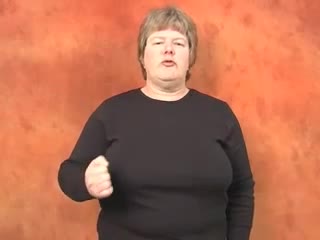
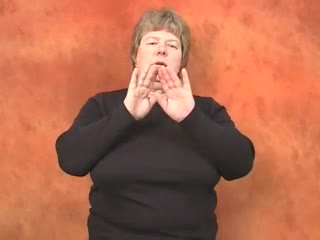
What Is the BSL Sign for "centimetre"?
Ever wondered how to precisely communicate small measurements in British Sign Language? The BSL sign for centimetre isn't just about a unit of length; it's a window into the precision and visual nature of signed communication. This particular sign elegantly captures the concept of a small, specific increment, making it indispensable for countless everyday discussions. Mastering the British Sign Language centimetre sign will significantly boost your ability to describe objects, give instructions, and engage in practical conversations within the Deaf community. Here's your definitive guide to understanding and using the BSL sign for centimetre with confidence.
How to Sign "centimetre" in British Sign Language - Step-by-Step
Getting the BSL sign for centimetre right involves a series of clear, precise actions that beautifully convey this unit of measurement.
Step 1: Handshape
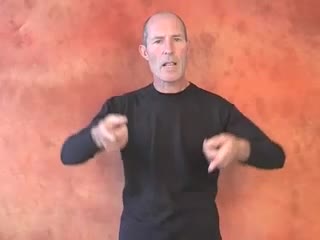
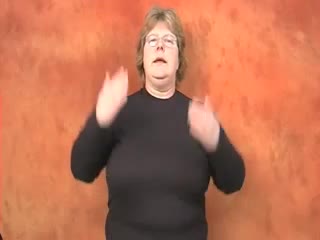
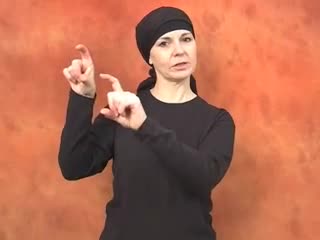
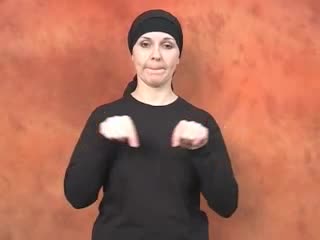
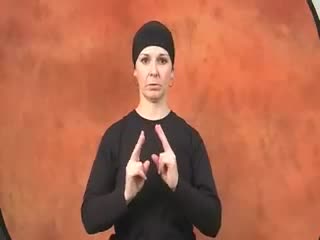
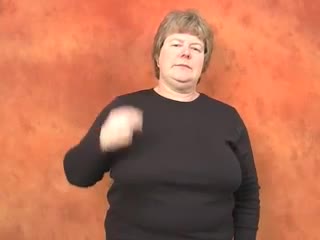
For this sign, you'll primarily use your dominant hand. Begin by forming a specific handshape where your index finger and thumb extend straight out, parallel to each other, creating a small, open gap between them. All your other fingers, the middle, ring, and pinky, should be curled gently into your palm, keeping them out of the way. Think of it as a very neat, precise 'G' handshape, ready to indicate a tiny space.
Step 2: Hand Placement and Location
Position your dominant hand in the neutral signing space directly in front of your body, roughly at chest height. Hold your arm slightly bent, keeping your elbow relaxed, ensuring your hand is comfortable and visible without being too high or too low. This central placement allows for clear communication and easy visual access for your conversation partner.
Step 3: Movement
With your handshape and placement ready, perform a small, controlled movement. From its starting position, gently move your dominant hand forward and slightly outwards, extending it only a very short distance, perhaps just a couple of centimetres, from your body. The movement is subtle, a single, precise extension, rather than a large sweep or repetitive action. This delicate motion reinforces the idea of a small, specific unit.
Step 4: Facial Expression and Mouthing
Non-manual features are absolutely vital in BSL, even for seemingly simple signs like this one. While signing centimetre, maintain a neutral, attentive facial expression; there's no need for exaggerated emotion here. Crucially, you should mouth the word "centimetre" or "cm" clearly while performing the sign. This mouthing acts as a vital clarifier, helping to distinguish the specific unit of measure from other visually similar signs or general indications of "small."
Step 5: Palm Orientation
Throughout the sign for centimetre, your palm should face towards your non-dominant side, or slightly forward. This orientation ensures that the distinct gap created by your extended index finger and thumb is clearly visible to the person you are communicating with. The clarity of this small gap is essential for conveying the exact meaning of a measured unit, making the specific palm direction critical for accuracy.
"centimetre" in BSL - Quick Reference Snapshot
- Handshape: Dominant hand, index finger and thumb extended parallel, other fingers curled.
- Location: Neutral signing space, in front of the chest.
- Movement: Small, precise outward extension from the body.
- Facial Expression: Neutral and attentive.
- Dominant Hand: Used throughout the sign.
- Palm Orientation: Faces towards non-dominant side or slightly forward.
5 Memorisation Tricks for the BSL Sign "centimetre"
Learning new signs can be quite fun, and here are some clever ways to really make the BSL centimetre sign stick in your memory.
- Visualise a Ruler: Picture the tiny markings on a ruler; specifically, focus on the small space between two lines indicating a single centimetre. Your index finger and thumb in the correct handshape physically represent this small measured gap, providing a direct visual link to the word's meaning.
- The "Tiny Gap" Drill: Practice the specific handshape and movement repeatedly, focusing on the feeling of that small, precise gap between your index finger and thumb. This muscle-memory exercise helps you internalise the exact physical action required, making the sign automatic and fluid over time.
- Connect to Measurement: Think about everyday items you might measure in centimetres, like the width of your phone or the length of a paperclip. As you sign, imagine you're actually holding that small object between your thumb and index finger, truly embodying the concept of the BSL sign for centimetre.
- Distinguish from "Small": A lot of new learners sometimes confuse this sign with general signs for "small." Remember, the key differentiator for "centimetre" is the precise, parallel alignment of the index finger and thumb, specifically indicating a unit, not just a size; this subtle difference is vital for accurate communication.
- "Measure Your World" Daily Challenge: Throughout your day, whenever you see something small, mentally sign "centimetre" and perform the action. Whether you're estimating the size of a coin or a button, this consistent, real-world application will quickly embed the centimetre sign language into your active BSL vocabulary.
Real-Life Situations to Use the BSL Sign for "centimetre"
Understanding how to use the centimetre British Sign Language sign in actual conversation makes all the difference for fluency. Here are some practical scenarios where it comes in handy:
- When discussing a sewing project, you might sign, "FABRIC NEEDS CUT THREE centimetre SMALLER" (fabric needs to be cut three centimetres smaller). Here, the sign for centimetre modifies the verb 'cut', giving a precise measurement.
- You could describe a small object by saying, "NEW BOOK SHELF centimetre TEN DEEP" (the new bookshelf is ten centimetres deep). This demonstrates how spatial grammar works, placing the measurement directly after the item and its dimension.
- If someone asks about a tiny adjustment, you might reply, "WINDOW GAP ONLY ONE centimetre WIDE" (the window gap is only one centimetre wide). Notice how the sign reinforces the adjective 'wide' with specific data.
- For giving instructions, someone could sign, "MOVE CHAIR FORWARD FIVE centimetre" (move the chair forward five centimetres). The sign integrates naturally into a command structure, providing essential detail for the action.
Top 3 Mistakes Learners Make Signing "centimetre" in BSL
Even experienced signers had to start somewhere, and making a few mistakes along the way is perfectly normal. Here's how to sidestep common pitfalls when learning the BSL centimetre sign:
-
Using the Wrong Handshape: Many beginners inadvertently spread their index finger and thumb too wide or curl other fingers incorrectly, making the handshape look like a general 'small' sign or even a 'seven'.
This happens because the precise parallel alignment required is quite subtle and takes practice.
To correct this, focus intently on keeping your index finger and thumb perfectly parallel and close, creating that specific, narrow gap, ensuring the other fingers are neatly tucked away.
-
Exaggerating the Movement: Instead of a small, precise outward movement, some learners might make the sign too large or sweep their hand too far.
This often occurs from a misunderstanding of how BSL conveys precision; larger movements usually indicate larger quantities or less exactness.
The correct approach is to keep the movement extremely compact, a slight forward extension, embodying the smallness of a centimetre itself.
-
Forgetting to Mouth the Word: Neglecting to mouth "centimetre" or "cm" is a very common oversight.
New signers sometimes underestimate the critical role of mouthing for clarity in BSL, especially for words that might have similar-looking signs but different meanings.
Always remember to clearly articulate "centimetre" or "cm" with your lips while signing; this non-manual feature is indispensable for distinguishing this specific unit.
Fascinating Facts About the BSL Sign for "centimetre"
Every sign has a story and unique characteristics, and the BSL sign for centimetre is no exception.
- The sign's iconic nature is quite strong; it visually represents the small unit of measure by creating a tiny, precise gap with the fingers. This direct visual representation makes it relatively intuitive to grasp for many learners.
- You'll find that within the BSL-using community, the fundamental handshape and movement for centimetre are remarkably consistent across different regions of the UK. While some signs have significant regional variations, this particular measurement sign tends to be quite standardised.
- Interestingly, this sign's form is less about individual letters from the manual alphabet and more about its visual, representational quality. It doesn't derive directly from fingerspelling 'C' or 'M' but rather from the concept of a small, measured distance.
- The precision inherent in the handshape and minimal movement highlights BSL's capacity for conveying exactness. This isn't a vague "small" sign; it's a specific numerical unit, which demonstrates the language's grammatical depth.
- The sign for "centimetre" often serves as a base for compound signs or when quantifying other concepts, demonstrating its foundational role in expressing detailed spatial information within BSL.
"centimetre" in Deaf Culture - Community and Identity
Measurement, like so many aspects of life, is experienced and communicated uniquely within the Deaf community, and the BSL sign for centimetre plays its part. Within Deaf culture, precision in visual communication is highly valued, and signs like this one allow for exact details to be shared without ambiguity. Whether discussing the dimensions of a new piece of furniture, planning a craft project, or even describing how tall a child has grown, the ability to clearly convey specific measurements like centimetres fosters efficiency and shared understanding. It helps build a collective mental picture, crucial in a visual language. This sign isn't just about a metric unit; it's a tool for shared creation, planning, and storytelling, deepening connections by providing a common, visual language for describing the world around us. It reinforces the idea that all information, no matter how precise, can be fully expressed and understood in BSL.
Example Conversations Using "centimetre" in BSL
Let's see the BSL sign for centimetre in action with some practical examples.
English: How many centimetres is this string? - BSL structure: (Question sign) STRING THIS CENTIMETRE HOW-MANY?
English: The gap needs to be five centimetres wide. - BSL structure: GAP NEED FIVE CENTIMETRE WIDE.
English: Please cut the paper two centimetres shorter. - BSL structure: PAPER CUT TWO CENTIMETRE SHORTER PLEASE.
English: My new screen is only one centimetre thick. - BSL structure: MY NEW SCREEN THICK ONLY ONE CENTIMETRE.
English: Can you measure it to the nearest centimetre? - BSL structure: MEASURE IT NEAREST CENTIMETRE CAN-YOU?
Frequently Asked Questions: The BSL Sign for "centimetre"
Are there different ways to sign "centimetre" across the UK in BSL?
While some BSL signs exhibit significant regional variations, the sign for centimetre is generally quite consistent throughout the UK. The core handshape and small, precise movement are widely understood and used, ensuring clear communication regardless of where you are learning or signing. Slight individual stylistic differences might occur, but the fundamental structure remains the same.
What signs might I confuse with "centimetre" and how can I avoid it?
Learners sometimes confuse the BSL sign for centimetre with general signs indicating "small" or "tiny" because of the similar handshapes involving the thumb and index finger. The key distinction is the precise, parallel alignment of the index finger and thumb for "centimetre," specifically denoting a measured unit. Always remember to mouth "centimetre" or "cm" to eliminate any ambiguity and ensure your meaning is clear.
Is "centimetre" an easy sign for BSL beginners to learn?
Yes, the BSL sign for centimetre is generally considered quite accessible for beginners. Its iconic nature, visually representing a small unit, makes it relatively intuitive. The handshape is common in BSL, and the movement is straightforward. Focusing on the precision of the handshape and movement, along with correct mouthing, will help you master it quickly.
How can I teach the BSL sign for "centimetre" to children?
Teaching the BSL sign for centimetre to children can be really engaging! Use real-life objects like toy blocks, crayons, or even their own fingers to demonstrate small measurements. Emphasise the tiny gap created by the index finger and thumb. Make it a game by asking them to "measure" things around the room, always reinforcing the sign with the mouthing of "cm."
How does the BSL sign for "centimetre" compare to signs in other signed languages?
Interestingly, many signed languages around the world have an iconic sign for centimetre or small measurement units that share some visual similarities with the BSL version. While handshapes, orientations, or specific movements might differ, the underlying principle of using the fingers to visually represent a small, precise unit of length is often a common thread across various signed systems. This highlights a universal human need to express measurement visually.
Signs That Pair Naturally with "centimetre" in BSL
Building your BSL vocabulary effectively means learning signs in context, and these signs naturally complement "centimetre" for a richer understanding of measurement and description.
- MEASURE: This sign, typically involving a 'Y' handshape moving across an open palm, is perfect for the overarching concept of taking dimensions, making it a natural partner to "centimetre."
- LENGTH: Often shown with an index finger tracing a line or two 'L' handshapes moving apart, "length" helps specify which dimension you're referring to when using "centimetre."
- WIDTH: Similar to "length" but often with hands moving horizontally, "width" provides another crucial descriptive term to use alongside precise centimetre measurements.
- HEIGHT: Indicated by an upright hand moving upwards, "height" completes the trio of basic dimensions, allowing you to describe objects fully using "centimetre."
- RULER: The sign for "ruler" usually depicts holding and moving a straight edge, giving context to how centimetre measurements are often obtained.
- SMALL: While "centimetre" is specific, the general sign for "small" (often a 'G' handshape or hands coming together) can be used for comparisons or to introduce the idea of a tiny object before giving exact dimensions.
Building Fluency: How to Practise "centimetre" in BSL
Consistent practice is the true secret to fluency, and you'll find mastering the BSL sign for centimetre becomes second nature with these techniques. Use a mirror to observe your handshape, movement, and mouthing; this visual feedback is incredibly valuable for refining your precision. Try integrating the sign into your daily BSL conversations by actively looking for opportunities to describe small objects or distances. Don't be shy about filming yourself signing; watching it back can highlight areas for improvement that you might not notice otherwise. When you're ready, connect with a Deaf conversation partner; they can offer invaluable feedback and real-world context, helping you use the sign naturally within the flow of dialogue. Remember, repetition spaced over several days, rather than intense cramming, will truly embed this sign into your long-term memory. Keep signing, keep learning, and you'll be expressing measurements with confidence in no time!