What Is the BSL Sign for "board"?
Have you ever needed to visually represent a flat surface for writing or display in a conversation? You'll find the British Sign Language sign for "board" does just that, painting a clear picture for your interlocutor. This particular BSL sign for board is wonderfully iconic; it literally traces out the very object it signifies in the air. Mastering this specific sign helps unlock numerous communicative possibilities within British Sign Language board discussions, allowing you to seamlessly refer to whiteboards, blackboards, or even notice boards. You’re about to discover a foundational piece of vocabulary that's both intuitive and widely understood across the Deaf community.
How to Sign "board" in British Sign Language - Step-by-Step
Let's break down this visually descriptive sign, guiding your hands through each precise movement.
Step 1: Handshape
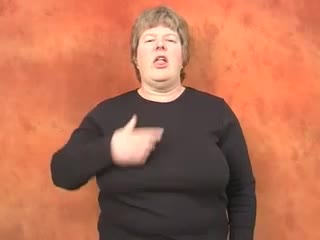
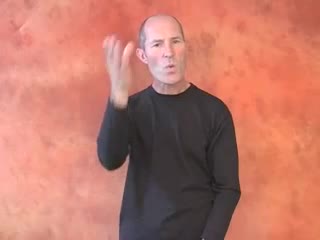
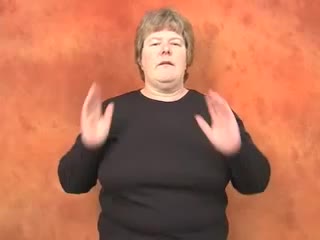
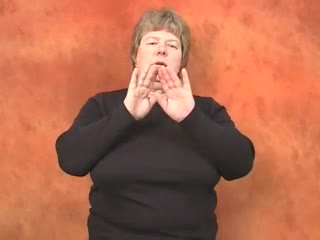
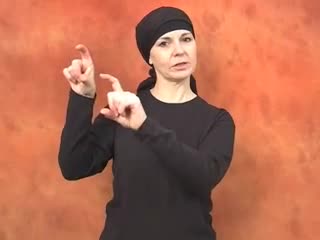
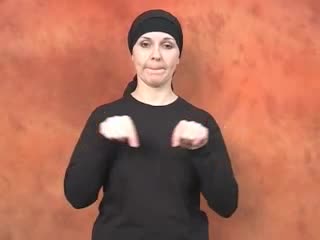
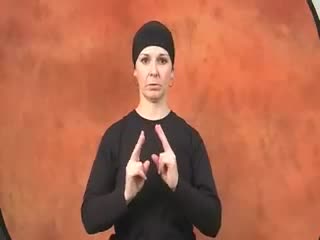
For this sign, you'll need both of your hands. Begin by extending all fingers on both hands completely straight and pressing them together, ensuring your thumbs are tucked neatly alongside your palms or resting against your index fingers. Your hands should be flat and rigid, resembling the surface of the board itself.
Step 2: Hand Placement and Location
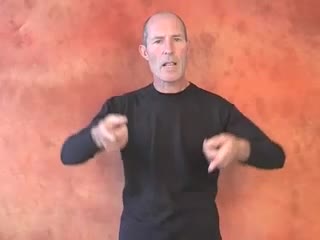
Position both hands in front of your upper torso, roughly at chest height and slightly wider than your shoulders. Your dominant hand will typically start on the left side, representing the top-left corner of the imaginary board, while your non-dominant hand starts towards the right, marking the top-right corner. Maintain a comfortable distance from your body, as if you’re illustrating a board that’s roughly arm’s length away.
Step 3: Movement
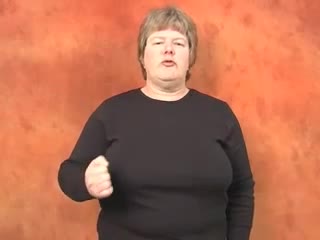
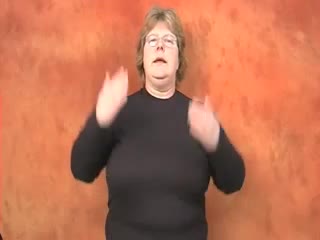
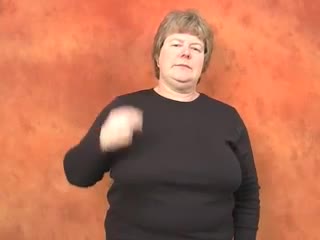
Commence the sign by moving both hands simultaneously and horizontally outwards, extending them further apart to delineate the top edge of the board. Once your hands reach the desired width for the top, smoothly bring both hands downwards in a parallel motion, tracing the vertical sides. Finally, sweep your hands inwards, closing the rectangular shape at the bottom, mimicking the perimeter of a typical writing board. This entire outlining movement should flow as one continuous, deliberate gesture, typically performed once.
Step 4: Facial Expression and Mouthing
A neutral facial expression usually accompanies the sign for "board." Since BSL is a full visual language, mouthing the word "board" (without voice) is often used to clarify or reinforce the lexical item, especially for signs that might have close visual resemblance to others. This subtle addition helps differentiate meaning and provides valuable context, a common feature in everyday BSL conversations.
Step 5: Palm Orientation
Throughout the outlining movement, your palms will primarily face inwards towards your body, or sometimes slightly angled forward. This orientation naturally facilitates the tracing of the imaginary surface, ensuring the flat part of your hand represents the flat plane of the board. The consistent inward or slightly forward palm direction helps convey the idea of a front-facing surface to your audience.
"board" in BSL - Quick Reference Snapshot
- Handshape: Both hands flat, fingers together, thumbs tucked.
- Location: In front of the upper torso, at chest height.
- Movement: Outline a rectangle, starting top-left and top-right, moving outwards, then down, then inwards.
- Facial Expression: Neutral, possibly mouthing "board."
- Dominant Hand: Both hands are active, moving symmetrically.
- Palm Orientation: Primarily facing inwards towards the body, shifting slightly as the outline is formed.
5 Memorisation Tricks for the BSL Sign "board"
- Visual Mnemonic: Picture yourself drawing a perfect rectangle in the air, exactly as you would on a physical board. This sign is highly iconic, so letting your mind's eye connect the physical action with the visual result will deeply embed the BSL board sign in your memory.
- Muscle-Memory Drill: Practice the outlining motion with your hands without thinking about the word itself, focusing solely on the smooth, symmetrical movement. Repeat this gesture ten times, then pause, and then repeat it again later in the day; this spaced repetition really helps your muscles learn the precise path.
- Connection to Meaning: The sign directly mimics the object, so simply remember that you are 'showing' the board to someone. This direct representation makes it one of the easiest signs to recall because its form is so intrinsically linked to the concept of what is the sign for board.
- Common-Confusion Tip: Be careful not to make the outline too small or too close to your body, which might be mistaken for "frame" or "picture." Ensure your hands create a clear, spacious rectangle in front of you; the scale helps distinguish the sign for board in sign language from similar concepts.
- Daily-Life Practice Idea: Every time you encounter a whiteboard, blackboard, or even a notice board during your day, discreetly sign "board" in British Sign Language. Integrate this sign into your observations, linking the real-world object to your burgeoning BSL vocabulary.
Real-Life Situations to Use the BSL Sign for "board"
- Imagine you're in a classroom and want to ask someone to look at the teacher's instructions: "LOOK BOARD" (look at the board). Here, the sign for "board" functions as the object of the verb, placed after the main action in a common BSL topic-comment structure.
- Perhaps you're discussing a meeting and need to refer to the agenda on the wall: "AGENDA BOARD ON" (the agenda is on the board). In this scenario, "board" receives a spatial modifier, indicating where the agenda is located, demonstrating how you can combine signs to convey precise spatial information.
- When you want to suggest writing something down during a brainstorming session: "WRITE BOARD IDEA" (let's write the idea on the board). This example showcases how "board" can be integrated into an action-oriented phrase, with the context making it clear that the writing surface is implied.
- Should you be wondering if the communal notice board has any new announcements: "NOTICE BOARD NEW?" (Are there new notices on the board?). Here, the interrogative facial expression (raised eyebrows) accompanying "NEW" turns the statement into a question about the content of the "board."
Top 3 Mistakes Learners Make Signing "board" in BSL
-
Incomplete or Sloppy Outline: Many beginners rush the movement, resulting in a vague, irregular shape rather than a clear rectangle. This happens because they're focusing on the word rather than the visual precision. The correction is to consciously slow down your hands and exaggerate the corners, ensuring a distinct, box-like form, just as if you were truly drawing a clear rectangle on a surface.
-
Incorrect Handshape: Learners sometimes splay their fingers or cup their hands, which distorts the flat surface representation. This often stems from a lack of awareness of how crucial precise handshape is for BSL meaning. To fix this, always ensure your fingers are firmly pressed together and straight, maintaining a flat, rigid hand configuration throughout the entire sign.
-
Too Small or Too Close: Placing the sign too near your body or making the outline too compact can make it difficult for others to perceive, or confuse it with signs for smaller objects. This error frequently occurs when new signers are self-conscious about using space. The solution is to intentionally extend your arms and create a larger, more visible rectangle in the neutral space in front of your chest, giving the sign its proper scale.
Fascinating Facts About the BSL Sign for "board"
- The sign for "board" in British Sign Language is a prime example of an iconic sign, meaning its physical form directly represents its meaning. It's not arbitrary; you can literally see the object being described through the movement of the hands.
- While the general rectangular outline remains consistent, regional variations within the BSL-using community can sometimes subtly influence the size or precise vertical/horizontal emphasis of the sign. A board in a small village hall might be signed slightly differently from a massive boardroom table in a city.
- You'll find this sign has a close relationship with other visually descriptive signs like "frame" or "picture," where the defining movement involves outlining a perimeter. However, the specific handshape and context are what truly distinguish the BSL board sign.
- The flexibility of this sign allows for modification to indicate different types of boards; for instance, a longer, thinner outline could suggest a plank of wood, or a wider, more horizontal sweep might denote a table top. This spatial adaptability highlights the richness of BSL grammar.
- This sign leverages the signing space as a linguistic tool, effectively using the air in front of the signer to project a tangible object. This spatial mapping is a fundamental feature of many BSL signs and a powerful way to convey visual information.
"board" in Deaf Culture - Community and Identity
The concept of a "board" holds a significant place within Deaf culture, especially concerning education and communication. For generations, blackboards and whiteboards have been indispensable tools in Deaf schools, providing a visual medium for learning that transcends auditory barriers. These surfaces facilitate direct instruction, shared notes, and visual storytelling, making information accessible in a way that respects the visual nature of BSL. Community notice boards, often physical and now increasingly digital, serve as vital hubs for sharing information about events, services, and cultural happenings, connecting Deaf individuals and fostering a strong sense of collective identity. The ability to easily refer to these 'boards' through sign language underscores their importance in facilitating information exchange and strengthening community bonds.
Example Conversations Using "board" in BSL
English: Could you please write that on the board? - BSL structure: YOU PLEASE WRITE BOARD?
English: The meeting agenda is already on the board. - BSL structure: MEETING AGENDA ALREADY BOARD ON.
English: Don't erase the entire board just yet. - BSL structure: BOARD ALL ERASE NOT YET.
English: I saw a new notice on the board today. - BSL structure: TODAY I SEE NEW NOTICE BOARD.
English: We need a much bigger board for our new project. - BSL structure: NEW PROJECT WE NEED BOARD BIGGER MUCH.
Frequently Asked Questions: The BSL Sign for "board"
Are there regional variations for the BSL sign for "board"?
Yes, while the core concept of outlining a rectangle remains consistent, you might observe slight regional differences in the exact size or emphasis of the movement. Some areas may use a slightly more pronounced downward stroke, while others might focus on the outward width, reflecting local signing preferences. These minor stylistic nuances are perfectly natural within the diverse BSL community.
How do I avoid confusing "board" with similar signs like "picture" or "frame"?
The key lies in refining your handshape and the specific context of your conversation. While "picture" or "frame" might also involve an outlining motion, the handshape for "board" is typically flat and solid, representing a uniform surface. Always consider the surrounding signs and the topic; context is invaluable in BSL for disambiguating signs that share visual characteristics.
Is "board" a suitable sign for beginners to learn in British Sign Language?
Absolutely, the sign for "board" is an excellent starting point for new learners. Its iconic nature makes it very intuitive and easy to grasp, as it visually mirrors the object it represents. This clear connection between form and meaning makes learn board BSL highly accessible for those just embarking on their signing journey.
Can children easily learn how to sign "board" in BSL?
Yes, children often pick up this sign quickly because of its direct visual representation. It's a concrete noun that they encounter frequently in their daily lives, from school to play, making it highly relatable. The simple, clear movement involved in the board sign language makes it very child-friendly and encourages early vocabulary acquisition.
Does the BSL sign for "board" have different forms for different types of boards (e.g., surfboard, chess board)?
The primary BSL sign for board, as described, typically refers to a flat, often rectangular writing or display surface like a whiteboard. For specific types of boards, like a "surfboard" or "chess board," BSL often employs a combination of the general "board" sign with an additional classifier or descriptive sign to convey the specific characteristics or function. For instance, "surfboard" might be signed by outlining a board and then adding a motion for "wave" or "riding."
Signs That Pair Naturally with "board" in BSL
- WRITE: You'll often use "board" with the sign for "WRITE," as in "write on the board." This pairing is fundamental for classroom or presentation contexts.
- LOOK: When directing attention, signing "LOOK" followed by "board" is a common way to say "look at the board." They naturally connect through visual focus.
- CLEAN: If discussing maintenance, the sign for "CLEAN" frequently accompanies "board" when talking about tidying up a writing surface.
- NOTICE: For public information, "NOTICE" often precedes or accompanies "board," creating the compound concept of a "notice board."
- DRAW: Similar to "WRITE," the sign for "DRAW" pairs well with "board" when illustrating or sketching ideas.
- BLANK: Describing an empty surface often involves the sign for "BLANK" followed by "board," indicating a clear or empty board.
Building Fluency: How to Practise "board" in BSL
To truly embed the BSL sign for "board" into your active vocabulary, consistent practice is your best friend. Start by standing in front of a mirror and slowly executing the full two-handed outlining movement, paying close attention to your handshape and the clarity of your rectangle; this immediate visual feedback helps refine your form. Next, try to integrate "board" into short, simple BSL sentences you create in your head throughout the day, perhaps describing objects around your home or office. Don't be shy about filming yourself signing; watching your own movements helps you spot areas for improvement that you might miss otherwise. Finally, and most importantly, seek out opportunities to use the sign with a Deaf conversation partner; real-world interaction is invaluable for cementing your learning and gaining confidence. Spread your practice sessions for "board" over several days rather than cramming, and you'll find it becomes second nature.