Speed
0
Practice reps times watched

Create a free account to keep your watch history and review plan.

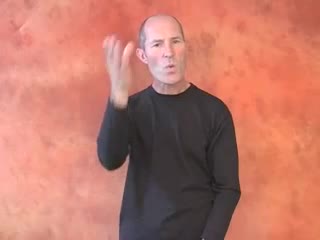
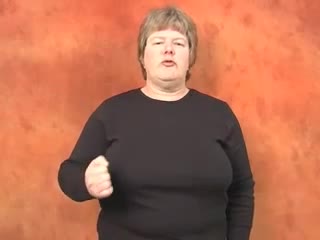
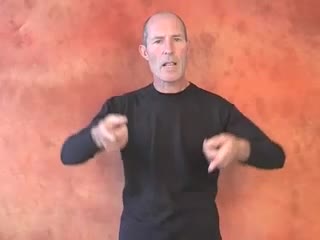
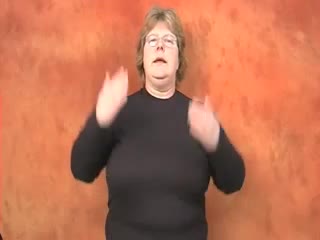
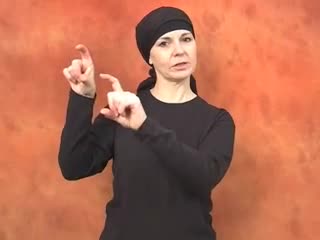
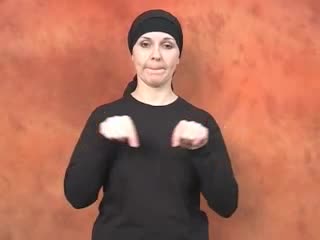
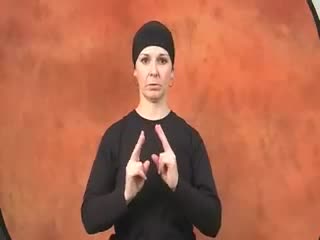
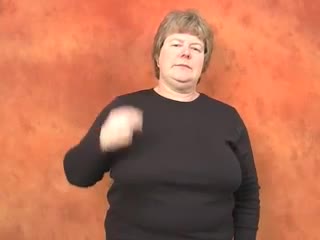
Best practice Use mirror mode, then watch the frame breakdown below to catch the start, movement, and finish cleanly.
Video via SpreadTheSign  - Free educational resource BSL
Updated April 22, 2026
British Sign Language (BSL) 🟢 Beginner 📊 A1 ⚡ Very Common Noun

road

A paved way for vehicles, connecting places

Source-linked video Step-by-step guide Context and safety notes
Synonyms
Street highway path
Antonyms
off-road detour
Difficulty
Not rated yet

Create a free account to save this sign, keep your watch history, and unlock a one-note journal preview.

How to sign it
Handshape
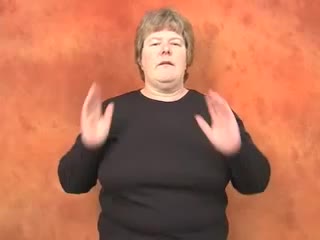
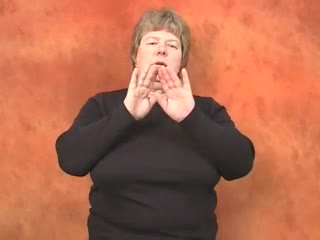
Both hands flat B-shapes, fingers together and extended
Location
In front of the chest, moving forward
Movement
Hands move forward in parallel, wiggling slightly
Palm Orientation
Palms face each other
Facial Expression
Neutral expression
🔁 Spaced Review Try it free

How well do you know this sign?

ROAD
Your Progress Live
🌱
Level 1 · BSL Beginner +0 XP today
This sign Not learned yet
0 watches
Mastery 0%
Confidence
How well do you know this sign?
0 🔥 Streak
0 Signs seen
0 Learned
0 Watches
📖 Vocabulary health 🔒 Log in to see score
0 Mastered
0 Confident
0 Practicing
0 Just seen

Create a free account to keep your vocabulary score between sessions

7-day activity 0 of 7 active

Register free to sync activity across devices

Watch signs to see your history here

Tracking locally for now. Create a free account to save your progress and sync across devices.
Free gets you started. Paid adds the repeat-learning layer: review queues, deeper notes, compare mode, and better comeback tools.
My Sign Journal
Personal notes, saved to your account forever
Locked

Write memory tricks, usage examples, and cultural reminders beside each sign. Create a free account to unlock your first saved note preview on this page.

Create free account Already have an account? Log in

What This Sign Means in BSL

The BSL sign for road is wonderfully direct, visually embodying the concept of a thoroughfare stretching out before you. Imagine both your hands acting as the parallel edges of a path or a track. It’s a literal representation, immediately conveying the idea of a defined route that vehicles or people might use to travel from one point to another.

This sign is fundamentally about the physical structure itself – the tarmac, the pavement, the track. It describes the ground you move along, not necessarily the act of travelling, but the surface that facilitates it. Its simplicity and visual clarity make it a foundational sign for discussing navigation, geography, and even daily commutes.

You'll notice its tone is objective and descriptive. It doesn't carry much emotional weight, but rather serves as a clear, functional label for this common piece of infrastructure. It's a sign that anchors conversations about location and movement, providing a solid reference point whether you're talking about a quiet lane or a busy motorway.

When This Sign Feels Natural

You'll find yourself reaching for the BSL sign for road in countless everyday situations. It feels most natural when you're referring to a specific street name, giving directions, or describing the condition of a particular path. For example, "The main road to the shop is closed today," or "Be careful, that road is very slippery." It’s perfect for distinguishing between different types of routes, like "a quiet country road" versus "a busy city road."

Consider using this sign when the physical aspect of the thoroughfare is important. If you're discussing roadworks, traffic jams, or even just pointing out a beautiful scenic drive, the sign for "road" will be your go-to. It’s a straightforward noun, and its register is generally neutral, fitting well into both casual chats and more formal discussions about urban planning or transport.

However, you might choose a different sign if your focus shifts from the physical path to the broader concept of travel or a journey. While a road is part of a journey, the sign for "journey" or "travel" might be more appropriate if you're talking about the entire experience rather than just the surface you're on. Always think about what specific aspect you want to highlight in your communication.

What Learners Usually Miss

One common subtlety learners sometimes miss with the BSL sign for road is the precise nature of the movement and handshape. It's not just two flat hands waving vaguely forward. Firstly, ensure both hands form flat B-handshapes, with palms facing each other, not flat to the ground or facing outwards. This creates the visual channel of the road.

Secondly, the movement needs to be consistently parallel and forward. Avoid letting one hand drift ahead of the other or allowing them to cross over. The "wiggling slightly" aspect is also crucial; it's not a rigid, straight line, but a gentle, continuous undulation. This subtle wiggle helps convey the idea of a continuous path that might have slight bends or changes in elevation, rather than a perfectly straight and unmoving barrier. Over-exaggerating this wiggle, turning it into a dramatic swerve, is also a common mistake – keep it subtle and fluid.

Finally, pay attention to the location: starting in front of the chest and moving forward. Don't let your hands drop too low or rise too high, as this can distort the visual metaphor. Practise maintaining a consistent height and distance between your hands as they move. The sign should feel like you're indicating a path stretching out from your body into the distance, clear and uninterrupted.

A Simple Way to Remember It

To really nail the BSL sign for road, think of your hands as representing the two sides of a physical path stretching out in front of you. The flat handshapes are like the continuous edges of the road, guiding the way, while the forward movement shows the path extending into the distance.

  • The Parallel Path: Imagine your two hands are the parallel lines of a road or a railway track, clearly defining the way forward.
  • Travelling Forward: The movement of your hands extending outwards from your chest naturally mimics the act of moving along a road, illustrating progression.
  • Subtle Undulations: The slight wiggle isn't just decoration; it hints at the natural curves, bumps, or slight turns a real road might have, making the representation more lifelike.

Short Practice Situations

  • "Which road should we take to get to the nearest supermarket?"
  • "The main road into town is very busy with traffic this morning."
  • "Be careful when crossing that road; there's no pedestrian crossing there."
  • "I saw a beautiful old cottage just off a small country road."
  • "They're planning to build a new road to connect these two villages."

Signs to Learn Next

  • CAR: Often travels on a road, making this a natural progression for discussing transport and movement.
  • WALK: People frequently walk alongside or across roads, connecting human movement to the infrastructure.
  • JOURNEY / TRAVEL: These signs describe the broader concept of moving from one place to another, often utilising roads as part of the route.
  • TURN (direction): Essential for giving more specific directions along a road, such as "turn left" or "turn right."
  • BRIDGE: A common structure found on or over roads, expanding your vocabulary for features of the landscape and travel.

🤖 AI Learning Guide for "road"

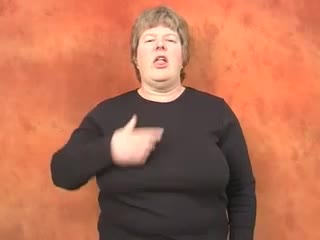
Describes flat, open path with both flat hands moving forward, wiggling for continuity

🎯 Practice Challenge

Practice holding B-handshape, moving forward with slight wiggle

⚠️ Most Common Mistake

Ensure both hands maintain flat B-shape, move parallel, include subtle wiggle

👐 How to Sign "road" in British Sign Language (BSL) (Quick Answer)

Follow these steps to sign road correctly in British Sign Language (BSL):

  1. 1 Form both hands into flat B-handshapes, palms facing each other
  2. 2 Position hands in front of your chest
  3. 3 Move hands forward in parallel
  4. 4 Wiggle hands slightly as they move forward

Tip: Watch the video above while following these steps for best results.

🤚 Sign Profile

🤚
Handshape
Both hands flat B-shapes, fingers together and extended
🔣
Handshape Code
B-hand
Dominant Hand
Either
🙌
Hand Count
Two-handed
📍
Location
In front of the chest, moving forward
↗️
Movement
Hands move forward in parallel, wiggling slightly
🔄
Movement Type
Linear, Repeated
👆
Contact
Air
👋
Palm Orientation
Palms face each other
⚖️
Symmetry
Symmetric

😊 Non-Manual Features

Facial expressions and body language are grammatically essential in British Sign Language (BSL) - not optional!

😊
Facial Expression
Neutral expression
🙆
Eyebrows
Neutral
👁️
Eye Gaze
Forward
🙂
Head Movement
None
👄
Mouth Morpheme
Neutral
🕴️
Body Shift
None

📖 Grammar & Linguistics

Part of Speech Noun
Inflection No
Classifier Usage CL:B for surfaces or paths
Role Shift No

🎓 Learning Context

📌 When to Use: Discussing travel, directions, infrastructure, places
⚠️ Common Mistake: Incorrect handshape, lack of wiggle, not using both hands
🚫 When NOT to Use: When referring to a specific street name
Context Tags
Travel infrastructure transport path

🧪 Practice Lab

Use these tiny checks right after watching the video. Fast feedback is what turns recognition into recall.

Meaning check

Which word matches the sign you just watched?

Usage check

Where would this sign fit most naturally?

Confidence check

How do you feel about road right now?

Pick one so SignDeaf can shape the rest of your session around how this sign actually feels.

🧭 Scenario Drill

One sign gets remembered faster when you attach it to real situations. Try these quick scene prompts.

Work

Stretch practice

Use this sign in a short workplace sentence or meeting exchange.

Family

Stretch practice

Try signing this while talking about family life or something at home.

School

Stretch practice

Imagine teaching this sign to a classmate or using it in a lesson.

Doctor

Stretch practice

Practise it in a healthcare conversation where clarity matters.

Travel

Strong fit

Use it in a travel scenario like asking for help or directions.

💬 Example Usage

1.[en] Road is long. / BSL:[ROAD LONG] | 2.[en] Drove main road. / BSL:[DRIVE MAIN ROAD] | 3.[en] Is this right road? / BSL:[THIS RIGHT ROAD?]

1.[en] Road is long. / BSL:[ROAD LONG] | 2.[en] Drove main road. / BSL:[DRIVE MAIN ROAD] | 3.[en] Is this right road? / BSL:[THIS RIGHT ROAD?]

When to use it

Discussing travel, directions, infrastructure, places

When not to use it

When referring to a specific street name

Register

Neutral

🌍 Cultural Context

Roads are fundamental; sign reflects linear nature

🗺️ Regional Variations

Minor variations in wiggle intensity or precise location

⚖️ Similar Signs - What's the Difference?

This sign road
VS
Similar signs Look closely
Compared to **STREET**, the sign for ROAD uses two flat B-hands moving forward in parallel with a slight wiggle, emphasizing a continuous thoroughfare. STREET can involve similar hands but often includes a horizontal sweep or downward motion, representing a layout within an urban area. ROAD focuses on the linear journey itself. Compared to **PATH**, which often uses a single flat B-hand moving forward, ROAD specifically uses both hands symmetrically. This two-handed, parallel movement conveys a wider, more established route, typically for vehicles, unlike a narrower foot path
joist sign thumbnail

joist

Beginner

A horizontal supporting timber or steel beam, typically one of a series, that supports a floor or ceiling

Compare with joist

📝 Usage Notes

Can be modified to show a winding road with curved movement

Frequently Asked Questions

Common questions about the British Sign Language (BSL) sign for "road".

🏷️ Tags

Handshape

Keywords

💡
Did you know?
Repetition is key. Try signing this word 10 times, slowly at first, then at natural speed.

📚 Explore More British Sign Language (BSL) Signs

Keep building your British Sign Language (BSL) vocabulary - explore signs by category or browse the full dictionary.