What This Sign Means in BSL
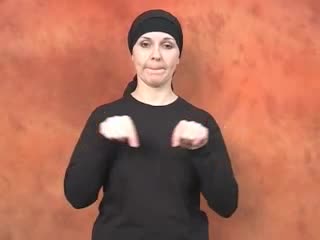
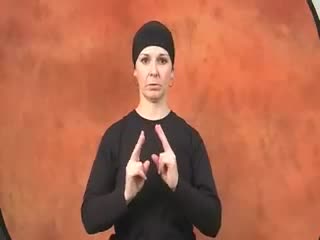
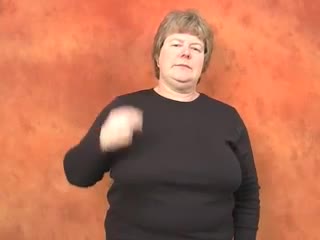
The BSL sign for laser is wonderfully direct, embodying the essence of a focused beam of light. When you make this sign, you're not just naming an object; you're visually representing its core characteristic: precision, intensity, and a clear, straight path. It's a sign that immediately conveys purpose and power, whether you're talking about a tiny laser pointer or a mighty industrial cutting tool.
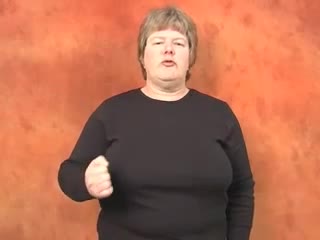
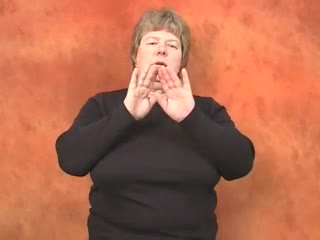
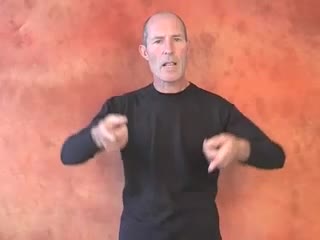
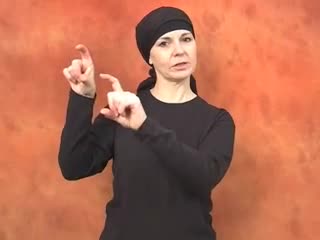
At its heart, the sign uses your dominant index finger (the G-handshape) to *become* the laser beam itself. This handshape is critical – a tightly extended index finger, with all other fingers securely curled into your palm. This isn't a relaxed gesture; it's firm, representing the laser's concentrated energy. The sign starts close to your body, typically near your dominant shoulder or chest, suggesting the origin point of the beam.
The movement is a sharp, straight forward projection. Crucially, it often includes a subtle tremble or a small, repeated push. This isn't just aesthetic; it’s an important nuance. It either suggests the continuous, high-frequency energy of a laser or perhaps a rapid, controlled firing. It adds a dynamic quality, showing the laser isn't just static but actively projecting its energy outwards.
When This Sign Feels Natural
This sign feels most natural when you need to specify the *technology* of a laser. Think about contexts where precision and focused energy are key. You'd use it in scientific discussions, when talking about medical procedures like laser eye surgery, or describing industrial applications such as laser cutting or engraving. It’s also perfectly at home in a casual conversation about a presentation with a laser pointer or even describing fictional laser weapons in a film.
While versatile, it's important not to overuse it or misapply it. The sign is specific to a laser, not just any bright light or beam. For instance, if you're talking about a flashlight, you'd use a different sign for "light" or "torch." The specificity of this sign means it stands out; it carries a distinct meaning that shouldn't be diluted by using it in broader contexts where general light is sufficient.
The register of this sign is generally neutral. It’s a clear, descriptive sign that fits well in both formal and informal settings, depending entirely on the topic. It doesn't carry inherent formality or informality. The key is simply whether the specific concept of a "laser" is truly what you intend to communicate to your audience.
What Learners Usually Miss
One common oversight for learners is the precise tension and form of the handshape. It's easy to let the other fingers relax or allow the index finger to bend slightly. Remember, a laser beam is incredibly straight and focused. Therefore, your G-hand needs to be equally taut and precise. Practice holding your index finger as stiff and straight as possible, ensuring the other fingers are tightly tucked away. This strong, clean line is vital for conveying the laser's nature.
Another subtle point often missed is the dynamic quality of the movement. Many learners perform a single, stiff push forward and then stop. However, the sign truly comes alive with that subtle tremble or the small, repeated push. This isn't just decorative; it conveys the *active* and *continuous* nature of a laser beam, or perhaps its rapid pulsing. Practise feeling that sustained energy through your finger as it moves forward, rather than a single, static action.
Finally, pay attention to the starting location and the directness of the movement. Starting near your shoulder or chest helps establish the laser's origin point, as if it's emanating from a device you're holding or wearing. The movement must be strictly straight forward. Any wavering or deviation weakens the sign’s meaning of precision. Avoid signing it from the side of your head or letting your finger drift; imagine a truly straight and unwavering beam projecting from your body.
A Simple Way to Remember It
Think of your dominant index finger as the laser beam itself, cutting through the air with focused energy. The sign's elements powerfully combine to represent this cutting-edge technology.
- The extended index finger (G-hand) is the *visual representation* of the thin, straight, powerful beam of light.
- The forward movement from your body symbolises the laser *shooting out* or *projecting* from its source.
- The subtle tremble or small repeated push adds the sense of focused *energy*, continuous output, or rapid pulsing, making the beam feel active and alive.
Short Practice Situations
- The scientist explained how a laser can be used to measure distances with incredible accuracy.
- Be careful not to shine that laser pointer directly into anyone's eyes; it can be very harmful.
- For delicate surgery, doctors often rely on the precision of a medical laser to treat patients.
- The new factory uses powerful lasers to cut through thick sheets of metal quickly and cleanly.
- In the film, the superhero's suit had a tiny laser built into the wrist for emergencies.
Signs to Learn Next
- LIGHT: (Open 5-hand, fingers flicking upwards from chin/chest) This is a general sign for light, offering a contrast to the specific, focused nature of a laser. Understanding both helps you choose the right sign for the context.
- BEAM/RAY: (Often a G-hand or F-hand sweeping broadly) While similar in using an extended finger, "beam" usually implies a wider, less precise, or more diffuse projection than the highly focused "laser."
- SCAN: (Index finger moving horizontally across a surface) Lasers are frequently used for scanning objects or areas. Learning this sign connects to a common application of laser technology.
- CUT: (V-hand slicing downwards or across) Since lasers are widely used for cutting materials, this sign naturally extends your vocabulary for discussing laser applications.
- PRECISION/ACCURATE: (F-hand twisting at the wrist or G-hand making small, exact movements) Laser technology is synonymous with precision. Knowing this sign allows you to describe the core advantage of using a laser.