Speed
0
Practice reps times watched

Create a free account to keep your watch history and review plan.

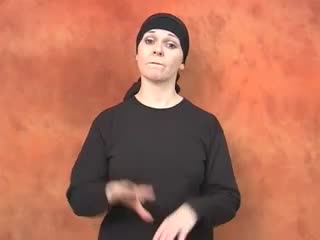
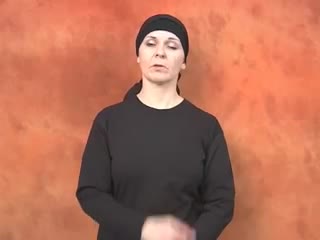
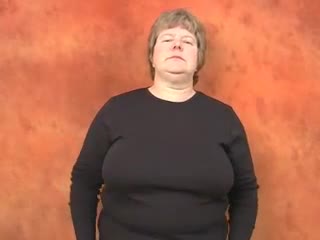
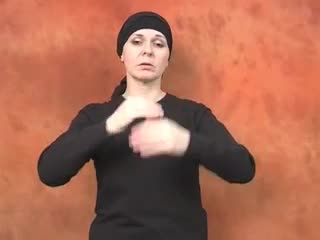
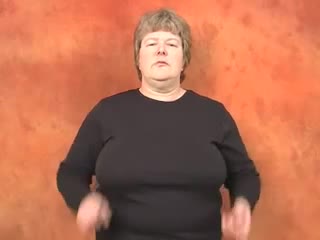
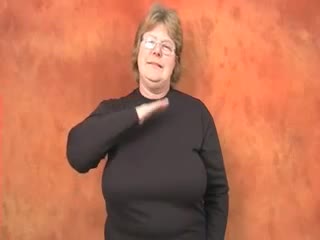
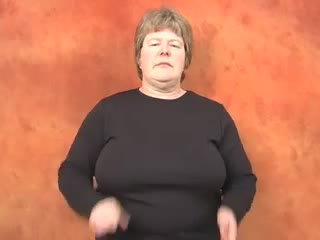
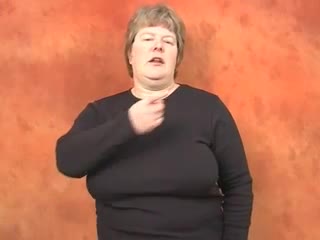
Best practice Use mirror mode, then watch the frame breakdown below to catch the start, movement, and finish cleanly.
Video via SpreadTheSign  - Free educational resource BSL
Updated April 20, 2026
British Sign Language (BSL) 🟢 Beginner 📊 A1 ⚡ Very Common Adjective

full

Describes a container at maximum capacity or a person feeling satisfied after eating

Source-linked video Step-by-step guide Context and safety notes
Synonyms
complete packed satisfied
Antonyms
empty hungry vacant
Difficulty
Not rated yet

Create a free account to save this sign, keep your watch history, and unlock a one-note journal preview.

How to sign it
Handshape
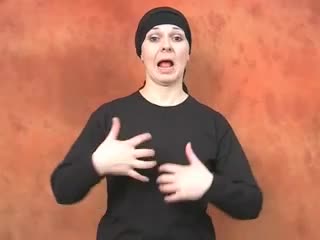
Both hands start as flat B-hands, palms facing inwards near the chest/stomach
Location
Starts near the chest/stomach area, moves outwards
Movement
Hands move outwards and slightly downwards in an arc, fingertips coming together
Palm Orientation
Starts facing inwards, ends facing each other
Facial Expression
Puffed cheeks (especially for feeling full after eating)
🔁 Spaced Review Try it free

How well do you know this sign?

FULL
Your Progress Live
🌱
Level 1 · BSL Beginner +0 XP today
This sign Not learned yet
0 watches
Mastery 0%
Confidence
How well do you know this sign?
0 🔥 Streak
0 Signs seen
0 Learned
0 Watches
📖 Vocabulary health 🔒 Log in to see score
0 Mastered
0 Confident
0 Practicing
0 Just seen

Create a free account to keep your vocabulary score between sessions

7-day activity 0 of 7 active

Register free to sync activity across devices

Watch signs to see your history here

Tracking locally for now. Create a free account to save your progress and sync across devices.
Free gets you started. Paid adds the repeat-learning layer: review queues, deeper notes, compare mode, and better comeback tools.
My Sign Journal
Personal notes, saved to your account forever
Locked

Write memory tricks, usage examples, and cultural reminders beside each sign. Create a free account to unlock your first saved note preview on this page.

Create free account Already have an account? Log in

What This Sign Means in BSL

The BSL sign for full is a wonderfully expressive and versatile adjective, used to convey the state of being at capacity. Imagine something that has reached its limit, whether it’s a physical space, a container, or even your own stomach after a satisfying meal. The movement inherently communicates this concept of expansion and completion, making it one of those signs that feels very intuitive once you grasp its core.

This sign doesn't just refer to a belly full of food; its meaning extends much further. You might use it to describe a bus packed with commuters, a diary with no more free appointments, or a cup filled to the brim. It’s a sign that truly captures the essence of "no more room." The way the hands start close and then push outwards, gently coming together, visually maps to the idea of something expanding until it can't expand any further, or until its contents are about to spill over.

It's important to remember that while it looks simple, the BSL sign for full carries significant meaning. It’s not just a descriptive term; it often implies a state of saturation or completion. Understanding this broader application will unlock many conversational opportunities, allowing you to discuss a wide range of situations where capacity has been reached.

When This Sign Feels Natural

You’ll find yourself reaching for this sign in many everyday scenarios. Think about finishing a delicious dinner; a natural reaction is to sign "full" to express your satiety. If you're trying to park your car and the car park is completely occupied, "full" is the perfect sign to communicate that situation. Similarly, when pouring a drink, you might ask someone if they want their glass "full" or just partially filled. Its commonality makes it a foundational sign for anyone learning BSL.

The register for this sign is generally neutral and appropriate across most social settings. You can use it formally or informally, and it will always be understood. However, context is key. While you'd use it for a physical state or capacity, you wouldn’t typically use this sign in BSL to describe someone who is "full of themselves" (meaning arrogant) or "full of it" (meaning lying). Those idiomatic English phrases have entirely different BSL equivalents, often involving signs like "proud" or "lie."

Choosing this sign feels natural when you want to convey a literal sense of capacity being met. If you're discussing a feeling like "full of joy," you'd typically sign "joy" and then potentially use a BSL intensifier or modifier to show the *degree* of joy, rather than using the sign for "full" in the same way you would for a physical container. Always consider if you're talking about a literal state of being filled, or if you're trying to express an abstract English idiom.

What Learners Usually Miss

One common oversight for new learners is the precise handshape and movement. The BSL sign for full starts with both hands as flat B-hands, palms facing inwards, near the chest or stomach. Crucially, the hands then move outwards and slightly downwards in a smooth, arcing motion, with the fingertips eventually coming together. Learners sometimes forget the slight downward arc, or they don't bring the fingertips quite together, which can make the sign look unfinished or less impactful. Ensure your hands stay flat and firm throughout the movement.

Another subtle point often missed is the accompanying facial expression and body language. When signing "full" after eating, a slight sigh of contentment, a relaxed posture, or a gentle pat of the stomach can enhance the meaning of satisfaction. Conversely, if you're signing about a bus being "full" and you couldn't get on, a frustrated or resigned expression would be much more appropriate. The sign itself provides the core meaning, but your non-manual features provide the emotional context and nuance, bringing the sign to life.

Finally, learners sometimes over-apply the sign, attempting to use it in situations where BSL has more specific or idiomatic alternatives. For instance, if a schedule is "full," the sign works perfectly. However, if you want to say "I've had a full day" (meaning busy), while "full" might be understood, signs like "busy" or "exhausted" might convey the nuance more accurately depending on the specific message. Remember that BSL is a distinct language, not just signed English, and direct word-for-sign translation doesn't always capture the true meaning or feeling.

A Simple Way to Remember It

Think of the sign for "full" as your body, or any container, expanding to its very limits. Your hands start close, representing the initial state, and then push outwards, mimicking the feeling of being completely filled. The gentle arc and the way the fingertips meet at the end can be imagined as sealing off that capacity, signifying that nothing more can be added.

  • The Expanding Container: Visualise your hands as the walls of a balloon or a container. As it fills, it expands outwards from the centre, reaching its maximum size.
  • The Satisfied Belly: Imagine patting your stomach after a big meal, feeling the expansion. The sign mirrors this outward pressure and sense of completion.
  • The Sealed Capacity: The bringing together of the fingertips at the end is like closing off the container, indicating that it's completely sealed and nothing else can fit inside.

Short Practice Situations

  • My stomach is completely full now, thank you for the delicious meal.
  • The car park was full, so we had to drive around to find another space.
  • Please fill my cup until it's full right to the very top.
  • Her diary is full next week; she doesn't have any free appointments.
  • The train was so full this morning, I couldn't even find a seat.

Signs to Learn Next

  • EMPTY: This is the natural opposite of "full." Learning them together helps you understand the concept of capacity and its absence.
  • PLENTY / ENOUGH: While "full" means at capacity, "plenty" or "enough" signifies sufficiency. You might have plenty of food, but not necessarily be full. Understanding the distinction adds valuable nuance.
  • HUNGRY: Often used in conversation alongside "full." You might ask "Are you hungry?" or state "I am full, not hungry."
  • TO FILL (a container): This action verb describes the process that leads to something being "full." Practising both the state and the action enhances your understanding of the concept.
  • PACKED / CROWDED: When a space is "full" of people, you might also use "packed" or "crowded" to describe the situation more specifically. These signs offer useful alternatives for social situations.

🤖 AI Learning Guide for "full"

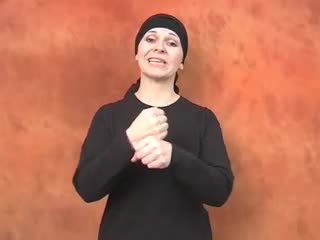
The BSL sign for "full" uses two flat hands moving outwards from the chest, often with puffed cheeks. It indicates capacity or satisfaction

🎯 Practice Challenge

Practice signing "full" for both a container and a person who has eaten. Focus on the non-manuals

⚠️ Most Common Mistake

Ensure hands are flat and move symmetrically. Remember to puff cheeks when indicating personal fullness

👐 How to Sign "full" in British Sign Language (BSL) (Quick Answer)

Follow these steps to sign full correctly in British Sign Language (BSL):

  1. 1 Form B-hands (flat hands) palms facing chest
  2. 2 Place hands near the chest/stomach area
  3. 3 Move both hands outwards and slightly downwards in an arc
  4. 4 Finish with fingertips of both hands touching or nearly touching
  5. 5 Optional: Puff cheeks during the movement for personal fullness

Tip: Watch the video above while following these steps for best results.

🤚 Sign Profile

🤚
Handshape
Both hands start as flat B-hands, palms facing inwards near the chest/stomach
🔣
Handshape Code
B-hand
Dominant Hand
Either
🙌
Hand Count
Two-handed
📍
Location
Starts near the chest/stomach area, moves outwards
↗️
Movement
Hands move outwards and slightly downwards in an arc, fingertips coming together
🔄
Movement Type
Linear
👆
Contact
Near
👋
Palm Orientation
Starts facing inwards, ends facing each other
⚖️
Symmetry
Symmetric

😊 Non-Manual Features

Facial expressions and body language are grammatically essential in British Sign Language (BSL) - not optional!

😊
Facial Expression
Puffed cheeks (especially for feeling full after eating)
🙆
Eyebrows
Neutral
👁️
Eye Gaze
Forward
🙂
Head Movement
None
👄
Mouth Morpheme
cha (puffed cheeks)
🕴️
Body Shift
None

📖 Grammar & Linguistics

Part of Speech Adjective
Inflection Yes
Classifier Usage N/A
Role Shift No

🎓 Learning Context

📌 When to Use: To describe a container at capacity or a person who has eaten enough
⚠️ Common Mistake: Not puffing cheeks for personal fullness; confusing with 'finished'
🚫 When NOT to Use: Not for 'full stop' or 'full speed'; use specific signs or phrases for those
Context Tags
food drink container capacity feeling satiety

🧪 Practice Lab

Use these tiny checks right after watching the video. Fast feedback is what turns recognition into recall.

Meaning check

Which word matches the sign you just watched?

Usage check

Where would this sign fit most naturally?

Confidence check

How do you feel about full right now?

Pick one so SignDeaf can shape the rest of your session around how this sign actually feels.

🧭 Scenario Drill

One sign gets remembered faster when you attach it to real situations. Try these quick scene prompts.

Work

Stretch practice

Use this sign in a short workplace sentence or meeting exchange.

Family

Possible fit

Try signing this while talking about family life or something at home.

School

Stretch practice

Imagine teaching this sign to a classmate or using it in a lesson.

Doctor

Stretch practice

Practise it in a healthcare conversation where clarity matters.

Travel

Stretch practice

Use it in a travel scenario like asking for help or directions.

💬 Example Usage

1.[en] My stomach is full. / BSL:[hands out from stomach, cheeks puffed] | 2.[en] The box is full. / BSL:[hands out from chest] | 3.[en] I'm full, thank you. / BSL:[hands out from stomach, cheeks puffed]

1.[en] My stomach is full. / BSL:[hands out from stomach, cheeks puffed] | 2.[en] The box is full. / BSL:[hands out from chest] | 3.[en] I'm full, thank you. / BSL:[hands out from stomach, cheeks puffed]

When to use it

To describe a container at capacity or a person who has eaten enough

When not to use it

Not for 'full stop' or 'full speed'; use specific signs or phrases for those

Register

Neutral

🌍 Cultural Context

Puffed cheeks are a common non-manual marker in BSL for 'fullness' or 'large quantity'

🗺️ Regional Variations

Minor, mainly in the exact starting point or arc of the movement

⚖️ Similar Signs - What's the Difference?

This sign full
VS
Similar signs Look closely
The sign for "full" (flat hands move outwards from the chest) is often confused with "finished" (hands twist at wrists, usually near the chest). "Full" indicates capacity or satiety, while "finished" indicates completion of an action or task. Another similar sign is "big" or "large" (hands spread wide), but "full" implies containment, whereas "big" describes general size

📝 Usage Notes

Often accompanied by puffed cheeks when indicating personal fullness

🏷️ Tags

Handshape

Keywords

💡
Did you know?
Watching Deaf signers on YouTube or BSL content online is one of the best ways to improve fluency.

📚 Explore More British Sign Language (BSL) Signs

Keep building your British Sign Language (BSL) vocabulary - explore signs by category or browse the full dictionary.