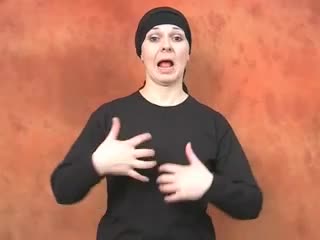
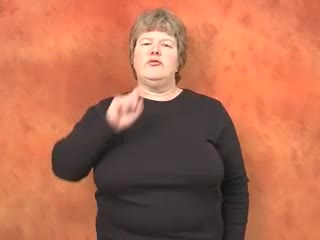
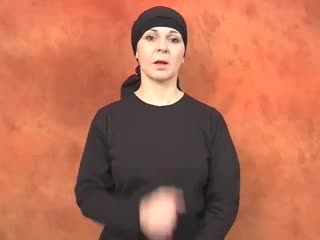
Speed
0
Practice reps times watched

Create a free account to keep your watch history and review plan.

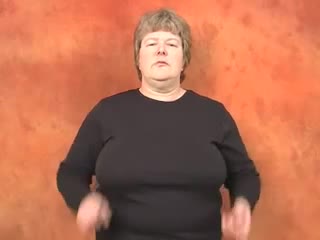
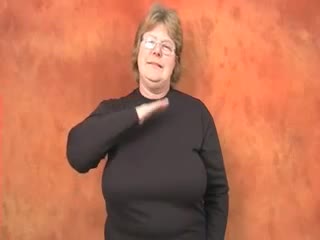
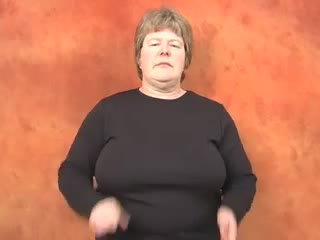
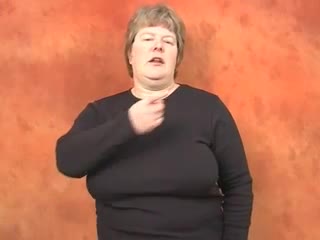
Best practice Use mirror mode, then watch the frame breakdown below to catch the start, movement, and finish cleanly.
Video via SpreadTheSign  - Free educational resource BSL
Updated April 20, 2026
British Sign Language (BSL) 🟢 Beginner 📊 A2 ⚡ Common Adjective

twisted

Bent, turned, or distorted from a straight or regular form

Source-linked video Step-by-step guide Context and safety notes
Synonyms
Bent crooked distorted
Antonyms
Straight direct untwisted
Difficulty
Not rated yet

Create a free account to save this sign, keep your watch history, and unlock a one-note journal preview.

How to sign it
Handshape
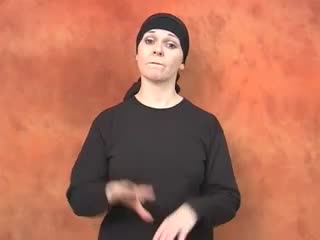
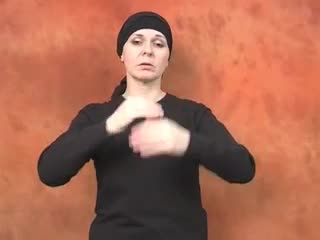
Dominant hand forms a G-handshape (index finger extended, thumb touching side)
Location
Neutral space, typically to the side of the body
Movement
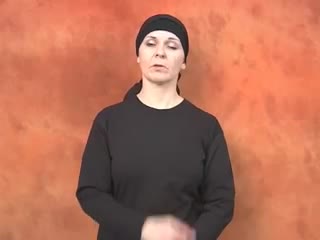
Wrist twists repeatedly side-to-side
Palm Orientation
Palm typically faces forward or slightly down/out
Facial Expression
None
🔁 Spaced Review Try it free

How well do you know this sign?

TWISTED
Your Progress Live
🌱
Level 1 · BSL Beginner +0 XP today
This sign Not learned yet
0 watches
Mastery 0%
Confidence
How well do you know this sign?
0 🔥 Streak
0 Signs seen
0 Learned
0 Watches
📖 Vocabulary health 🔒 Log in to see score
0 Mastered
0 Confident
0 Practicing
0 Just seen

Create a free account to keep your vocabulary score between sessions

7-day activity 0 of 7 active

Register free to sync activity across devices

Watch signs to see your history here

Tracking locally for now. Create a free account to save your progress and sync across devices.
Free gets you started. Paid adds the repeat-learning layer: review queues, deeper notes, compare mode, and better comeback tools.
My Sign Journal
Personal notes, saved to your account forever
Locked

Write memory tricks, usage examples, and cultural reminders beside each sign. Create a free account to unlock your first saved note preview on this page.

Create free account Already have an account? Log in

What This Sign Means in BSL

The BSL sign for twisted is a wonderfully visual and kinetic sign. At its core, it describes something that has been turned or contorted out of its original straight or natural form. Think about the physical action of taking something pliable, like a piece of wire or a strand of rope, and literally twisting it.

This sign uses your dominant hand in a G-handshape – that’s your index finger extended, with your thumb touching its side – which then performs a repeated wrist-twisting motion in neutral space, often to the side of your body. The repeated nature of the movement is crucial; it’s not just one turn, but a continuous or several-times-over twisting action, reinforcing the idea that something is thoroughly contorted or has undergone a significant change from its original state.

While often used for physical objects, this sign can extend to more abstract ideas in conversation. It carries a sense of something being complex, convoluted, or even distorted from what's considered normal or straightforward. Pay attention to how the movement embodies that sense of being wound up or turned over and over.

When This Sign Feels Natural

You’ll find this sign feels most natural when you're describing physical objects that have literally been twisted. Imagine a piece of metal, a length of fabric, or even a tree branch that has grown in a gnarled, twisted way. It’s perfect for conveying that specific physical state where something isn't just bent, but has been rotated along its axis.

Beyond the literal, the BSL sign for twisted can also be effectively used to describe abstract concepts, especially when implying something is convoluted or difficult to understand. For instance, you might use it to talk about a "twisted plot" in a story, a "twisted situation" that's complicated and hard to unravel, or even a "twisted sense of humour" if the context and non-manual features support that nuance. In these cases, the sign suggests something that isn't straightforward or simple.

Consider your audience and the context. If you’re discussing a physical object, the sign is very direct. When moving into abstract territory, make sure your facial expression and the surrounding signs clarify your meaning. For example, signing "story" followed by twisted with a slightly puzzled or intrigued expression clearly communicates a complex narrative, rather than literally twisting a book.

What Learners Usually Miss

One common oversight for learners is the precise nature of the movement. Many will perform a single, sharp twist of the wrist. However, the sign for twisted typically involves a *repeated*, side-to-side twisting motion. It's not just a quick turn; it's a sustained or reiterated action that truly communicates the contorted nature of the subject. Practice making that wrist movement smooth, continuous, and clearly iterative.

Another subtle point often missed is the non-manual features (NMFs). While the handshape and movement are key, your facial expression adds significant context. For a physically twisted object, your expression might be neutral or slightly descriptive. But if you’re referring to a "twisted idea" or a "twisted personality," your eyebrows might furrow, your mouth might show slight disapproval or bewilderment, or your eyes might convey a sense of complexity or unease. Neglecting these NMFs can make your sign less impactful or even ambiguous.

Finally, learners sometimes overuse this sign in situations where a simpler descriptor might be more appropriate. If something is merely *bent* or *curved*, there are other, more specific signs. Twisted implies a rotation or contortion along an axis, rather than just a simple change in direction. Always ask yourself if the concept you're trying to convey truly involves a twisting action or a state of being twisted, or if another sign would be a better fit for 'bent' or 'complicated'.

A Simple Way to Remember It

To really lock in the BSL sign for twisted, connect its form directly to its meaning. Imagine your G-handshape as if it's grasping something long and thin, like a piece of wire or a strand of wool, and your wrist is the mechanism doing the actual contorting. The repeated side-to-side motion then visually illustrates the act of winding or turning something over and over, creating that twisted effect.

  • Grasp and Turn: Picture your G-handshape as a strong grip, and the twisting wrist as the action of rotating a stubborn knob or literally twisting a piece of cloth to wring it out.
  • Visual Repetition: Remember that the movement isn't a single event but a repeated action. This helps convey the lasting state of being twisted, not just the momentary act of twisting.
  • Contorted Shape: Associate the sign with the visual image of something physically distorted, like a spiral staircase or a gnarled tree trunk, where the form has been thoroughly altered by twisting.

Short Practice Situations

  • Imagine you're fixing something in the garden: "The old wire fence was all twisted and broken."
  • Talking about a fascinating book: "The detective novel had a really twisted plot that kept me guessing."
  • Describing a piece of art: "Look at this sculpture, the metal has been beautifully twisted into abstract shapes."
  • Explaining a complex problem: "I tried to understand their reasoning, but their logic felt completely twisted."

Signs to Learn Next

  • BENT: This sign often involves the dominant hand shaping to show a curve or bend. Learning it next helps differentiate between a simple bend and a full twist.
  • CURVED: Similar to BENT, this sign describes something that follows a curve. Understanding CURVED alongside TWISTED refines your ability to describe different non-straight forms.
  • KNOT: KNOT often involves intertwining hand movements, which shares a conceptual link with something being twisted together, but it specifically refers to a fastened tangle.
  • COMPLICATED/DIFFICULT: These signs are useful when twisted is used metaphorically for a complex situation or idea. Knowing them helps you choose the most precise sign for abstract concepts.
  • STRANGE/ODD: If you're using twisted to describe something unconventional or peculiar (like a "twisted sense of humour"), then signs for STRANGE or ODD offer alternative ways to express similar nuances.

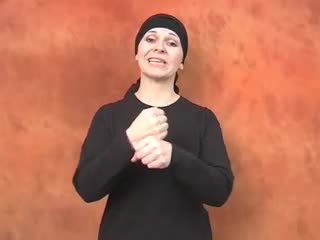
🤖 AI Learning Guide for "twisted"

Sign for 'twisted' uses a G-handshape with repeated wrist twisting motion

🎯 Practice Challenge

Focus on the clear G-handshape and consistent wrist twisting

⚠️ Most Common Mistake

Ensure the G-handshape is maintained and the twist is from the wrist

👐 How to Sign "twisted" in British Sign Language (BSL) (Quick Answer)

Follow these steps to sign twisted correctly in British Sign Language (BSL):

  1. 1 Form G-handshape, index finger extended
  2. 2 Place hand in neutral space, side of body
  3. 3 Wrist twists repeatedly side-to-side
  4. 4 Maintain G-hand throughout

Tip: Watch the video above while following these steps for best results.

🤚 Sign Profile

🤚
Handshape
Dominant hand forms a G-handshape (index finger extended, thumb touching side)
🔣
Handshape Code
G
Dominant Hand
Either
🙌
Hand Count
One-handed
📍
Location
Neutral space, typically to the side of the body
↗️
Movement
Wrist twists repeatedly side-to-side
🔄
Movement Type
Twist
👆
Contact
Air
👋
Palm Orientation
Palm typically faces forward or slightly down/out

😊 Non-Manual Features

Facial expressions and body language are grammatically essential in British Sign Language (BSL) - not optional!

😊
Facial Expression
None
🙆
Eyebrows
Neutral
👁️
Eye Gaze
Forward
🙂
Head Movement
None
👄
Mouth Morpheme
None
🕴️
Body Shift
None

📖 Grammar & Linguistics

Part of Speech Adjective
Inflection No
Classifier Usage N/A
Role Shift No

🎓 Learning Context

📌 When to Use: Describing physical objects or concepts that are bent or distorted
⚠️ Common Mistake: Confusing with 'turn' or 'rotate'
🚫 When NOT to Use: When referring to emotional 'twisted' or metaphorical meanings
Context Tags
Shape form object description

🧪 Practice Lab

Use these tiny checks right after watching the video. Fast feedback is what turns recognition into recall.

Meaning check

Which word matches the sign you just watched?

Usage check

Where would this sign fit most naturally?

Confidence check

How do you feel about twisted right now?

Pick one so SignDeaf can shape the rest of your session around how this sign actually feels.

🧭 Scenario Drill

One sign gets remembered faster when you attach it to real situations. Try these quick scene prompts.

Work

Stretch practice

Use this sign in a short workplace sentence or meeting exchange.

Family

Stretch practice

Try signing this while talking about family life or something at home.

School

Stretch practice

Imagine teaching this sign to a classmate or using it in a lesson.

Doctor

Stretch practice

Practise it in a healthcare conversation where clarity matters.

Travel

Stretch practice

Use it in a travel scenario like asking for help or directions.

💬 Example Usage

1.[en] The branch was twisted. / BSL: BRANCH TWISTED | 2.[en] My ankle felt twisted. / BSL: MY ANKLE FEEL TWISTED | 3.[en] He made a twisted balloon animal. / BSL: HE MAKE BALLOON ANIMAL TWISTED

1.[en] The branch was twisted. / BSL: BRANCH TWISTED | 2.[en] My ankle felt twisted. / BSL: MY ANKLE FEEL TWISTED | 3.[en] He made a twisted balloon animal. / BSL: HE MAKE BALLOON ANIMAL TWISTED

When to use it

Describing physical objects or concepts that are bent or distorted

When not to use it

When referring to emotional 'twisted' or metaphorical meanings

Register

Neutral

🌍 Cultural Context

None specific to this physical descriptive sign

🗺️ Regional Variations

Minimal or none known for this basic concept

⚖️ Similar Signs - What's the Difference?

This sign twisted
VS
Similar signs Look closely
TWISTED (G-hand, repeated wrist twist) describes a state of being distorted. It differs from TURN (often an S-hand rotating) which describes an action of rotation. It also contrasts with BENT (often B-hand, bending motion) which implies a curve rather than a helical distortion
full sign thumbnail

full

Beginner

Describes a container at maximum capacity or a person feeling satisfied after eating

Compare with full

📝 Usage Notes

Primarily describes physical distortion, not complex emotional states

Frequently Asked Questions

Common questions about the British Sign Language (BSL) sign for "twisted".

🏷️ Tags

Handshape

Keywords

💡
Did you know?
Watching Deaf signers on YouTube or BSL content online is one of the best ways to improve fluency.

📚 Explore More British Sign Language (BSL) Signs

Keep building your British Sign Language (BSL) vocabulary - explore signs by category or browse the full dictionary.