What Is the BSL Sign for "frame"?
Imagine for a moment how much we rely on structure and boundaries in our visual world; a picture on the wall, a window showing a view, or the very framework of a building all rely on a "frame." This particular BSL sign for frame captures that essence beautifully, directly representing the physical outline of something. It's an incredibly useful sign in British Sign Language frame vocabulary, helping you describe everything from artwork to architectural elements. Learning how to sign frame in BSL isn't just about mastering a gesture; it's about understanding a visual concept central to everyday conversation within the Deaf community. You'll find this sign pops up surprisingly often when discussing home decor, construction, or even just pointing out features in your environment.
How to Sign "frame" in British Sign Language - Step-by-Step
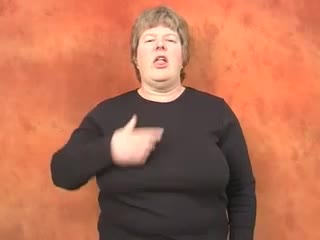
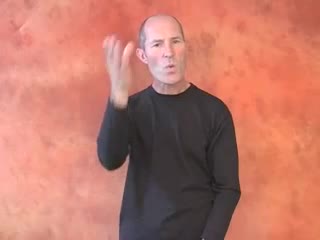
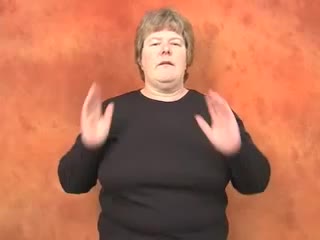
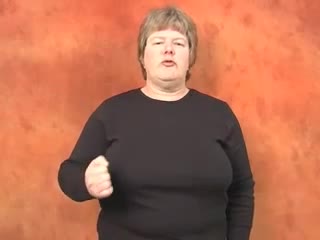
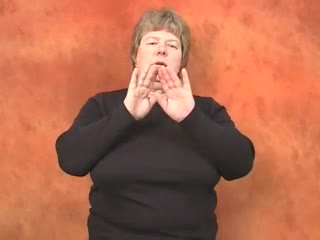
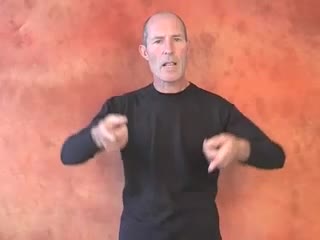
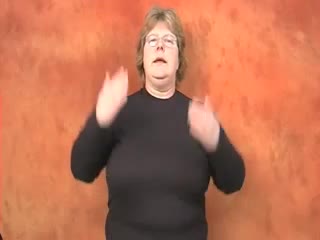
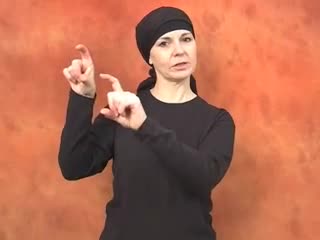
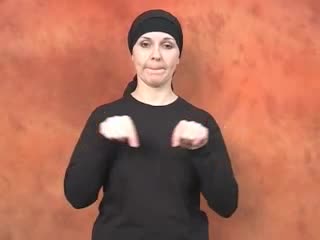
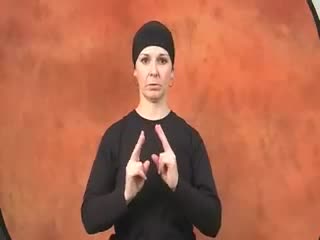
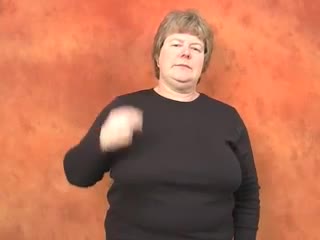
Getting the BSL frame sign right involves a precise combination of handshapes, placement, and movement, forming a clear visual representation.
Step 1: Handshape
You'll begin with both hands in a specific configuration. Extend your index fingers straight out, keeping them rigid, while your thumbs remain tucked in against your palms. Your remaining three fingers (middle, ring, and pinky) should be curled down, gently touching your palm. Essentially, you're forming an "L" shape with each hand, but with the thumb tucked away, making it a strong, pointing index finger.
Step 2: Hand Placement and Location
Now, bring both of your hands up to a comfortable height directly in front of your chest or slightly higher, perhaps around shoulder level. Position them so your index fingertips are almost touching, or very close together, forming the top corners of an imaginary rectangle. Your dominant hand will likely form the right side of this invisible frame, while your non-dominant hand creates the left side.
Step 3: Movement
With your hands in position, you're going to create the outline of a rectangular frame in the air. First, move both hands simultaneously downwards, keeping the index fingers straight and parallel to each other, defining the vertical sides of your frame. Then, bring both hands inwards towards each other, allowing your index fingertips to meet or nearly meet again, thereby completing the bottom horizontal line of the frame. This continuous, smooth motion outlines a clear rectangular shape, moving from top-outer corners, down the sides, and then across the bottom.
Step 4: Facial Expression and Mouthing
Typically, a neutral facial expression accompanies the sign for "frame," unless you're emphasizing the size or quality of the frame, which might subtly alter your brow or mouth. Crucially, you'll mouth the English word "frame" as you perform the sign. Mouthing the corresponding English word is a vital non-manual feature in BSL, clarifying meaning and adding grammatical context, especially for homonyms or signs that could have multiple interpretations. It helps establish the specific noun "frame" rather than, say, the verb "to frame."
Step 5: Palm Orientation
Throughout the entire movement, your palms should generally face inwards, towards your body, or slightly towards each other. This orientation helps to define the plane of the frame you're creating, as if you're outlining an object directly in front of you. Maintaining this inward facing palm orientation is critical; if your palms were to face outwards, for example, it might suggest you're pushing something away or indicating distance, completely changing the intended meaning of the sign.
"frame" in BSL - Quick Reference Snapshot
- Handshape: Both hands, index fingers extended straight, other fingers curled down, thumbs tucked.
- Location: In front of the chest or shoulder height, starting with index fingertips forming top corners.
- Movement: Simultaneously trace a rectangle downwards and inwards, outlining a frame.
- Facial Expression: Generally neutral, mouth "frame."
- Dominant Hand: Typically forms the right side of the frame; both hands work in tandem.
- Palm Orientation: Palms facing inwards, towards the body, or slightly towards each other.
5 Memorisation Tricks for the BSL Sign "frame"
- Visualise a Photo Frame: Picture a beautiful photograph sitting on your mantelpiece. Imagine you're physically tracing the edges of its wooden or metal frame with your index fingers; this mnemonic directly connects the sign's movement to its most common noun meaning, making it incredibly intuitive.
- Muscle Memory Tracing: Dedicate a few minutes each day to simply tracing large and small imaginary rectangles in the air. Focus on the smooth, controlled movement from top to bottom, then across the base; this repetitive physical drill will embed the pattern deeply into your motor memory, making the sign feel natural.
- Connect to "Boundary": Think about how a frame creates a boundary or defines a space. This sign visually creates that enclosed space, reminding you of its function; understanding the concept behind the sign's form reinforces its meaning beyond just a single object.
- Distinguish from "Window": Many learners initially confuse "frame" with "window" because both involve rectangular shapes. Remember, "frame" typically traces a solid, defined border, while "window" often incorporates a "breaking" or "opening" motion; paying attention to these subtle differences will prevent mix-ups.
- Daily Life Practice: As you go about your day, whenever you see a framed picture, a door frame, or even a computer screen, mentally (or physically, if you're alone!) perform the BSL sign for it. Integrating the sign into your visual surroundings helps cement it in your active vocabulary, making recall much quicker.
Real-Life Situations to Use the BSL Sign for "frame"
- You're visiting a friend's new flat and notice a blank wall. You might sign, "WALL EMPTY. PHOTO NEED FRAME?" to suggest adding some artwork, using a question inflection in BSL by raising your eyebrows.
- Discussing home renovations, you could tell a builder, "WINDOW FRAME OLD. NEED NEW," clearly indicating that the existing window frames require replacement, with the sign taking a direct object role in your BSL sentence structure.
- Perhaps you're at a gallery, admiring a piece of art. You might sign to a Deaf friend, "PAINTING BEAUTIFUL. FRAME GOLD," describing the specific characteristics of the decorative frame around the artwork, showing how adjectives precede nouns in BSL.
- When talking about constructing something, like a shed or a small structure, you might explain, "FIRST BUILD WOOD FRAME," indicating the initial skeletal structure, often using spatial grammar to show the size or shape of the frame you're imagining.
Top 3 Mistakes Learners Make Signing "frame" in BSL
- Incorrect Handshape Confusion: A common error involves using a flattened hand or an open "5" handshape instead of the precise index-finger-extended "L" shape. This often happens because learners might think of a flat surface or a general outline. To correct this, always ensure your index finger is strong and isolated, with other fingers curled, truly representing a rigid edge.
- Incomplete or Jagged Movement: Some beginners tend to make the tracing motion too quick, wobbly, or stop short before completing the full rectangle. This can make the sign unclear, resembling an abstract gesture rather than a defined object. Focus on a smooth, deliberate, and continuous movement that distinctly outlines all four sides of the rectangle, ensuring the corners are clearly implied.
- Missing the Two-Handed Symmetry: Occasionally, learners might try to sign "frame" with only one hand or perform the two-handed movement asynchronously. The sign for "frame" is inherently symmetrical and requires both hands to move in coordinated opposition to define the space effectively. Always ensure both hands start and finish their movements together, maintaining parallel alignment to create a balanced, clear frame.
Fascinating Facts About the BSL Sign for "frame"
- The BSL sign for "frame" is largely iconic; its form directly mimics the object it represents, tracing the outline of a rectangular frame. This makes it quite intuitive for new learners, as the visual connection is immediate and strong.
- While the core movement of outlining a rectangle is consistent, you might observe subtle regional variations across the UK. Some signers might start closer to their face, others slightly further out, or vary the exact size of the traced rectangle depending on the context.
- The sign's clear, defined edges resonate with the visual nature of BSL. The act of "framing" in communication emphasizes the visual boundary, much like how BSL uses signing space to delineate different ideas or locations.
- Interestingly, while the sign represents a physical object, its adaptability means it can sometimes hint at conceptual frames in complex BSL discourse, though typically with additional signs or context to avoid ambiguity.
- This sign does not have a direct historical tie to a specific letter of the manual alphabet; instead, its form evolved from a direct visual representation of the concept of a "frame" itself, making it a prime example of a motivated sign.
"frame" in Deaf Culture - Community and Identity
The concept of a "frame" in Deaf culture, through the BSL sign, often touches upon themes of clarity, presentation, and the visual world. In a community where visual communication is paramount, how things are presented and contained is significant; a picture frame isn't just a border, it's about highlighting what's important within that space. This sign, by visually delineating space, reflects the Deaf community's emphasis on clear boundaries and structured information, whether in storytelling, explaining concepts, or describing environments. It's a reminder of how BSL, as a visual language, allows signers to "build" and "outline" objects and ideas directly in space, fostering a rich, descriptive way of sharing experiences and perspectives.
Example Conversations Using "frame" in BSL
English: That picture needs a new frame. - BSL structure: PICTURE THAT, FRAME NEW NEED.
English: Can you frame this certificate for me? - BSL structure: CERTIFICATE THIS, YOU FRAME FOR ME CAN?
English: The door frame is damaged. - BSL structure: DOOR FRAME, DAMAGED.
English: What colour is your window frame? - BSL structure: YOUR WINDOW FRAME, COLOUR WHAT?
English: We need to replace the photo frame. - BSL structure: PHOTO FRAME, REPLACE NEED.
Frequently Asked Questions: The BSL Sign for "frame"
Is the BSL sign for frame the same everywhere in the UK?
While the core concept of outlining a rectangle remains constant, you might encounter slight regional variations in the BSL sign for frame, such as the initial hand placement or the size of the box traced. These minor differences are part of BSL's natural linguistic diversity, but the meaning will always be understood.
Are there any similar BSL signs I should avoid confusing with "frame"?
Yes, some learners occasionally confuse "frame" with signs like "window" or even "box." Remember, "frame" specifically outlines a rigid boundary; "window" often involves an additional opening or closing movement, and "box" typically incorporates flat surfaces or a more enclosed shape. Paying close attention to the specific handshape and movement unique to "frame" will prevent these mix-ups.
Is "frame" a good sign for BSL beginners to learn early?
Absolutely, the BSL sign for frame is an excellent sign for beginners! Its iconic nature, where the sign visually represents the object, makes it relatively easy to grasp and remember. It's also quite practical for describing objects in your home or surroundings, giving you immediate opportunities to use it in context.
Can children easily learn the BSL sign for frame?
Children pick up the BSL sign for frame with remarkable ease, often enjoying the physical act of tracing the rectangle in the air. Its direct visual connection to everyday objects like picture frames and windows makes it a fun and accessible sign for young learners to incorporate into their early vocabulary.
How does the BSL sign for frame compare to other sign languages' equivalents?
The BSL sign for frame, with its distinct two-handed rectangular tracing, is quite specific to British Sign Language. Other sign languages might use different handshapes, movements, or even one-handed signs to convey the same concept, highlighting the unique linguistic structures and iconic motivations that vary across different signed languages.
Signs That Pair Naturally with "frame" in BSL
- PICTURE: Often, a "picture" needs a "frame," making these two signs natural partners when discussing artwork or photographs.
- WINDOW: A "window" always has a "frame," so pairing these signs is essential when talking about architecture or looking outside.
- DOOR: Just like windows, "doors" are set within a "frame," making this another logical connection for describing household features.
- WALL: You might put a "frame" on a "wall," or discuss how a "frame" defines a section of a "wall," linking these concepts together.
- BUILDING: The "frame" is the structural backbone of a "building," so these signs naturally connect when discussing construction or architecture.
- MIRROR: Many "mirrors" come with decorative "frames," making this a useful pairing for talking about home furnishings.
Building Fluency: How to Practise "frame" in BSL
To truly master the BSL sign for frame, consistency is your best friend. Start by finding a mirror and meticulously practising the handshape and movement, ensuring your index fingers are straight and your hands move in a smooth, synchronised rectangle. Try to integrate the sign into your daily BSL conversations by describing the frames you see around you, whether it's on a TV, a painting, or a door. A fantastic way to refine your technique is to film yourself signing; watching your own movements helps you spot any inconsistencies and make precise adjustments, bringing your execution closer to native fluency. Once you feel comfortable, seek out opportunities to practise with a Deaf conversation partner; they can provide invaluable feedback and help you use the sign naturally in context. Spaced repetition, where you revisit the sign over several days, will cement "frame" in your long-term memory, ensuring it becomes a natural part of your BSL vocabulary. Keep practising, and you'll soon be framing your conversations with confidence!