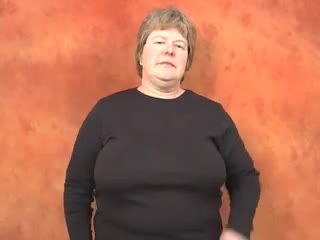
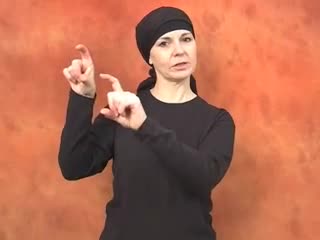
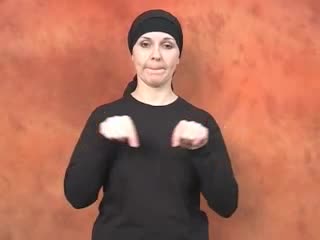
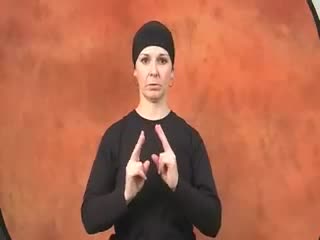
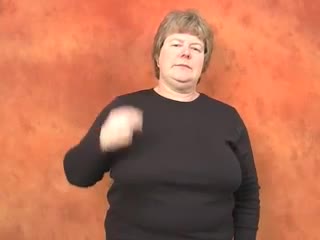
What Is the BSL Sign for "tin snips"?
Understanding the BSL sign for tin snips opens up a world of practical communication, especially when discussing tools, craftsmanship, or DIY projects. This particular sign vividly captures the essence of the tool it represents, making it quite intuitive once you grasp its physical form. When you encounter this sign in British Sign Language conversations, you'll immediately recognise its connection to the powerful, precise cutting action of tin snips. Here at SignDeaf.com, we're excited to guide you through learning the tin snips British Sign Language sign, helping you connect with the Deaf community with greater confidence and clarity.
How to Sign "tin snips" in British Sign Language - Step-by-Step
Let's break down the physical actions involved in forming the sign for "tin snips," ensuring you capture the precision and utility of this essential tool.
Step 1: Handshape
Begin by forming a 'G' handshape with your dominant hand, which means your index finger and thumb are extended parallel to each other, as if you're holding a small pencil. Your remaining fingers (middle, ring, and pinky) should be curled into your palm. Now, do the same with your non-dominant hand, mirroring the 'G' shape. You'll have two identical handshapes, ready to mimic the blades of the snips.
Step 2: Hand Placement and Location
Position both of your 'G' shaped hands in front of your body, roughly at waist height, with your dominant hand slightly above and in front of your non-dominant hand. The tips of your index fingers and thumbs should be close to touching, indicating the closed position of the tool's blades. This neutral signing space allows for clear, unobstructed movement.
Step 3: Movement
From this initial position, your dominant hand performs the primary action. Move your dominant hand's index finger and thumb apart slightly, opening them as if the snips are preparing to cut. Immediately follow this with a sharp, controlled closing movement, bringing the index finger and thumb back together, mimicking a single cutting action. Repeat this opening and closing motion two or three times in quick succession, creating a distinct, repetitive snipping gesture.
Step 4: Facial Expression and Mouthing
A neutral, focused facial expression typically accompanies the sign for "tin snips," reflecting the concentration often required when using such a tool. You might also subtly mouth the word "tin snips" as you sign. This non-manual feature, known as mouthing, acts as an additional layer of clarity and is a deeply integrated part of BSL grammar, helping to differentiate signs or specify meaning in context.
Step 5: Palm Orientation
Maintain a consistent palm orientation throughout the sign for "tin snips." The palms of both your dominant and non-dominant hands should face inwards, towards each other, as if you are holding the tool horizontally in front of you. This orientation naturally positions your index fingers and thumbs to represent the cutting blades, giving the visual impression of the snips being ready to work.
"tin snips" in BSL - Quick Reference Snapshot
- Handshape: Both hands form a 'G' shape (index finger and thumb extended, others curled).
- Location: In neutral space, at waist height, dominant hand slightly above non-dominant.
- Movement: Dominant hand's index finger and thumb repeatedly open and close, mimicking cutting.
- Facial Expression: Neutral and focused, potentially mouthing "tin snips."
- Dominant Hand: Performs the primary cutting motion.
- Palm Orientation: Both palms face inwards, towards each other.
5 Memorisation Tricks for the BSL Sign "tin snips"
Here are five clever ways to help embed the BSL sign for "tin snips" firmly in your memory, making it second nature for your BSL conversations.
- Visual Mnemonic: Picture your two 'G' shaped hands as the distinct blades of a pair of tin snips, poised and ready to slice through metal. The index finger and thumb become the sharp edges, and their opening and closing movement is the powerful cutting action; this visual connection makes the sign's form unforgettable.
- Muscle-Memory Drill: Practice the repetitive snipping motion with your dominant hand while holding an imaginary piece of paper or metal, focusing on the distinct feel of the index finger and thumb separating and coming together. This physical engagement helps your hand muscles remember the precise movement, solidifying the sign through kinesthetic learning.
- Connect to the Word's Meaning: Think about what tin snips actually do – they cut tough materials with a strong, precise bite. The sign itself directly embodies this function; its sharp, controlled closing action is a direct visual metaphor for the tool's purpose, making the sign's meaning intrinsically linked to its form.
- Common-Confusion Tip: Be mindful not to confuse this sign with generic 'cut' signs, which often involve a flat hand slicing across another or a single scissor-like motion. The specific 'G' handshapes on both hands and the distinct, repetitive action are what make "tin snips" unique, so focus on those details to avoid misinterpretation.
- Daily-Life Practice Idea: Every time you see a tool or imagine a task requiring heavy-duty cutting, take a moment to perform the sign for "tin snips" in your mind or subtly with your hands. You could sign it while passing a hardware store or watching a DIY show, integrating the sign into your everyday observations and reinforcing its recall.
Real-Life Situations to Use the BSL Sign for "tin snips"
Learning how to sign "tin snips" truly comes alive when you integrate it into practical, everyday conversations within the Deaf community. Here are some scenarios where this sign becomes incredibly useful.
- Imagine you're at a workshop with a Deaf friend, and you need to ask for a specific tool: you might sign "YOU HAVE TIN SNIPS?" incorporating a raised eyebrow for the question, then point to indicate where you expect the tool to be.
- Perhaps you're explaining a craft project that involves metal work: you could sign "I NEED TIN SNIPS [gestural emphasis on the action] TO CUT METAL," using a clear topic-comment structure.
- If someone offers you the wrong tool, you'd sign "NO, NOT THAT. I NEED TIN SNIPS [specific sign]," shaking your head for negation and making a clear distinction.
- When discussing safety around tools, you might convey, "BE CAREFUL, TIN SNIPS SHARP," using a serious facial expression to convey the warning.
Top 3 Mistakes Learners Make Signing "tin snips" in BSL
It's completely normal to make a few errors when you're first learning a new BSL sign, but knowing the common pitfalls for "tin snips" will help you avoid them.
- Incorrect Handshape: A frequent error involves using a 'V' handshape (like scissors) instead of the specific 'G' handshape for both hands. This happens because "tin snips" are a cutting tool, similar to scissors, but the 'G' handshape with extended index finger and thumb is crucial for accurately depicting the snips' distinct form and function. To correct this, consciously practise forming a clear 'G' with both hands, ensuring your index finger and thumb are parallel and extended.
- Missing the Repetitive Movement: Some learners might perform only a single opening and closing action, or an overly slow one, which can make the sign less clear or even suggest a different cutting tool. The sign for "tin snips" requires a quick, repetitive snipping motion to convey the tool's continuous action and robust nature. The precise correction is to ensure you execute two or three swift, distinct open-and-close movements with your dominant hand, bringing the fingers together with a decisive snap.
- Forgetting the Non-Dominant Hand: Occasionally, beginners might only use their dominant hand for the snipping action, neglecting to form the 'G' handshape with their non-dominant hand and position it correctly. While the dominant hand performs the movement, the presence of the non-dominant hand, mirroring the 'G' shape and held steadily below, is integral to representing the full, two-bladed structure of the snips. Remember to engage both hands consistently, maintaining the non-dominant hand as a stable base for the sign.
Fascinating Facts About the BSL Sign for "tin snips"
Delving into the specifics of signs like "tin snips" often reveals some truly interesting linguistic and cultural insights within BSL.
- This sign is highly iconic, meaning its form directly mimics the action and appearance of the object it represents; you can almost see the tool in action as you watch the sign.
- While 'tin snips' is a specific tool, the sign itself belongs to a broader category of BSL signs for 'cutting tools,' where subtle variations in handshape and movement distinguish one implement from another.
- Interestingly, the two-handed nature of this sign, with one hand acting as a stable base and the other performing the action, is a common feature in BSL for tools that require two parts or a specific grip.
- You might find slight regional variations in the speed or repetition of the cutting motion across different Deaf communities in the UK, but the core 'G' handshape and general movement remain widely understood.
- The clear, specific nature of this sign means it's rarely confused with other BSL signs, which is a testament to its strong iconic motivation and distinct form in the BSL lexicon.
"tin snips" in Deaf Culture - Community and Identity
Signs for practical tools like "tin snips" might seem straightforward, yet their use within the Deaf community beautifully illustrates the importance of clear, visual communication for everyday tasks and shared interests. When Deaf individuals discuss DIY projects, craftsmanship, or vocational skills, having a precise and universally understood sign for specific tools fosters a deeper sense of connection and collaboration. It bridges potential communication gaps, allowing for detailed instructions, problem-solving, and the simple joy of sharing a hobby without needing to resort to fingerspelling or gesture. These signs become part of the shared vocabulary that binds the community, enabling conversations about work, passion, and creativity to flow naturally and efficiently.
Example Conversations Using "tin snips" in BSL
Let's look at how the sign for "tin snips" fits into various conversational contexts, highlighting the dynamic nature of BSL grammar.
English: Do you have tin snips? - BSL structure: YOU HAVE TIN SNIPS? (incorporating a raised eyebrow for the question marker and potentially pointing to imply availability)
English: I need the tin snips. - BSL structure: I NEED TIN SNIPS. (a direct statement, possibly with an expectant facial expression)
English: Can you pass me the tin snips over there? - BSL structure: TIN SNIPS OVER THERE [point], YOU PASS ME? (utilising spatial grammar by pointing to the tool's location, followed by the request)
English: These tin snips are really sharp. - BSL structure: THESE TIN SNIPS SHARP, BE CAREFUL. (demonstrating descriptive signing, with "sharp" often signed with a quick, precise movement)
English: We used tin snips to cut the metal sheet. - BSL structure: METAL SHEET, WE USE TIN SNIPS CUT. (a typical BSL topic-comment structure, placing the object first for clarity)
Frequently Asked Questions: The BSL Sign for "tin snips"
Learning a new sign often brings up various questions, so let's address some of the most common ones about "tin snips" in BSL.
Is the BSL sign for "tin snips" the same across the entire UK?
While the core handshape and movement for "tin snips" are generally consistent and widely understood throughout the UK, you might encounter minor variations in the speed or emphasis of the repeated cutting motion in different regional Deaf communities. These subtle differences are usually not enough to impede comprehension, but it's always good practice to observe local signers if you have the opportunity.
Are there any similar signs in BSL that I might confuse with "tin snips"?
It's possible to briefly confuse "tin snips" with other BSL signs for general cutting or even "scissors," as they all share a cutting action. However, "tin snips" is distinct due to its specific 'G' handshape on both hands and the robust, repetitive nature of its action. Always pay close attention to the precise handshape and the characteristic movement to distinguish it clearly.
Is "tin snips" a good sign for beginners to learn in BSL?
Absolutely, "tin snips" is an excellent sign for beginners! Its highly iconic nature means the sign visually resembles the tool's function, making it intuitive and easier to remember than many abstract signs. Mastering this sign builds confidence and introduces you to the common BSL practice of representing tools through their actions.
Can children easily learn the BSL sign for "tin snips"?
Yes, children can certainly learn the BSL sign for "tin snips" with ease. The visual and kinetic aspects of the sign are engaging for younger learners, especially if they enjoy crafts or playing with tools. Encouraging them to associate the sign with real tin snips or even toy versions can make the learning process fun and memorable.
Does the BSL sign for "tin snips" share similarities with equivalents in other signing systems?
While specific handshapes and movements vary significantly between different sign languages worldwide, the iconic nature of tool signs often means there might be a conceptual resemblance in how "cutting" or "snips" are represented. However, the exact form of the BSL sign for "tin snips" is unique to British Sign Language and its specific linguistic evolution.
Signs That Pair Naturally with "tin snips" in BSL
Expanding your BSL vocabulary effectively means learning signs in clusters that relate to each other, enhancing your overall communication flow.
- CUT: This is a fundamental action that naturally follows the use of tin snips, linking the tool to its primary function.
- METAL: Since tin snips are specifically designed for cutting metal, this sign immediately connects to the material the tool works with.
- TOOL: A broader category sign, "tool" helps to classify "tin snips" and facilitates discussions about equipment in general.
- WORKSHOP: This sign provides a common setting where tin snips would be found and used, creating a contextual link.
- CRAFT / DIY: These concepts often involve using various tools, including tin snips, making them natural partners for discussing projects and hobbies.
- SHARP: Describing the blades of the tin snips, this sign helps to convey important safety information or characteristics of the tool.
Building Fluency: How to Practise "tin snips" in BSL
Developing fluency in BSL, especially with practical signs like "tin snips," really thrives on consistent and varied practice. Grab a mirror and spend a few minutes focusing solely on your handshapes for the 'G' position and the precise, repetitive cutting movement; seeing yourself sign helps you refine the visual accuracy. Try to integrate "tin snips" into your daily thoughts; imagine you're planning a project and mentally sign "I need tin snips" or "Where are the tin snips?". Filming yourself signing can provide invaluable feedback, allowing you to objectively review your handshape, movement, and facial expression, pinpointing areas for improvement. Crucially, seek opportunities to connect with Deaf individuals; nothing beats practising with a native signer who can offer authentic feedback and natural conversational flow. Remember, consistency is your greatest ally, so space out your practice sessions over several days rather than cramming, allowing your brain and muscles to truly embed the sign.