What Is the BSL Sign for "rebuild"?
Imagine a challenge, a setback, a structure needing attention, then picture the resilience required to start anew. That powerful sense of renewal and construction is beautifully captured in the BSL sign for rebuild. This isn't just about putting bricks back together; it embodies the spirit of restoring, improving, or creating something fresh from its foundations. When you learn how to sign rebuild in BSL, you’re gaining a versatile verb essential for discussing everything from physical structures to abstract concepts like trust or communities. Mastering this particular British Sign Language rebuild will equip you to express a fundamental human endeavour: the act of making things whole and strong once more.
How to Sign "rebuild" in British Sign Language - Step-by-Step
Let's break down the precise movements and features that make up this meaningful BSL sign, guiding you through each component to ensure your execution is clear and accurate.
Step 1: Handshape
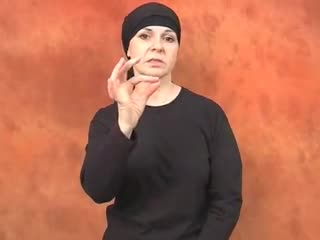
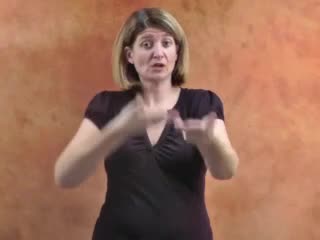
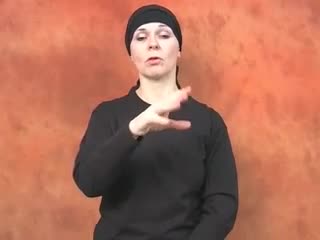
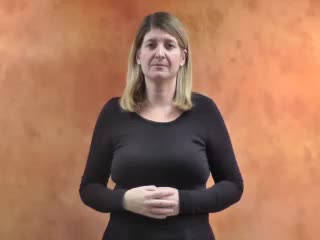
For the BSL sign for rebuild, you'll use a specific flat handshape with both your dominant and non-dominant hands. Begin by extending all fingers on each hand straight and holding them together, ensuring your thumb rests alongside the palm, not sticking out. Picture your hands becoming flat, solid planes, ready to form the structural components of something new; this particular configuration is often referred to as a "B-handshape" in sign language phonology, signifying a foundational element.
Step 2: Hand Placement and Location
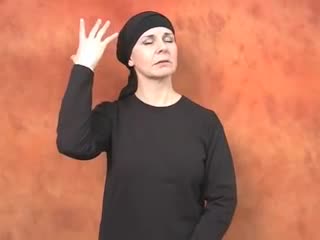
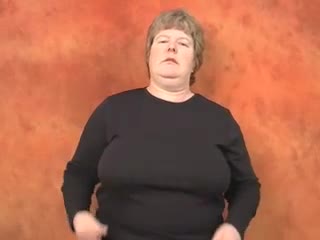
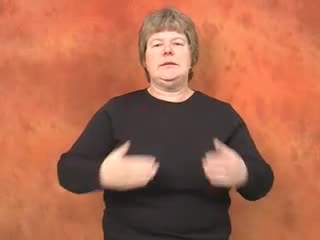
Start by positioning your non-dominant hand slightly in front of your body, usually at about waist or chest height, with its palm facing upwards and fingers pointing directly away from you. This hand establishes the base or the ground upon which the rebuilding will occur. Then, place your dominant hand directly above your non-dominant hand, with its palm facing downwards and fingers also pointing away from your body, mirroring the direction of the non-dominant hand. You're setting up the scene, preparing to lay down new layers onto an existing foundation.
Step 3: Movement
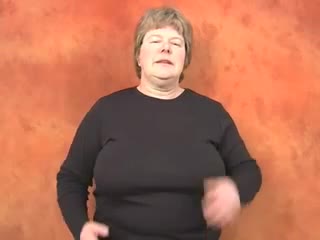
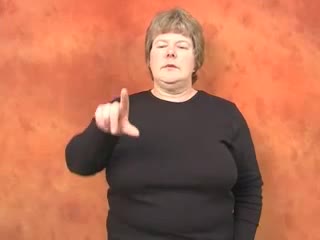
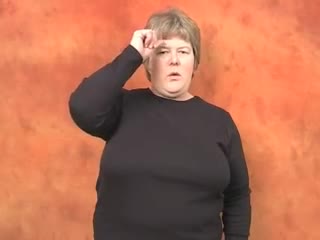
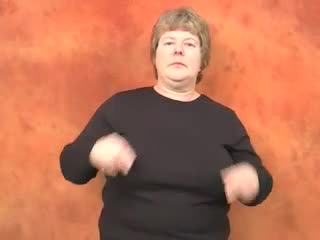
The movement for rebuild in British Sign Language involves a deliberate, layered action. From its starting position, your dominant hand moves downwards to gently "meet" or "rest" upon your non-dominant hand, as if you're firmly placing a new block or layer onto a structure. Immediately after this contact, the dominant hand lifts slightly, moves forward a short distance (just an inch or two), and then repeats the downward motion to meet the non-dominant hand again. This "lift-forward-down" sequence happens two or three times, creating a clear visual of layers being systematically added and solidified, emphasizing the construction and re-establishment.
Step 4: Facial Expression and Mouthing
Non-manual features are truly the grammar and emotion of BSL, making them indispensable for signs like rebuild. For this sign, a determined or focused facial expression is incredibly appropriate; you might slightly furrow your brow or show a resolute set to your mouth, conveying the effort and purpose involved in rebuilding. Simultaneously, it's crucial to mouth the word "rebuild" without vocalising it. This mouthing acts as a lexical feature, helping to distinguish the sign from similar concepts and providing important contextual information for the viewer, ensuring absolute clarity in your message.
Step 5: Palm Orientation
Throughout the sign for rebuild, the palm of your non-dominant hand maintains an upward orientation, consistently presenting itself as the stable base or platform. Conversely, your dominant hand starts with its palm facing downwards, ready to lay down new material. As your dominant hand performs the "lift-forward-down" movement, its palm orientation remains consistently downward, directly interacting with the upward-facing non-dominant palm. This opposing palm orientation is critical; it visually reinforces the action of layering and constructing upon a foundation, making the meaning of strengthening or establishing anew unmistakable to anyone watching.
"rebuild" in BSL - Quick Reference Snapshot
- Handshape: Both hands flat (B-handshape), fingers extended and together.
- Location: Non-dominant hand forms a base at waist/chest height, dominant hand directly above.
- Movement: Dominant hand moves down to meet non-dominant, lifts slightly, moves forward, then repeats downward motion 2-3 times.
- Facial Expression: Determined, focused, or resolute.
- Dominant Hand: Performs the active layering movement.
- Palm Orientation: Non-dominant palm up, dominant palm down, maintaining this opposition throughout.
5 Memorisation Tricks for the BSL Sign "rebuild"
Learning new signs can feel like a big task, but with a few clever tricks, you'll have "rebuild" locked into your memory in no time. Here are some specific strategies to help you truly master this BSL sign.
- Visualise the "Layering" Mnemonic: Think of the sign's movement as literally laying down new bricks or structural layers to reconstruct something. Your non-dominant hand is the existing foundation or ground, and your dominant hand is carefully and deliberately placing new components on top, one after another. This direct visual connection to the act of building something up again makes the "lift-forward-down" motion incredibly intuitive and easy to recall.
- Engage in Focused Muscle Memory Drills: Practice the sign slowly at first, really feeling the distinct "lift-forward-down" motion with your dominant hand, ensuring it makes gentle contact with your non-dominant hand each time. Focus on the deliberate, repeated action, not just a single movement, as this repetition is key to conveying the 're-' aspect. Repetitive, mindful practice will embed the motor pattern deep into your muscle memory, making it second nature.
- Connect to the Concept of Resilience: When you sign "rebuild," don't just think about the physical movement; actively recall the meaning of overcoming challenges and creating something stronger from a previous state. Imagine rebuilding a broken friendship, a community spirit, or even your own confidence. Connecting the physical sign to such powerful, emotional concepts helps reinforce its significance, making it more memorable than just a sequence of hand movements.
- Distinguish from Simple "Build" or "Construct": A common pitfall is to confuse "rebuild" with signs for "build" or "construct." Remember, the specific repeated, layered "lift-forward-down" movement of "rebuild" implies a process of *re-establishment* or *starting anew* from a base, often after a period of damage or decline. Simple "build" might just be a single upward stacking motion, so pay close attention to that unique forward-and-repeat element that signals the 're-'.
- Integrate into Daily Mental Narratives: Look around you during your day and mentally sign "rebuild" whenever you see something being repaired, renovated, or discussed in terms of recovery. Perhaps a local shop is undergoing refurbishment, or a news story mentions efforts to rebuild an economy. By consistently associating the BSL sign for rebuild with real-world examples, you're creating countless opportunities for passive reinforcement and making it part of your active vocabulary.
Real-Life Situations to Use the BSL Sign for "rebuild"
Understanding a sign is one thing; knowing when and how to use it in conversation is another entirely. The sign for "rebuild" is remarkably versatile, appearing in both literal and metaphorical contexts in BSL.
-
English: "They need to rebuild the old community hall after the fire." - BSL structure: You'll often see the topic-comment structure here, so "COMMUNITY HALL OLD FIRE, REBUILD NEED." The sign REBUILD would be clear and direct, expressing the urgent necessity of reconstructing the physical building.
-
English: "It's difficult, but we must rebuild trust after what happened." - BSL structure: For abstract concepts, BSL often uses a similar pattern: "TRUST BROKEN, REBUILD MUST DIFFICULT." The sign REBUILD, accompanied by a thoughtful or determined facial expression, perfectly conveys the effort and time required to restore intangible connections.
-
English: "The local economy is starting to rebuild slowly." - BSL structure: Here, you might sign "ECONOMY LOCAL, SLOWLY REBUILD START." The sign REBUILD visually captures the gradual, layered process of recovery, perhaps with a slightly slower or more deliberate movement to emphasise the 'slowly' aspect. This shows how BSL can adapt sign movement to convey adverbs.
-
English: "Can you help me rebuild my confidence?" - BSL structure: This could be signed as "CONFIDENCE MY, REBUILD YOU HELP CAN?" The question marker (raised eyebrows) would accompany the end of the sentence. Using REBUILD in this personal context highlights a journey of self-improvement and strengthening one's inner resolve.
Top 3 Mistakes Learners Make Signing "rebuild" in BSL
Every learner makes mistakes, and that's completely normal! Identifying common pitfalls with the BSL sign for rebuild can help you avoid them, ensuring your communication is clear and effective from the start.
-
Forgetting the Repetitive 'Re-' Movement: A frequent error is performing only a single downward motion instead of the distinct "lift-forward-down" sequence. This often makes the sign look like a simple "build" or "place," missing the crucial 're-' aspect that signifies reconstruction or renewal. The correction involves consciously adding that slight lift and forward shift before each subsequent downward placement, ensuring you clearly repeat the layering action two or three times to convey the full meaning of rebuilding.
-
Incorrect Handshape or Placement: Some beginners might use fists or splayed fingers, or position their dominant hand far from the non-dominant base. This fundamentally alters the visual clarity and the iconic representation of laying down new layers. The correct approach is to maintain flat B-handshapes for both hands throughout the sign, with the dominant hand starting directly above and precisely interacting with the non-dominant hand, clearly showing a structured, intentional layering process.
-
Lacking Appropriate Facial Expression and Mouthing: Signing "rebuild" with a neutral face or without mouthing the word can significantly reduce its impact and clarity. The non-manual features are integral to BSL grammar and meaning. To correct this, always remember to pair the sign with a determined or focused facial expression, reflecting the effort involved, and distinctly mouth "rebuild" as you sign. This combination adds depth and ensures your message is fully understood, aligning with how Deaf people naturally communicate.
Fascinating Facts About the BSL Sign for "rebuild"
Delving into the background of a sign can often deepen your understanding and appreciation for BSL as a rich, visual language. The sign for "rebuild" carries some interesting insights into BSL's structure and cultural nuances.
- This sign is highly iconic, meaning its form directly resembles its meaning. The visual of one hand actively layering onto another perfectly mimics the physical act of constructing or adding new components to a structure, making it intuitively understandable even to those new to BSL.
- The 're-' prefix, indicating repetition or renewal, is not an added separate sign in BSL but is intrinsically embedded within the movement itself. The repeated "lift-forward-down" motion of the dominant hand after an initial 'build' action is the linguistic mechanism BSL uses to convey the concept of doing something again, or re-establishing.
- While the core movement of "rebuild" is quite consistent, you might observe subtle regional variations across the UK. Some signers may use a slightly more vigorous or expansive movement to emphasise a large-scale rebuilding effort, while others might keep it more contained for abstract concepts, showcasing the natural fluidity of sign languages.
- This sign can function both literally, for physical structures like houses or bridges, and metaphorically for abstract concepts such as trust, relationships, or an economy. BSL uses the exact same sign, relying on context and non-manual features to differentiate between a tangible and an intangible rebuilding process.
- The handshapes involved, particularly the flat B-handshape, are very common in BSL, often used for signs related to surfaces, foundations, or flat objects. This shared phonological feature connects "rebuild" to a broader family of signs that deal with construction and stability, enhancing its linguistic coherence.
"rebuild" in Deaf Culture - Community and Identity
The concept of "rebuild" resonates deeply within Deaf culture, reflecting a history of resilience, adaptation, and the continuous effort to strengthen community bonds and institutions. For Deaf people, rebuilding isn't just about physical structures; it's profoundly linked to identity and collective experience. Throughout history, Deaf communities have often had to rebuild their spaces and support networks, whether it's establishing new Deaf clubs after old ones closed, advocating for BSL-inclusive education when services were cut, or creating new forms of cultural expression when traditional avenues were inaccessible. This sign, therefore, carries a powerful connotation of determination, collective action, and the enduring spirit to foster a vibrant, self-sustaining community. It speaks to the continuous work of nurturing Deaf identity, ensuring BSL thrives, and creating welcoming, accessible environments for future generations.
Example Conversations Using "rebuild" in BSL
Seeing "rebuild" in action within example sentences helps solidify your understanding of its practical application and grammatical nuances in British Sign Language.
English: "The school needs to rebuild its reputation after the scandal." - BSL structure: Here, you'll likely see a clear topic-comment flow, "SCHOOL REPUTATION SCANDAL, REBUILD MUST." The sign REBUILD would be performed with a serious facial expression, reflecting the gravity of the situation.
English: "Our team worked hard to rebuild the damaged bridge." - BSL structure: This sentence would typically be structured as "BRIDGE DAMAGED, TEAM OUR WORK HARD, REBUILD FINISH." The sign REBUILD here explicitly refers to the physical reconstruction, perhaps with an emphasis on completion.
English: "After the divorce, she focused on rebuilding her life." - BSL structure: BSL often prioritises key information: "DIVORCE FINISH, SHE LIFE HER REBUILD FOCUSED." The sign REBUILD would be accompanied by a determined or reflective facial expression, showing personal effort.
English: "Are they going to rebuild the old factory?" - BSL structure: For a yes/no question, you'd use a raised eyebrow: "FACTORY OLD, THEY REBUILD WILL? (question-mark-face)." The sign REBUILD would be clear, asking about the intentions for the structure.
English: "It will take time to rebuild the economy." - BSL structure: This could be signed as "ECONOMY, REBUILD TAKE TIME IT WILL." The sign REBUILD would be performed with a steady, unhurried movement to visually represent the passage of time needed for the process.
Frequently Asked Questions: The BSL Sign for "rebuild"
Is there much regional variation for the BSL sign for "rebuild" across the UK?
While the core handshapes and the concept of layered movement for "rebuild" remain largely consistent throughout the UK, you might encounter minor regional differences in the vigour or extent of the movement. Some areas might use a slightly more pronounced forward motion, while others keep it more compact. These are usually subtle nuances, and the fundamental meaning of the sign stays clear across different Deaf communities.
Are there any similar BSL signs that learners often confuse with "rebuild"?
Yes, learners sometimes confuse "rebuild" with simpler signs like "build" (which might involve a single stacking motion) or "construct" (which could use different handshapes or movements). Another common mix-up can be with "repair" or "fix," which typically involve different actions focusing on mending rather than completely re-establishing. The key distinguishing feature of "rebuild" is that specific, repetitive "lift-forward-down" layering motion that implies starting anew or making strong again.
Is the BSL sign for "rebuild" suitable for beginners to learn early on?
Absolutely! The sign for "rebuild" is quite iconic and straightforward, making it an excellent sign for beginners. Its clear visual representation of layering and construction helps new learners grasp the connection between the sign's form and its meaning quickly. Plus, its versatility in both literal and abstract contexts means you'll find many opportunities to use and practice it, boosting your early BSL vocabulary.
Can children easily learn and use the BSL sign for "rebuild"?
Yes, children pick up the sign for "rebuild" very well. Its highly visual and repetitive nature appeals to younger learners, as they can easily mimic the building action with their hands. It's a fantastic sign for discussing construction projects, mending toys, or even talking about growing stronger, making it a valuable addition to a child's early BSL vocabulary for expressing resilience and growth.
How does the BSL sign for "rebuild" conceptually compare to signs for similar ideas in other visual-gestural languages?
Across different signed languages globally, the concept of "rebuild" is often conveyed through iconic movements that represent construction or layering, much like in BSL. While the specific handshapes, exact movements, or number of repetitions might vary from one signed language to another, the underlying visual metaphor of putting something back together or building upwards from a foundation is a surprisingly common and effective way to express this idea.
Signs That Pair Naturally with "rebuild" in BSL
To truly expand your BSL fluency, it's incredibly helpful to learn signs in clusters, understanding how they relate conceptually. Here are some signs that naturally complement "rebuild" and help you discuss related ideas.
- BUILD: This is the foundational sign that "rebuild" is based upon. Learning "build" alongside "rebuild" clarifies the 're-' aspect and helps you distinguish between initial construction and subsequent reconstruction.
- REPAIR / FIX: While "rebuild" implies a more substantial, often from-the-ground-up effort, "repair" or "fix" usually means mending something that's broken. Pairing them helps you articulate different levels of restoration.
- RESTORE: "Restore" is closely related to "rebuild," often focusing on bringing something back to its original or former condition. Using them together allows for nuanced discussions about types of renewal.
- FOUNDATION: As "rebuild" often implies starting from or strengthening a base, the sign for "foundation" is a natural partner, allowing you to discuss the underlying structure of anything, literal or abstract.
- FUTURE: Rebuilding is inherently forward-looking, aiming for a better state. Pairing "rebuild" with "future" helps express aspirations, planning, and long-term goals for improvement.
- STRONG: The goal of rebuilding is often to make something stronger. Using "strong" with "rebuild" highlights the desired outcome of the effort, whether it's a physical structure or a relationship.
Building Fluency: How to Practise "rebuild" in BSL
You've got the steps, you've got the tricks – now it's time to put it all into practice and really make the BSL sign for rebuild yours. Consistent, thoughtful practice is what builds true fluency. Start by standing in front of a mirror and slowly executing the sign, paying close attention to your handshapes, placement, and that crucial "lift-forward-down" movement. Watch your dominant hand as it layers onto your non-dominant hand, ensuring your facial expression matches the determination of the sign. Try integrating "rebuild" into your daily thoughts; for instance, when you see a construction site or hear about an organisation making changes, mentally sign the word, reinforcing the connection. A fantastic way to refine your technique is to film yourself signing; reviewing your own movements allows you to spot any subtle errors and make precise corrections you might miss otherwise. Ultimately, the most impactful practice involves engaging with a Deaf conversation partner or joining a local BSL group, as this provides authentic feedback and real-world application, helping you use "rebuild" naturally in a communicative context. Don't be afraid to try it out, repeat it often, and space your practice over several days – you'll be signing "rebuild" with confidence and clarity in no time!