What Is the BSL Sign for "hook"?
Ever wondered how to capture that curved, catching essence in British Sign Language? The BSL sign for hook isn't just about fishing gear; it's a wonderfully versatile movement that visually represents the concept of something curved, designed to catch, or even a literal hook shape. You'll find this particular sign frequently used in conversations ranging from describing objects to explaining actions, making it an essential piece of vocabulary for anyone learning British Sign Language hook. It truly anchors a range of ideas, embodying the physical characteristic of curvature and connection in a single, fluid gesture.
How to Sign "hook" in British Sign Language - Step-by-Step
Let's break down the precise movements and features that bring this practical sign to life, ensuring you can replicate it with clarity and confidence.
Step 1: Handshape
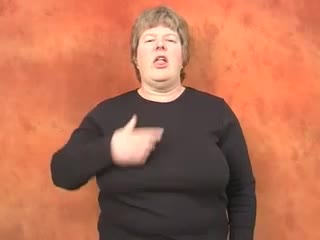
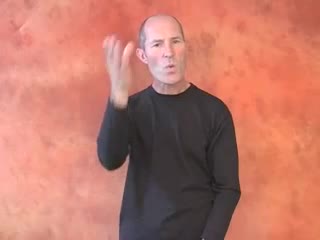
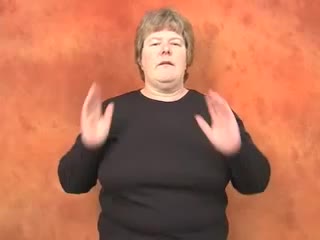
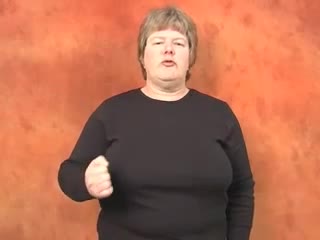
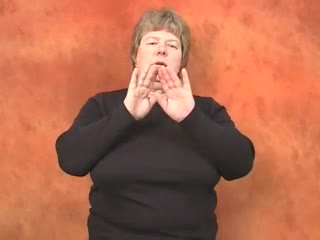
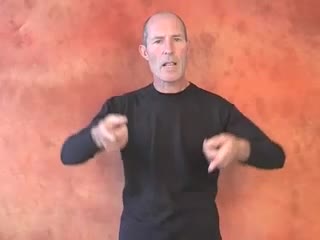
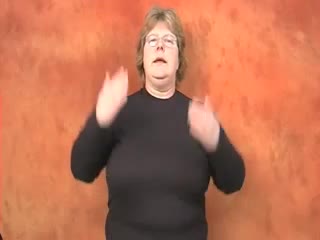
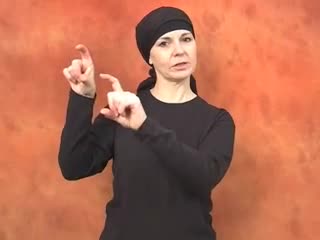
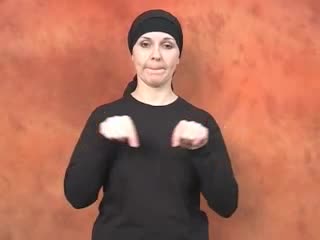
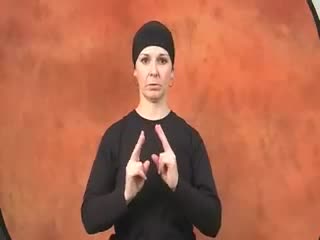
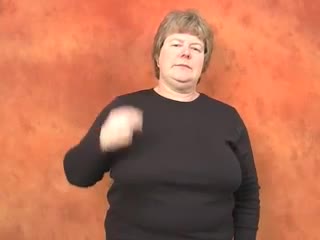
For the BSL sign for "hook," you'll primarily use your dominant hand. Start by forming a 'C' shape with your dominant hand; your fingers should be curled inwards towards your palm, with your thumb extended and tucked slightly alongside your index finger, mimicking a natural grasping curve. Ensure your index, middle, ring, and pinky fingers remain together, creating a unified, strong curved form, almost like the end of a physical hook.
Step 2: Hand Placement and Location
Position your dominant hand, already in the 'C' handshape, in the neutral signing space directly in front of your body, approximately at chest height. It should be comfortably extended away from your torso, allowing for clear movement. Your non-dominant hand remains relaxed at your side or in a neutral position, as it isn't typically involved in this specific sign.
Step 3: Movement
From its initial position, move your dominant 'C' handshape with a deliberate, short, curved motion. You'll draw your hand slightly downwards and then back towards your body, ending a little closer than where you began, as if you're pulling something in or making a small, distinct hooking action. The movement is concise and firm, making one single, clear arc.
Step 4: Facial Expression and Mouthing
While the sign for "hook" doesn't demand a specific intense facial expression, maintaining a neutral and engaged facial expression is always appropriate in BSL. Simultaneously, you should mouth the English word "hook" clearly and naturally. Mouthing is a crucial non-manual feature in BSL, providing context and reinforcing the lexicon, so articulating the word silently helps distinguish the sign and aids comprehension.
Step 5: Palm Orientation
Throughout the sign, your palm should primarily face inwards towards your body, or slightly towards the side, maintaining that curved posture. This inward orientation helps to reinforce the visual impression of a "hook" and its function, suggesting an action of catching or pulling something towards oneself. The direction of your palm remains consistent during the entire motion, not shifting or rotating significantly.
"hook" in BSL - Quick Reference Snapshot
- Handshape: Dominant hand forms a 'C' with fingers curled and thumb tucked.
- Location: Neutral signing space, chest height, in front of the body.
- Movement: Single, short, distinct downward and inward curved arc.
- Facial Expression: Neutral, engaged.
- Dominant Hand: Used alone.
- Palm Orientation: Inward, towards the body.
5 Memorisation Tricks for the BSL Sign "hook"
- Visual Mnemonic: Picture a fishing hook or a coat hook right in front of you. The 'C' handshape you form is literally the curve of that hook, and the slight pulling movement mimics what a hook does – it catches and secures.
- Muscle-Memory Drill: Practice the single, firm arc in the air repeatedly, focusing on the feeling of your wrist and forearm creating that small, precise curve. Doing this ten times slowly, then ten times quickly, will embed the motion into your muscle memory.
- Connect to Meaning: Think about the core purpose of a hook: to grab or hold onto something. As you make the sign, mentally "hook" an imaginary object, associating the physical action with the word's function.
- Common Confusion Tip: Be careful not to make the movement too large or too repetitive; a common mistake is overdoing it. Remember, it's a single, concise 'pull' motion, not a repetitive 'snatching' or a broad sweep.
- Daily-Life Practice Idea: Every time you see a hook in your home – on the back of a door, for your keys, or even a coat hanger – make the sign for "hook" silently to yourself. This constant visual trigger will reinforce the connection.
Real-Life Situations to Use the BSL Sign for "hook"
- Imagine you're describing your new jacket: you might sign, "My jacket has a small hook for hanging." Here, "hook" functions as a noun, specifying a feature.
- If you're asking about fishing, you could sign, "Do you have a fishing hook?" The sign integrates smoothly into a question structure, maintaining its lexical meaning.
- Perhaps you're explaining a design: "The designer used a clever hook to grab attention." In this context, it can refer to a metaphorical 'hook' or an engaging element, showing its flexibility in BSL.
- When talking about securing something, you could indicate, "I need to put a hook on the wall to hang the picture." This demonstrates its use in a practical, action-oriented sentence, often followed by signs for "wall" or "hang."
Top 3 Mistakes Learners Make Signing "hook" in BSL
- Overly Wide Handshape: Many beginners spread their fingers too much, making a wide, open 'C' that looks more like "cup" or "hold." To correct this, ensure your fingers are tightly together and genuinely curled inward, forming a compact, strong curve.
- Incorrect Movement Repetition: Learners sometimes perform the sign with multiple small "jerk" movements, as if trying to reel something in. The sign for "hook" is a single, distinct, deliberate pull; focus on one clean, curved motion rather than several small ones.
- Palm Orientation Confusion: It's easy to accidentally let the palm face outwards or upwards during the movement, which can alter the sign's meaning or make it unclear. Always remember to keep your palm oriented inwards towards your body, reinforcing the action of catching or drawing something to you.
Fascinating Facts About the BSL Sign for "hook"
- The BSL sign for "hook" is beautifully iconic, meaning its form directly resembles the thing it represents – the curved shape of a physical hook. This visual representation makes it quite intuitive for new learners to grasp.
- While the core sign is widely understood, you might encounter slight regional variations in BSL. Some areas might have a slightly larger or smaller movement, or a minor difference in the exact angle of the wrist, but the fundamental 'C' handshape and pulling motion remain consistent across the UK.
- Interestingly, this sign's handshape can be seen as a modified version of the BSL manual alphabet letter 'C'. This connection highlights how the manual alphabet often informs and is incorporated into the broader lexicon of BSL signs.
- The sign can sometimes be subtly modified to convey different types of hooks, for instance, a larger, stronger hook might involve a more robust movement, or a tiny hook might use a more delicate, precise gesture, demonstrating BSL's inherent spatial and iconic flexibility.
- Its strong visual motivation allows "hook" to be easily understood even by those with minimal BSL knowledge, as the sign itself communicates the concept quite clearly without needing extensive contextualisation.
"hook" in Deaf Culture - Community and Identity
The concept of a "hook" in Deaf culture extends beyond its literal meaning, often embodying connections and capturing attention, which are vital aspects of community interaction. In conversations, a well-placed sign can act as a rhetorical "hook," drawing others into a shared dialogue or narrative, fostering that strong sense of belonging. Communication in the Deaf community thrives on visual clarity and engaging storytelling, and signs like "hook" become part of the rich tapestry of expressive language. This shared visual lexicon, including signs like "hook," forms a fundamental part of Deaf identity, allowing for unique ways of expressing ideas and forging strong social bonds.
Example Conversations Using "hook" in BSL
English: Where's the coat hook? - BSL structure: Topic-comment order, with spatial reference for "where."
English: I bought a new fishing hook. - BSL structure: Subject-verb-object, with "new" modifying "hook."
English: Can you hook this up for me? - BSL structure: Question marker with implied object, "hook" acting as a verb here.
English: That story has a great hook. - BSL structure: Topic-comment, "hook" used metaphorically to describe an engaging element.
English: My keys are on the hook by the door. - BSL structure: Location-topic-comment, indicating spatial relationship.
Frequently Asked Questions: The BSL Sign for "hook"
Is the BSL sign for "hook" difficult for beginners?
Not at all, the BSL sign for "hook" is quite accessible for beginners! Its iconic nature, meaning it looks like what it represents, makes it relatively easy to learn and remember. Focusing on the clear 'C' handshape and the single, distinct pulling movement will help you master it quickly.
Are there different ways to sign "hook" in BSL for different types of hooks?
While the core sign remains consistent, BSL allows for subtle modifications to convey nuances. You might use a larger, more forceful movement for a heavy-duty hook or a smaller, more delicate gesture for a tiny, intricate hook, showing the inherent flexibility of visual language. These modifications are usually contextual and intuitive.
Can children easily learn the BSL sign for "hook"?
Absolutely, children pick up the BSL sign for "hook" very readily! Its clear visual representation and simple, memorable movement make it ideal for young learners. They often enjoy connecting the sign to real-world objects like coat hooks or toy hooks, which helps reinforce their understanding.
What's the difference between "hook" and "catch" in BSL?
The BSL sign for "hook" specifically refers to the curved object or the action of using such an object to secure something. The sign for "catch" often involves two hands coming together or a single hand moving to grasp, focusing more on the action of intercepting or seizing something in motion. While related, their forms and primary meanings are distinct.
Does the sign for "hook" have any metaphorical uses in BSL?
Yes, the BSL sign for "hook" can certainly be used metaphorically, much like in spoken English. For instance, you could use it to describe an engaging element in a story or a compelling argument that "hooks" someone's attention. The visual essence of drawing something in or securing interest translates well into abstract contexts.
Signs That Pair Naturally with "hook" in BSL
- FISH: This pairs naturally because a "hook" is often associated with fishing, making them a logical vocabulary cluster for discussions about angling or sea life.
- COAT: Many coats have a loop or a means to be hung on a "hook," so learning these together helps describe everyday items and actions in a practical way.
- HANG: The action of "hanging" something frequently involves a "hook," creating a direct functional link between the two signs and expanding your ability to describe household tasks.
- WALL: You might put a "hook" on a "wall," so understanding both allows you to describe where objects are placed and how they are secured in your environment.
- CATCH: While distinct, "hook" and "catch" are conceptually related through the idea of securing or snagging something, making them useful to learn in tandem for richer descriptive power.
- KEY: Often, keys are kept on a "hook" by the door, making "key" a practical companion sign for daily conversations about organisation and home items.
Building Fluency: How to Practise "hook" in BSL
To truly embed the BSL sign for "hook" into your active vocabulary, consistent practice is key. Start by using a mirror to observe your handshape and movement; ensure your 'C' is firm and the single, curved pull is clear and distinct, matching the visual description. Try integrating "hook" into simple daily BSL conversations you might have with yourself or a practice partner, perhaps describing objects around your home that have hooks or need one. Filming yourself signing a few sentences that include "hook" can offer invaluable feedback, helping you spot any subtle errors you might not notice otherwise. The best way to build fluency is to find a Deaf conversation partner; they'll provide real-time feedback and expose you to how "hook" is used naturally in context. Remember to space out your practice over several days rather than cramming, allowing your brain to consolidate the new motor memory and linguistic connections.