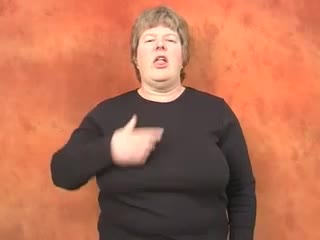
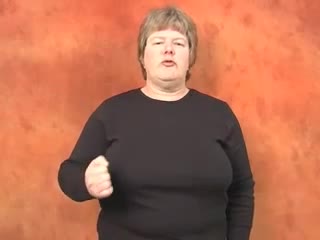
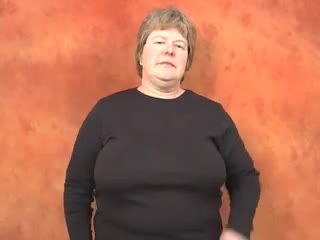
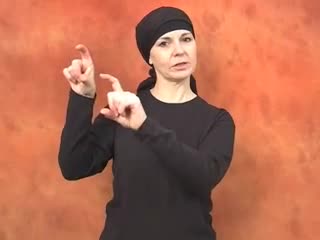
What Is the BSL Sign for "socket outlet"?
Ever found yourself needing to talk about plugging something in, perhaps asking for the nearest charging point, or discussing home repairs? Learning the BSL sign for socket outlet opens up a vital area of everyday communication in British Sign Language. This particular sign beautifully captures the essence of its meaning, making it quite intuitive once you understand its visual logic. It's a foundational piece of vocabulary, essential for anyone looking to truly connect and navigate daily conversations within the Deaf community in the UK. Mastering the British Sign Language socket outlet sign means you're well on your way to discussing practical aspects of your environment with ease.
How to Sign "socket outlet" in British Sign Language - Step-by-Step
Let's get your hands moving and truly embody this sign, step by step, ensuring you grasp every nuance.
Step 1: Handshape
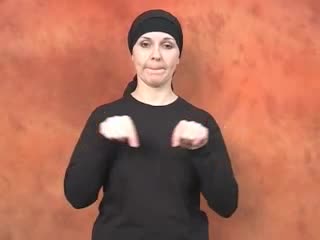
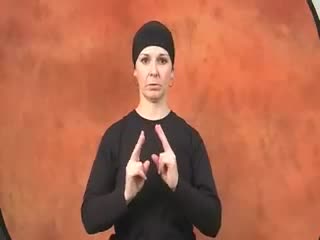
For this sign, you'll primarily use your dominant hand. Start by extending your index finger and middle finger, holding them slightly apart, much like a pair of open scissors or the prongs of an electrical plug. Your thumb, ring finger, and pinky finger should remain curled inward, gently resting against your palm. Imagine forming a 'V' shape, but with your fingers straight and separated, not bent.
Step 2: Hand Placement and Location
Position your non-dominant hand in front of your body, around chest height, with your palm facing slightly towards you or angled directly forward, fingers together and flat, representing a wall surface or the face of a socket. Your dominant hand, with its 'V' shape, should be held a short distance away, ready to approach. Think of your non-dominant hand as the fixed point where the action will happen.
Step 3: Movement
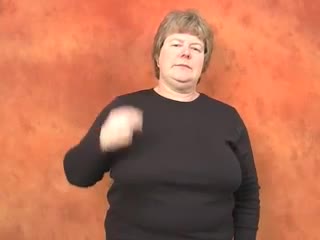
Now, with your dominant 'V' handshape, move it purposefully and directly towards your non-dominant hand. The movement should be a short, sharp, forward thrust, as if you are inserting a plug into a socket. Your fingers, the 'prongs' of your dominant hand, should aim to gently "enter" the space between your non-dominant fingers or simply meet the flat surface with a slight, firm contact. Perform this action just once.
Step 4: Facial Expression and Mouthing
A neutral or slightly focused facial expression is entirely appropriate for the sign socket outlet; there's no strong emotion typically associated with this word. Crucially, accompany the manual sign by mouthing the word "socket" or "outlet" silently or very subtly. This mouthing, a non-manual feature, provides vital context and helps clarify the specific English word being conveyed, a common practice within British Sign Language for many signs.
Step 5: Palm Orientation
As your dominant 'V' hand approaches your non-dominant hand, your palm should generally face towards the non-dominant hand, or slightly downwards and forward. During the "insertion" movement, the orientation remains consistent, maintaining the visual metaphor of a plug fitting into its receptacle. Maintaining this orientation throughout the movement ensures the sign's meaning is clear and unambiguous.
"socket outlet" in BSL - Quick Reference Snapshot
Here's a handy summary to help you quickly recall the specifics of signing "socket outlet":
- Handshape: Dominant hand, index and middle fingers extended and slightly spread, others curled.
- Location: Dominant hand moves towards a flat non-dominant hand positioned at chest height.
- Movement: Short, single forward thrust, mimicking a plug insertion.
- Facial Expression: Neutral or focused.
- Dominant Hand: Used for the 'plug' movement.
- Palm Orientation: Dominant hand's palm faces non-dominant hand or slightly forward.
5 Memorisation Tricks for the BSL Sign "socket outlet"
Learning a new sign can be tricky, but these tricks will help the BSL socket outlet sign stick with you.
- Visual Mnemonic: Picture those two extended fingers as the prongs of a UK electrical plug, ready to connect. Your non-dominant hand acts as the wall or the actual socket itself, creating a clear visual story in your mind. This immediate connection to the physical object makes the sign's form incredibly logical and easy to recall.
- Muscle-Memory Drill: Practice the specific 'V' handshape and the precise forward movement ten times in a row, then take a short break, and repeat. Focusing on the physical sensation of your fingers separating and the slight push helps embed the motion into your muscle memory, making the sign feel natural over time.
- Connect to Meaning: Think about the function of a socket outlet: it's where you *insert* a plug to get power. The sign is a direct, iconic representation of this action. When you sign it, consciously think "I am plugging something in," reinforcing the link between the action and the word.
- Common-Confusion Tip: Be careful not to let your fingers splay too wide or curl too much; the 'V' needs to be distinct and firm. Many learners initially relax the handshape, which can make it look like a general pointing gesture or another sign entirely, so focus on crisp finger extension.
- Daily-Life Practice: Every time you plug in your phone, kettle, or laptop, pause for a moment and physically perform the how to sign socket outlet in BSL sign. Integrate it into your routine, perhaps narrating your actions in sign language to yourself, which helps solidify the sign in a practical context.
Real-Life Situations to Use the BSL Sign for "socket outlet"
Knowing how to sign socket outlet in BSL is incredibly useful in many practical settings. Here are some real-life scenarios:
- Imagine you're at a friend's house and your phone battery is critically low. You could sign, "PHONE FLAT. WHERE [sign for 'socket outlet']?" using a questioning facial expression to ask for its location.
- Perhaps you're discussing home renovations and need to specify where a new electrical connection should go. You might sign, "NEW [sign for 'socket outlet'] THERE," pointing to the desired spot with spatial clarity.
- If a light isn't working, you might check the connection and sign, "LIGHT NOT WORKING. IS [sign for 'socket outlet'] BROKEN?" indicating a potential issue with the power source.
- During a conversation about safety with children, you could use the sign to warn them, "DON'T TOUCH [sign for 'socket outlet']! DANGEROUS." This direct visual communication effectively conveys the message.
Top 3 Mistakes Learners Make Signing "socket outlet" in BSL
It's completely normal to make a few errors when you're starting out, and understanding these common pitfalls will significantly improve your BSL socket outlet sign.
- Incorrect Handshape: A frequent mistake involves using a relaxed 'V' or letting the fingers droop. This dilutes the visual representation of the plug's prongs, making the sign less clear. The correction is to ensure your index and middle fingers are straight, distinct, and slightly spread, maintaining the firm 'V' throughout the movement.
- Vague Placement or Movement: Sometimes learners sign the 'V' handshape without a clear target or with a floppy, uncontrolled motion. This diminishes the iconic quality of "plugging in." To fix this, always establish your non-dominant hand as the "socket" and execute a decisive, direct forward thrust with your dominant hand, mimicking the action precisely.
- Missing Non-Manual Features: Failing to mouth "socket" or "outlet" can sometimes lead to confusion, especially for new signers or if the manual sign is slightly ambiguous. Remember that mouthing is an integral part of BSL grammar and clarity. Consciously practice mouthing the word as you perform the manual sign to reinforce the complete BSL vocabulary item.
Fascinating Facts About the BSL Sign for "socket outlet"
Delving into the specifics of what is the sign for socket outlet reveals some interesting insights into British Sign Language itself.
- This sign is a great example of an "iconic" sign in BSL; it visually represents the action or object it describes. You can literally see the 'plug' going into the 'socket'.
- While the core handshape and movement are consistent, subtle regional variations might exist in the exact angle or speed of the "insertion" within the diverse BSL-using community across the UK. These nuances are usually minor and understood universally.
- The sign doesn't derive directly from the manual alphabet, meaning it's not fingerspelled or based on a letter shape but rather on the physical form and function of the object.
- Its direct visual nature makes it a relatively easy sign for beginners to learn and remember, often serving as an early example of BSL's descriptive power.
- This sign's utility highlights how BSL adapts to modern life, incorporating everyday objects and concepts into its rich lexicon with clear, functional representations.
"socket outlet" in Deaf Culture - Community and Identity
The concept of a "socket outlet," while seemingly mundane, subtly weaves into daily life within the Deaf community, just as it does for everyone. For Deaf individuals, clear communication about practicalities like electricity access is essential, especially when relying on technology such as phones, laptops, and hearing aids or cochlear implants, all of which require consistent power. The sign itself becomes a shared, unambiguous way to discuss common needs without verbal barriers. It represents a small but significant piece of the practical communication fabric that supports independence and connection. Being able to effortlessly ask where to charge a device or discuss an electrical issue reinforces a sense of belonging and ease in everyday interactions, demonstrating how BSL empowers individuals to navigate their world fully.
Example Conversations Using "socket outlet" in BSL
Here are five practical examples of how you might use the British Sign Language socket outlet sign in conversation:
English: Where is the nearest socket outlet, please? - BSL structure: NEAREST [sign for 'socket outlet'] WHERE? (Question marker on face)
English: Can you move the lamp to that socket outlet over there? - BSL structure: LAMP MOVE [sign for 'socket outlet'] THERE CAN YOU? (Pointing with directionality)
English: This socket outlet isn't working at all. - BSL structure: THIS [sign for 'socket outlet'] NOT WORKING AT ALL. (Negative headshake, specific emphasis)
English: I need to install another socket outlet in the kitchen. - BSL structure: KITCHEN NEED INSTALL ANOTHER [sign for 'socket outlet']. (Topic-comment structure)</
English: Be careful, the socket outlet is loose. - BSL structure: BE CAREFUL [sign for 'socket outlet'] LOOSE. (Warning expression)
Frequently Asked Questions: The BSL Sign for "socket outlet"
Is the BSL sign for socket outlet suitable for beginners?
Absolutely, the BSL sign for socket outlet is an excellent sign for beginners to learn! Its iconic nature, meaning it visually resembles the action of plugging something in, makes it quite intuitive and easy to grasp, solidifying early learning. You'll find it's a frequently used word in daily interactions, so it's very practical.
Are there regional variations for the BSL socket outlet sign?
While the fundamental handshape and movement for the BSL socket outlet sign are generally consistent across the UK, you might observe very slight regional differences in the exact speed or 'firmness' of the movement. These minor stylistic variations rarely impede understanding, as the core visual concept remains the same everywhere.
What signs are commonly confused with the BSL sign for socket outlet?
Beginners sometimes confuse the sign for socket outlet with general pointing gestures or signs for "V" or "two." The key difference lies in the specific forward movement and the intention to represent a plug. Always ensure your non-dominant hand is present as the "socket" and the movement is a distinct "insertion."
Is this BSL sign for socket outlet child-friendly?
Yes, the BSL sign for socket outlet is very child-friendly! Its direct visual representation makes it easy for children to understand and replicate. It's often used when teaching children about electrical safety or simply asking them to plug in a toy, making it a valuable sign for family communication.
How does the BSL sign for socket outlet compare to signs for the same concept in another sign language?
Every sign language is unique, and while the concept of a "socket outlet" is universal, the specific sign for it will vary significantly across different sign languages. British Sign Language has its own distinct, iconic sign as described, which is different from how this concept might be represented in a sign language from another country, reflecting each language's independent development.
Signs That Pair Naturally with "socket outlet" in BSL
Building your vocabulary systematically helps with fluency. Here are some signs that naturally cluster with the BSL sign for socket outlet:
- PLUG: This sign often mirrors the 'prongs' and insertion, making it a logical partner for discussing electrical connections. They represent the two halves of a connection.
- ELECTRICITY / POWER: Essential for discussing what comes from a socket, linking the physical object to its energy output.
- CHARGE (battery): You charge devices by plugging them into a socket, so this sign frequently follows or precedes "socket outlet."
- BROKEN / NOT WORKING: Useful for describing a faulty socket, connecting the object to its functional status.
- LAMP / LIGHT: Many lamps require a socket for power, making these common companions in conversations about lighting.
- APPLIANCE: A general term for devices that use sockets, helping to categorise what might be plugged in.
Building Fluency: How to Practise "socket outlet" in BSL
To truly embed the BSL sign for socket outlet into your active vocabulary, consistent and thoughtful practice is your best friend. Start by finding a mirror and observing your handshape and movement; make sure your 'V' hand is clear and your "plugging in" motion is precise and consistent, just like we discussed. Integrate this sign into your daily BSL conversation practice by consciously looking for opportunities to use it. When you walk into a room, identify all the "socket outlets" and sign them, perhaps narrating silently to yourself. Filming yourself signing can offer incredible insight; you'll spot nuances you might miss otherwise, helping you refine your technique and improve clarity. Most importantly, seek out opportunities to practise with a Deaf conversation partner; they'll provide invaluable feedback and context, helping you use the sign naturally within genuine dialogue. Keep practising, and you'll soon find "socket outlet" flowing effortlessly from your hands!