What Is the BSL Sign for "bit"?
Ever found yourself needing to express a tiny amount, a small piece, or just a little of something in conversation? Here's the brilliant BSL sign for "bit" that opens up a whole world of nuanced communication. This particular sign elegantly captures the essence of smallness or a minimal quantity, becoming a foundational element in British Sign Language when you want to qualify how much of something you're referring to. Learning this specific sign will truly enhance your ability to communicate subtle distinctions in everyday interactions, making your signing much more expressive and precise. You'll quickly discover how this simple gesture plays a significant role across countless daily scenarios.
How to Sign "bit" in British Sign Language - Step-by-Step
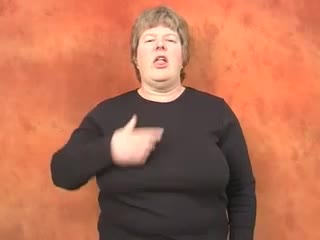
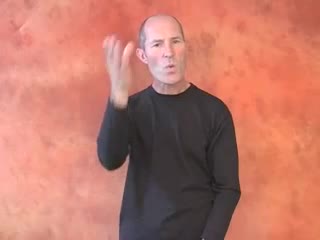
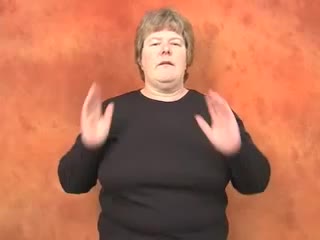
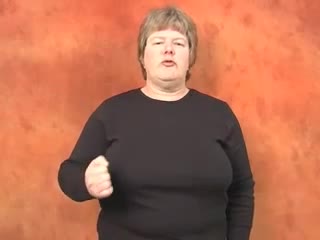
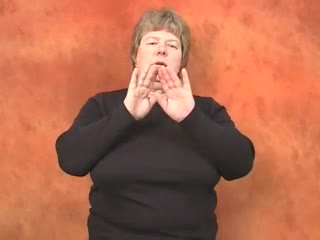
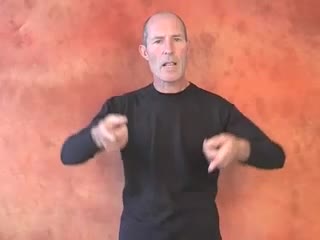
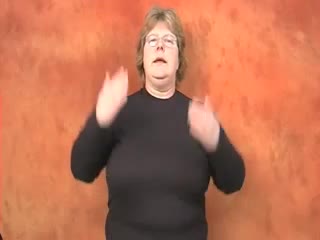
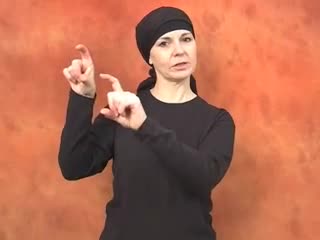
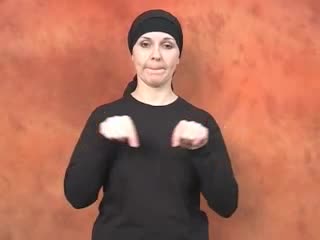
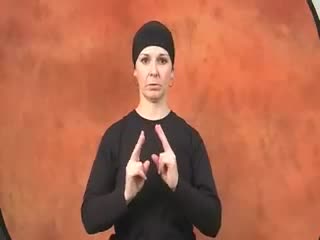
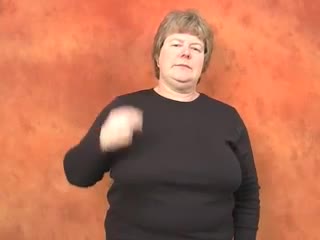
Mastering the action for "bit" in British Sign Language is a precise yet approachable process, involving a delicate handshape and a subtle movement.
Step 1: Handshape
For this sign, you'll want to use your dominant hand. Start by extending your index finger straight out while curling your middle, ring, and little fingers into your palm, keeping them gently tucked away. Now, bring the tip of your thumb to lightly touch the very tip of your extended index finger, forming a precise, small "pinch" or "tweezers" shape. All other fingers should remain completely folded down, creating a very focused and compact handform that clearly signifies something small.
Step 2: Hand Placement and Location
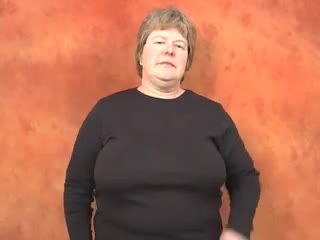
Position your dominant hand, already in the "pinch" handshape, in a neutral space slightly in front of your body, around waist or chest height. It doesn't need to be against any part of your torso or face; rather, it floats freely in the air. This central, unconstrained placement allows for clear visibility and prepares for the upcoming movement. Your non-dominant hand remains relaxed at your side or in a comfortable resting position, as it doesn't participate in forming this particular sign.
Step 3: Movement
With your hand held in that precise "pinch" configuration, execute a small, subtle flick of the wrist. The movement is usually a quick, very slight downward and forward motion, almost as if you're gently dropping a tiny, invisible speck. It’s not a large sweep or a dramatic arc, but rather a contained, controlled action, emphasizing the minimal quantity being conveyed. Perform this subtle flick only once; repetition isn't typically part of this specific sign's standard execution.
Step 4: Facial Expression and Mouthing
Accompanying the manual sign for "bit," your facial expression should reflect the idea of something small or minimal. Often, a slight tightening of the lips or a subtle narrowing of the eyes can convey this nuance. Crucially, you should mouth the word "bit" as you perform the sign. Mouthing, a vital non-manual feature in British Sign Language, provides crucial lexical information, helping to differentiate homonyms and adding clarity to your message, even when the manual sign is clear.
Step 5: Palm Orientation
Initially, as you form the handshape and position it, your palm will generally be facing inwards towards your body or slightly downwards. As you execute the small flicking movement, there might be a very slight, almost imperceptible shift in the palm's orientation, perhaps turning a fraction more forward or downward. This subtle change naturally accompanies the wrist action and contributes to the visual representation of handling something tiny, adding to the sign's overall communicative impact.
"bit" in BSL - Quick Reference Snapshot
- Handshape: Dominant hand, index finger and thumb tips touching, other fingers curled.
- Location: Neutral space, slightly in front of the body.
- Movement: Small, subtle downward and forward flick of the wrist.
- Facial Expression: Subtle indication of smallness; mouth "bit".
- Dominant Hand: Used exclusively for this sign.
- Palm Orientation: Initially inwards/downwards, slight shift forward/downward during movement.
5 Memorisation Tricks for the BSL Sign "bit"
- Visual Mnemonic: Picture your index finger and thumb forming a tiny pair of tweezers, delicately picking up an invisible crumb or a minuscule grain of sand. This image directly relates to the handshape and the concept of something extremely small, helping you recall the precise finger formation for "bit British Sign Language."
- Muscle-Memory Drill: Practice the specific "pinch and flick" motion repeatedly while focusing intently on the sensation in your wrist and fingertips. Close your eyes and perform the movement, then open them to check your accuracy, reinforcing the correct motor pattern for the BSL bit sign without visual distraction.
- Connection to Meaning: Think of the sign as literally showing "just a tiny piece" or "a small amount" between your fingers. This iconic representation directly mirrors the lexical meaning of "bit," creating a strong conceptual link that makes the sign intuitive and easier to remember when you need to sign bit in BSL.
- Common-Confusion Tip: Be mindful not to confuse this with signs for "small" or "little," which often involve a broader movement or a different handshape. The key distinction for "bit" lies in that very specific, delicate index-thumb pinch and minimal flick, setting it apart from other size-related signs.
- Daily-Life Practice Idea: Throughout your day, whenever you encounter something small, like a speck of dust, a tiny button, or a crumb, mentally or physically perform the BSL sign for bit. Integrating it into these real-world observations will naturally embed "how to sign bit in BSL" into your daily routine.
Real-Life Situations to Use the BSL Sign for "bit"
- You might use this sign in a café when asking for "just a bit of milk" in your tea. Here, the sign for "bit" would follow the sign for "milk," showing a clear topic-comment structure.
- Imagine you're discussing a puzzle with a friend and want to say, "I need a bit more time." The sign "bit" would modify "time," indicating a small additional duration, often accompanied by a slightly pleading or contemplative facial expression.
- When sharing food, you could offer someone "a bit" of your cake, signing "cake" then "bit," perhaps with an open palm gesture towards them, demonstrating an offer of a small portion.
- Perhaps you're telling a story and want to emphasize a minor challenge, stating, "It was a bit difficult." The sign for "bit" would precede "difficult," grammatically intensifying the adjective to a slight degree.
Top 3 Mistakes Learners Make Signing "bit" in BSL
- Incorrect Handshape: Many beginners mistakenly use an 'S' handshape (a closed fist) or a flat hand. This completely changes the sign's meaning and makes it unintelligible. The correct handshape requires the precise touching of the index finger and thumb tips, distinctly forming a small, open 'F' equivalent, explicitly showing the idea of handling something tiny.
- Overly Large Movement: Another common error involves performing a sweeping or exaggerated movement, as if indicating a larger amount. This sign's essence lies in its subtlety; the movement should be a quick, very delicate flick, no bigger than if you were brushing away a tiny crumb, reflecting the minimal nature of a "bit."
- Omitting Mouthing: Learners sometimes forget to mouth the word "bit" while signing. While the manual sign is clear, mouthing is a crucial linguistic component in BSL that adds clarity and confirms the specific English word being referenced, preventing potential misinterpretations with similar signs.
Fascinating Facts About the BSL Sign for "bit"
- The iconic nature of the sign for "bit" is quite compelling; it visually represents the act of holding or indicating something tiny between the fingers, making its meaning intuitively graspable for new learners.
- While the core handshape for this sign remains consistent across the United Kingdom, some regional variations might exist in the exact direction or emphasis of the small movement, though the fundamental concept is retained.
- This sign's form is an excellent example of an indexical sign, where the sign points to or indicates its meaning directly through a physical representation, rather than an arbitrary symbol.
- Interestingly, the careful precision required for the index finger and thumb to meet closely reinforces the idea of specific smallness, distinguishing it from more general terms for "small."
- Its usage often functions as a quantifier or intensifier in BSL, demonstrating the flexibility of a single sign to modify other concepts and add a layer of nuance to expressions.
"bit" in Deaf Culture - Community and Identity
Communicating nuanced amounts like "a bit" is fundamental in any language, and within Deaf culture, the clarity and directness of the BSL sign for "bit" are highly valued. It allows for precise and efficient communication about quantities without needing lengthy verbal explanations. This sign facilitates smoother interactions, whether discussing how much tea someone wants or how much effort a task requires. The ability to quickly and accurately convey such details strengthens connections within the community, fostering a shared understanding that transcends spoken language barriers. It's these kinds of specific, expressive signs that truly enrich the tapestry of daily communication and contribute to the vibrant identity of the Deaf community.
Example Conversations Using "bit" in BSL
English: Can I have a bit of that cake, please? - BSL structure: CAKE, BIT, I HAVE, PLEASE? (Topic-comment structure, 'bit' quantifying 'cake')
English: I’m feeling a bit tired today. - BSL structure: TODAY, I FEEL BIT TIRED. (Temporal marker first, 'bit' modifying the adjective 'tired')
English: Just a bit of sugar in my coffee. - BSL structure: COFFEE, SUGAR, BIT. (Object then modifier for precise quantity)
English: Do you have a bit of spare time later? - BSL structure: LATER, YOU HAVE BIT TIME? (Question structure with 'bit' qualifying 'time')
English: It was only a bit tricky, not very hard. - BSL structure: TRICKY BIT, NOT HARD. (Emphasizing minimal difficulty with 'bit')
Frequently Asked Questions: The BSL Sign for "bit"
Is the BSL sign for "bit" used differently in Scotland compared to England?
While the core handshape and movement for the British Sign Language bit sign are widely understood across the UK, you might encounter very minor regional stylistic differences in the precise flick or emphasis. However, the fundamental meaning and recognition of this sign for "bit British Sign Language" remain consistent, ensuring clear communication regardless of the specific locale.
Are there similar signs I should avoid confusing with the BSL bit sign?
You'll want to be careful not to confuse this sign with other BSL signs that denote general size or smallness, like the sign for "small," which typically involves two hands or a broader pinching motion. The distinctive feature of the BSL sign for "bit" is its very specific, delicate index-thumb contact and minimal movement, specifically indicating a small *amount* or *piece*.
Is the BSL sign for "bit" suitable for beginners to learn early on?
Absolutely, the British Sign Language bit sign is an excellent sign for beginners to learn early in their BSL journey. It's relatively straightforward to execute, and its frequent use in everyday conversations makes it a highly practical addition to any new signer's vocabulary. Mastering this sign will quickly enhance your ability to express nuanced quantities.
Can children easily learn and use the BSL sign for "bit"?
Yes, children can certainly pick up the BSL sign for "bit" with ease! Its visual and iconic nature, representing a small quantity, is often very intuitive for young learners. Encouraging children to use this sign helps them express their needs for "just a little" of something, fostering early communication skills in British Sign Language.
How does the BSL sign for "bit" compare to other sign languages' equivalents?
Each sign language has its unique way of expressing "a bit" or "a small amount," reflecting its own linguistic and cultural background. While the concept is universal, the specific manual articulations and non-manual features will differ significantly from one sign language to another; there isn't a direct one-to-one manual translation for "bit sign language" across all systems.
Signs That Pair Naturally with "bit" in BSL
- TIME: Pairing "bit" with "TIME" allows you to express "a bit of time" or "a little while," which is incredibly useful in scheduling or discussing durations.
- MORE: When you sign "BIT" then "MORE," you're asking for "just a little more," perfect for adding a small quantity of something.
- SLOW: Combining "BIT" with "SLOW" conveys "a bit slow," a common phrase to describe speed or progress, adding a mild modifier.
- DIFFICULT: Using "BIT" before "DIFFICULT" effectively communicates "a bit difficult," softening the intensity of the adjective to a slight degree.
- MILK: This pairing is common in café settings for "a bit of milk" in a drink, showing how "bit" quantifies a specific item.
- HELP: When you sign "BIT" and then "HELP," you're requesting "a little help," indicating a modest need for assistance rather than extensive aid.
Building Fluency: How to Practise "bit" in BSL
To truly embed the BSL sign for "bit" into your signing repertoire, consistent and varied practice is key. Start by using a mirror to observe your handshape and movement; make sure your index finger and thumb are precisely touching, and that your flick is subtle, not exaggerated. Integrate this sign into your daily British Sign Language conversations by consciously looking for opportunities to express small quantities or slight modifications. Consider filming yourself signing short sentences that include "bit," then watch them back to identify areas for refinement in your handshape, movement, and crucial facial expression. Most importantly, seek out a Deaf conversation partner; they'll provide invaluable real-time feedback and help you understand the nuances of using this essential sign in natural, flowing BSL. Keep practicing regularly, and you'll find yourself using this expressive sign with confidence and accuracy.