What Is the BSL Sign for "padlock"?
Are you ready to explore an essential sign in British Sign Language that speaks to security and protection? Understanding the BSL sign for padlock opens up conversations about safeguarding belongings, securing spaces, and even metaphorical safety. This visually intuitive sign clearly represents the physical object, making it wonderfully accessible for new learners. You'll quickly see how this particular sign fits seamlessly into discussions about everyday items and crucial safety measures within the British Sign Language padlock context. Let's delve into how you master this fundamental piece of your BSL vocabulary.
How to Sign "padlock" in British Sign Language - Step-by-Step
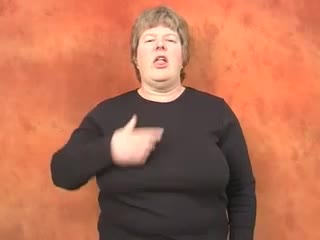
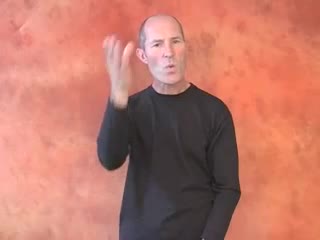
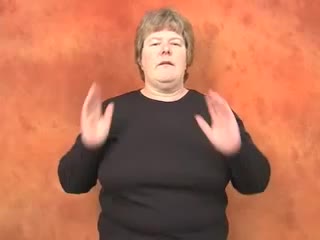
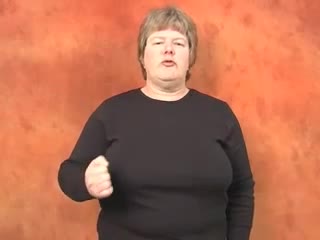
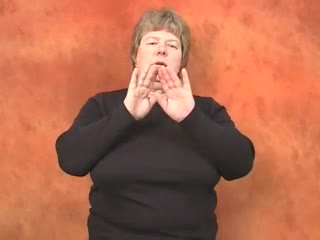
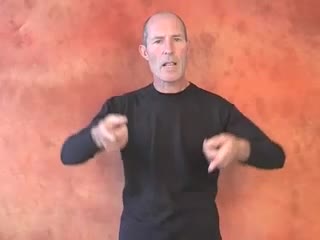
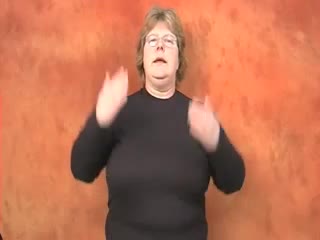
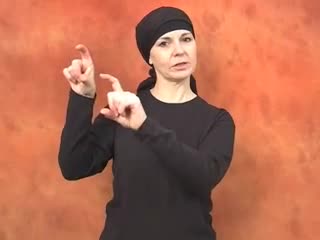
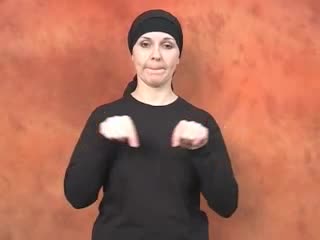
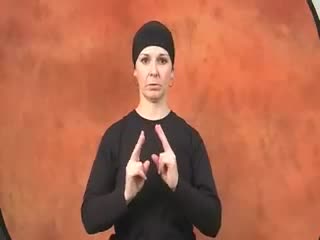
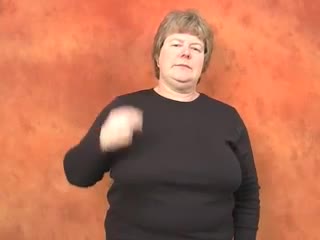
Mastering this sign involves a precise combination of handshape, placement, and movement, all working together to visually represent the familiar security device.
Step 1: Handshape
For the sign "padlock," you'll begin by forming your dominant hand into a specific configuration. Your palm faces inward, towards your body, and your fingers are initially closed into a loose fist. Then, extend your index finger, curving it slightly at the knuckle, almost as if it's the shackle of a padlock. Your thumb should rest against the side of your palm or extend slightly outward, not touching the index finger, while your remaining middle, ring, and pinky fingers remain curled gently into your palm.
Step 2: Hand Placement and Location
You'll position this specially formed hand in the neutral signing space directly in front of your chest, slightly to the side of your dominant shoulder. The hand should be comfortable and relaxed, not tense, held out at a natural distance where it's easily visible to your conversation partner. There's no contact with your body or your non-dominant hand for this particular sign, allowing the movement to be unimpeded.
Step 3: Movement
The movement for "padlock" is quite distinctive and iconic. Starting with your index finger curved as described, you'll make a short, sharp, downward-arc movement. This action mimics the closing or "clicking" shut of a padlock. The movement is swift and deliberate, signifying the final securing action, almost a brief snap of the wrist. Perform this single, concise motion; excessive repetition isn't necessary for clarity here.
Step 4: Facial Expression and Mouthing
Typically, a neutral or thoughtful facial expression accompanies the sign for "padlock," reflecting the straightforward nature of the object itself. However, if you're discussing a situation where security is a concern or a strong emotion is involved, your expression can certainly adapt to convey that added layer of meaning. Linguistically, mouthing the English word "padlock" silently or quietly is a common non-manual feature that aids in comprehension and distinguishes this sign from others that might have similar handshapes or movements in certain contexts. This co-articulation helps to reinforce the specific vocabulary item you're conveying.
Step 5: Palm Orientation
Initially, your palm faces somewhat inward, towards your chest, as your hand forms the shackle shape. As you execute the short, downward-arc movement, your palm might subtly rotate to face slightly more forward or downward, depending on the natural flow of the action. This slight shift in orientation reinforces the visual of a padlock closing, where the shackle rotates into place. The primary visual cue comes from the index finger's shape and the closing movement, but the palm's subtle adjustment contributes to the overall clarity of the sign.
"padlock" in BSL - Quick Reference Snapshot
- Handshape: Dominant hand, index finger extended and curved (like a shackle), other fingers curled, thumb rests on palm side.
- Location: Neutral signing space, in front of the chest.
- Movement: Short, sharp, downward-arc motion, mimicking a closing padlock.
- Facial Expression: Neutral, adaptable for context; mouthing "padlock."
- Dominant Hand: Used alone to form the sign.
- Palm Orientation: Starts inward, subtly shifts forward/downward during movement.
5 Memorisation Tricks for the BSL Sign "padlock"
Here are some creative ways to help that sign for "padlock" stick firmly in your memory.
- Visual Mnemonic: Picture the shape of your extended, curved index finger; it looks just like the arching shackle of a real padlock that you might hold in your hand. Visualise attaching that finger-shackle to an imaginary clasp as you perform the movement.
- Muscle-Memory Drill: Practice the exact movement by imagining you are actually locking something. Repeat the short, swift downward arc ten times, focusing on the feeling in your wrist and finger, perhaps even making a quiet 'click' sound to enhance the sensation of securing.
- Connection to the Word's Meaning: Think about the purpose of a padlock: to secure, to protect. As you sign, embody that feeling of security and closure in your movement, letting the sign represent the finality of locking something away.
- Common-Confusion Tip: Don't mistake this sign for 'key' or the verb 'to lock' (which often involves a twisting motion). The unique curved index finger and single downward arc are specific to the padlock object itself, so focus on that distinct shackle shape.
- Daily-Life Practice Idea: Every time you encounter a padlock in your daily life - on a shed, a gate, a locker, or even in a picture - pause for a moment and silently sign "padlock" to yourself. This constant real-world reinforcement will solidify the sign.
Real-Life Situations to Use the BSL Sign for "padlock"
You'll find the sign for "padlock" incredibly useful in many practical, day-to-day exchanges.
- Imagine you're asking a friend, "Do you have a padlock for your bike?" In BSL, you might sign "YOUR BIKE PADLOCK YOU HAVE?" with an inquisitive facial expression, placing "PADLOCK" clearly in the topic position.
- Perhaps you're explaining that an item is secure: "The shed has a strong padlock." You'd sign "SHED STRONG PADLOCK HAVE," using a firm, declarative facial expression to show certainty.
- When discussing a security issue, you could say, "We need a new padlock for the gate." This translates to "GATE NEW PADLOCK NEED WE," often with the sign for "NEED" executed with conviction.
- If someone asks about the security of a box, you could respond, "No, it doesn't have a padlock." Here, you'd sign "BOX PADLOCK NOT HAVE," incorporating a headshake with the "NOT HAVE" sign for negation.
Top 3 Mistakes Learners Make Signing "padlock" in BSL
Even experienced learners can sometimes stumble, but awareness is the first step to perfection!
- Incorrect Handshape: Many beginners tend to keep their index finger too straight or overly curled, rather than the specific gentle curve that mimics a padlock's shackle. This happens because they might not visualise the object clearly enough; the correction involves carefully observing your hand in a mirror and adjusting your index finger to achieve that iconic, slightly hooked form.
- Missing the Definitive Movement: Another frequent error is performing a weak or absent downward arc, making the sign look incomplete or unclear. Learners sometimes forget the sharp, decisive action, perhaps rushing or being too gentle; ensure your movement is a distinct, brief "snap" downwards, truly conveying the closing of the lock.
- Confusing it with "Key" or "Lock" (verb): It's common for new signers to muddle "padlock" with the sign for 'key' (which involves a twisting motion with a different handshape) or the verb 'to lock' (which also has distinct movement and handshape variations). The reason for this confusion lies in the related concepts; the precise fix is to focus on "padlock's" unique curved index finger and its singular, downward closing motion, distinguishing it from the rotational action of a key or the broader 'to lock' verb.
Fascinating Facts About the BSL Sign for "padlock"
The world of BSL is rich with history and linguistic nuance, even for seemingly simple signs.
- The sign for "padlock" is highly iconic, meaning it strongly resembles the object or action it represents. This direct visual connection makes it remarkably easy for people to guess its meaning, even without prior BSL knowledge.
- Unlike some abstract concepts, the sign for "padlock" tends to be quite consistent across different regions where British Sign Language is used, reflecting the universal nature and appearance of the object itself.
- Interestingly, the sign's form is less about individual letters from the manual alphabet and more about directly picturing the object's function. It's an example of BSL's visual-gestural nature at its finest, prioritising clarity through imagery.
- Its clear separation from signs like 'key' or 'door' highlights BSL's precision in distinguishing between related but distinct concepts of security and access. The language uses specific visual cues for each item.
- The singular, decisive downward movement of the sign linguistically captures the finality of securing something, emphasising the "lock-down" aspect rather than a continuous or repeated action.
"padlock" in Deaf Culture - Community and Identity
While "padlock" might seem like a straightforward object, its concept resonates deeply within the Deaf community, often touching upon themes of independence and security. Clear communication about personal belongings and shared spaces is always paramount, and the sign plays a crucial role in ensuring everyone understands instructions regarding safety and access. Imagine coordinating secure storage for community events, or discussing the security of a Deaf club's premises; the sign facilitates those vital conversations. It helps foster trust and shared responsibility, as community members rely on clear visual language for all aspects of their lives, including safeguarding their possessions. This sign, like many others, contributes to the rich visual tapestry that allows Deaf people to navigate and thrive in their world with confidence and autonomy.
Example Conversations Using "padlock" in BSL
Let's see "padlock" in action with some practical BSL sentence structures.
English: Do you have a padlock for your suitcase? - BSL structure: YOUR SUITCASE PADLOCK YOU HAVE? (Topic-Comment structure, question indicator via facial expression)
English: The gate needs a new padlock. - BSL structure: GATE NEW PADLOCK NEED. (Subject-Object-Verb order, clear statement)
English: I bought a strong padlock yesterday. - BSL structure: YESTERDAY I PADLOCK STRONG BOUGHT. (Time-Subject-Object-Verb order, describing an action)
English: Where is the padlock for the shed? - BSL structure: SHED PADLOCK WHERE? (Topic-Question word order, inquisitive facial expression)
English: Make sure you put a padlock on the box. - BSL structure: BOX PADLOCK PUT MAKE-SURE YOU. (Instructional sentence, emphasis on certainty)
Frequently Asked Questions: The BSL Sign for "padlock"
Does the BSL sign for padlock have regional variations?
Generally, the sign for padlock is quite consistent across regions within the BSL-using community, which is common for highly iconic signs that directly mimic a physical object. While slight stylistic differences might exist in individuals' signing, the core handshape and movement for "padlock" remain widely understood and unchanged throughout Britain. Its visual clarity makes it less prone to the kind of significant regional divergence found in more abstract signs.
Are there any similar BSL signs I should avoid confusing with padlock?
Yes, learners sometimes confuse "padlock" with 'key' or 'lock' (the verb 'to lock'). The sign for 'key' often involves a different handshape and a distinct twisting motion, mimicking turning a key. The verb 'to lock' can have variations, but it generally focuses on the action of securing rather than the object itself. Pay close attention to the specific curved index finger handshape and the single downward arc for "padlock" to avoid these confusions.
Is the BSL sign for padlock suitable for beginners?
Absolutely, the BSL sign for padlock is an excellent sign for beginners! Its iconic nature means it's visually logical and relatively straightforward to learn and remember. It doesn't require complex two-handed movements or subtle non-manual features beyond basic mouthing, making it an accessible and rewarding sign for those just starting their BSL journey.
Can children easily learn and use the BSL sign for padlock?
Children pick up the sign for "padlock" very quickly due to its clear visual representation of the object. They often enjoy connecting it to real-world items like their toy boxes, bikes, or school lockers, making it a highly practical and engaging sign for young learners. The sign's simplicity and directness make it perfect for early vocabulary acquisition.
How does the BSL sign for padlock compare to its equivalent in another sign language?
While the fundamental concept of a padlock is universal, the specific signs for it can differ considerably between sign languages. For instance, another sign language might use a two-handed sign to represent the padlock and its shackle, or it could employ a different handshape entirely for the "closing" action. This highlights how each sign language develops its own unique visual vocabulary, even for common objects.
Signs That Pair Naturally with "padlock" in BSL
Expanding your vocabulary around "padlock" helps build stronger, more coherent conversations.
- KEY: Often used in conjunction with "padlock" when discussing access or security, as one implies the other.
- LOCK (verb): This sign naturally follows "padlock" when describing the action of securing something with the object.
- DOOR: Padlocks are frequently used on doors, making this a common pairing in discussions about entrances and security.
- GATE: Similar to "door," gates often feature padlocks, so these two signs naturally go together in everyday contexts.
- SECURE: This sign describes the state of being locked or safe, directly relating to the function of a "padlock."
- SAFE (container): When talking about valuable items kept under lock and key, "safe" and "padlock" become relevant companions.
Building Fluency: How to Practise "padlock" in BSL
Consistent, focused practice is the secret to making "padlock" feel completely natural in your BSL communication. Begin by carefully signing "padlock" in front of a mirror, paying close attention to your handshape and ensuring that curved index finger looks exactly like a padlock's shackle. Integrate this sign into your daily BSL conversations, even if you're just signing to yourself about seeing a padlock on a garden shed or a bicycle. Try filming yourself signing the word in a simple sentence, then watch it back to identify any areas for improvement, particularly checking the crispness of that downward movement. The ultimate goal is to find a Deaf conversation partner who can provide invaluable feedback, helping you refine your technique and build confidence. Remember, a little practice each day goes a long way towards fluency!