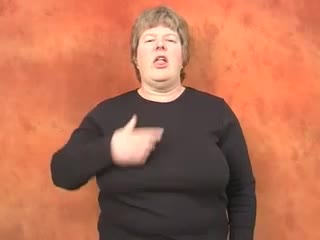
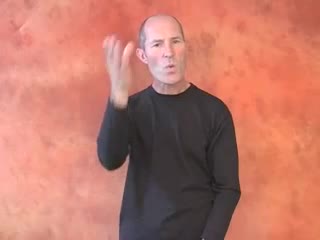
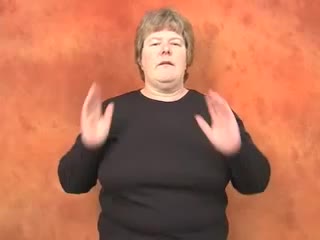
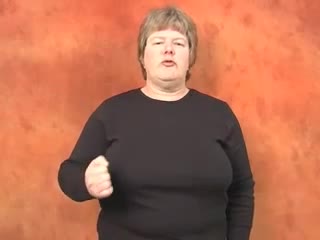
What Is the BSL Sign for "frame support"?
Ever wondered how to describe something providing stability or structure in British Sign Language? The BSL sign for frame support isn't just about literal frames; it beautifully encapsulates the idea of foundational reinforcement. This versatile sign, crucial for clear communication, conveys the essence of holding something steady or creating a boundary. Mastering the British Sign Language frame support sign opens up conversations about everything from construction projects to artistic installations, allowing you to articulate crucial structural concepts with precision and ease.
How to Sign "frame support" in British Sign Language - Step-by-Step
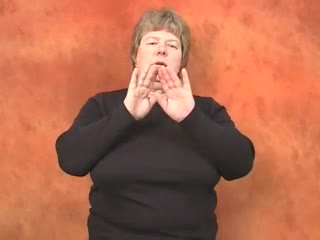
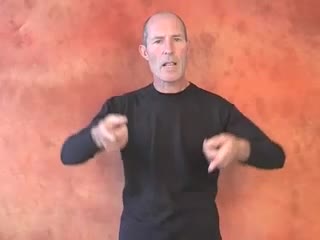
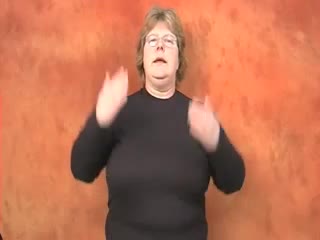
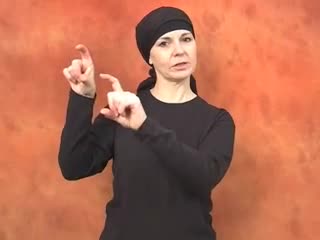
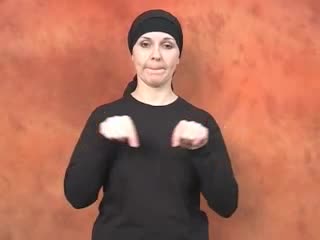
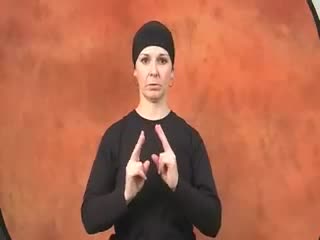
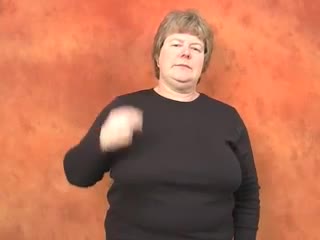
Let's break down this multi-layered sign, which combines the concept of a boundary with the action of holding something steady.
Step 1: Handshape
You'll begin with both of your hands in what we call a 'G' handshape. To achieve this, extend your index finger straight out, keeping it firm, while your thumb also extends straight and rests against the side of your palm. Curl your middle, ring, and pinky fingers down into your palm, ensuring they stay tucked away. Both hands should mirror each other in this precise configuration.
Step 2: Hand Placement and Location
Start by positioning your hands in a neutral signing space, roughly in front of your chest, about shoulder-width apart. Your dominant hand will be on the right side of your body (if you're right-handed), and your non-dominant hand on the left. The palms of both 'G' handshapes should initially face each other, with your extended index fingers pointing upwards, ready to define a perimeter.
Step 3: Movement
The sign unfolds in two distinct phases. First, to represent the "frame," move both hands simultaneously. From their starting position, trace a rectangular shape in the air. Your hands will move downwards in unison, then inward towards each other to form the bottom edge, then upwards, and finally outwards again to complete the top edge of an imagined frame. This movement should be smooth and deliberate, outlining a visible boundary. Following this framing action, transition to the "support" element. Bring your dominant hand, now flattened into a 'B' handshape (all fingers together and extended, palm open), underneath your non-dominant hand, which remains relatively stable, perhaps forming a loose fist or a flat hand, palm down. Your dominant hand gently scoops upwards and makes light contact with the underside of your non-dominant hand, signifying an upward push or bolster.
Step 4: Facial Expression and Mouthing
Non-manual features are truly the grammar of British Sign Language, so pay close attention here! When signing "frame support," your facial expression should generally be neutral but convey a sense of stability or perhaps slight tension, reflecting the strength inherent in providing structure. For the "frame" part, your brow might subtly furrow as if concentrating on the outline. During the "support" portion, a firm, steady gaze helps reinforce the meaning. Crucially, mouthing the word "frame support" silently or with a very slight whisper is common. This helps to disambiguate the sign from visually similar ones and provides a direct link to the English concept for both signers and learners.
Step 5: Palm Orientation
Throughout the initial "frame" movement, your palms generally face each other, or slightly inward, as you outline the perimeter. The index fingers maintain their upward orientation, defining the vertical and horizontal lines. Once you transition to the "support" element, your dominant hand's palm will rotate to face upwards as it moves to position itself beneath your non-dominant hand. This upward-facing palm orientation is vital because it visually signifies the action of lifting, holding, or underpinning, which is the very essence of supporting something from below.
"frame support" in BSL - Quick Reference Snapshot
Here's a concise overview to help you quickly recall the sign:
- Handshape: Initial 'G' handshapes for both hands, transitioning to a flat 'B' handshape for the dominant hand.
- Location: Neutral signing space, in front of the chest.
- Movement: Trace a rectangle with both hands, then dominant hand moves under non-dominant hand to lift slightly.
- Facial Expression: Neutral to slight concentration, steady gaze.
- Dominant Hand: Performs the tracing and the supporting scoop.
- Palm Orientation: Inward/upward during frame, upward for support.
5 Memorisation Tricks for the BSL Sign "frame support"
Learning new signs can feel like a puzzle, but here are some clever ways to lock the British Sign Language frame support into your memory.
- Visual Mnemonic: The Invisible Blueprint. Picture yourself as an architect, drawing the outline of a sturdy window frame with your index fingers. The 'G' handshape looks a bit like a pencil, doesn't it? After you've "drawn" the frame, imagine you're placing a strong beam underneath it to hold it up securely; that's your dominant hand providing the support.
- Muscle Memory Drill: Repetitive Framing and Lifting. Stand in front of a mirror and slowly perform the sign ten times, focusing on the distinct two-part movement. Really feel the tracing of the frame and the gentle but firm lift of the support. This physical repetition helps embed the sequence in your motor memory, making it second nature.
- Concept Connection: Building and Bolstering. Think about the core meaning of "frame support" – it's about structure and stability. Connect the initial rectangular tracing to the idea of building a robust outline, and the subsequent upward scoop to the act of bolstering or reinforcing that structure. This linkage strengthens your understanding of why the sign looks the way it does.
- Common Confusion Tip: Not Just a Box. Many beginners might make a simple box shape and stop there, forgetting the crucial "support" element. To avoid this, always remind yourself that "frame support" is more than just outlining a square or rectangle; it specifically includes the action of providing a base or reinforcement. The full sign has two clear stages.
- Daily Life Practice: Pointing Out Stability. Whenever you see something in your everyday environment that has a frame and support – a picture frame on the wall, the frame of a house under construction, or even the stand of a monitor – practice the sign. Silently sign "frame support" to yourself as you observe these objects, integrating the sign into your visual world.
Real-Life Situations to Use the BSL Sign for "frame support"
You'll find the sign for "frame support" incredibly useful in a variety of contexts, far beyond just construction sites.
- Imagine discussing a new art installation; you might sign, "Artist used strong [frame support] for the sculpture," clearly conveying the structural integrity. Here, the sign acts as a direct noun, often placed after the object it describes in BSL's topic-comment structure.
- When you're talking about home improvements, you could ask, "Does this new shelf need extra [frame support]?" The question might involve raised eyebrows and a slight forward lean, adding BSL's non-manual grammar for interrogatives.
- Perhaps a friend is struggling with a wobbly table. You might suggest, "Maybe add some more [frame support] underneath," using spatial language to indicate where the reinforcement is needed, with the sign placed in the relevant area of your signing space.
- Even in a more abstract sense, when discussing architectural drawings, you could sign, "The architect designed robust [frame support] for the entire building," emphasising the foundational strength through your expression and movement.
Top 3 Mistakes Learners Make Signing "frame support" in BSL
Every learner encounters hurdles, and "frame support" has its common pitfalls. Let's tackle them head-on.
- Mistake 1: Omitting the "Support" Element. A frequent error involves only performing the "frame" outlining movement and neglecting the subsequent "support" action with the dominant hand. This mistake happens because the "frame" part is quite visually intuitive. The correction is to always ensure you complete both distinct phases of the sign: first the rectangular outline with both 'G' hands, then the dominant 'B' hand moving underneath to signify support.
- Mistake 2: Inconsistent Handshapes. Sometimes beginners might use a flat 'B' handshape for the entire "frame" outline, or they might not transition their dominant hand correctly for the "support" part. This inconsistency can make the sign unclear. The precise correction is to always start with both hands in the 'G' handshape for the frame, and then specifically transition only the dominant hand to a flat 'B' handshape for the supporting action.
- Mistake 3: Lack of Deliberate Movement. Rushing through the sign or making vague, floppy movements for either the frame or the support can lead to misinterpretation. The sign for frame support needs clarity in its execution to convey strength and stability. To correct this, focus on deliberate, controlled movements for both parts: a clean, defined rectangular trace and a steady, firm upward scoop for the support, ensuring your hand muscles are engaged.
Fascinating Facts About the BSL Sign for "frame support"
The world of British Sign Language is rich with intriguing details, and even a sign like "frame support" holds some interesting stories.
- The iconic nature of this sign, where the form directly mimics the concept, makes it remarkably accessible for new learners. You're literally drawing the frame and then showing the support, a visual representation that transcends spoken language.
- While the core elements remain consistent, you might observe subtle regional variations in the BSL-using community. Some signers might make the "frame" slightly larger or smaller, or the "support" movement might be a little more pronounced depending on local dialects, although the fundamental handshapes and sequence persist.
- The two-part structure of this sign illustrates a common linguistic feature in BSL: compounding. It effectively combines two distinct visual concepts – outlining a boundary and providing foundational strength – into a single, cohesive lexical item.
- This sign isn't directly derived from the manual alphabet, but the 'G' handshape used in the first part is a fundamental component of many other BSL signs, demonstrating how foundational handshapes are reused and adapted to build complex meanings.
- The interplay between the two hands in this sign, one delineating and the other providing a base, highlights the beautiful spatial grammar inherent in BSL, where concepts are built and presented in three-dimensional space rather than linear sequence.
"frame support" in Deaf Culture - Community and Identity
Understanding a sign in BSL goes far beyond its manual execution; it's about connecting with the vibrant Deaf community. The concept of "frame support" resonates deeply within Deaf culture, often extending metaphorically to the support systems vital for community strength. Think of the way Deaf clubs and organisations provide a framework and support network for individuals, acting as literal "frame supports" for cultural preservation and identity. These spaces offer a place where people can communicate freely, share experiences, and reinforce the unique cultural identity of Deaf people, creating a stable foundation for collective well-being. It’s a testament to the community's resilience and its commitment to upholding and strengthening its members.
Example Conversations Using "frame support" in BSL
Let's see "frame support" in action with some practical sentences.
English: We need to add more frame support to the stage. - BSL structure: Topic-comment order, with "stage" first, then "more frame support needed."
English: Is the window frame support strong enough? - BSL structure: Question marked by facial expression (raised eyebrows) and a slightly inquisitive lean, "window frame support strong enough?"
English: He designed a clever frame support for the sculpture. - BSL structure: "He designed clever sculpture frame support," placing the adjective before the noun or concept it describes.
English: Without proper frame support, the structure will collapse. - BSL structure: Conditional statement, "proper frame support none, structure collapse will."
English: That old bridge needs some serious frame support. - BSL structure: Emphasis on "serious" can be conveyed through a more intense facial expression and a slightly stronger, more deliberate sign for "frame support."
Frequently Asked Questions: The BSL Sign for "frame support"
Is the BSL sign for "frame support" the same everywhere in the UK?
While the core components of the BSL sign for frame support are widely recognised across the UK, small regional nuances can sometimes appear. The fundamental handshapes, movements, and overall concept remain consistent, but you might notice slight variations in the emphasis or speed of execution depending on local BSL dialects, which are a natural part of any living language.
Are there any similar BSL signs I should be careful not to confuse with "frame support"?
Indeed, some signs might initially look similar, particularly if you're not precise with the handshapes or the second part of the movement. Signs for "box" or "window" might involve similar rectangular outlining. However, the crucial differentiator for "frame support" is the distinct 'G' handshapes for the frame and the specific upward 'B' hand support movement, which sets it apart from other frame-like or container signs.
Is the BSL sign for "frame support" suitable for beginners?
Absolutely, the BSL sign for frame support is a fantastic sign for beginners to learn! Its iconic nature, visually representing both the frame and the support, makes it relatively easy to grasp and remember. Focusing on clear, deliberate movements for each stage will help you master it quickly and build confidence in your signing.
Can children learn and use the BSL sign for "frame support"?
Yes, children can certainly learn and effectively use the BSL sign for frame support. Its visual and action-oriented nature is very appealing to younger learners. You might find that children enjoy making the 'frame' shape and the 'supporting' action, which aids in their memorisation and understanding of the concept in a practical, engaging way.
How does the BSL sign for "frame support" compare to other signs for 'support'?
The BSL sign for "frame support" is quite specific because it incorporates the "frame" element first. While there are more general signs for "support" (often involving one hand lifting another, or a foundational gesture), "frame support" uniquely combines this with the explicit outlining of a structure. This makes it distinct when you specifically need to convey support for a defined perimeter or structure, rather than just general assistance.
Signs That Pair Naturally with "frame support" in BSL
Building your BSL vocabulary efficiently means learning signs in natural clusters. Here are some signs that complement "frame support" beautifully.
- BUILD: This sign, often involving stacking hands or a rising motion, logically pairs with "frame support" as frames are foundational elements in construction.
- STRUCTURE: Conveyed by outlining a complex shape or indicating an organised arrangement, "structure" is a conceptual neighbour, as "frame support" creates and maintains structural integrity.
- STRONG: An assertive sign often shown by flexing an arm, "strong" directly relates to the quality needed for effective frame support.
- WALL: Made by outlining a vertical plane, "wall" often relies on underlying frame support for its stability, making it a natural companion sign.
- DESIGN: This sign, often involving drawing in the air, links well because frame supports are typically a key part of an engineered or architectural design.
- REPAIR: When something needs "frame support," it might also need "repair," a sign often shown by bringing hands together and then apart as if mending.
Building Fluency: How to Practise "frame support" in BSL
Mastering "frame support" is all about consistent, thoughtful practice. Start by using a mirror; this allows you to observe your handshapes and movements, making sure your 'G' hands are precise for the frame and your 'B' hand for the support is clear. Try integrating "frame support" into everyday BSL conversation by consciously thinking of situations where you might use it. For instance, if you're discussing furniture, think, "Does this chair have good [frame support]?" Filming yourself signing is incredibly insightful; it helps you spot any hesitations or inaccuracies you might miss otherwise, giving you a chance to refine your movements and expressions. The ultimate step for building fluency is to connect with a Deaf conversation partner. They can provide invaluable feedback, helping you adjust your signing to be perfectly clear and natural within genuine BSL dialogue. Remember, repetition spaced over several days, rather than intense cramming, will truly embed this sign into your long-term BSL vocabulary. Keep going, you're doing brilliantly!