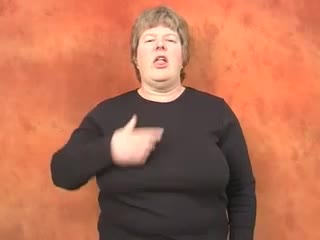
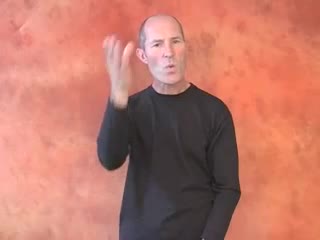
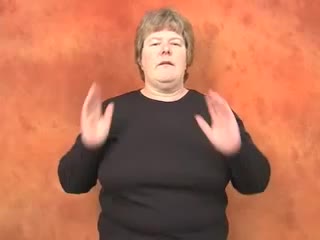
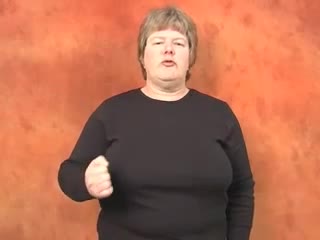
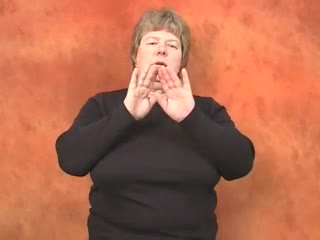
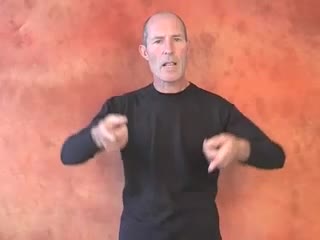
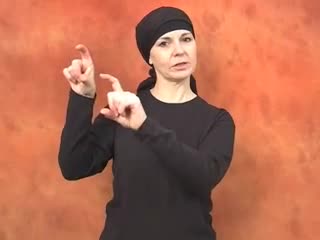
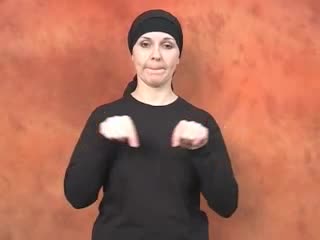
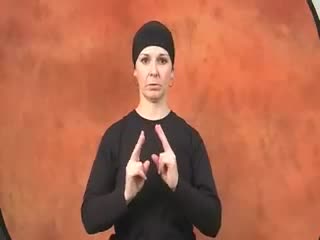
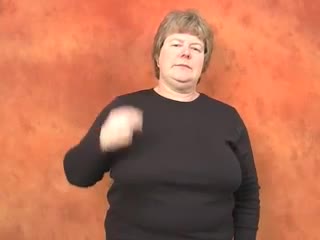
What Is the BSL Sign for "mark"?
Sometimes a simple word like "mark" can carry a surprising amount of weight, whether you're talking about a stain on your shirt, a grade on an exam, or a spot you've highlighted. Understanding how to convey this varied concept clearly is absolutely vital for effective communication in British Sign Language. The BSL sign for mark offers a wonderfully direct and visually intuitive way to express this idea, bringing clarity where the English word might be ambiguous. You'll discover that mastering this particular sign isn't just about learning a new vocabulary item; it's about grasping how we visually represent abstract concepts in the language. Getting to grips with the British Sign Language mark means you're taking another significant step towards truly connecting with the Deaf community.
How to Sign "mark" in British Sign Language - Step-by-Step
Learning to produce this sign accurately involves a deliberate combination of handshape, placement, and movement, each component working together to form the complete message.
Step 1: Handshape
To begin, you'll form what we call a "D" handshape with your dominant hand. This means your index finger extends straight upwards, pointing towards the ceiling, while your other three fingers (middle, ring, and pinky) curl down into your palm. Your thumb should rest securely alongside your curled fingers, keeping them neatly tucked away and providing a stable base for your extended index finger. Picture holding a small, imaginary pen, poised to draw, but with just your index finger as the "nib."
Step 2: Hand Placement and Location
Next, position your non-dominant hand flat, palm facing upwards, held comfortably in the neutral space in front of your body, around waist height. This flat, open palm acts as your "surface" or "page." Your dominant hand, with its extended index finger, should then be brought towards this non-dominant palm, hovering just above it, ready to make contact. The two hands don't need to be tightly pressed together initially; a slight gap is perfectly fine.
Step 3: Movement
With your dominant index finger, you're going to make a short, distinct tapping motion onto the centre of your non-dominant palm. Imagine you are lightly dabbing a small dot onto the surface. This movement is usually singular and firm, indicating the placement of a specific "mark." There's no sweeping or repetitive action here; it's a precise, single contact that embodies the idea of making a distinct impression.
Step 4: Facial Expression and Mouthing
For the basic noun "mark," a neutral facial expression is generally appropriate; you're simply stating a fact, so your face remains relaxed and open. However, context is always key in British Sign Language; if you're discussing a "bad mark" or a "significant mark," your facial expression would naturally shift to reflect that nuance. Crucially, mouthing the English word "mark" as you sign it helps clarify meaning for hearing learners and often accompanies the sign for many Deaf BSL users. This non-manual feature supports the visual message, particularly when the sign might otherwise be ambiguous or when speaking with hearing individuals.
Step 5: Palm Orientation
Throughout this sign, your dominant hand's palm generally faces slightly towards your non-dominant hand or downwards as you prepare to make contact. This orientation allows your extended index finger to clearly and naturally tap onto the upward-facing palm of your non-dominant hand. Maintaining this angle during the action ensures the 'drawing' or 'placing' of the mark is visually consistent and easily understood, signifying the act of putting something *onto* a surface.
"mark" in BSL - Quick Reference Snapshot
- Handshape: Dominant hand forms a "D" shape (index finger extended, others curled, thumb alongside).
- Location: Dominant index finger taps onto the open palm of the non-dominant hand, held in neutral space.
- Movement: A single, distinct tapping motion.
- Facial Expression: Typically neutral, adapting to context.
- Dominant Hand: Used to perform the tapping action.
- Palm Orientation: Dominant palm faces slightly downwards or towards the non-dominant hand.
5 Memorisation Tricks for the BSL Sign "mark"
- Visual Mnemonic: Picture a teacher giving a student a "mark" on their hand with an imaginary pen. The extended index finger looks just like that pen, leaving a visible impression. This helps you remember both the handshape and the movement.
- Muscle-Memory Drill: Repeatedly make the tapping motion of the sign while saying "mark" aloud or mouthing it. Focus on the feeling of your index finger touching your palm. Doing this ten times in a row, then taking a break, and repeating later will embed the movement.
- Connect to Meaning: Think of the sign as literally "drawing a mark" or "placing a dot" onto a surface. The flat non-dominant hand is your paper, and your dominant index finger is the tool making the impression. This direct visual link reinforces the sign's core meaning.
- Common-Confusion Tip: Be careful not to confuse this sign with 'point' or 'dot'. While they share similar handshapes, 'mark' involves a clear, singular tap on the non-dominant palm, whereas 'point' often directs outwards, and 'dot' might involve a smaller, more delicate touch or a quick small circle. Pay attention to the location and specific movement.
- Daily-Life Practice: Every time you physically "mark" something in your day, whether it's crossing an item off your to-do list, putting a sticker on a chart, or circling a date on a calendar, mentally or physically perform the BSL sign. This consistent, contextual practice makes the sign second nature.
Real-Life Situations to Use the BSL Sign for "mark"
- Imagine you're reviewing a document with a friend. You could sign, "THIS PAGE, CAN YOU SEE-IT MARK?" to ask if they notice a specific highlight or correction you've made. Here, "MARK" acts as a direct reference to a visible indicator.
- Perhaps you're discussing school results. You might express, "MY TEST, I GOT GOOD MARK!" The sign for "mark" clearly communicates a grade or score achieved, often accompanied by a positive facial expression for "GOOD."
- When planning an outing, you could sign, "MAP, PLEASE MARK THE LOCATION" to request that someone indicate a particular spot on a map. This usage demonstrates how the sign can be used in an imperative or request context, guiding action.
- Should you be pointing out an imperfection, you might sign, "OH! TABLE, THERE-IS MARK," indicating a scratch or a stain on a surface. This shows the sign's versatility for identifying blemishes or distinguishing features.
Top 3 Mistakes Learners Make Signing "mark" in BSL
- Incorrect Handshape Confusion: A frequent error involves using a slightly open '5' handshape or an 'S' handshape instead of the precise 'D' handshape. Learners sometimes let their middle finger extend slightly or curl their thumb inside their palm. The correction is simple: ensure only your index finger is extended straight, with all other fingers tightly curled and the thumb firmly on the outside, creating that distinct 'D' shape, like a pointer.
- Vague or Repetitive Movement: Some learners will make several light taps or a scrubbing motion rather than the single, clear contact required. This can lead to confusion with signs like 'rub' or 'clean'. To fix this, focus on executing just one deliberate, firm tap onto the palm, ensuring the movement is concise and definitive, representing the singular act of placing a mark.
- Misplaced Location: Occasionally, beginners might tap their dominant index finger onto their chest, arm, or even the air, rather than the designated non-dominant palm. This alters the sign's meaning and makes it less clear. The precise correction involves consistently bringing your dominant hand to make contact with the centre of your non-dominant palm, which serves as the visual 'surface' for the mark.
Fascinating Facts About the BSL Sign for "mark"
- The BSL sign for "mark" is highly iconic, meaning its form directly resembles the action or concept it represents. It literally looks like you are "making a mark" or "dot" on a surface, which aids in its memorability and makes it quite intuitive for new learners.
- While the core sign remains consistent across the BSL-using community, you might observe subtle regional variations in the speed or emphasis of the tap. Some areas might use a slightly softer touch, while others might execute a more pronounced, definitive contact, reflecting local signing preferences.
- This sign's form is deeply rooted in the concept of indication or identification. It serves as a visual placeholder, drawing attention to a specific point, much like a pen dotting paper. Its simplicity belies a powerful communicative function.
- Interestingly, the 'D' handshape used here is foundational in British Sign Language, appearing in many other signs that involve pointing, defining, or designating something. Mastering this specific handshape for "mark" therefore strengthens your grasp of a common BSL building block.
- The sign for "mark" often necessitates a clear distinction from signs for "spot" (as in a physical location) or "stain" (a discoloured area). While all involve an 'indicator' concept, "mark" specifically implies an *intentional* or *designated* impression, even if it refers to a physical blemish.
"mark" in Deaf Culture - Community and Identity
The concept of a "mark" resonates in various aspects of Deaf culture, particularly concerning education and identity. In educational settings, where BSL is the primary language of instruction, receiving a "mark" or grade is a clear indicator of academic achievement, understood and celebrated within the community. Beyond formal contexts, the precision of signing itself could be seen as leaving an indelible "mark" of clarity and respect in communication. When conversations flow smoothly in BSL, without misunderstanding or misinterpretation, it creates a powerful connection that reinforces community bonds. Understanding and using signs like "mark" accurately contributes to this shared language and cultural identity, fostering a sense of belonging and mutual respect among BSL users.
Example Conversations Using "mark" in BSL
English: Did you see the mark on the wall? - BSL structure: WALL, MARK, YOU SEE?
English: I got a really good mark on my BSL homework. - BSL structure: MY BSL HOMEWORK, MARK, REALLY GOOD, I GOT.
English: Please mark this page for me. - BSL structure: THIS PAGE, ME, MARK, PLEASE.
English: There's a strange mark on this antique chair. - BSL structure: THIS CHAIR, ANTIQUE, MARK, STRANGE, THERE-IS.
English: The teacher needs to mark all the assignments by Friday. - BSL structure: TEACHER, ALL ASSIGNMENTS, MARK, FRIDAY, MUST-DO.
Frequently Asked Questions: The BSL Sign for "mark"
Are there regional differences for the BSL sign for mark?
While the core handshape and movement for "mark" generally remain quite consistent across the BSL-using community, you might occasionally encounter minor regional variations in the exact intensity or speed of the tap. These subtle differences usually don't hinder comprehension, as the fundamental visual concept is universally understood wherever BSL is used. It's always beneficial to observe local signers in your area.
How is the BSL sign for mark different from 'spot' or 'stain'?
The BSL sign for "mark" typically implies a deliberate inscription or a designated point, or sometimes a blemish that stands out. In contrast, "spot" (as in a location) often uses a 'D' handshape pointing to a general area or a specific location, without the tapping action on the non-dominant palm. The sign for "stain" usually involves rubbing a 'S' or 'A' handshape on a surface, depicting the physical act of smudging or discolouration, distinguishing it clearly from the single, precise tap of "mark."
Is the BSL sign for mark suitable for beginners?
Absolutely, the BSL sign for "mark" is an excellent sign for beginners to learn early on. Its iconic nature makes it quite intuitive, and the handshape, placement, and movement are relatively straightforward to master. It’s a very practical sign that you'll find yourself using often in various contexts, making it a valuable addition to any new signer's vocabulary.
Can children easily learn the BSL sign for mark?
Yes, children typically pick up the BSL sign for "mark" with great ease. Its direct visual representation of making an impression is highly accessible for young learners. Using it in games, when pointing out things in books, or even during drawing activities can make learning this sign both fun and effective for children.
Does the BSL sign for mark have other meanings?
While the primary meaning of the BSL sign for "mark" is indeed a visible impression, a grade, or a specific point, its exact interpretation can subtly shift with context and accompanying non-manual features. For instance, using a different facial expression or combining it with other signs might lean towards 'highlight' or 'point out a specific detail,' rather than just a physical blemish. It's an example of how BSL efficiently uses a core sign to convey related concepts.
Signs That Pair Naturally with "mark" in BSL
- GRADE: This sign, often made by touching the dominant 'G' handshape to the non-dominant palm, naturally links with "mark" when discussing academic performance or assessments. Both signs relate to evaluating progress.
- TEST: Frequently signed by making a 'T' handshape on both hands and moving them up and down, "test" logically precedes or follows "mark" in educational discussions, as marks are typically given for tests.
- WRITE: Involving the dominant hand signing a 'scribbling' motion on the non-dominant palm, "write" pairs well because one often writes to "mark" information down or create a mark. They share a similar conceptual space of creating inscriptions.
- DOT: Signed by tapping a 'D' handshape (similar to "mark" but often smaller or more delicate) once, this sign is conceptually close to "mark" when referring to a small, distinct point. Learning both helps differentiate precise visual representations.
- STAIN: Often signed by rubbing a 'S' handshape on a surface, "stain" offers a contrasting concept to "mark" when discussing imperfections. While "mark" can be a blemish, "stain" implies a more permanent discolouration, making their comparison useful for vocabulary building.
- HIGHLIGHT: This sign, frequently made by sweeping a 'H' handshape across the non-dominant palm or a flat hand, connects to "mark" when you're drawing attention to important information. One might "mark" a passage by "highlighting" it.
Building Fluency: How to Practise "mark" in BSL
To truly embed the BSL sign for "mark" into your active vocabulary, consistent and varied practice is absolutely key. Stand in front of a mirror and watch your dominant handshape closely as you perform the sign; ensure your index finger is perfectly extended and your other fingers are neatly tucked away, just as described. Try to integrate the sign into your daily BSL conversations, even if you're just signing to yourself, by identifying opportunities to use it whenever you encounter a "mark" in your environment, whether it's a price tag, a note, or a design. Filming yourself signing can provide invaluable feedback, allowing you to critically review your handshape, movement, and facial expression, catching any subtle errors you might otherwise miss. Remember, the best way to gain fluency is by finding a Deaf conversation partner; they'll offer authentic feedback and expose you to natural usage, helping you refine your signing. Finally, spaced repetition over several days will solidify your memory; revisit the sign for "mark" regularly, perhaps for a minute or two each day, rather than just one long session, and you'll soon find it feels completely natural.