What Is the BSL Sign for "external entrance door"?
Navigating our surroundings often means needing to specify points of entry, and for anyone learning British Sign Language, clearly identifying the main way into a building is incredibly useful. This particular sign provides a vital piece of architectural vocabulary, allowing you to articulate precisely which access point you're referring to. Understanding the British Sign Language external entrance door sign helps you discuss everything from meeting places to safety exits, enhancing your ability to communicate about the world around you. This fundamental sign for external entrance door in sign language bridges a common communication gap, making it a cornerstone for everyday conversations.
How to Sign "external entrance door" in British Sign Language - Step-by-Step
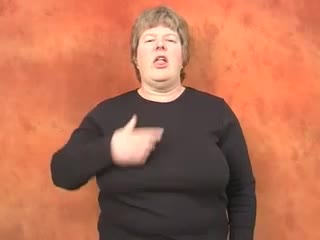
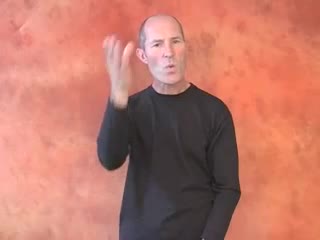
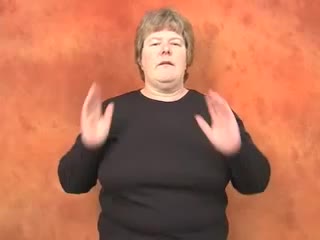
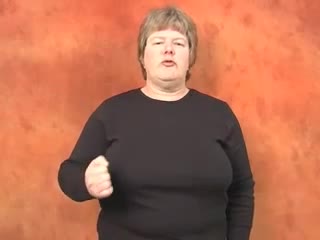
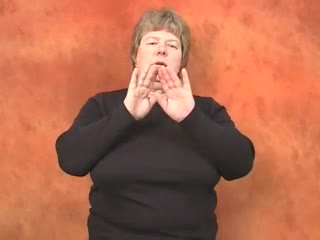
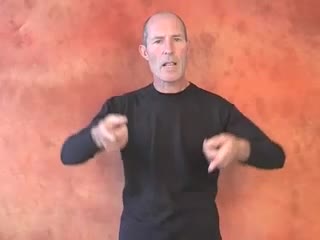
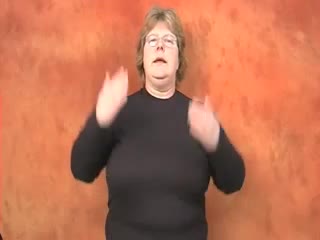
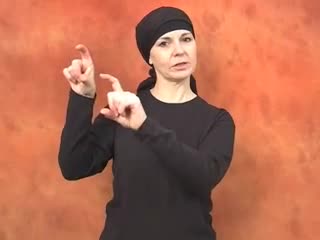
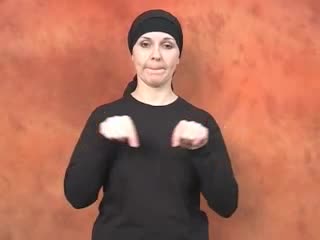
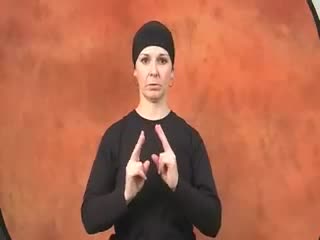
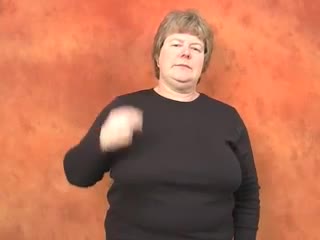
Learning to perform this visually intuitive sign is quite straightforward, representing the very action of a door opening and closing.
Step 1: Handshape
Begin by forming a flat handshape with both your dominant and non-dominant hands. To achieve this, extend all your fingers straight and keep them pressed together, ensuring your thumb rests alongside your palm or slightly tucked in. Imagine each hand becoming a rigid, flat surface, much like a solid panel.
Step 2: Hand Placement and Location
Position your non-dominant hand a short distance in front of your chest, with its palm facing slightly towards your body or forward. Now, bring your dominant hand so its pinky finger side is pressed gently against the thumb side or palm of your non-dominant hand. This creates the visual of a door panel resting against its frame, setting the scene for movement.
Step 3: Movement
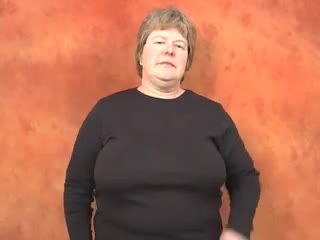
From this starting position, pivot your dominant hand outward, away from your non-dominant hand, as if it were a door swinging open. Your dominant wrist acts as the hinge, and the movement should be controlled, like a door slowly opening. After this outward sweep, bring your dominant hand back to its initial position, simulating the door closing. This opening and closing action is typically performed once or twice to clearly convey the concept.
Step 4: Facial Expression and Mouthing
While signing a neutral noun like this, your facial expression should generally remain neutral, reflecting the object itself. However, it's crucial to mouth the word "door" silently or subtly as you perform the sign. Mouthing, a non-manual feature in BSL, is an integral part of the language's grammar, providing clarity and distinguishing homographs, so always remember this important linguistic component.
Step 5: Palm Orientation
Throughout this sign, your non-dominant hand's palm generally maintains its initial orientation, facing slightly towards you or forward. Your dominant hand, acting as the door, begins with its palm facing the non-dominant hand. As you pivot it open, the palm of your dominant hand will naturally rotate to face outward, away from your body, before returning to its inward-facing position upon closing. This shift in palm orientation is key to accurately representing the door's action and its spatial relationship.
"external entrance door" in BSL - Quick Reference Snapshot
- **Handshape:** Both hands flat, fingers together.
- **Location:** Non-dominant hand stationary in front of chest, dominant hand pivots from it.
- **Movement:** Dominant hand pivots open and closed once or twice.
- **Facial Expression:** Neutral, with mouthing of "door".
- **Dominant Hand:** Performs the opening/closing movement.
- **Palm Orientation:** Dominant palm faces inward then outward; non-dominant palm faces slightly towards signer or forward.
5 Memorisation Tricks for the BSL Sign "external entrance door"
Here are some clever ways to really make the British Sign Language external entrance door sign stick in your memory.
- **Visual Mnemonic:** Picture yourself physically opening a heavy, solid external entrance door with your dominant hand, using your non-dominant hand as the sturdy door frame. This mental image of the door swinging on its hinge directly mirrors the sign's movement, making the connection strong and immediate.
- **Muscle-Memory Drill:** Stand near an actual door and practice the sign every time you pass through it, consciously focusing on the pivot motion of your dominant hand against your non-dominant hand. Repetitively engaging these specific muscles will embed the motion deeply into your kinesthetic memory, making the sign feel natural and automatic over time.
- **Connect to Meaning:** Think about how the sign perfectly mimics the function of a door, providing a clear visual representation of opening and closing an entryway. Recognising this iconic connection reinforces the meaning directly into the physical action, helping you understand *why* the sign looks the way it does.
- **Common-Confusion Tip:** Be careful not to confuse this with a general "opening" sign, which might use a more expansive, less structured movement without the distinct pivot. Always remember the non-dominant hand acts as the fixed frame, ensuring your how to sign external entrance door in BSL accurately represents the object, not just an action.
- **Daily-Life Practice:** Whenever you see an external entrance door, whether at a shop, your home, or a friend's house, mentally (or physically!) sign "external entrance door" and then perhaps "open" or "close." Integrating the sign into your daily observations makes learning external entrance door BSL a continuous, effortless process.
Real-Life Situations to Use the BSL Sign for "external entrance door"
Knowing how to sign external entrance door in BSL opens up many practical communication possibilities in everyday scenarios.
- **Asking about access:** You might sign, "EXTERNAL ENTRANCE DOOR WHERE?" accompanied by raised eyebrows to form a question, indicating you're looking for the main way in. This clearly establishes your query about the building's primary entry point.
- **Giving directions:** When guiding someone, you could sign, "GO THROUGH EXTERNAL ENTRANCE DOOR," using a forward motion with the sign to indicate the direction of travel. Such spatial grammar efficiently directs them towards the specific opening.
- **Describing a situation:** Perhaps you want to explain that a particular entrance is closed; you'd sign, "EXTERNAL ENTRANCE DOOR CLOSED," adding a headshake with the "CLOSED" sign for negation. This effectively conveys the status of the entryway.
- **Referring to an event:** If someone is waiting outside, you might remark, "SOMEONE AT EXTERNAL ENTRANCE DOOR," pointing towards the conceptual location of the door in your signing space. This creates a vivid picture for your conversational partner.
Top 3 Mistakes Learners Make Signing "external entrance door" in BSL
Even experienced learners can sometimes misstep; let's address the most common errors when trying to sign "external entrance door" in British Sign Language.
- **Incorrect Handshape:** A frequent mistake is curling the fingers slightly or allowing them to splay, rather than keeping them flat and together. This can make the sign look less like a solid door panel and more ambiguous. To correct this, consciously flatten both hands, ensuring all fingers are extended straight and pressed tightly against each other, creating a firm, unyielding surface.
- **Lack of a Clear Pivot:** Some learners perform a general waving motion or simply move both hands apart without a distinct hinge point. Without the non-dominant hand acting as the frame and the dominant hand clearly pivoting from it, the sign loses its iconic meaning. The precise correction involves maintaining the non-dominant hand steadily in place, then ensuring the dominant hand's pinky edge makes firm contact and rotates smoothly away and back, mimicking a door on its hinges.
- **Forgetting Non-Manual Features:** It's easy to focus solely on hand movements and neglect the crucial mouthing of "door" or maintaining a neutral facial expression. Missing these elements can lead to misinterpretation or make your sign less fluent within the BSL grammatical structure. To fix this, always practice signing with a neutral face and consciously mouth "door" whenever you produce the sign, embedding this vital linguistic component into your muscle memory.
Fascinating Facts About the BSL Sign for "external entrance door"
The sign for what is the sign for external entrance door in BSL carries some interesting insights into the language itself.
- Its strong iconic motivation means the sign directly resembles the action of a door opening and closing, making it highly intuitive for new learners to grasp quickly. This visual representation creates an immediate link between the sign's form and its meaning.
- While the core concept remains consistent, subtle regional variations in BSL might see slight differences in the exact hand placement or the extent of the pivot movement. These minor regional nuances, though not altering the meaning, highlight the rich diversity within the BSL-using community across the UK.
- The clear, distinct nature of this sign means it rarely gets confused with other similar concepts, a testament to its efficient linguistic design. Its strong visual cue immediately differentiates it from related signs like 'window' or 'gate.'
- Linguistically, the sign for external entrance door in sign language often serves as a base for compound signs, combining with other signs to create more complex meanings. For instance, pairing it with 'open' or 'close' forms common phrases, showcasing its versatility.
- The simplicity and directness of this sign make it one of the foundational vocabulary items many BSL learners encounter early on. Its straightforward execution helps build confidence while introducing essential concepts of BSL handshapes and movement.
"external entrance door" in Deaf Culture - Community and Identity
The concept of a "door," particularly an external entrance, holds significant cultural weight within the Deaf community, subtly reflecting themes of access and inclusion. Historically, doors have represented both entry and exclusion, and for Deaf individuals, clear communication about entrances is vital for navigating public spaces safely and efficiently. The ability to articulate the precise location or status of an external entrance door in British Sign Language empowers individuals to advocate for accessible environments and ensures smooth interactions. This sign becomes a simple yet powerful tool for discussing meeting points, security features, or even describing one's home, fostering a sense of shared understanding and belonging within the community. It reinforces the importance of clear, visual communication in all aspects of daily life, celebrating the directness and efficiency inherent in sign language.
Example Conversations Using "external entrance door" in BSL
Here are five practical examples showing how you might use the BSL external entrance door sign in different conversational contexts.
English: Where is the main external entrance door for the building? - BSL structure: You'd sign BUILDING MAIN EXTERNAL ENTRANCE DOOR WHERE? with questioning eyebrows and a slight forward lean.
English: Please wait by the external entrance door. - BSL structure: This would be EXTERNAL ENTRANCE DOOR WAIT THERE, using spatial grammar to indicate the waiting location.
English: The external entrance door is locked after 6 PM. - BSL structure: You'd sign 6 PM AFTER EXTERNAL ENTRANCE DOOR LOCKED, perhaps with a slight headshake on "LOCKED" to emphasise the state.
English: I saw a new sign on the external entrance door. - BSL structure: You might sign EXTERNAL ENTRANCE DOOR NEW SIGN SEE, employing a topic-comment structure.
English: Is the external entrance door automatic? - BSL structure: You'd sign EXTERNAL ENTRANCE DOOR AUTOMATIC? with questioning eyebrows and a slight forward tilt of the head to form the yes/no question.
Frequently Asked Questions: The BSL Sign for "external entrance door"
Are there regional variations for the BSL sign for external entrance door?
While the fundamental concept and iconic movement for external entrance door in British Sign Language remain widely understood, you might encounter minor regional differences in the exact hand placement or the fluidity of the pivot. These variations are usually subtle and won't hinder comprehension, but it's always good to be aware that local dialects exist within BSL. The core sign for what is the sign for external entrance door will be recognisable across the BSL community.
Are there similar signs to "external entrance door" in BSL that I should watch out for?
Yes, learners sometimes confuse this sign with 'window' or 'gate' due to both involving a similar flat handshape and a type of opening motion. The key distinguishing feature for the BSL external entrance door sign is the clear pivot point established by the non-dominant hand and the precise opening/closing action of a solid panel. Pay close attention to the specific hand placement and movement to avoid these common mix-ups.
Is "external entrance door" in British Sign Language a good sign for beginners to learn?
Absolutely, this is an excellent sign for beginners! Its highly iconic nature means the sign directly visualises the object it represents, making it easy to remember and understand. Mastering the BSL sign for external entrance door provides a solid foundation in handshapes and movement principles, quickly building confidence in new learners.
Can children easily learn the BSL sign for "external entrance door"?
Children typically pick up the BSL external entrance door sign with great ease because of its visual and active representation. The action of opening and closing a door is familiar to them, making the sign intuitive and fun to learn. This makes it a fantastic addition to early sign language education, connecting directly to their everyday experiences.
How does the BSL sign for "external entrance door" compare to other sign languages?
Across different sign languages globally, the concept of 'door' is often conveyed through iconic signs that visually represent an opening and closing action. While the specific handshapes, orientation, and movement paths will vary between languages, the underlying principle of mimicking the door's function frequently means there's a recognisable visual commonality, even if the exact execution of learn external entrance door BSL is unique.
Signs That Pair Naturally with "external entrance door" in BSL
Building your vocabulary systematically means learning signs that naturally fit together, enhancing your fluency. Here are some signs that complement the BSL external entrance door sign.
- **OPEN:** This sign, often performed with flat hands moving apart, is a natural companion, allowing you to specify the door's state.
- **CLOSE:** Similarly, the sign for closing, typically flat hands coming together, immediately follows the concept of an external entrance door.
- **LOCKED:** After discussing an entrance, you might need to mention its security, making the sign for 'locked' (often a fist turning a key) highly relevant.
- **BUILDING:** This sign provides context, allowing you to specify *which* building's external entrance door you're referring to in conversation.
- **INSIDE:** If you're going through the door, you'll likely use 'inside' (often a flat hand moving into the non-dominant cupped hand) to describe your destination.
- **OUTSIDE:** Conversely, 'outside' (often a hand pushing away from the body) is essential for describing locations beyond the external entrance door.
- **WELCOME:** When someone arrives at an external entrance door, the welcoming gesture is a lovely, polite follow-up, showing hospitality.
Building Fluency: How to Practise "external entrance door" in BSL
Consistent practice is the key to mastering any sign, and for the BSL sign for external entrance door, a few targeted techniques will make all the difference. Start by using a mirror to observe your own handshapes and movements; seeing yourself sign helps you refine the precise pivot and ensure your fingers remain flat. Next, integrate the sign into your daily BSL conversations by actively looking for opportunities to use it when talking about buildings, entry points, or giving directions. Don't shy away from filming yourself practicing, as watching your own signing can reveal subtle areas for improvement that you might otherwise miss. Finally, and most importantly, seek out opportunities to engage with Deaf individuals; their feedback and guidance are invaluable for truly embedding the sign naturally and accurately within your BSL fluency. Keep practising regularly, spacing your sessions over several days, and you'll find this essential sign becomes a confident part of your vocabulary.