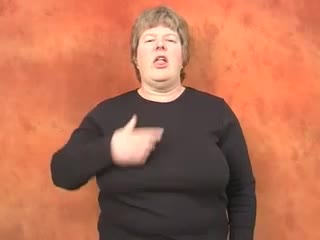
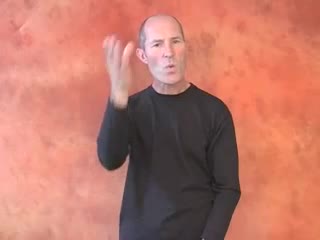
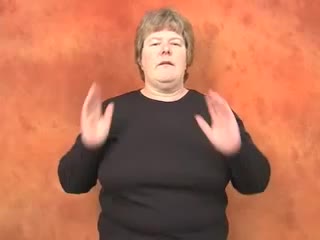
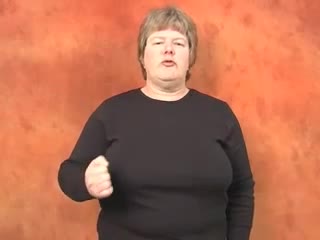
What Is the BSL Sign for "square"?
Welcome, aspiring BSL learners and members of our vibrant Deaf community! Today, we're delving into a fundamental and incredibly useful sign: the BSL sign for "square". Understanding how to sign square in BSL is not just about describing a shape; it's about enriching your ability to describe objects, layouts, and even abstract concepts in British Sign Language. This comprehensive guide will walk you through every nuance of the square sign language, ensuring you can confidently use the BSL square sign in your daily conversations. Whether you're just starting to learn square BSL or refining your existing skills, you'll find everything you need right here to master the British Sign Language square.
How to Sign "square" in British Sign Language - Step-by-Step Guide
Let's break down the BSL sign for "square" into clear, manageable steps so you can learn it effectively and accurately.
Step 1: Handshape
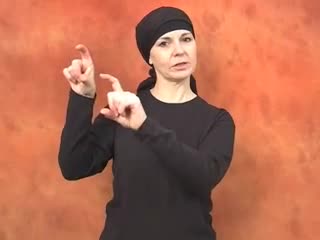
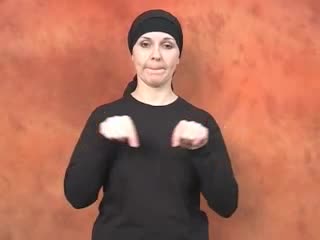
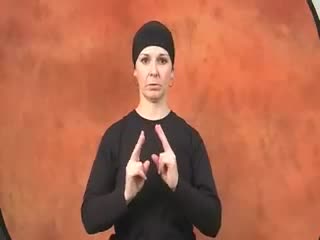
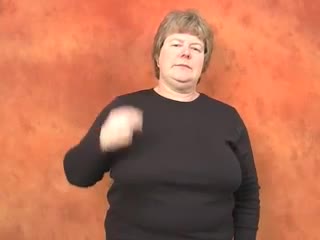
To begin the BSL sign for square, you will primarily use your dominant hand. Form a 'G' handshape, which means your index finger is extended straight out, and your thumb is extended parallel to it, touching the side of your index finger or resting just below its base. Your middle, ring, and pinky fingers should be curled down into your palm, resting against the thumb. This creates a pointed, almost L-shaped form with your index finger and thumb. Ensure your index finger is firm and straight, ready to delineate the shape.
Step 2: Hand Position and Location
The initial hand position for the British Sign Language square sign is typically in a neutral signing space, which is the area directly in front of your chest and shoulders, comfortably within your natural arm reach. You will use your dominant hand for this sign. Start with your hand positioned so that your extended index finger and thumb are pointing forward, away from your body, or slightly towards the non-dominant side if you prefer to draw the square relative to your body. There's no requirement for the non-dominant hand to be involved in the initial setup, allowing your dominant hand full freedom of movement.
Step 3: Movement
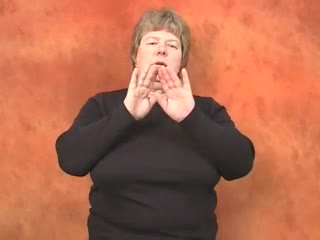
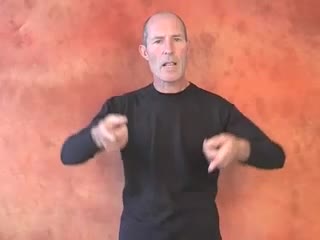
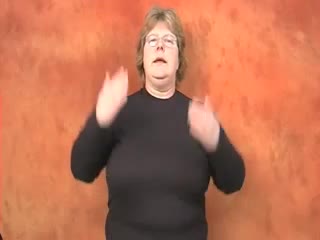
This is where the "square" truly comes to life in BSL. With your dominant hand in the 'G' handshape, you will draw the outline of a square in the air. Begin by moving your hand straight across from left to right (from your perspective), creating the top side of the square. Then, without stopping, move your hand straight downward, forming the right side. Next, move your hand straight across from right to left, completing the bottom side. Finally, move your hand straight upward to meet your starting point, closing the left side of the square. The movement should be deliberate and precise, creating clear, sharp angles at each corner. Imagine you are tracing a perfect square on an invisible canvas in front of you. The speed should be moderate, allowing for distinct corners rather than a rounded shape. This four-part, angular movement is crucial for accurately conveying the BSL square sign.
Step 4: Non-Manual Features (Facial Expression & Mouthing)
Non-manual features (NMFs) are an essential, grammatically integrated part of BSL, and they add clarity and naturalness to your signing. For the BSL sign for square, the facial expression is usually neutral or slightly inquisitive if you are asking about a square object. More importantly, mouthing the word "square" silently or subtly can greatly aid comprehension for both Deaf and hearing signers. Mouthing "square" helps to distinguish it from other signs that might have similar handshapes or movements in different contexts. A slight furrow of the brow might be used if you are focusing on the precision of the shape, but generally, a relaxed, attentive face is appropriate.
Step 5: Palm Orientation
Throughout the movement of signing "square" in British Sign Language, your palm orientation will generally remain consistent. Your palm will primarily face inward, towards your body, or slightly downward, allowing the extended index finger and thumb to clearly delineate the square shape. The back of your hand will be facing outwards. There isn't a significant change in palm orientation during the movement; the focus is on the steady, angular path of the index finger and thumb as they draw the four sides of the square in the air. Maintaining this stable palm orientation helps ensure the clarity and distinctness of the shape you are conveying.
Quick Reference: "square" BSL Sign at a Glance
- Handshape: Dominant hand in a 'G' handshape (index finger and thumb extended, other fingers curled).
- Location: Neutral signing space in front of the chest.
- Movement: Draw a square shape in the air with four distinct, straight movements.
- Facial Expression: Neutral, possibly mouthing "square" subtly.
- Dominant Hand: Used for the entire sign.
5 Tips to Learn the BSL Sign for "square" Quickly
- Visualise and Trace: Before you even move your hand, clearly visualise a perfect square in your mind's eye. Then, use your dominant hand to air-trace the shape slowly and deliberately. Connect the action of tracing the shape directly with the meaning of the word "square" to create a strong visual-motor memory link. This helps solidify the movement pattern for the BSL sign for square.
- Practice in Front of a Mirror: Stand in front of a mirror and practice the BSL square sign. Pay close attention to your handshape, the straightness of your lines, and the sharpness of your corners. The mirror provides instant feedback, allowing you to correct any rounding of the corners or wobbling of the lines, ensuring your British Sign Language square is precise.
- Connect to Real-World Objects: As you go about your day, consciously identify square objects around you – a window, a table, a book. Each time you see one, mentally (or physically, if appropriate) sign "square." This repeated association helps embed the BSL sign for square into your active vocabulary and makes learning the sign for "square" in BSL much more intuitive.
- Exaggerate the Corners: When you first learn how to sign square in BSL, deliberately exaggerate the pauses and sharp turns at each corner of the square. This over-articulation helps to build muscle memory for the precise angular movements required, making it less likely that your sign will become rounded or unclear over time.
- Incorporate Mouthing from the Start: From your very first practice session, make an effort to subtly mouth the word "square" as you perform the sign. This practice reinforces the connection between the visual sign and the lexical item, enhancing both your recall and your communicative clarity when using square sign language in conversation.
When and How to Use the BSL Sign for "square"
The BSL sign for "square" is a versatile descriptor used in many everyday contexts, helping to specify shapes and dimensions. Mastering how to sign square in BSL allows you to describe everything from physical objects to abstract concepts in a clear and concise manner.
- Describing Physical Objects: This is the most common use. You might use the BSL square sign to talk about a square table, a square picture frame, or a square room. For example, you could sign "TABLE SQUARE" to describe a piece of furniture.
- In Architectural or Design Contexts: When discussing building layouts, room dimensions, or design elements, the British Sign Language square is indispensable. You could sign "ROOM, BIG, SQUARE" to describe a spacious, rectangular room.
- For Abstract Concepts (less common but possible): While less frequent, "square" can sometimes be used metaphorically in BSL to describe fairness or uprightness, similar to the English idiom "fair and square." However, other signs like "FAIR" or "HONEST" are more commonly used for these abstract meanings. Always consider context.
- As part of a Question: If you're asking about the shape of something, the BSL square sign would be combined with a questioning facial expression and head tilt. For instance, "WINDOW, SQUARE?" (with questioning NMFs) would ask if a window is square.
In BSL grammar, the sign for "square" often follows the noun it describes, adhering to a topic-comment structure (e.g., "TABLE SQUARE" rather than "SQUARE TABLE"). This allows for clear, visual communication, typical of British Sign Language square usage.
Common Mistakes When Signing "square" in BSL - And How to Fix Them
Learning any new sign comes with its challenges, and the BSL sign for "square" is no exception. Here are some common pitfalls beginners encounter and how to correct them, ensuring your square sign language is accurate and easily understood.
- Rounding the Corners:
The Error: Instead of making sharp, distinct 90-degree turns, beginners often tend to round off the corners when drawing the square. This makes the sign look more like a circle or an oval than a square.
Why It Happens: This usually stems from a desire for fluidity or a lack of precision in muscle memory. It's easier for the hand to move in a continuous curve than to stop and change direction sharply.
The Fix: Focus intently on making each side of the square a distinct, straight line. At each corner, imagine a brief, almost imperceptible pause as your hand changes direction. Practice slowly, exaggerating the sharp angles. Think of it as drawing with a ruler, not freehand. This will help you master how to sign square in BSL with precision.
- Incorrect Handshape:
The Error: Learners sometimes use an open hand, a 'C' handshape, or even just an index finger without the thumb extended, instead of the specific 'G' handshape required for the BSL sign for square.
Why It Happens: Forgetting the exact configuration of fingers and thumb is common, especially when focusing on the movement itself. Using an incorrect handshape can alter the meaning or make the sign unintelligible.
The Fix: Before you even start the movement, consciously check your handshape. Ensure your index finger is straight, your thumb is extended alongside it, and your other fingers are curled down. Practice just holding the 'G' handshape comfortably before adding the movement. This foundational accuracy is key to correctly learning the BSL square sign.
- Inconsistent Size or Wobbly Lines:
The Error: The square drawn in the air might be uneven, with sides of different lengths, or the lines might appear wobbly and not straight. This can make the sign unclear or ambiguous.
Why It Happens: This can be due to a lack of control, signing too quickly, or not having a clear mental image of the square's dimensions before signing. It's like trying to draw a straight line without a steady hand.
The Fix: Practice drawing a consistent, medium-sized square, roughly the size of your hand or a small book. Use your elbow and shoulder as pivot points to maintain straight lines. Start slowly, focusing on making each side equal in length and perfectly straight. Gradually increase your speed only when you can maintain consistency and precision. This deliberate practice will refine your British Sign Language square significantly.
"square" in BSL - Fun Facts and History
Dive deeper into the fascinating world of the BSL sign for "square" with these intriguing facts that illuminate its linguistic and cultural context.
- Iconic Representation: The BSL sign for square is a highly iconic sign, meaning its form directly mimics its meaning. By literally tracing a square in the air, the sign visually represents the concept, making it relatively intuitive for new learners and a prime example of BSL's visual-spatial nature.
- Universal Clarity: Due to its iconic nature, the underlying concept of tracing a square is quite universal. While the exact handshape or starting point might vary slightly across different sign languages, the core idea of drawing the shape is often shared, making the BSL square sign understandable in many contexts, even outside of the UK to some extent.
- Regional Nuances: While the core movement of drawing a square is consistent across the UK, minor regional variations might exist, particularly in the emphasis on precision or the exact starting point. For instance, a signer in Scotland might have a slightly different stylistic flourish than one in London, though the fundamental square sign language remains the same and universally understood within the British Deaf community.
- Building Blocks for Other Signs: The 'G' handshape used in the BSL sign for square is a foundational handshape in BSL. Mastering this handshape for "square" can help learners become more proficient with other signs that utilise a similar hand configuration, making it a valuable building block in your BSL vocabulary.
- Evolution of Precision: Historically, signs for shapes may have been less precisely articulated. As BSL has developed and standardised, there's been an increasing emphasis on clarity and distinctness for signs like the British Sign Language square, ensuring unambiguous communication for architectural, design, and descriptive purposes.
"square" in Deaf Culture and BSL Community
The concept of "square" and its BSL sign, while seemingly simple, holds a practical and essential place within Deaf culture and the BSL community in the UK. Communication is paramount, and being able to precisely describe shapes is fundamental to daily interactions, whether it's discussing the layout of a room, the design of a piece of art, or identifying objects. The BSL sign for square empowers Deaf individuals and hearing signers to convey visual information with clarity and efficiency. It contributes to the rich visual grammar of BSL, allowing for detailed descriptions that are often more direct and visually engaging than their spoken English counterparts. Learning how to sign square in BSL isn't just about memorising a movement; it's about gaining a tool for effective visual communication that integrates seamlessly into the everyday lives and conversations of the Deaf community, fostering stronger connections and understanding.
Example Sentences Using "square" in BSL
Here are five practical example sentences demonstrating the BSL sign for "square" in context, showing you how to integrate it naturally into your conversations.
English sentence: The table in the kitchen is square. - BSL structure: KITCHEN TABLE, SQUARE.
English sentence: I need a square piece of paper for this craft. - BSL structure: CRAFT, PAPER, SQUARE, ME NEED.
English sentence: Look at that beautiful square window! - BSL structure: WINDOW, BEAUTIFUL, SQUARE, LOOK!
English sentence: Is your garden shed square or rectangular? - BSL structure: YOUR GARDEN SHED, SQUARE OR RECTANGLE? (with questioning NMFs)
English sentence: Please draw a big square on the whiteboard. - BSL structure: WHITEBOARD, DRAW, SQUARE, BIG, PLEASE.
Frequently Asked Questions About the BSL Sign for "square"
Is this sign the same everywhere in the UK?
The core BSL sign for "square" is remarkably consistent across the UK due to its iconic nature (drawing the shape). While minor stylistic differences or regional accents in BSL exist for some signs, the fundamental movement and handshape for square sign language are universally understood within the British Deaf community, ensuring clear communication regardless of location.
How is this sign different from similar signs?
The BSL sign for square is distinct from other shapes due to its specific angular movement. For example, "CIRCLE" involves a continuous circular movement, and "RECTANGLE" typically involves drawing two longer sides and two shorter sides. The precise 'G' handshape and the four distinct, equal-sided movements are what make the BSL square sign unique and unmistakable.
Is this suitable for beginners?
Absolutely! The BSL sign for square is considered a foundational sign and is highly suitable for beginners. Its iconic nature makes it intuitive to learn and remember, making it an excellent starting point for those new to British Sign Language. Mastering it early builds confidence and a strong base for learning more complex signs.
Can I use this sign with Deaf children?
Yes, the BSL sign for square is perfect for use with Deaf children! Children often learn shapes early, and the visual, active nature of signing "square" makes it engaging and easy for them to grasp. It's a great sign to incorporate into educational activities, storytelling, and describing toys or objects, helping them build their BSL vocabulary.
Where can I practise this sign?
You can practise the BSL sign for square anywhere! Start by using a mirror to check your handshape and movement. Then, incorporate it into daily life by identifying square objects around you and signing them. Join a local BSL class, attend Deaf events, or connect with online BSL communities to practice with others and get feedback on your British Sign Language square.
Related BSL Signs to Learn Alongside "square"
Learning signs in clusters can significantly boost your BSL fluency and understanding of related concepts. Here are 5-6 complementary BSL signs to learn alongside the BSL sign for "square."
- RECTANGLE: Understanding "rectangle" (often involving two long sides and two short sides drawn) directly complements "square" as both are four-sided figures. Learning them together helps you differentiate and describe a wider range of objects.
- CIRCLE: This sign, typically a continuous circular movement, provides a clear contrast to the angular BSL square sign. Learning shapes together enhances your descriptive vocabulary for forms.
- TRIANGLE: By learning "triangle" (three distinct lines forming a point), you complete a basic set of geometric shapes, allowing you to describe most common forms encountered in daily life.
- SHAPE: The general sign for "shape" is useful to learn alongside specific shapes. It allows you to ask "WHAT SHAPE?" or discuss shapes in a broader context after you've mastered the BSL square sign.
- BIG / SMALL: These fundamental descriptive adjectives are crucial for adding detail to your shape descriptions. You can sign "SQUARE BIG" or "SQUARE SMALL" to specify the size of the square you are referring to.
- TABLE: Often, objects like tables are square. Learning the sign for "table" allows you to immediately put your BSL square sign into practical sentence structures like "TABLE SQUARE."
How to Practise the BSL Sign for "square" Effectively
Consistent and thoughtful practice is the key to mastering the BSL sign for "square" and retaining it long-term. Start by regularly practising in front of a mirror, focusing intently on maintaining the correct 'G' handshape and executing the four precise, straight movements for the British Sign Language square. Film yourself signing; watching your own BSL square sign will highlight any areas needing improvement, such as rounding corners or inconsistent line lengths. Crucially, try to use the BSL sign for square in real or imagined sentences throughout your day, associating it with actual square objects around you. Finally, engage with the Deaf community or other BSL learners whenever possible, as receiving feedback from native signers is invaluable for refining your technique and building confidence in using square sign language naturally.