What Is the BSL Sign for "surface"?
Ever wondered how to convey the idea of something's outer layer, its uppermost part, or even just a flat expanse in conversation? Understanding the sign for "surface" in British Sign Language unlocks a common and incredibly versatile concept you'll use constantly. This particular sign provides a clear visual representation, making it intuitive once you grasp the underlying imagery. It's a foundational sign in BSL that helps describe everything from a table's top to the face of a liquid, enriching your descriptive vocabulary in British Sign Language.
How to Sign "surface" in British Sign Language - Step-by-Step
Let's walk through the precise movements and hand formations to accurately perform this descriptive sign in BSL.
Step 1: Handshape
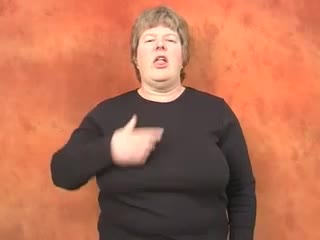
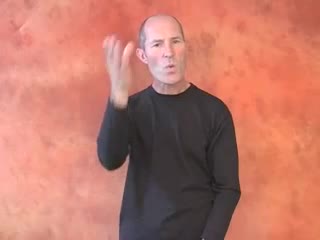
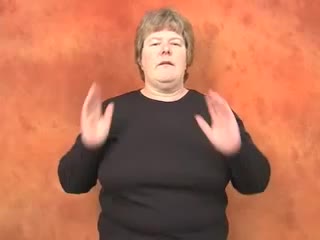
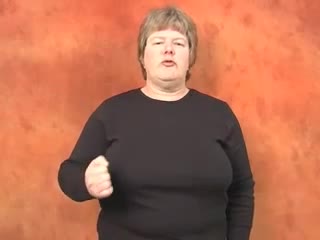
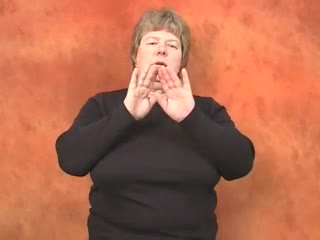
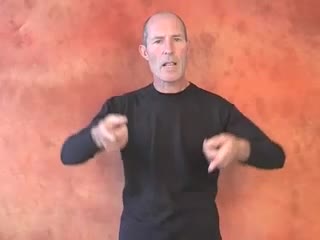
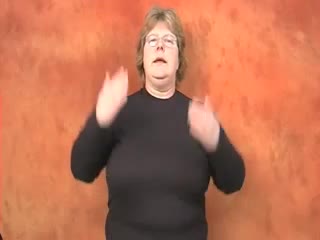
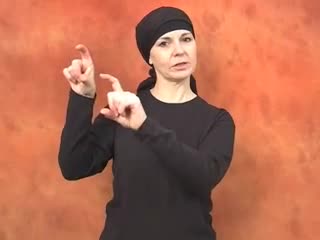
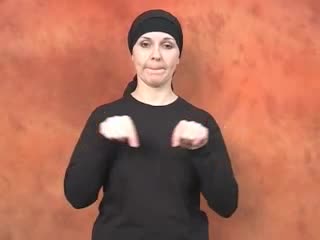
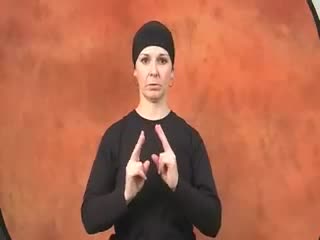
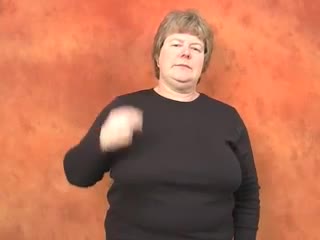
Begin by forming a flat handshape with your dominant hand. You'll want all four fingers held together, extended straight and tightly pressed against one another, with your thumb tucked neatly alongside the palm or slightly extended but not actively involved in the primary signing action. Imagine your hand becoming a smooth, flat plane, ready to represent the very thing you're signing.
Step 2: Hand Placement and Location
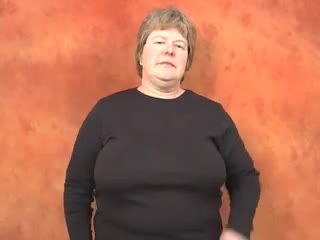
Position your dominant flat hand horizontally in the neutral signing space directly in front of your upper chest or slightly below your chin. There's no requirement for your non-dominant hand here; it remains relaxed at your side. This initial placement sets the stage, creating an imaginary level plane ready for the sign's dynamic motion.
Step 3: Movement
From its starting position, move your dominant flat hand slowly and smoothly outward away from your body, maintaining that horizontal, flat orientation. The movement should be a single, controlled sweep, extending forward about 10-15 centimetres, as if you're tracing the top of an invisible flat object. There's no repetition in this action; a single, deliberate stroke communicates the idea effectively.
Step 4: Facial Expression and Mouthing
Maintain a neutral, calm facial expression when signing "surface," as the sign itself carries the primary semantic load. You'll typically mouth the word "surface" as you perform the sign. This mouthing isn't merely for audibility; it’s an integral non-manual feature in BSL, clarifying the specific lexical item being conveyed and aiding comprehension for both Deaf and hearing signers.
Step 5: Palm Orientation
Throughout the entire movement, your palm will remain facing downwards towards the floor. This consistent downward orientation is crucial; it visually reinforces the concept of a flat, horizontal plane or the top layer of something. Any deviation, such as turning your palm upwards or sideways, would fundamentally alter the sign's meaning, potentially creating confusion with other BSL signs.
"surface" in BSL - Quick Reference Snapshot
- Handshape: Dominant flat hand, fingers together and extended
- Location: Neutral space in front of upper chest/chin
- Movement: Single, smooth outward sweep
- Facial Expression: Neutral, calm
- Dominant Hand: Used alone
- Palm Orientation: Downwards throughout
5 Memorisation Tricks for the BSL Sign "surface"
- Visual Mnemonic: Picture your flat dominant hand as the actual top of a table or a water body; the outward sweep visually mimics gently skimming across that flat area, reinforcing the concept of its uppermost layer.
- Muscle-Memory Drill: Practice the movement with purpose: find a real flat object, like a book or a desk, and gently move your hand just above its top, feeling the flat plane and imprinting that sensation into your muscle memory.
- Connection to Meaning: Think about how a "surface" is always the part you see or touch first; the sign's direct, outward motion represents presenting or indicating that primary, exposed layer.
- Common-Confusion Tip: Don't confuse this sign with 'flat' (often two hands touching or forming a flat shape) or 'table' (often a flat hand tapping the non-dominant arm); the key for 'surface' is that single, unhindered outward sweep of one hand.
- Daily-Life Practice Idea: Throughout your day, whenever you encounter a surface – a wall, the floor, your phone screen – mentally or physically sign "surface" as you interact with it, creating immediate contextual links.
Real-Life Situations to Use the BSL Sign for "surface"
You'll discover this sign incredibly useful in a multitude of everyday scenarios.
- Imagine you're asking someone to place an object down: "Please put the cup on the TABLE, on the SURFACE." Here, the sign clarifies exactly where on the table.
- Perhaps you're discussing the condition of something: "The WATER SURFACE is very calm today," using a gentle, flowing movement for water before indicating its smooth top.
- You might describe a building material: "This WALL has a rough SURFACE," where you'd sign 'wall' then 'rough' before showing the textured idea of 'surface' with a slightly different non-manual feature.
- When explaining a computer issue, you could say: "The SCREEN SURFACE is scratched," specifying the area of damage.
Top 3 Mistakes Learners Make Signing "surface" in BSL
- Incorrect Handshape: A common error involves letting the fingers splay apart or curling them slightly, which can make the sign look like 'thin' or lose its definitive flat quality. The precise correction is to ensure all fingers are pressed tightly together, forming a truly solid, flat plane.
- Excessive or Repetitive Movement: Some learners might make the outward movement too vigorous, too long, or repeat it multiple times, often confusing it with signs indicating 'spreading' or 'level'. Remember, the sign for 'surface' requires just one calm, moderate sweep, representing a singular flat expanse.
- Wrong Palm Orientation: Accidentally rotating the palm to face sideways or slightly upwards diminishes the sign's clarity, making it ambiguous. The precise fix is to consistently keep your palm facing downwards, grounding the visual metaphor of a horizontal top layer.
Fascinating Facts About the BSL Sign for "surface"
- This sign for 'surface' is largely iconic, meaning its form visually represents its meaning; the flat hand physically traces an implied flat plane, making it readily understandable across different linguistic backgrounds.
- While the core handshape and movement are quite stable, you might encounter slight regional variations in the BSL-using community regarding the exact length of the outward sweep or how close to the body the sign begins, though the fundamental concept remains consistent.
- The sign can be subtly modified to convey different *types* of surfaces; for instance, a slightly textured movement might imply a rough surface, while a very smooth, deliberate sweep would signify something polished.
- Interestingly, this particular sign has no direct relationship to the BSL manual alphabet, standing on its own as a fully motivated lexical item rather than deriving from finger-spelled letters.
- Its simplicity and directness make it a highly effective sign for spatial descriptions, allowing signers to quickly establish a conceptual baseline for discussions about objects and their environments.
"surface" in Deaf Culture - Community and Identity
Understanding how to sign "surface" correctly isn't just about mastering a vocabulary item; it's about gaining another tool to articulate the physical world, which is incredibly important for shared experiences within the Deaf community. Visual language thrives on clear descriptions of space and objects, and a sign like "surface" helps build those precise mental images during conversations. When you can describe the texture of a table, the calm top of a lake, or the condition of a path using specific BSL, you're not just communicating; you're participating in a rich, descriptive dialogue that connects you more deeply to the way Deaf people experience and convey their reality. Learning such signs fosters better understanding and strengthens your ability to share your world in a truly visual way.
Example Conversations Using "surface" in BSL
English: The table surface is clean. - BSL structure: TABLE SURFACE CLEAN (Topic-comment structure)
English: Did you see the water's surface? - BSL structure: WATER SURFACE SEE YOU? (Object-Subject-Verb question order)
English: Be careful, the road surface is slippery. - BSL structure: ROAD SURFACE SLIPPERY CAREFUL (Contextual adjective before warning)
English: What kind of surface does this material have? - BSL structure: THIS MATERIAL SURFACE WHAT-KIND? (Demonstrative with descriptive question)
English: There's a scratch on the glass surface. - BSL structure: GLASS SURFACE SCRATCH THERE (Noun-adjective-location description)
Frequently Asked Questions: The BSL Sign for "surface"
Are there regional variations for the BSL sign for surface?
While the core concept of 'surface' is consistently communicated using a flat hand moving outwards, you might observe minor regional differences in the British Sign Language community. These could include subtle shifts in the height of the hand in the neutral space or the exact length of the sweep, but the fundamental handshape and direction remain universally understood.
Is the BSL sign for surface a good sign for beginners to learn?
Absolutely, the sign for 'surface' is an excellent sign for beginners learning British Sign Language. Its iconic nature makes it quite intuitive, and the handshape is straightforward to form. Mastering this sign early provides a solid foundation for describing objects and environments, boosting confidence as you build your BSL vocabulary.
What are some signs that are easily confused with the BSL sign for surface?
Learners sometimes confuse 'surface' with signs like 'flat' (often two hands coming together or forming a level plane) or 'plate' (which might involve a similar flat hand but with a different movement or context). Pay close attention to the specific single outward movement and downward palm orientation of 'surface' to distinguish it clearly.
Can children easily learn and use the BSL sign for surface?
Yes, children pick up the BSL sign for 'surface' very readily due to its visual clarity and simplicity. It's a fantastic sign for them to learn early, as it helps them describe their surroundings, like the top of a toy box or a book, fostering early communicative development in British Sign Language.
Does the BSL sign for surface have a specific grammatical role in sentences?
The sign for 'surface' functions primarily as a noun in BSL, indicating the top or outer layer of an object. However, it often combines with other signs to form descriptive phrases, acting almost adverbially or adjectivally to specify *where* an action occurs or *what kind* of top something has, much like English. For instance, 'TABLE SURFACE' functions like 'tabletop'.
Signs That Pair Naturally with "surface" in BSL
- TABLE: This sign often pairs with 'surface' when you want to specify the top of a table, rather than the whole item, linking the object to its upper plane.
- WATER: Combining 'water' with 'surface' allows you to talk about the top of a body of water, perhaps describing its calmness or ripples, connecting a substance to its exposed layer.
- SMOOTH: After signing 'surface', you can add 'smooth' to describe the texture, linking the flat plane to a tactile quality.
- ROUGH: Conversely, using 'rough' after 'surface' immediately conveys a different texture, showing how adjectives modify this nominal concept.
- CLEAN: You'll often sign 'clean' following 'surface' when talking about tidying up or the state of a particular area, connecting the sign to conditions.
- WALK: When discussing traversing an area, pairing 'walk' with 'surface' might refer to the ground or path you're on, linking movement to the support it relies upon.
Building Fluency: How to Practise "surface" in BSL
To truly embed the sign for "surface" into your active British Sign Language vocabulary, consistent and varied practice is key. Try using a mirror to observe your handshape and movement; ensuring your fingers are tightly together and your palm faces consistently downwards makes a huge difference in clarity. Integrate this sign into your daily BSL conversations by actively looking for opportunities to describe the tops of things around you, whether it's your coffee table, a book, or the floor. Recording yourself signing "surface" in different contexts, then reviewing the footage, offers invaluable insights into your technique. Don't forget the power of spaced repetition: practice the sign for a few minutes each day over the course of a week, rather than just once. Most importantly, seek out Deaf individuals for conversation; interacting with native signers provides authentic feedback and helps you internalise the sign's natural flow and usage within the rich tapestry of BSL. Keep signing, you'll be communicating with ease in no time!