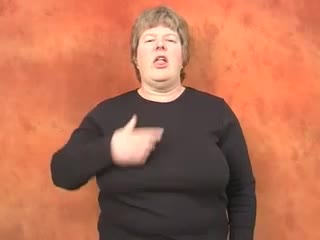
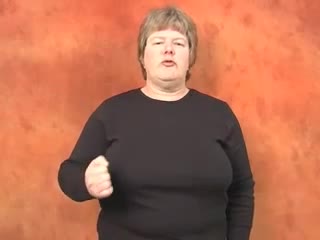
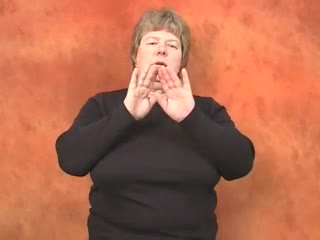
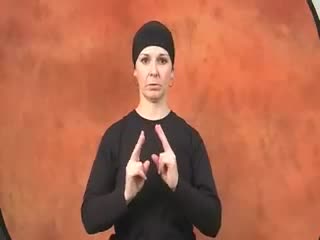
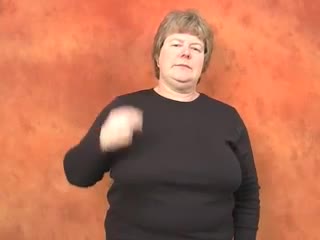
What Is the BSL Sign for "putty"?
Ever wondered how to convey that soft, pliable sealant in British Sign Language? The BSL sign for putty beautifully captures the essence of this versatile material, transforming a tangible substance into a dynamic visual concept. This particular sign plays a vital role in practical discussions, especially when you're talking about home improvements or repairs within the Deaf community. Learning the British Sign Language putty sign opens up a whole new avenue for precise communication, helping you articulate needs and observations about the world around you with clarity and confidence. It's a wonderfully intuitive sign, often reflecting the very action of working with the material itself.
How to Sign "putty" in British Sign Language - Step-by-Step
Mastering this sign involves a series of coordinated hand movements and expressions that perfectly illustrate the tactile nature of the substance.
Step 1: Handshape
For this sign, your dominant hand forms a gentle, slightly flattened 'O' handshape. Imagine your fingertips, specifically the index, middle, ring, and pinky fingers, softly touching the tip of your thumb. This creates a somewhat cupped but relaxed form, not a rigid circle. It's as if you're gently holding a small, soft lump of material, poised to press or spread it. All your fingers should remain relaxed, avoiding any stiffness, to accurately convey the pliancy of putty.
Step 2: Hand Placement and Location
Your non-dominant hand will be held flat, with its palm facing upwards or angled slightly, fingers together and extended. This hand serves as the visual representation of the "surface" where the putty is to be applied. Your dominant hand, in its flattened 'O' shape, is then positioned directly above, or lightly touching, the palm of your non-dominant hand. This setup establishes the context of application, making the sign instantly understandable.
Step 3: Movement
Now, with your dominant hand in place, perform a small, repetitive pressing and slightly spreading motion against the palm of your non-dominant hand. This isn't a forceful action; instead, think of it as a gentle, controlled 'working' or 'moulding' movement. You'll typically repeat this pressing and spreading motion two or three times, visually mimicking the act of pressing down and smoothing out the malleable substance. The wrist of your dominant hand might slightly flex or rotate with each press, enhancing the visual effect of spreading the material.
Step 4: Facial Expression and Mouthing
A neutral, perhaps slightly focused or observant, facial expression accompanies the sign for "putty." Your brow might furrow just a touch, reflecting concentration on the task at hand. Critically, mouthing the word "putty" simultaneously provides vital phonological information in BSL. This non-manual feature enhances the sign's clarity, offering additional lexical reinforcement that aids comprehension for both Deaf and hearing signers. It ensures your message is conveyed with maximum precision.
Step 5: Palm Orientation
Throughout the entire signing process, the palm of your dominant hand consistently faces downwards, oriented towards the palm of your non-dominant hand. This specific palm orientation is absolutely crucial; it directly depicts the action of applying a substance to a surface. Any deviation from this downward-facing orientation could alter the perceived meaning, potentially suggesting holding or scooping rather than the distinct action of pressing and spreading.
"putty" in BSL - Quick Reference Snapshot
- Handshape: Dominant hand forms a gentle, slightly flattened 'O' with fingertips touching the thumb.
- Location: Dominant hand positioned just above or lightly on the non-dominant hand's flat, open palm.
- Movement: Small, repetitive pressing and slightly spreading motion of the dominant hand against the non-dominant palm.
- Facial Expression: Neutral to slightly focused.
- Dominant Hand: Performs the main action, typically the right hand for right-handed individuals.
- Palm Orientation: Dominant palm faces downwards, towards the non-dominant hand.
5 Memorisation Tricks for the BSL Sign "putty"
Learning new signs can sometimes feel like a challenge, but with a few clever tricks, the sign for "putty" will stick in your mind for good. Here are some tailored strategies to help you remember it.
- Visual Mnemonic: The Squeezing Motion. Picture your dominant hand's shape as if you're gently squeezing a small, soft lump of actual putty between your fingers and thumb, ready to apply it. This immediate visual connection to the material's texture and pliability makes the handshape much more intuitive and memorable. It’s an effective way to link the abstract sign to a concrete image.
- Muscle-Memory Drill: The Gentle Press. Consistently perform the repetitive pressing and spreading motion against your non-dominant palm, focusing on the light, controlled pressure. Do this slowly, feeling the slight flexion in your dominant wrist and the soft contact with your other hand; this physical repetition deeply embeds the movement into your muscle memory, making it second nature. Practicing this tactile sensation reinforces the sign's true character.
- Connection to Meaning: Mimicking Application. Recognise that the entire sign is a direct physical mimicry of applying putty to a surface, often to seal a gap or repair something. By consciously linking the sign's action to its real-world purpose, you're not just learning a movement, you're understanding its iconic representation. This strong conceptual bond helps solidify the sign in your memory.
- Common-Confusion Tip: Differentiating from 'Clay'. Be careful not to confuse "putty" with signs for similar malleable substances like 'clay' or 'dough', which often involve a more vigorous kneading or shaping motion. The sign for putty is notably gentler and more focused on spreading or pressing onto a flat surface, lacking the 'pulling apart' or 'sculpting' actions seen in other signs. Pay close attention to these subtle but important distinctions to avoid miscommunication.
- Daily-Life Practice: Observational Signing. Whenever you see a window frame, a small crack needing filling, or any object that might use putty in everyday life, mentally (or physically, if appropriate!) perform the sign. Visualising the sign in relevant contexts, such as when passing a hardware store or noticing a DIY project, helps embed it into your active vocabulary. This contextual practice ensures you’re ready to use it in real conversations.
Real-Life Situations to Use the BSL Sign for "putty"
Understanding how to integrate "putty" into authentic BSL conversations is key to building fluency. This sign appears naturally in various practical scenarios.
- You might use it when discussing home maintenance: "My window frame needs some fresh putty." In BSL, you’d likely structure this as **WINDOW FRAME, MY, PUTTY, NEW, NEED** with a clear topic-comment structure.
- Imagine you're at a hardware store, asking for a specific item: "Do you sell any waterproof putty?" Here, your question might be formed as **PUTTY, WATERPROOF, YOU-HAVE, Q?**, where the 'Q' indicates a raised eyebrow for the question.
- Someone could be describing a repair job they completed: "The old putty was very hard and difficult to remove." This descriptive sentence would likely be expressed as **PUTTY-OLD, HARD, DIFFICULT-REMOVE**, using specific adjectives to convey texture and challenge.
- You might provide instructions to a friend: "Make sure you smooth the putty down evenly." This imperative could be signed as **PUTTY, SMOOTH-DOWN, EVEN, MAKE-SURE**, with a clear, directive facial expression.
- Perhaps you're explaining a craft project: "I used a special kind of putty to sculpt the details." This would translate to **PUTTY, SPECIAL-KIND, I, SCULPT-DETAILS, USE**.
Top 3 Mistakes Learners Make Signing "putty" in BSL
Every learner encounters hurdles, and the sign for "putty" has a few common pitfalls. Knowing these in advance helps you avoid them and refine your signing technique.
- Mistake 1: Handshape Too Open or Flat. Many beginners form the dominant hand with fingers too straight or spread too wide, failing to create the distinct flattened 'O' shape. This happens because they might not fully grasp the idea of 'holding' or 'containing' a soft substance. The precise correction involves consciously curling your fingers gently to meet your thumb, forming a soft, cupped shape that accurately represents the malleable nature of putty.
- Mistake 2: Movement Too Large or Aggressive. Learners sometimes exaggerate the movement, making it a vigorous rub or a wide sweep across the non-dominant palm. This typically occurs from an overzealous attempt to show 'spreading' without understanding the material's specific consistency. The correct technique requires a much smaller, gentler, and more controlled pressing and subtle spreading motion, reflecting the precise application of a soft, adhesive substance rather than a broad, energetic action.
- Mistake 3: Incorrect Location or Surface Representation. A common error is performing the sign in neutral space without the non-dominant hand acting as a surface, or signing it against an inappropriate body part like the chest. This often stems from not internalising the iconic nature of the sign as depicting 'application onto something'. The precise correction involves always using your non-dominant hand, held flat and open, as the designated "surface" for your dominant hand's action, clearly establishing the context of where the putty is being applied.
Fascinating Facts About the BSL Sign for "putty"
Delving into the unique characteristics of a sign like "putty" reveals much about the structure and beauty of British Sign Language. Here are some intriguing insights.
- The sign for "putty" is remarkably **iconic**, meaning it visually resembles the action or object it represents. This direct mimicry of pressing and spreading a soft substance onto a surface makes it highly intuitive for new learners and contributes to its widespread recognition within the BSL community.
- While the core elements of the sign remain consistent, you might observe subtle **regional variations** within the BSL-using community. Some areas may favour a slightly quicker repetition of the pressing motion, while others might emphasize a more pronounced 'spreading' gesture, showcasing the natural evolution of signs across different Deaf communities.
- Linguistically, this sign is an excellent example of a **two-handed sign** where the dominant hand performs an action upon or in relation to the non-dominant hand. This common BSL structure is frequently used for signs depicting interaction with objects or surfaces, reinforcing its clear visual grammar.
- Interestingly, the handshape used for "putty" doesn't directly correspond to a specific letter in the BSL manual alphabet, but its flattened 'O' shape shares characteristics with some modified letter forms. This highlights how BSL signs often draw from a rich lexicon of handshapes that are distinct from finger-spelling.
- The sign’s form effectively conveys the **malleability and adhesiveness** of the material without needing additional descriptive signs. The gentle pressing and spreading motion inherently communicates that the substance is soft enough to shape and sticky enough to adhere, embodying its key properties in a single gesture.
"putty" in Deaf Culture - Community and Identity
While the word "putty" itself may seem mundane, its sign, and the conversations it facilitates, are integral to the everyday fabric of the Deaf community. Effective communication about practical matters, like home repairs or craft projects, fosters independence and self-sufficiency. Being able to clearly articulate a need for "putty" for a leaky window or a craft endeavour ensures that Deaf individuals can navigate daily life without unnecessary barriers. This shared vocabulary for common household items allows for effortless discussions, strengthening community bonds through practical support and shared knowledge. It underscores how BSL empowers precise communication across all aspects of life, from profound conversations to the simple necessity of fixing something around the house.
Example Conversations Using "putty" in BSL
Understanding how "putty" integrates into full BSL sentences helps you grasp its practical application and grammatical context.
English: We need to buy some more putty for the window frames. - BSL structure: Topic-comment order, clearly establishing WINDOW FRAMES as the topic, followed by the action (PUTTY, MORE, BUY, NEED).
English: Have you ever worked with this kind of putty before? - BSL structure: Question formation, where YOU is the subject, followed by the specific kind of PUTTY, the action WORK-WITH, and the temporal marker BEFORE, concluding with a raised eyebrow for the question.
English: The old putty was so crumbly and difficult to remove. - BSL structure: Descriptive phrasing, beginning with PUTTY-OLD, then using signs for CRUMBLY and DIFFICULT-REMOVE to illustrate its state.
English: Don't forget to smooth the putty down after you apply it. - BSL structure: Imperative sentence, starting with FORGET-NOT, then indicating the PUTTY and the action SMOOTH-DOWN, often with a slight pause to show sequence.
English: He spent the entire afternoon applying the new putty to the door. - BSL structure: Time reference first (AFTERNOON-WHOLE), then the subject HE, followed by the specific item (DOOR, PUTTY-NEW), and finally the action APPLY-PUTTY.
Frequently Asked Questions: The BSL Sign for "putty"
Are there regional variations for the BSL sign for putty?
While the core handshape, location, and movement for "putty" are generally consistent across BSL, you might encounter slight regional nuances. Some communities might exhibit a subtle difference in the speed of the pressing motion or the exact degree of wrist rotation during the 'spreading' action. These minor variations are natural in any living language and don't typically impede understanding.
What BSL signs are often confused with "putty"?
Learners sometimes confuse "putty" with signs for other malleable materials like 'clay' or 'dough'. The key distinction lies in the specific movement: 'putty' involves a gentle, repetitive pressing and spreading onto a surface, whereas 'clay' might involve more shaping or 'dough' a kneading motion. Paying close attention to these subtle differences in action prevents misinterpretation.
Is "putty" a good sign for beginners to learn in BSL?
Absolutely, "putty" is an excellent sign for beginners! Its highly iconic nature, directly mimicking the action of working with the substance, makes it very intuitive and easy to grasp. It also introduces fundamental BSL concepts like two-handed signs and the use of the non-dominant hand as a surface, providing a solid foundation for further learning.
Can children learn the BSL sign for putty easily?
Yes, children typically pick up the BSL sign for "putty" with great ease. Its visual and tactile representation resonates well with young learners, who often enjoy mimicking actions. Incorporating it into play, such as pretend home repairs or craft activities, makes the learning process engaging and highly effective for children.
Does the BSL sign for putty have a connection to the manual alphabet?
The BSL sign for "putty" does not have a direct, explicit connection to a specific letter in the manual alphabet. While its dominant handshape, a flattened 'O', might bear a passing resemblance to a modified 'O' or 'C', it's a distinct sign with its own unique lexical identity. Its form is primarily motivated by the action it represents, rather than an alphabetical link.
Signs That Pair Naturally with "putty" in BSL
Building your BSL vocabulary effectively means learning signs in context, understanding how they naturally group together. Here are some signs that complement "putty" beautifully.
- WINDOW: Putty is frequently used for sealing window panes, making this an obvious and common pairing for discussions about repairs or maintenance.
- REPAIR / FIX: The action of applying putty is almost always part of a repair or restoration process, so these signs share a strong conceptual link.
- CRACK: Putty often serves to fill cracks or gaps in various surfaces, making 'crack' a highly relevant sign to learn alongside it.
- GLUE / PASTE: These signs represent similar adhesive or binding materials, offering useful comparative vocabulary when distinguishing between different types of sealants or adhesives.
- SMOOTH: After applying putty, the next step is often to smooth it out, directly connecting this action to the use of the material itself.
- MATERIAL / SUBSTANCE: Learning "putty" as a type of material helps learners categorize it within a broader vocabulary of construction or craft substances.
Building Fluency: How to Practise "putty" in BSL
Consistent and varied practice is the secret to true fluency in BSL, and the sign for "putty" is no exception. Here are some actionable tips to embed it firmly in your signing repertoire.
Begin by using a mirror to observe your handshape and movement precisely; this visual feedback helps you refine the flattened 'O' and the gentle pressing action, ensuring your technique is accurate. Try to integrate the sign into your daily BSL conversations by actively looking for opportunities to discuss home projects, repairs, or textures with others. A fantastic way to catch subtle errors is to film yourself signing "putty" from different angles, then watch it back critically, just as a BSL teacher would. Whenever possible, seek out a Deaf conversation partner; their feedback on your naturalness and clarity will be invaluable for perfecting your execution. Finally, don't cram your practice; instead, revisit the sign for a few minutes daily over several days, allowing for spaced repetition to truly solidify it in your long-term memory.