What Is the BSL Sign for "drill"?
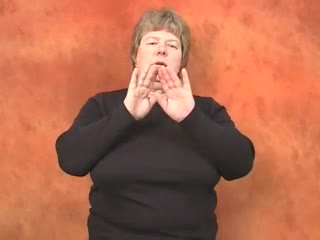
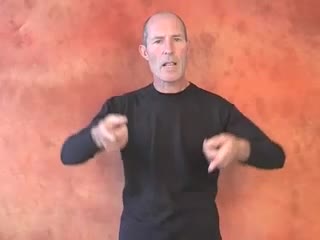
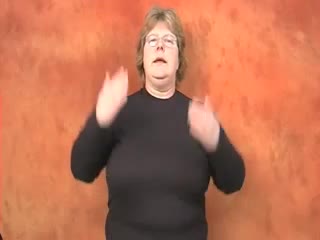
You've probably seen a drill, that handy tool for making holes, but have you ever considered how to convey that concept in British Sign Language? The BSL sign for drill beautifully captures the essence of this everyday object. It's a highly visual and iconic sign, immediately understandable once you see its distinct movement and handshape. This sign doesn't just represent the physical tool; it brings its function to life, making it a truly engaging piece of British Sign Language drill vocabulary. Mastering this sign will effortlessly expand your ability to discuss household tasks, construction, or even abstract ideas of precision and making a mark.
How to Sign "drill" in British Sign Language - Step-by-Step
Let's break down the mechanics of forming this sign, guiding you through each element with precision.
Step 1: Handshape
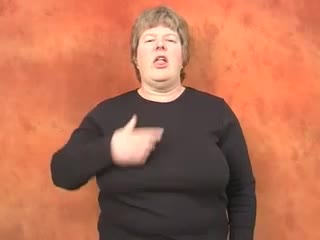
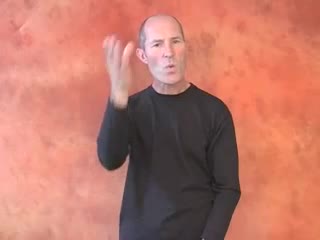
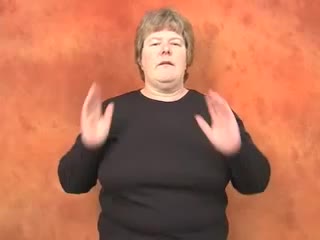
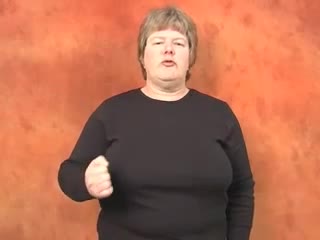
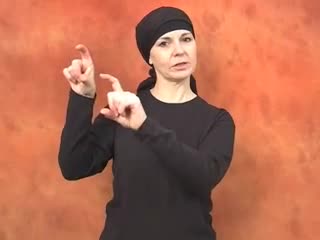
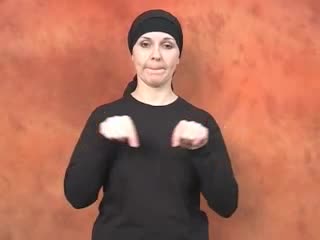
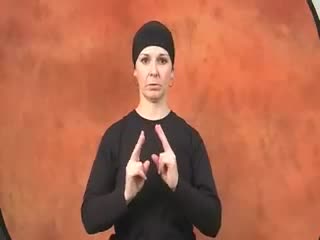
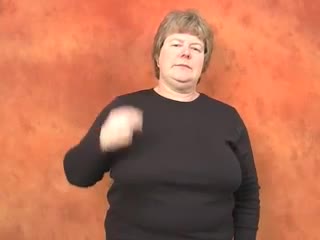
For this sign, you'll extend your dominant hand's index finger straight out, keeping it firm and pointed. Your thumb will rest against the side of your index finger, providing support, while your remaining three fingers (middle, ring, and pinky) curl down into your palm, forming a loose fist. Imagine holding a small, pointed object, ready to twist.
Step 2: Hand Placement and Location
Now, bring your dominant hand up towards the side of your head. You want to position the tip of your extended index finger so it's pointing at or very near your temple, just above your eyebrow, or sometimes slightly further back on the side of your forehead. It's a location that feels natural, almost as if you're pointing to a thought or a specific spot.
Step 3: Movement
The movement here is crucial for conveying the action of a drill. With your index finger positioned at your temple, you'll perform a small, tight circular motion. This isn't a large sweep; think of it as a concentrated rotation, powered by your wrist and forearm. The circles should be fairly quick and continuous, typically completing two or three full rotations. This rotational movement perfectly mimics the spinning action of a drill bit.
Step 4: Facial Expression and Mouthing
While the sign itself is quite clear, non-manual features add depth and context in British Sign Language. For "drill" as a noun, your facial expression should remain neutral or mildly focused, reflecting the object itself. Crucially, you'll mouth the English word "drill" clearly and naturally, without voicing it. This mouthing helps distinguish the sign from any similar movements and reinforces its meaning, acting as a vital grammatical component.
Step 5: Palm Orientation
Your palm orientation during this sign will generally face inwards, towards your head, as your index finger points to your temple. As you perform the rotational movement, the palm may subtly shift its exact angle but largely maintains this inward facing orientation throughout the sign. This specific palm direction contributes to the iconic representation, ensuring the "drilling" action is clearly understood in relation to your head as the perceived surface.
"drill" in BSL - Quick Reference Snapshot
- Handshape: Dominant hand, index finger extended, other fingers curled, thumb resting on side.
- Location: Tip of index finger at or near the temple/side of the forehead.
- Movement: Small, continuous circular rotations originating from the wrist.
- Facial Expression: Neutral or mildly focused.
- Dominant Hand: Always your preferred signing hand.
- Palm Orientation: Generally facing inwards towards your head.
5 Memorisation Tricks for the BSL Sign "drill"
Here are some helpful strategies to really embed the sign for "drill" into your memory.
- Visual Mnemonic: Picture a tiny person inside your head, using a drill to install a new idea. The spinning finger at your temple then becomes a literal representation of an internal "drill" at work, making the connection between the sign and the concept unforgettable.
- Muscle-Memory Drill: Practice the movement with your eyes closed, focusing solely on the sensation of your wrist rotating and your index finger making those small circles. This helps build a strong kinesthetic memory, so your hand remembers the sign even before your brain consciously recalls it.
- Connection to Meaning: Think about the purpose of a drill: to penetrate, to create. The sign's action of "drilling" into your temple can metaphorically represent an intense thought process, or literally, the action of using the tool. Linking the function directly to the form makes it stick.
- Common-Confusion Tip: Be mindful not to let your hand stray too far from your temple or to make the circles too large. A common mistake is signing too broadly, which can lose the precise "drilling" effect. Keep it tight and close to the head for clarity.
- Daily-Life Practice: Every time you see a drill in a shop, on TV, or hear someone mention one, make the sign for "drill" silently to yourself. Associating the sign with its real-world presence in your everyday environment will greatly reinforce your recall.
Real-Life Situations to Use the BSL Sign for "drill"
Learning a sign is fantastic, but knowing how to use it in actual conversations is where the magic happens. Here are a few scenarios where you'd naturally employ the sign for "drill."
- Imagine you're helping a friend with DIY and need a specific tool; you might sign, "YOU HAVE DRILL?" using a raised eyebrow for the question, indicating you're asking about the power tool. The sign for "drill" here specifies the exact item you're looking for.
- Perhaps you're discussing a carpentry project, and someone asks about the tools required. You could sign, "NEED DRILL, SCREWDRIVER, HAMMER," listing the items clearly. The sign effortlessly integrates into a list of necessary equipment.
- If you're explaining a task that involves making a hole, you might sign, "FIRST, TAKE DRILL, THEN MAKE HOLE." Here, the sign for "drill" acts as the subject of the action, clearly identifying the instrument used.
- When contrasting tools, someone might ask, "THIS DRILL OR SAW?" Your sign for "drill" would be distinct, clarifying which implement is being discussed. This highlights its role in providing specific information within a choice.
Top 3 Mistakes Learners Make Signing "drill" in BSL
It's completely normal to make a few errors when learning new signs; recognizing them is the fastest route to improvement.
- Incorrect Handshape: Many beginners might use an open hand or a different finger, like the middle finger, instead of the extended index finger. This changes the visual representation entirely and can lead to confusion. The precise correction is always ensuring only the index finger is extended, with the thumb supported, precisely mimicking a pointed drill bit.
- Location Drift: Learners sometimes place the sign too low on the cheek or too far forward on the forehead. This minor shift can make the sign less clear or even resemble other signs. The key is to consistently aim for the temple or just above the eyebrow, maintaining that specific and recognizable spot for the 'drilling' action.
- Lack of Consistent Rotation: Instead of continuous, tight circles, some might do a single jab or a wobbly, irregular movement. This fails to convey the sustained, spinning motion of a drill. You'll want to focus on smooth, controlled, small circular rotations, ensuring the movement is fluid and repetitive to accurately represent the tool's function.
Fascinating Facts About the BSL Sign for "drill"
Every sign has a story and unique characteristics that make it interesting. Let's delve into what makes the British Sign Language sign for "drill" particularly noteworthy.
- The iconic nature of this sign is remarkable; it's a perfect example of how BSL often visually represents the action or shape of an object. You can almost instantly understand what it means, even without prior knowledge, because it so clearly depicts the tool's function.
- While the core sign for the tool "drill" is widely understood across the BSL-using community, you might occasionally encounter slight regional variations in the exact placement or the speed of rotation. These subtle differences usually don't hinder comprehension, but they're a testament to the organic evolution of the language.
- Interestingly, the sign's movement, a small rotation at the temple, bears a resemblance to the common gesture for "thinking" or "idea" in some cultures, though the BSL sign's handshape and precise context distinguish it completely. This highlights the importance of the whole sign package, not just one component.
- You'll notice that the sign for "drill" relies heavily on the dominant hand to perform the action. This is a common linguistic feature in many BSL signs, where the dominant hand often carries the primary movement and information.
- Unlike some signs that might be derived from fingerspelling or have a less direct link to their meaning, the BSL sign for "drill" is a beautifully motivated sign, meaning its form directly relates to its meaning. This makes it a great sign for beginners to learn, as its logic is very transparent.
"drill" in Deaf Culture - Community and Identity
The concept of a "drill" in Deaf culture, particularly the tool, often intertwines with practical skills, independence, and the visual nature of communication. Within the Deaf community, many individuals excel in vocational trades, where tools like drills are essential, fostering a strong sense of hands-on capability and self-reliance. Discussions about home improvements, DIY projects, or even professional construction work are common, and the sign for "drill" becomes a fundamental part of these practical conversations. There's a shared appreciation for visual clarity and direct communication, which the iconic nature of this sign perfectly embodies. This practical engagement reinforces a collective identity rooted in tangible skills and effective visual explanation.
Example Conversations Using "drill" in BSL
Here are five different ways you might see the sign for "drill" used in a natural BSL conversation.
English: Do you have a drill I can borrow? - BSL structure: YOU HAVE DRILL? (Question marker: raised eyebrows, leaning forward slightly, sign for "HAVE" followed by "DRILL")
English: I need a new drill for this project. - BSL structure: PROJECT, I NEED NEW DRILL. (Topic-comment structure: "PROJECT" established first, then "I NEED" and "NEW DRILL")
English: That drill is very powerful, be careful. - BSL structure: THAT DRILL, VERY STRONG, BE CAREFUL. (Adjective "STRONG" follows the noun "DRILL", spatial reference "THAT" points to the item)
English: Can you show me how to use the drill? - BSL structure: DRILL, HOW USE, YOU SHOW ME? (Object "DRILL" introduced, then "HOW USE" and request "YOU SHOW ME" with question non-manuals)
English: My drill broke yesterday, it's so frustrating. - BSL structure: YESTERDAY, MY DRILL BROKE, FRUSTRATED ME. (Time marker "YESTERDAY" at beginning, expressing emotion "FRUSTRATED" at the end)
Frequently Asked Questions: The BSL Sign for "drill"
You've got questions, and we've got answers. Let's tackle some common queries about the BSL sign for "drill."
Is the BSL sign for "drill" the same everywhere in the UK?
While the core concept and the iconic movement for the BSL sign for "drill" are widely consistent throughout the UK, you might observe minor stylistic variations. Some signers might use a slightly different hand position on the head, or vary the speed of the rotation, but the fundamental structure remains recognizable and understood across different regions. These slight differences reflect natural linguistic diversity.
Are there any similar signs in BSL I should avoid confusing with "drill"?
Yes, it's easy to confuse "drill" with signs that involve a finger pointing or rotating at the head, such as "THINK" or sometimes elements of "IDEA" or "CRAZY." The key distinctions for "drill" are its specific handshape (only the index finger extended) and the consistent, tight, circular movement at the temple, along with the precise mouthing of the English word. Pay close attention to these details to ensure clarity.
Is the BSL sign for "drill" suitable for beginners?
Absolutely, the BSL sign for "drill" is an excellent sign for beginners! Its iconic nature means it's visually logical and easy to remember, making it less abstract than some other signs. Mastering it early provides a confidence boost and demonstrates how BSL often makes sense through its direct representation of concepts.
Can children easily learn and use the BSL sign for "drill"?
Yes, children pick up the BSL sign for "drill" very quickly because of its highly visual and action-oriented nature. They often enjoy mimicking the spinning movement, and it's a useful sign for discussing toys, imaginative play, or helping with simple household tasks. It's a fun and practical addition to a child's early BSL vocabulary.
How does the BSL sign for "drill" compare to the sign in other sign languages?
Different sign languages typically have their own unique signs for "drill," though some may share iconic similarities. For instance, in some sign languages, you might see a similar rotational movement, but the handshape, location, or palm orientation would likely differ significantly. The British Sign Language sign for "drill" is distinct to our linguistic community and its unique visual grammar.
Signs That Pair Naturally with "drill" in BSL
To really boost your vocabulary and conversational flow, it helps to learn signs in clusters that relate to each other.
- TOOL: This is a foundational sign, often preceding or following "drill" when discussing general equipment or differentiating specific implements. It helps categorise the object.
- SCREWDRIVER: Another common hand tool, learning "screwdriver" alongside "drill" allows you to discuss a broader range of practical tasks and repairs. Both are used for fastening and unfastening.
- HAMMER: Frequently found in the same toolbox as a drill, "hammer" completes a basic set of construction or DIY tools. They represent different modes of fastening and shaping.
- HOLE: Since a drill's primary function is to create a "hole," this sign is a perfect natural pairing. You'll often use them together to describe the action and its outcome.
- BUILD: Whether you're constructing furniture or a house, "build" is a natural partner for "drill," as drilling is often a step in the building process. It links the tool to a larger project.
- REPAIR: Drills are commonly used for fixing things, so "repair" is an excellent sign to associate. It connects the tool to problem-solving and maintenance.
Building Fluency: How to Practise "drill" in BSL
Consistent, thoughtful practice is the secret to fluency, and for the sign "drill," there are some specific techniques you'll find incredibly helpful. Start by using a mirror; watch your handshape and movement closely, ensuring your index finger is perfectly extended and those rotations are tight and precise at your temple. Integrate the sign into your daily British Sign Language conversations, even if you just sign "I need a drill" to yourself while thinking about home repairs. Filming yourself signing "drill" from different angles can reveal subtle inconsistencies you might not notice otherwise; review it, then refine your technique. Critically, seek out Deaf conversation partners or join a BSL group; real-time feedback and natural usage will significantly enhance your understanding and execution. Finally, spaced repetition is key: practice "drill" daily for a few minutes, then revisit it after a few days, ensuring the sign becomes deeply ingrained in your muscle memory and conversational repertoire.