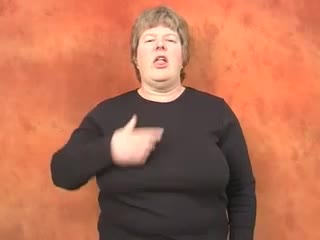
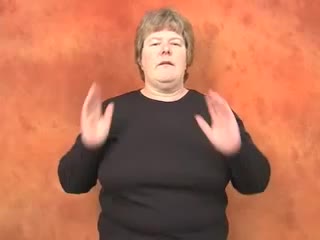
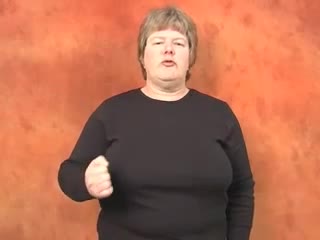
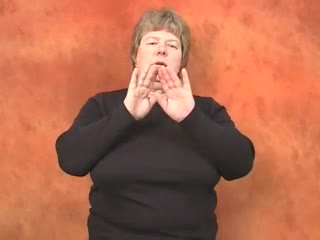
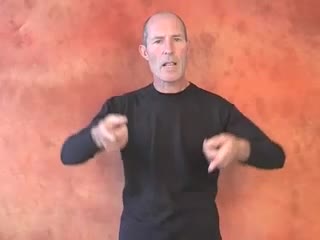
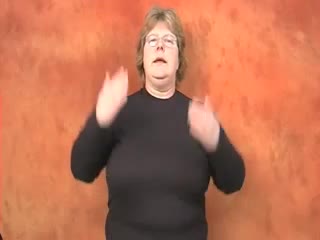
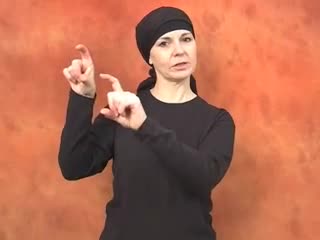
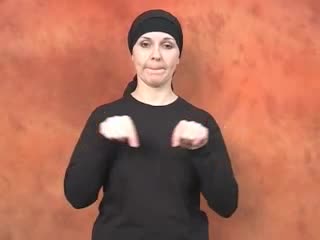
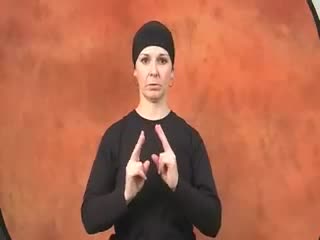
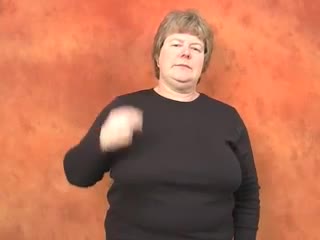
What Is the BSL Sign for "wire stripper"?
Imagine holding a small, precise tool designed to peel away insulation; that’s exactly the image the BSL sign for wire stripper evokes. This sign represents a crucial piece of equipment for electricians and DIY enthusiasts alike, embodying its function through a clear, iconic movement in British Sign Language. Learning how to sign wire stripper in BSL not only expands your technical vocabulary but also connects you directly with practical communication within the Deaf community. It's a sign that perfectly illustrates the descriptive power of BSL, making it easy to understand what the tool does just by seeing its sign.
How to Sign "wire stripper" in British Sign Language - Step-by-Step
Let's break down this practical sign with careful attention to each component, just like an engineer dissects a complex circuit.
Step 1: Handshape
For the BSL sign for wire stripper, you'll begin by forming an "F" handshape with your dominant hand. This means your thumb and index finger should be lightly touching at their tips, creating a small, open circle, while your middle, ring, and little fingers extend straight outwards, remaining together. Picture this as the precise gripping jaws of the tool itself, ready to perform a delicate task.
Step 2: Hand Placement and Location
Position your dominant hand, with the "F" handshape, in the neutral signing space directly in front of your body. You'll typically find this around chest height, slightly to the side of your dominant hand's natural resting position. The signing space provides an imaginary workbench where actions unfold, and here, you're preparing to demonstrate the tool's function.
Step 3: Movement
With your "F" handshape ready, perform a sharp, short pulling movement. Your hand will move backwards, directly towards your body, as if you're clamping down on an imaginary wire and quickly stripping its insulation away. This motion is swift and decisive, mimicking the efficient action of the tool, often executed with a single, clear pull.
Step 4: Facial Expression and Mouthing
A neutral, focused facial expression usually accompanies the British Sign Language wire stripper sign. You might also naturally mouth the words "wire stripper" as you sign. Mouthing, a key non-manual feature in BSL, provides additional clarity and context, effectively reinforcing the lexical item you're conveying without sound.
Step 5: Palm Orientation
At the beginning of the sign, your palm will generally face downwards and slightly towards your non-dominant side, as if approaching an imaginary wire from above. As you perform the pulling movement, the palm orientation might subtly shift to face more directly towards your body or slightly upwards, reflecting the changing angle of the tool's action. This orientation helps to visually convey the direction and force of the stripping motion.
"wire stripper" in BSL - Quick Reference Snapshot
- Handshape: Dominant hand forms an "F" (thumb and index finger tips touching, others extended).
- Location: Neutral space in front of the chest.
- Movement: Short, sharp pull backwards towards the body.
- Facial Expression: Neutral, focused, often accompanied by mouthing "wire stripper".
- Dominant Hand: Performs the action.
- Palm Orientation: Begins facing downwards/non-dominant side, shifts slightly during pull.
5 Memorisation Tricks for the BSL Sign "wire stripper"
Here's how you can really make the BSL wire stripper sign stick in your memory, turning practice into effortless recall.
- **Visual Mnemonic:** Imagine the 'F' handshape literally as the jaws of a wire stripper, pinching an invisible wire. The circular shape formed by your thumb and index finger becomes the gripping mechanism, making it easy to visualise the tool's function directly in your hand.
- **Muscle-Memory Drill:** Practice the sharp, backward pulling motion repeatedly, focusing on the tactile sensation. You'll want to feel the controlled tension in your hand as if you're truly gripping and pulling, building a strong physical memory of the action.
- **Connect to Meaning:** Think about what a wire stripper *does*: it separates an outer layer from an inner core. The sign physically enacts this separation – you're 'pulling away' something from something else, directly linking the sign's movement to its practical purpose.
- **Common-Confusion Tip:** Be careful not to confuse this sign with generic 'pull' or 'pinch' signs. The key here is the specific "F" handshape combined with that precise, short, firm backward movement, distinctly mimicking the tool, not just a general action.
- **Daily-Life Practice Idea:** Every time you see an electrical cord or a DIY project involving wires, mentally (or physically!) perform the sign for "wire stripper." Integrating it into your observations of everyday objects reinforces its meaning and usage.
Real-Life Situations to Use the BSL Sign for "wire stripper"
Knowing the sign is one thing; using it naturally in conversation is where the magic happens. Here are a few ways you'd see the British Sign Language wire stripper sign come to life.
- Imagine you're helping a friend with a home repair. You might sign, "DO-YOU-HAVE WIRE-STRIPPER?" (BSL structure often places the question word at the end, or uses non-manual features to indicate a question).
- Perhaps you're at a hardware shop, trying to locate the right tool. You could sign, "NEED WIRE-STRIPPER, WHERE?" (Using spatial grammar to indicate direction or query a location).
- Someone asks if you've finished a task, and you respond, "NO, WIRE-STRIPPER NOT-FOUND" (Negative statements in BSL are often formed by adding a negative sign or headshake).
- You're describing a repair you just completed. You'd sign, "I USE WIRE-STRIPPER, EASY" (Describing an action and its outcome).
Top 3 Mistakes Learners Make Signing "wire stripper" in BSL
It's completely normal to stumble a bit when learning new signs. Let's make sure you avoid these common pitfalls that beginners often encounter with the BSL sign for wire stripper.
- **Incorrect Handshape:** A frequent error is using a general 'C' handshape or even an 'S' (fist) instead of the specific 'F' handshape. This changes the visual representation from a precise gripping tool to something much more generic. The correction is to ensure your thumb and index finger tips are touching to form that distinct circle, making it unequivocally clear you're referring to the wire stripper.
- **Lack of Precision in Movement:** Some learners might make the pulling movement too broad, too slow, or too weak, losing the characteristic sharpness of stripping a wire. This dilutes the iconic quality of the sign. The fix is to practice a short, firm, and decisive backward pull, really aiming to mimic the quick, efficient action of the tool itself.
- **Missing Non-Manual Features:** Forgetting to mouth "wire stripper" or maintaining a blank expression can make the sign less clear, especially for new signers or in ambiguous contexts. While the sign itself is strong, the accompanying non-manual signals are an integral part of BSL communication. Remember to incorporate that focused expression and subtle mouthing; it reinforces the sign's meaning and makes your communication more natural.
Fascinating Facts About the BSL Sign for "wire stripper"
Dive a little deeper into the intricacies of BSL and discover what makes this particular sign quite special.
- The sign for wire stripper is highly iconic, meaning its form directly resembles the action or object it represents. This makes it quite intuitive for new learners and visually descriptive for fluent signers, bridging understanding instantly.
- Unlike some signs with ancient origins, technical tool signs like wire stripper often develop more recently as technology evolves, reflecting the practical needs of the Deaf community in modern contexts.
- While core BSL tends to be standardised, subtle variations in the exact speed or 'firmness' of the pulling motion might be observed across different regions where British Sign Language is used, though the fundamental handshape and direction remain consistent.
- This sign stands as a great example of how BSL efficiently conveys complex concepts. Instead of fingerspelling "W-I-R-E S-T-R-I-P-P-E-R," which would be cumbersome, the iconic sign provides an immediate and clear visual equivalent.
- Its clear visual motivation means it's less likely to be confused with abstract concepts, keeping its meaning firmly rooted in its physical function, which is a hallmark of many effective BSL vocabulary items.
"wire stripper" in Deaf Culture - Community and Identity
Tools like the wire stripper are part of the fabric of everyday life, and their signs integrate seamlessly into the daily conversations within the Deaf community. Whether it's discussing home improvements, vocational training, or simply sharing a story about a DIY project, having a clear and precise sign for "wire stripper" ensures smooth and efficient communication. It's not just about naming an object; it's about being able to fully participate in discussions around practical skills, sharing knowledge, and collaborating on tasks where such tools are essential. The shared understanding of signs for common items, including specialist tools, strengthens community bonds and reflects the practical, self-sufficient spirit often found within Deaf culture. This sign, like many others, helps facilitate independence and full engagement in all aspects of life, from the workshop to the kitchen table.
Example Conversations Using "wire stripper" in BSL
Let's see the sign for "wire stripper" in action, giving you a feel for how it fits into everyday BSL exchanges.
English: Can you pass me the wire stripper, please? - BSL structure: YOU PASS WIRE-STRIPPER, PLEASE?
English: I need a wire stripper for this job. - BSL structure: THIS JOB, I NEED WIRE-STRIPPER.
English: Where did you buy that wire stripper? - BSL structure: THAT WIRE-STRIPPER, YOU BUY WHERE?
English: Oh, my wire stripper is broken. - BSL structure: OH, MY WIRE-STRIPPER BROKEN.
English: We should get a better wire stripper next time. - BSL structure: NEXT TIME, WE SHOULD GET WIRE-STRIPPER BETTER.
Frequently Asked Questions: The BSL Sign for "wire stripper"
Is the BSL sign for wire stripper suitable for beginners?
Yes, absolutely! The BSL sign for wire stripper is quite iconic and straightforward, making it an excellent sign for beginners to learn. Its visual representation of the tool's action helps with memorisation, providing a clear link between the sign and its meaning from the very start.
Are there regional variations for the BSL sign for wire stripper?
While the core handshape and movement for wire stripper are generally consistent across the regions where British Sign Language is used, very minor stylistic differences might occasionally appear. These are typically subtle nuances in the speed or intensity of the movement rather than entirely different signs, ensuring broad understanding.
What signs are similar to the BSL sign for wire stripper that I should avoid confusing it with?
You'll want to differentiate it from general "pinch" or "pull" signs, which might use a similar motion but typically lack the specific "F" handshape. Also, be mindful not to confuse it with other tool signs that might involve gripping, as their specific handshapes or movements will denote their unique function.
Can children easily learn the BSL sign for wire stripper?
Children can certainly learn the BSL sign for wire stripper, especially if they are exposed to the tool itself or its function. Its iconic nature is often appealing to younger learners, as they can easily connect the sign to the physical action of stripping a wire.
How does the BSL sign for wire stripper compare to equivalent signs in other sign languages?
Most sign languages will have a sign for "wire stripper," but they will almost certainly differ from the BSL version, reflecting their unique linguistic structures and iconic representations. Each sign language develops its own vocabulary, so while the concept is universal, the specific visual form of the sign will vary greatly.
Signs That Pair Naturally with "wire stripper" in BSL
To truly build your BSL vocabulary, it's incredibly helpful to learn signs in clusters, understanding how they relate to each other. Here are some signs that naturally complement "wire stripper."
- **WIRE:** This sign, often a "W" handshape moving across an imaginary path, is an obvious partner. They belong together because you can't use a wire stripper without a wire!
- **TOOL:** A general sign for "tool" or "implement" would be a great pairing. Learning this helps categorise "wire stripper" within the broader class of objects.
- **ELECTRICITY / ELECTRICIAN:** These signs connect directly to the primary use of a wire stripper. Understanding these expands your ability to discuss related professional fields.
- **STRIP (to remove covering):** While the wire stripper sign is specific to the tool, understanding the more general verb "to strip" (removing a covering) provides a conceptual link to the tool's core function.
- **REPAIR:** Many times, you'll be using a wire stripper as part of a repair job. This sign helps contextualise the action within a broader practical task.
- **CUT:** Often, after stripping a wire, you might need to cut it. Learning this sign allows for a natural progression in describing tasks.
Building Fluency: How to Practise "wire stripper" in BSL
Now you've got the foundations, let's talk about putting it into practice so the BSL sign for wire stripper becomes second nature. Grab a mirror and watch your dominant hand as you form that 'F' handshape, ensuring your thumb and index finger meet precisely, and your other fingers extend neatly. Then, focus on the sharp, controlled backward pull; really feel that motion. Try integrating "wire stripper" into simple BSL sentences throughout your day, perhaps describing an imaginary task or thinking about tools you might need. A fantastic way to solidify your learning is to film yourself signing it; you'll notice subtle areas for improvement that you might miss otherwise. Most importantly, try to find a Deaf conversation partner – there's no substitute for real-world interaction, which will make your signing truly fluent and natural. Keep practicing, and you'll be signing with confidence in no time!