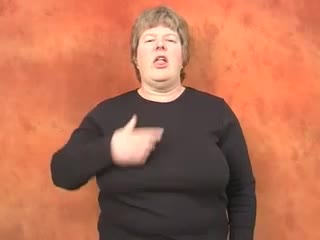
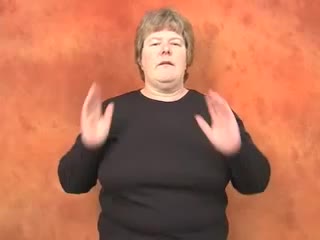
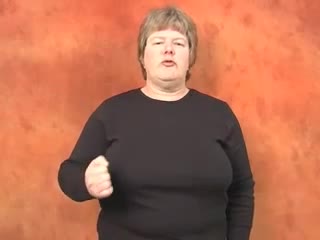
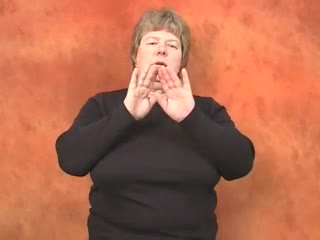
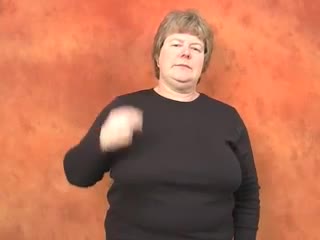
What Is the BSL Sign for "nut"?
Have you ever wondered how to discuss your favourite snack, or perhaps even a pesky allergy, when communicating in British Sign Language? Here at SignDeaf.com, we're ready to show you the expressive way to convey "nut" in BSL. This sign represents not only the delicious edible kind but also often the broader concept within conversational flow, making it an essential addition to your growing vocabulary. Learning the British Sign Language nut sign is a wonderfully practical step for anyone keen to connect more deeply with the Deaf community.
How to Sign "nut" in British Sign Language - Step-by-Step
Mastering this particular sign involves a blend of specific hand movements and a touch of non-manual expression that brings the word to life.
Step 1: Handshape
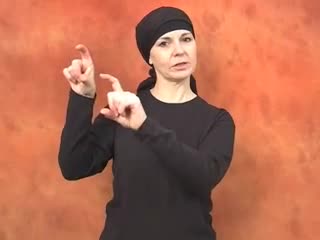
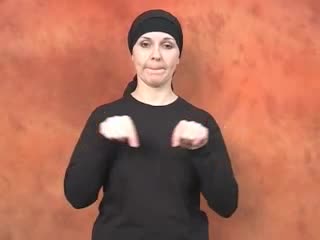
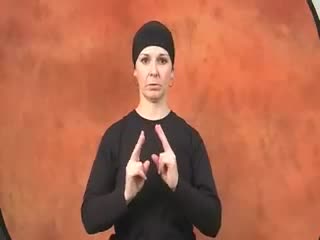
Begin by forming your dominant hand into a 'V' handshape, where your index finger and middle finger extend upwards, slightly separated, while your thumb holds down your ring and little fingers. Your fingers should be relatively straight, poised and ready for action.
Step 2: Hand Placement and Location
Now, bring your dominant hand, maintaining that 'V' shape, up to the side of your face. Position your two extended fingers so they are pointing towards your cheek or jaw area, typically just in front of or slightly below your earlobe. Your hand should be comfortably close, but not pressing against your skin at this initial stage.
Step 3: Movement
With your 'V' handshape in place near your cheek, perform a quick, light tapping or brushing motion. Your extended fingers will gently tap or sweep against your cheek or jawline two or three times. Imagine the action of cracking a shell or perhaps indicating something going into your mouth; it’s a small, precise movement.
Step 4: Facial Expression and Mouthing
A neutral or slightly inquisitive facial expression generally accompanies the sign for "nut." Crucially, you'll want to mouth the word "nut" clearly and naturally as you perform the sign. Mouthing, which is a key non-manual feature in British Sign Language, provides vital grammatical information and helps disambiguate signs that might otherwise look similar, ensuring your message is understood with clarity.
Step 5: Palm Orientation
Throughout the sign, your palm will generally face inwards, towards your cheek or slightly backwards. This orientation feels natural for the tapping motion and helps to visually direct the concept towards the face, reinforcing the idea of consumption or a characteristic associated with the mouth. Maintaining this inward-facing palm during the movement is consistent for this particular sign.
"nut" in BSL - Quick Reference Snapshot
- Handshape: Dominant hand, 'V' shape (index and middle fingers extended)
- Location: Cheek or jaw area
- Movement: Two to three light taps or brushes against the cheek
- Facial Expression: Neutral; mouthing "nut"
- Dominant Hand: Used alone
- Palm Orientation: Inward, towards the face
5 Memorisation Tricks for the BSL Sign "nut"
- Visual Mnemonic: Picture your two extended fingers as a pair of nutcrackers, gently cracking a tiny nut shell against your cheek. This visual connection to the action of preparing a nut for eating will anchor the sign in your memory.
- Muscle-Memory Drill: Try signing "nut" while actually holding a small, shelled nut in your non-dominant hand. The tactile experience of the real object can help solidify the handshape and movement association in your mind.
- Connection to Meaning: Think about the common act of eating nuts, which often involves bringing them to the mouth or chewing. The sign's placement near the cheek naturally links to this action, making its meaning inherently logical.
- Common-Confusion Tip: Be mindful of the number of taps and the specific location. Some similar signs might use a single tap or a different handshape; consistently using two or three taps on the cheek with the 'V' handshape will prevent mix-ups.
- Daily-Life Practice Idea: Every time you see a nut or a food containing nuts, perform the sign silently to yourself. Whether you're in a supermarket aisle or enjoying a snack, these spontaneous repetitions reinforce the sign without extra effort.
Real-Life Situations to Use the BSL Sign for "nut"
Using signs in context is the best way to make them stick and understand their nuance.
- Imagine you're at a café, and someone asks about your food preferences; you might sign "I NO EAT NUT" to clearly express a dietary restriction or allergy.
- When discussing baking, you could ask a friend, "CAKE NEED NUT?" to inquire if a recipe calls for that ingredient, demonstrating a practical question structure.
- Perhaps you're pointing out a squirrel in the park; you might sign "LOOK SQUIRREL EAT NUT" to describe its activity, illustrating spatial referencing and action.
- You could be at a party, commenting on the snacks, and sign "THESE NUT DELICIOUS!" to share your enjoyment of the food.
Top 3 Mistakes Learners Make Signing "nut" in BSL
Even experienced signers had to start somewhere, and knowing common pitfalls helps you avoid them.
- Incorrect Handshape: A frequent error involves using a closed fist or an open palm instead of the precise 'V' handshape. This changes the visual representation entirely; consistently forming the 'V' with extended index and middle fingers is crucial for accurate communication.
- Wrong Location: Some learners inadvertently place the sign too high on the temple or too low on the chin. The correct placement is specifically on the cheek or jaw area, just below the ear, ensuring the sign is instantly recognisable within the BSL lexicon.
- Lack of Mouthing: Forgetting to mouth "nut" is a common oversight. While the manual sign is clear, the non-manual feature of mouthing adds a layer of clarity and is an integral part of BSL grammar, distinguishing it from other signs that might have manual similarities.
Fascinating Facts About the BSL Sign for "nut"
Every sign has a story and unique characteristics that make it interesting.
- The sign for "nut" is highly iconic, meaning it visually resembles the action or concept it represents; here, it cleverly mimics either cracking a nut or placing it in the mouth for consumption.
- Historically, many food-related signs in BSL have evolved from natural gestures associated with eating or preparing food, and this sign beautifully exemplifies that linguistic phenomenon.
- While the core sign remains consistent across the BSL-using community, you might occasionally spot subtle regional variations in the speed or intensity of the tapping motion, though the handshape and location are generally preserved.
- This sign does not directly derive from the manual alphabet, but its distinct 'V' handshape shows how signs can use common finger configurations in unique ways to create specific meanings.
- Its clear visual motivation makes "nut" an excellent example of how BSL efficiently conveys meaning through its highly visual and gestural nature, aiding quick comprehension for learners.
"nut" in Deaf Culture - Community and Identity
Food, like language, forms a significant part of community and identity, and discussions around "nut" are no exception. Within the Deaf community, shared meals and conversations about food are vital for connection, just as in any culture. Knowing how to sign "nut" becomes especially important for discussing dietary needs, such as allergies, which are a serious consideration for everyone. It facilitates inclusive communication around shared snacks or meal preparations, ensuring that everyone feels comfortable and understood. The ability to clearly articulate what you can or cannot eat, including specifics like nuts, fosters a sense of safety and belonging at gatherings, reinforcing the strong communal bonds that are so cherished in Deaf spaces.
Example Conversations Using "nut" in BSL
Practising signs in full sentences really cements your learning.
English: Do you like peanuts?
BSL structure: PEANUT, YOU LIKE? - BSL structure: Topic-comment order, with the topic "PEANUT" established first, followed by the question "YOU LIKE?"
English: I’m allergic to nuts.
BSL structure: ME ALLERGY NUT. - BSL structure: A straightforward subject-verb-object structure, clearly stating the allergy. The sign for "allergy" often involves a scratching motion, indicating a reaction.
English: Can you pass the mixed nuts?
BSL structure: MIXED NUT, PLEASE PASS. - BSL structure: Again, topic-comment order with a polite request. The sign for "mixed" often involves a swirling motion of hands.
English: That squirrel just buried a nut.
BSL structure: SQUIRREL, JUST BURIED NUT. - BSL structure: Establishes the subject "SQUIRREL" then describes the recent action, often using spatial signing to show the burying. "Just" might be signed with a quick flick of the hand.
English: What kind of nuts are these?
BSL structure: THESE NUT, WHAT KIND? - BSL structure: Identifies the objects "THESE NUT" first, then asks the specific question about their type. Eyebrows would be raised for the "WHAT" question word.
Frequently Asked Questions: The BSL Sign for "nut"
Is there a specific sign for different types of nuts in BSL?
Generally, the basic sign for "nut" serves as a collective term for most edible nuts. If you need to specify a particular type, like "peanut" or "walnut," you'll typically sign "nut" followed by mouthing the specific type or perhaps fingerspelling it if context isn't enough. Many specific types of nuts don't have unique BSL signs; instead, they rely on this combination for clarity.
How can I avoid confusing "nut" with other signs that might look similar?
The key to avoiding confusion lies in observing the precise details of handshape, location, and movement. While some signs might involve the cheek area, the 'V' handshape with two to three distinct taps is quite unique to "nut." Always remember to mouth "nut" clearly, as this non-manual feature significantly aids differentiation from other signs that might share superficial manual characteristics.
Is the sign for "nut" appropriate for beginners to learn?
Absolutely, the BSL sign for "nut" is a fantastic sign for beginners to learn! It's relatively straightforward with a clear iconic motivation, making it easy to remember. Its practical use in everyday conversations about food, allergies, and nature also means you'll have plenty of opportunities to practice it from the start of your BSL journey.
Can children easily learn and use the BSL sign for "nut"?
Children pick up the sign for "nut" very easily because of its simple handshape and the clear, concrete concept it represents. Its connection to snacks and animals like squirrels makes it a fun and engaging sign for young learners. Encouraging children to use it when talking about food or nature helps build their early BSL vocabulary effectively.
How does the BSL sign for "nut" compare to the equivalent sign in American Sign Language (ASL)?
While both BSL and ASL are full, natural languages, their signs for "nut" are distinctly different, showcasing their independent linguistic development. In ASL, the common sign for "nut" often involves a dominant 'A' or 'S' handshape (a fist) placed against the cheek, performing a twisting motion, representing the action of a squirrel storing food. This contrasts with the 'V' handshape and tapping motion used in BSL, highlighting the unique visual and conceptual representations across the two languages.
Signs That Pair Naturally with "nut" in BSL
Building clusters of related vocabulary helps you learn more efficiently.
- ALLERGY: Essential for discussing dietary restrictions, this pairs perfectly with "nut" for safety and health conversations.
- EAT: A fundamental verb that naturally follows or precedes "nut" in sentences about consumption.
- FOOD: "Nut" is a category of food, making this a logical broader term to learn alongside it.
- SQUIRREL: Animals often associated with nuts, creating a fun and natural connection for storytelling or observation.
- CAKE: Many cakes contain nuts, so this pairing is useful for discussing ingredients in baking.
- SNACK: Nuts are a popular snack, making "snack" a great companion sign for daily conversations about treats.
Building Fluency: How to Practise "nut" in BSL
Becoming fluent in BSL is a journey, and consistent practice is your best tool. Try standing in front of a mirror and signing "nut" multiple times, paying close attention to your handshape and the exact placement on your cheek. Integrating this sign into your daily BSL conversation practice is key; next time you're discussing groceries or a recipe, consciously think about how you'd use "nut" in a sentence. Consider filming yourself signing and then watching it back to objectively assess your technique, ensuring your mouthing is clear and your movement precise. Most importantly, seek out opportunities to practise with a Deaf conversation partner; their feedback will be invaluable for refining your sign and understanding its natural flow within real communication. Keep practising, keep connecting, and you'll see your BSL fluency flourish.