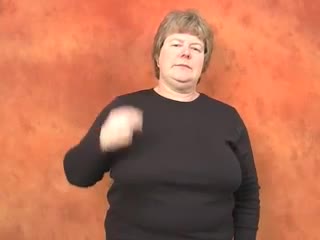
What Is the BSL Sign for "mould fungus"?
You know that unwelcome fuzzy growth that appears on old bread or damp walls? That’s exactly what the British Sign Language mould fungus sign captures in its visual essence. This BSL sign for mould fungus isn’t just a simple gesture; it's a wonderfully descriptive piece of visual language that helps you discuss an all-too-common natural phenomenon. By learning how to sign mould fungus in BSL, you’re not just acquiring a new vocabulary item; you're gaining a clearer understanding of how BSL conveys concepts with vivid imagery, making communication incredibly effective and intuitive.
How to Sign "mould fungus" in British Sign Language - Step-by-Step
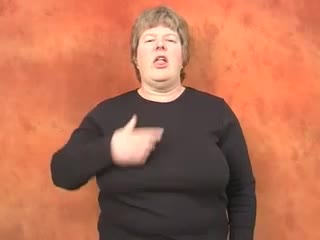
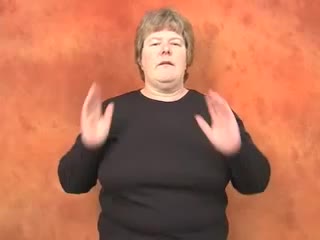
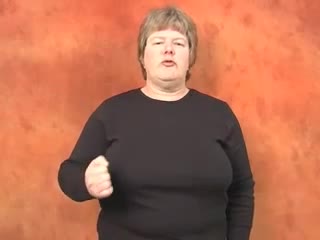
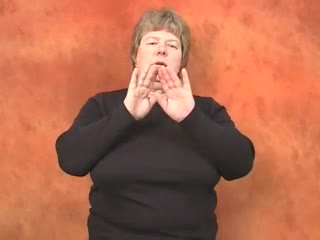
Mastering this sign involves a graceful combination of handshape, placement, and movement, all working together to visually represent this organic growth.
Step 1: Handshape
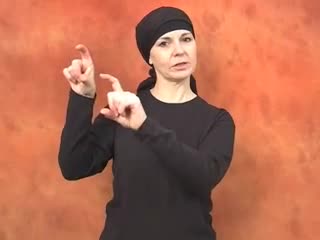
For this particular sign, your dominant hand forms a slightly bent '5' handshape. Imagine your fingers are gently curved, not stiffly straight, and they remain separated, not tightly pressed together. Your thumb extends outwards somewhat, keeping a relaxed posture. This configuration helps depict the irregular, spreading texture of mould, rather than a solid or smooth object.
Step 2: Hand Placement and Location
You’ll start by holding your non-dominant hand flat, palm facing upwards, positioned comfortably in front of your body, as if it were a surface or a piece of bread. This non-dominant hand serves as the canvas upon which the mould appears. Your dominant hand, in its bent '5' shape, positions itself directly above the heel of your non-dominant palm.
Step 3: Movement
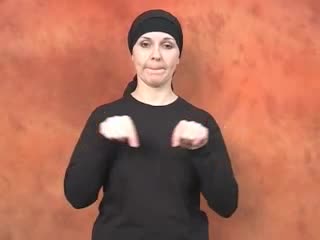
With your dominant hand hovering over the non-dominant palm, perform several small, irregular tapping and spreading motions. Begin near the base of your non-dominant palm, then subtly move your dominant hand forward and outwards towards the fingers, as if dabbling or spreading an uneven substance. This motion is repeated two or three times, creating the visual impression of something growing and spreading patchily across a surface.
Step 4: Facial Expression and Mouthing
Non-manual features are absolutely vital in BSL, and for "mould fungus," a subtle facial expression communicates an added layer of meaning. You'll naturally adopt a slight frown or wrinkle your nose, conveying a sense of mild distaste or unpleasantness. Alongside this, you would mouth the English word "mould" or "fungus" without vocalising, which further clarifies the sign's specific meaning within the conversation.
Step 5: Palm Orientation
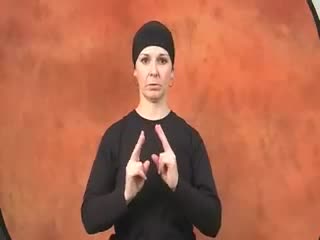
Initially, your dominant hand's palm will face downwards, directly towards your non-dominant palm as you begin the tapping movement. As you perform the spreading motion, the palm orientation subtly shifts to face slightly more towards your own body, allowing the inner curve of your bent fingers to indicate the irregular surface of the growth. This shift helps to visually convey the texture and depth of the mould rather than just a flat image.
"mould fungus" in BSL - Quick Reference Snapshot
- Handshape: Dominant hand forms a bent '5' (fingers curved and separated, thumb extended).
- Location: Over the non-dominant palm (held flat, palm up).
- Movement: Dominant hand taps and spreads irregularly from palm heel towards fingers, repeated 2-3 times.
- Facial Expression: Slight frown or wrinkled nose, indicating mild distaste.
- Dominant Hand: Performs the movement.
- Palm Orientation: Initially down towards non-dominant palm, shifts slightly towards signer during spreading.
5 Memorisation Tricks for the BSL Sign "mould fungus"
- Visual Mnemonic: Picture your bent '5' dominant hand as a tiny, fuzzy patch of mould, with each finger representing an irregular lobe. When you perform the spreading motion over your non-dominant palm, imagine it's growing slowly, expanding its fuzzy tendrils across a surface.
- Muscle-Memory Drill: Try signing "mould fungus" while looking at different surfaces around your home – a wall, a piece of fruit, or even your own hand. Focus on the sensation of your dominant hand's irregular movement over the "surface" of your non-dominant palm, repeating the action until the motion feels natural and fluid.
- Connection to Meaning: Think about the organic, slightly unpleasant nature of mould. The slightly curved, separated fingers and the irregular, dabbing movement perfectly mimic how mould actually appears to grow and spread, making the sign itself an almost direct illustration of the concept.
- Common-Confusion Tip: Be careful not to confuse this sign with generic signs for 'spread' or 'grow'. The distinct bent '5' handshape and the specific irregular, dabbing movement are key; a sign for 'spread' might use flatter hands or a smoother, wider motion, while 'grow' often involves an upward movement.
- Daily-Life Practice Idea: Next time you encounter something that's gone a bit mouldy – perhaps a forgotten item in the fridge – make a mental note, or even physically sign "mould fungus" to yourself. This real-world association will strongly reinforce the sign’s meaning and help cement it in your memory.
Real-Life Situations to Use the BSL Sign for "mould fungus"
Engaging with this sign in practical contexts helps solidify your understanding and fluency. Here are some scenarios where you'd naturally use it:
- You might be discussing home repairs with a friend, signing, "My bathroom wall has mould fungus," indicating the problematic area with a head nod towards the ceiling.
- Perhaps you're in the kitchen, checking ingredients, and you discover some spoiled food, exclaiming, "Oh no, the bread has mould fungus!" accompanied by a slight shake of the head.
- When explaining a science experiment to a child, you could ask, "Do you know what mould fungus is?" using an inquisitive facial expression, then demonstrating the sign clearly.
- You might use it to describe an old, damp house, signing, "That old house has mould fungus everywhere inside," using spatial grammar to indicate the pervasive nature of the problem.
Top 3 Mistakes Learners Make Signing "mould fungus" in BSL
Learning any new sign involves a few common pitfalls, but knowing them beforehand makes correction much easier.
- Incorrect Handshape Rigidity: Many beginners tend to hold their fingers too stiffly straight or too tightly together in a flat '5' handshape. This makes the sign look like a flat surface rather than an irregular growth. The precise correction involves relaxing your dominant hand, allowing the fingers to gently curve and separate, creating that distinctive organic, slightly uneven visual effect.
- Vague or Overly Broad Movement: Learners sometimes perform a wide, sweeping motion instead of the specific, irregular dabbing. A large, smooth sweep doesn't convey the particular texture of mould. The solution is to focus on smaller, more contained, and slightly erratic tapping movements that suggest tiny, spreading patches, ensuring your dominant hand moves across the non-dominant palm in short, distinct bursts.
- Missing the Facial Expression: Forgetting the accompanying facial expression is a common oversight, as non-manual features are often overlooked by new signers. Without the slight frown or wrinkled nose, the sign for "mould fungus" loses its inherent negative connotation, appearing more neutral. Always remember to incorporate that subtle hint of distaste, as it’s a crucial grammatical component that enriches the meaning.
Fascinating Facts About the BSL Sign for "mould fungus"
Every sign has its own story and unique characteristics within the rich tapestry of BSL.
- The iconic nature of this sign means it directly mimics the visual appearance of its meaning; the irregular handshape and spreading movement are designed to look like mould itself, making it highly intuitive for new learners.
- While the core elements remain consistent, you might observe slight regional variations within the UK BSL community; some areas might use a slightly more pronounced tapping, while others might emphasise a gentler spreading motion.
- This sign stands out because it doesn't directly relate to the manual alphabet; its form is driven purely by the descriptive qualities of the concept, rather than being initialised from an English letter.
- Linguistically, the repetition of the irregular movement reinforces the idea of persistence and growth, embodying how mould can spread over time rather than just appearing in one static spot.
- The incorporation of non-manual features, like the facial expression, is a powerful example of BSL's holistic grammar, where meaning isn't just conveyed by the hands but by the entire body working in concert.
"mould fungus" in Deaf Culture - Community and Identity
Within Deaf culture, practical signs like "mould fungus" are part of the shared vocabulary that helps navigate everyday life and maintain homes. Discussing household issues, from dampness to necessary repairs, often involves descriptive signs that are universally understood and visually clear. There's a pragmatic appreciation for signs that directly illustrate concepts, allowing for straightforward communication about common challenges, such as keeping a home dry and healthy. This shared visual language fosters a strong sense of community, as everyone can instantly connect with the visual representation of such a tangible concern.
Example Conversations Using "mould fungus" in BSL
Here are some practical examples to help you see "mould fungus" in action.
English: There's mould fungus on the bathroom ceiling. - BSL structure: You'd sign BATHROOM CEILING (point up) MOULD FUNGUS, using spatial referencing to indicate the location.
English: Did you see the mould fungus on the old cheese? - BSL structure: OLD CHEESE (show condition) MOULD FUNGUS, then sign QUESTION (with appropriate facial expression), maintaining topic-comment order.
English: We need to clean the mould fungus off the wall quickly. - BSL structure: WALL MOULD FUNGUS, CLEAN NEED QUICKLY, emphasising the urgency with a strong movement for "quickly".
English: I hate the smell of mould fungus in damp places. - BSL structure: DAMP PLACE, MOULD FUNGUS, SMELL, HATE, conveying personal feelings clearly.
English: Unfortunately, the cupboard developed mould fungus after the leak. - BSL structure: CUPBOARD, LEAK, AFTER, MOULD FUNGUS (showing the consequence), using temporal sequencing for clarity.
Frequently Asked Questions: The BSL Sign for "mould fungus"
Is the BSL sign for "mould fungus" suitable for beginners?
Absolutely, this sign is quite beginner-friendly! Its highly iconic nature means that what you see is what you get; the sign directly mimics the visual appearance of mould, making it easy to remember and understand even for those just starting their BSL journey. You'll find it’s a great example of BSL’s descriptive power.
Are there regional variations for the British Sign Language mould fungus sign?
While the core elements of the sign remain broadly consistent across the UK, you might encounter subtle regional differences in emphasis or slight modifications to the movement. Some areas may use a slightly faster tapping, while others might hold the bent '5' handshape with minor variations, but the overall concept and visual representation remain universally understood.
What signs are commonly confused with the BSL mould fungus sign?
One common point of confusion for new learners is mistaking it for general signs related to 'spreading' or 'growth' that lack the specific irregular handshape and dabbing movement. For instance, a sign for 'spread' might involve a flatter hand and a broader motion, so paying close attention to the precise handshape and the small, irregular movement of "mould fungus" is essential to avoid ambiguity.
Can children easily learn the BSL sign for "mould fungus"?
Yes, children typically pick up this sign quite readily! Its descriptive and visual nature appeals to young learners, especially when accompanied by the appropriate facial expression. Making a game out of identifying "mould fungus" safely in their environment can be a fun and effective way for them to learn.
How does this BSL sign visually differentiate itself from other signs for decay or decomposition?
This specific BSL sign for "mould fungus" distinguishes itself through its unique combination of the bent '5' handshape and the irregular, spreading movement. While other signs for decay might involve a 'crumbling' motion or represent general 'rotting', this sign specifically captures the distinctive textured, patchy growth characteristic of mould, making it visually distinct and unambiguous.
Signs That Pair Naturally with "mould fungus" in BSL
Building your vocabulary means connecting signs into meaningful clusters, and "mould fungus" has some natural companions.
- DAMP: This sign, often a dominant hand brushing downwards on the non-dominant palm, naturally pairs with "mould fungus" because damp conditions are typically what cause mould to grow.
- CLEAN: Using a dominant hand wiping across the non-dominant palm, "clean" is a direct opposite and a common action taken in response to discovering mould fungus.
- OLD: Often signed with a dominant hand stroking down from the chin, "old" frequently precedes the appearance of mould fungus on food or objects.
- SMELL (BAD): Involving the dominant hand waving away from the nose with a negative facial expression, this sign is a common sensory experience associated with mould fungus.
- PROBLEM: Signed with two 'P' handshapes moving towards each other, "problem" often describes the situation when mould fungus is discovered in a home.
- AIR: Using open hands fluttering, "air" is relevant because good air circulation helps prevent mould fungus from developing.
Building Fluency: How to Practise "mould fungus" in BSL
Now that you know the specifics, let's get you practising! Start by using a mirror to observe your own signing; really focus on ensuring your dominant hand's bent '5' handshape is distinct and that your spreading movement over your non-dominant palm is irregular and precise, just as described. Try to integrate "mould fungus" into simple, imagined conversations throughout your day; perhaps you could narrate your morning routine, mentioning if you spot any mould on food or in the bathroom, signing it naturally. Filming yourself signing this word and then reviewing it can reveal subtle areas for improvement, helping you refine both your handshape and that crucial facial expression. Most importantly, seek out opportunities to practise with a Deaf conversation partner; their feedback will be invaluable for building your confidence and ensuring your sign is clear and understood within the BSL community. Keep going, you’re doing brilliantly!