What Is the BSL Sign for "hot melt adhesive"?
Ever found yourself reaching for that trusty glue gun, perhaps mending something cherished or getting stuck into a new crafting project? You'll know the incredible versatility of hot melt adhesive, that quick-drying wonder that binds so many things together. For those who want to communicate this practical, everyday concept within the Deaf community, understanding the British Sign Language hot melt adhesive sign becomes really useful. This particular sign beautifully captures both the temperature and the function, offering a visual representation that makes perfect sense once you see it in action. Here at SignDeaf.com, we're going to break down the BSL sign for hot melt adhesive, showing you exactly how to express this essential term with clarity and confidence.
How to Sign "hot melt adhesive" in British Sign Language - Step-by-Step
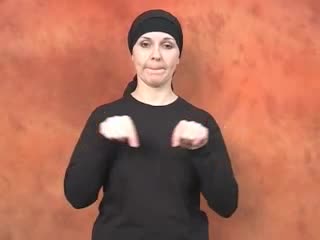
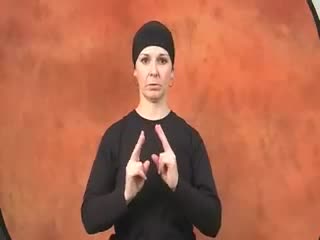
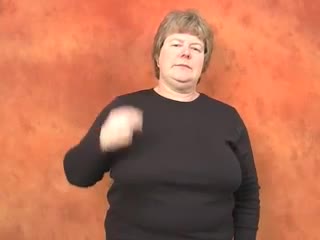
Let's get your hands moving and explore the specific, descriptive motions that convey "hot melt adhesive" in British Sign Language.
Step 1: Handshape
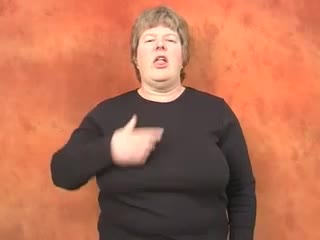
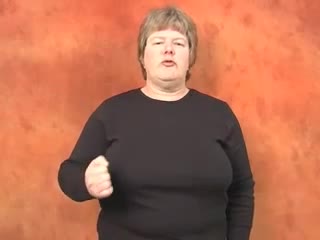
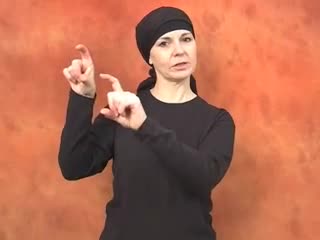
You'll begin by forming an 'F' handshape with your dominant hand. To achieve this, extend your index finger and bring your thumb to touch its tip, creating a small, enclosed circle. Ensure your remaining fingers (middle, ring, and pinky) are gently curled inwards towards your palm. This precise handshape is crucial for indicating the applicator or the flowing stream of the adhesive.
Step 2: Hand Placement and Location
Position your dominant hand, already in that 'F' handshape, near your mouth. Specifically, you want it about chin level, with your palm facing slightly towards your body or even subtly downwards. Starting near the mouth subtly references the "hot" aspect of the adhesive, hinting at the warmth or even the action of blowing on something to cool it.
Step 3: Movement
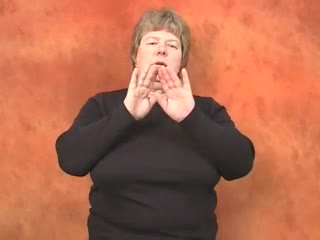
From its initial position near your mouth, move your 'F' handshape downwards and slightly outwards in a continuous, gentle arc. As you perform this flowing motion, allow your fingers to subtly 'wobble' or 'tremble' just a little; this visual cue represents the molten, flowing quality of the adhesive as it melts. Conclude the movement with a slight 'dab' or 'press' as if applying the sticky substance to a surface.
Step 4: Facial Expression and Mouthing
A critical part of this sign, and indeed of all British Sign Language, involves your non-manual features. When you begin the sign, you might make a subtle 'pff' or 'ooh' mouth shape, indicating the 'hot' element. As you transition into the 'melt' and 'adhesive' part of the sign, your facial expression should become neutral or gently focused, conveying the careful application of the material. Mouthing the full English word "hot-melt-adhesive" or a shortened version like "hot-melt" can also accompany the sign, providing additional clarity.
Step 5: Palm Orientation
Initially, as your hand sits near your mouth, your palm will be facing slightly towards your body or downwards. As you execute the downward and outward movement, your palm orientation will subtly shift to face more downwards or even slightly forward, mimicking the direction in which you would typically apply hot melt adhesive. This change in orientation is vital for correctly illustrating the adhesive's application.
"hot melt adhesive" in BSL - Quick Reference Snapshot
Here's a concise summary of the BSL sign for "hot melt adhesive" for quick recall:
- Handshape: Dominant hand forms an 'F' (index finger and thumb touch, other fingers curled).
- Location: Begins near the mouth, at chin level.
- Movement: Smoothly arcs downwards and outwards, with subtle finger 'wobble' and a final 'dab' motion.
- Facial Expression: Starts with a 'pff' or 'ooh' for 'hot', then transitions to neutral/focused.
- Dominant Hand: Always your preferred signing hand.
- Palm Orientation: Starts slightly body-facing/downwards, shifts to downwards/forward during movement.
5 Memorisation Tricks for the BSL Sign "hot melt adhesive"
Learning new signs can sometimes feel like a puzzle, but with a few clever tricks, you'll master the British Sign Language hot melt adhesive sign in no time.
- Visual Mnemonic: Picture the Glue Gun Nozzle. Imagine your 'F' handshape as the tiny nozzle of a hot glue gun, perfectly poised to dispense adhesive. Think of the heat originating from your mouth as the "hot" element, and the downward flow as the actual melted glue coming out. This strong visual link helps cement the handshape and initial placement.
- Muscle Memory Drill: "Flow and Fix." Repeatedly practice the entire motion: bringing the 'F' handshape to your mouth, then executing the smooth, wobbling downward arc with that final dab. Focus on the continuous, fluid action, almost as if you're actually dispensing and sticking something; this builds a powerful muscle memory that makes the sign feel natural.
- Connect to Meaning: The "Hot, Melt, Stick" Story. Break the sign down mentally into its core components: the initial mouth placement for "hot," the flowing movement with finger wobble for "melt," and the final subtle dab for "adhesive" or "stick." Understanding how each part of the sign tells a piece of the story makes it much easier to recall the full sequence.
- Avoid Confusion: Differentiating from "GLUE." Be mindful not to confuse this specific sign with a more general sign for "GLUE," which often involves rubbing hands together or a simple 'G' handshape. Remember, the BSL hot melt adhesive sign has that distinct mouth placement and the unique 'F' handshape movement to specifically convey the *hot melt* aspect, making it unique.
- Daily Life Practice: Point and Sign. Every time you see something that's been fixed with hot melt adhesive, or you're about to use a glue gun, pause and sign "hot melt adhesive." This everyday integration helps you associate the sign directly with its real-world application, making it stick in your memory.
Real-Life Situations to Use the BSL Sign for "hot melt adhesive"
Knowing a sign is one thing; using it naturally in conversation is quite another. Here are a few practical scenarios where you'd effectively employ the BSL sign for "hot melt adhesive," complete with a touch of BSL grammatical context.
- You're at a craft fair, admiring a piece of art, and you want to ask the artist, "Did you use hot melt adhesive for this?" In BSL, you might sign "ART YOU MAKE, USE HOT-MELT-ADHESIVE, YOU?" with a questioning facial expression.
- Someone needs to fix a broken toy, and you suggest, "I think hot melt adhesive would work really well for that repair." You'd sign "TOY BROKEN, REPAIR, HOT-MELT-ADHESIVE GOOD, THINK I."
- While working on a DIY project with a Deaf friend, you might gesture towards a tool and sign, "Pass me the hot melt adhesive, please." In BSL, this could be "HOT-MELT-ADHESIVE, PLEASE GIVE ME."
- You're explaining a technique in a workshop and want to clarify a step. "First, apply the hot melt adhesive, then press firmly." You would sign "FIRST HOT-MELT-ADHESIVE APPLY, THEN PRESS FIRM."
Top 3 Mistakes Learners Make Signing "hot melt adhesive" in BSL
It's completely normal to stumble a bit when learning new signs; everyone does it! Here are the most common pitfalls learners encounter with the BSL sign for "hot melt adhesive" and how you can easily correct them.
- Incorrect Handshape at the Start: A frequent error involves using a 'G' handshape (a fist with the thumb extended) instead of the precise 'F' handshape (thumb and index finger touching). The 'G' handshape looks more like a general pointer or 'glue' in some contexts, missing the specific visual of a fine nozzle or stream. To correct this, consciously practice forming that perfect 'F' handshape, ensuring your thumb and index finger make a clear circle.
- Missing the Mouth Placement or "Hot" Cue: Learners sometimes omit bringing the hand near the mouth initially or neglect the subtle facial expression for "hot," making the sign less clear. Without this crucial opening, the sign might just look like a generic application of something sticky, losing the "hot melt" distinction. Always remember to initiate the sign close to your mouth with a slight 'pff' or 'ooh' expression, clearly setting the stage for the molten aspect.
- Omitting the "Melt/Flow" Movement: Another common mistake is making the movement too rigid or simply a single 'dab' without the downward arc and subtle finger 'wobble.' This makes the adhesive seem like a solid block or a quick press, rather than a flowing, melted substance. Focus on the smooth, continuous downward and outward arc, incorporating a gentle tremor in your fingers to authentically convey the melting, flowing quality of the adhesive.
Fascinating Facts About the BSL Sign for "hot melt adhesive"
Every sign has a story, and the BSL sign for "hot melt adhesive" offers some really interesting insights into how British Sign Language evolves and represents the modern world.
- The sign's iconic motivation is quite strong; it visually describes the properties of the material itself. You're not just signing a word; you're miming the *action* and *characteristics* of hot melt adhesive, making it highly descriptive and often understandable even to new learners.
- While many signs have deep historical roots, specific technical terms like "hot melt adhesive" often develop more recently out of necessity. This sign likely emerged as the product became more common in everyday life and industry, showcasing BSL's dynamic ability to adapt and incorporate new concepts.
- Regional variations for highly specific or technical signs can sometimes exist within the BSL-using community. While the described sign is a widely understood and logical representation, some areas might add a fingerspelled element for extra clarity or use a slightly different descriptive approach for "glue" in general.
- The 'F' handshape used in this sign is also part of the manual alphabet, representing the letter 'F'. This connection can sometimes help learners recall the handshape, even though the sign itself is not fingerspelled.
- The sign's compound-like nature, combining elements of "hot" and "adhesive flow" into a single, seamless motion, exemplifies how BSL efficiently packs meaning into concise visual expressions. It doesn't typically break down into separate signs for "hot," "melt," and "adhesive," but rather integrates them.
"hot melt adhesive" in Deaf Culture - Community and Identity
The concept of "hot melt adhesive," while seemingly technical, connects with Deaf culture through the shared human experience of creating, mending, and innovating. In a community that often values visual communication and practical skills, tools like hot melt adhesive become incredibly useful in everyday life, from crafting projects to quick household repairs. Members of the Deaf community, like anyone else, engage in DIY, artistic pursuits, and home improvements, where such an adhesive is indispensable. Sharing knowledge about tools and techniques, including how to sign specific materials, strengthens community bonds and fosters self-reliance. When discussing a new project or a clever fix, being able to precisely sign "hot melt adhesive" means you can share ideas, give advice, and connect over practical matters with greater ease and clarity. It's about empowering communication around shared activities and interests, reinforcing a sense of collective skill and resourcefulness.
Example Conversations Using "hot melt adhesive" in BSL
Let's see how "hot melt adhesive" fits into some common conversational exchanges in British Sign Language.
English: Do you have any hot melt adhesive I could borrow for a quick repair? - BSL structure: YOU HAVE HOT-MELT-ADHESIVE, I BORROW, QUICK REPAIR, YOU?
English: I used hot melt adhesive to secure the fabric to the frame; it worked perfectly! - BSL structure: FABRIC FRAME CONNECT, I USE HOT-MELT-ADHESIVE, PERFECT RESULT.
English: This new hot melt adhesive sets incredibly fast, which is really convenient for crafts. - BSL structure: NEW HOT-MELT-ADHESIVE, SET FAST, CRAFTS VERY CONVENIENT.
English: Be careful, the hot melt adhesive is still very hot right after application. - BSL structure: CAREFUL, HOT-MELT-ADHESIVE APPLY AFTER, STILL VERY HOT.
English: We need to buy more hot melt adhesive before starting the next big project. - BSL structure: NEXT BIG PROJECT BEFORE, WE NEED BUY MORE HOT-MELT-ADHESIVE.
Frequently Asked Questions: The BSL Sign for "hot melt adhesive"
Is there a common regional variation for the BSL sign for "hot melt adhesive" in the UK?
Generally, this descriptive sign for "hot melt adhesive" is quite widely understood across the UK because it’s iconic, meaning it clearly depicts the action and properties of the material. While specific signs for "glue" might have minor regional differences, the combined "hot melt" aspect usually maintains this consistent form, ensuring clear communication regardless of where you are in the country.
Are there any similar BSL signs I should be careful not to confuse with "hot melt adhesive"?
Absolutely, you'll want to differentiate this sign from a general sign for "GLUE" or "STICKY," which often involve rubbing hands together or simpler 'G' handshapes. Additionally, be mindful not to confuse it with the isolated sign for "HOT," which typically involves moving a 'C' handshape away from the mouth or face. The unique combination of handshape, placement near the mouth, and the distinct flowing movement clearly identifies the specific "hot melt adhesive" sign.
Is the BSL sign for "hot melt adhesive" suitable for beginners to learn?
Yes, this sign is quite accessible for beginners! Its descriptive and iconic nature means that once you understand the logic behind the "hot" element and the "melting, flowing" action, it becomes much easier to remember and reproduce. It's an excellent example of how BSL visually represents concepts, making it intuitive for new learners.
Can children easily learn and use the BSL sign for "hot melt adhesive"?
Children often pick up descriptive signs very quickly, and this one is no exception. Its visual representation of a glue gun's action, combined with the "hot" cue, makes it relatable and memorable for young learners, especially if they're involved in crafts or helping with repairs. Encourage them to act out the "melting" part for extra fun and retention.
How does the British Sign Language sign for "hot melt adhesive" compare to equivalent signs in other sign languages?
Sign languages around the world develop independently, reflecting their own cultures and linguistic structures. While other sign languages might have signs for "hot" and "adhesive," their specific combination for "hot melt adhesive" would likely differ significantly from British Sign Language. BSL's sign, with its particular handshape, mouth placement, and flowing motion, is unique to its linguistic context and how its users conceptualise this specific item.
Signs That Pair Naturally with "hot melt adhesive" in BSL
Building your vocabulary means understanding how signs connect. Here are some related signs that naturally complement "hot melt adhesive" in your BSL learning journey.
- GLUE: This general term for adhesive is a foundational sign, often used when the specific "hot melt" aspect isn't essential. Learning it alongside "hot melt adhesive" helps you distinguish between general and specific types of bonding.
- REPAIR: When you're using hot melt adhesive, you're usually fixing something. The sign for "REPAIR" naturally follows as a common action performed with this material.
- CRAFT: Many people use hot melt adhesive for crafting projects. Pairing these signs expands your ability to discuss hobbies and creative activities.
- BUILD: Whether assembling models or creating structures, "BUILD" is a verb that often involves adhesives, making it a logical companion sign.
- HEAT: This sign highlights the "hot" component of hot melt adhesive, giving you a way to talk about temperature in relation to the material.
- STICKY: Describing the tactile quality of the adhesive, "STICKY" helps you articulate the material's properties and effects.
Building Fluency: How to Practise "hot melt adhesive" in BSL
Mastering any sign, especially one as descriptive as "hot melt adhesive," comes down to consistent, thoughtful practice. You'll want to integrate this sign into your daily BSL use to truly make it your own. Begin by standing in front of a mirror, carefully watching your dominant hand as you form the 'F' handshape, bring it to your mouth, and execute that flowing, wobbling motion. Pay close attention to your facial expression and mouthing; do they convey the "hot" and "adhesive" qualities clearly? Then, try incorporating "hot melt adhesive" into simple sentences about things around your home or office that might use it, verbally thinking through the BSL structure as you sign. A fantastic way to accelerate your learning involves filming yourself signing; watching playback allows you to spot any subtle movements or expressions you might be missing, giving you immediate, objective feedback. Most importantly, seek out opportunities to use this sign with a Deaf conversation partner or in a BSL class; real-time interaction is invaluable for building confidence and natural fluency. Remember, consistent repetition spaced over several days will solidify this sign in your muscle memory, making it feel completely natural next time you reach for that glue gun.