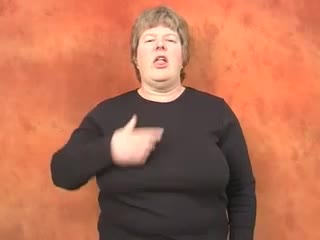
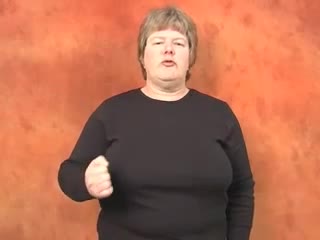
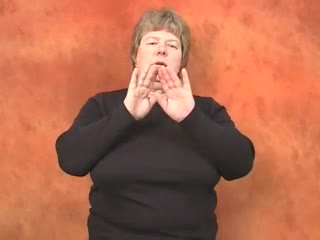
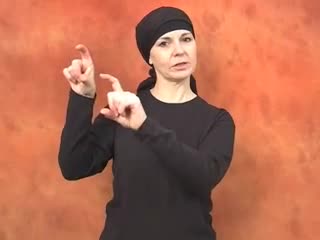
What Is the BSL Sign for "centre post"?
Have you ever needed to describe that crucial, central support in a structure, the very heart of its stability? Then you'll be delighted to discover the British Sign Language sign for "centre post." This specific BSL sign isn't just a practical term for builders or engineers; it embodies the essence of something foundational and central in conversation. Learning to sign "centre post" in BSL truly enriches your vocabulary, allowing you to clearly communicate about core elements, whether you're discussing architecture, a tent, or even a metaphorical central idea. It’s a wonderfully descriptive sign that immediately conveys its meaning once you understand its visual logic, forming a key piece of your ever-growing signing repertoire.
How to Sign "centre post" in British Sign Language - Step-by-Step
Let's get your hands moving and truly master the mechanics of this distinctive sign, breaking it down into clear, manageable actions.
Step 1: Handshape
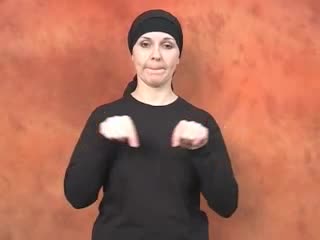
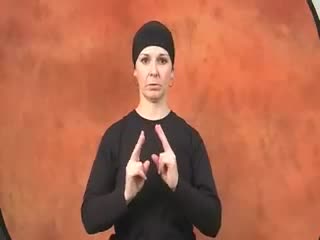
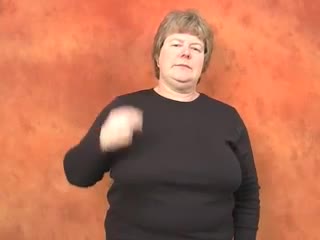
For your dominant hand, extend your index finger straight upwards, keeping all other fingers curled tightly into your palm. Your thumb should rest securely alongside your curled fingers, creating a firm, upright pointer. This distinct '1' handshape will represent the "post" itself. Meanwhile, your non-dominant hand will form an open, flat palm, with all fingers held together and extended straight, while your thumb rests naturally alongside the palm's edge.
Step 2: Hand Placement and Location
Position your non-dominant hand flat, palm facing directly upwards, held steadily in front of your body at about chest height. Imagine this hand as the ground or base where the post will stand. Next, bring your dominant hand, already in its '1' handshape, to a position just slightly above and to one side of your non-dominant palm, perhaps a few inches away, ready to descend.
Step 3: Movement
Begin with your dominant '1' hand, moving it purposefully and directly downwards until the tip of your extended index finger lands with a gentle, yet firm, touch right in the precise centre of your non-dominant palm. Once your index finger makes contact, execute a small, controlled, downward pressing motion, or a tiny, deliberate rotation clockwise, to emphasise the idea of something being firmly 'centred' or 'planted'. This action is singular and conclusive, not repeated.
Step 4: Facial Expression and Mouthing
Maintaining a neutral facial expression is generally appropriate for this sign, reflecting its descriptive nature. However, if the "centre post" holds particular significance or if you’re conveying its crucial role, a slight tightening of the lips or a subtle nod can add emphasis. Crucially, mouthing the words "centre post" simultaneously as you sign is an integral part of BSL communication, providing phonological information and supporting clarity for all conversational partners.
Step 5: Palm Orientation
Throughout the entire signing process, the palm of your dominant hand (the '1' handshape) will consistently face forward or slightly towards your non-dominant side, allowing the index finger to clearly represent an upright structure. Your non-dominant hand's palm will maintain an upward orientation, creating a stable, receptive surface for the 'post' to interact with. This specific combination of palm orientations is vital; it instantly communicates the structural relationship between a base and a central support.
"centre post" in BSL - Quick Reference Snapshot
- Handshape: Dominant hand '1' (index finger extended), non-dominant hand open flat.
- Location: Dominant hand points to the centre of the non-dominant palm, held at chest height.
- Movement: Dominant hand moves down to touch and press/rotate in the non-dominant palm's centre.
- Facial Expression: Neutral, potentially with slight emphasis for importance.
- Dominant Hand: The hand forming the '1' handshape.
- Palm Orientation: Dominant palm faces forward/sideways, non-dominant palm faces up.
5 Memorisation Tricks for the BSL Sign "centre post"
Learning new signs is always an adventure, and here are some clever ways to really make the BSL sign for "centre post" stick in your mind.
- Visual Mnemonic: Picture your extended index finger as a strong, solitary pole, and your flat non-dominant hand as the ground or floor. The action of planting that "pole" right in the very middle of your "ground" hand creates a vivid mental image of a centre post, making the sign's logic instantly clear.
- Muscle-Memory Drill: Perform the sign slowly, five times in a row, focusing intensely on the tactile sensation of your index finger touching the exact centre of your opposite palm. This deliberate, repetitive physical action will help engrain the precise movement into your muscle memory, making it feel natural and automatic over time.
- Connect to Meaning: Think about what a centre post *does* in real life: it supports, it holds things up, and it's always found at the core. Associate that crucial, supportive function with the firm, central placement of your dominant hand, remembering how this sign visually represents that structural importance.
- Common-Confusion Tip: A lot of people initially confuse this sign with general signs for 'middle' or 'point'. Remember, the key here is the *upright '1' handshape* specifically landing with a reinforcing action, which clearly differentiates it as a "post" rather than just a general location.
- Daily-Life Practice: Every time you see a physical centre post – maybe in a tent, a construction site, or even a table's central leg – pause for a moment and mentally perform the sign. Integrating this visual trigger into your everyday observations will reinforce the sign's meaning and help you recall it effortlessly.
Real-Life Situations to Use the BSL Sign for "centre post"
Knowing a sign is one thing; knowing when and how to use it is where the real learning happens. Here are some practical scenarios for "centre post".
- Imagine you're discussing putting up a marquee for an event; you might sign, "MARQUEE ERECT, CENTRE POST IMPORTANT" to stress a critical structural element. This shows topic-comment structure, where the key detail comes after the main subject.
- If you're explaining a design to someone, perhaps a new garden shed, you could sign, "SHED PLAN, CENTRE POST WHERE?" using a questioning facial expression and leaning forward slightly, demonstrating BSL's non-manual markers for inquiries.
- When describing a broken structure, you might sign, "HOUSE ROOF COLLAPSE, CENTRE POST WEAK" to indicate the failure point, employing spatial grammar by referencing the 'post' as the cause of the collapse.
- Perhaps you are at a community meeting discussing an upcoming project, and you want to refer to the core idea guiding it. You could metaphorically sign, "PROJECT SUCCESS, CENTRE POST OUR SHARED VISION" to highlight the central principle.
Top 3 Mistakes Learners Make Signing "centre post" in BSL
It's completely natural to stumble a little when learning a new sign, and recognising common pitfalls really helps you refine your technique.
- Incorrect Handshape for the Post: Many beginners might use an open 'B' handshape or a curled 'C' hand for the dominant hand, thinking it represents a general object. The mistake here is losing the specific "post" identity; the correct '1' handshape is crucial for indicating a singular, upright support. Always remember to extend only your index finger for that unmistakable "post" visual.
- Vague Placement or Movement: Sometimes learners will bring the dominant hand to a general area on the non-dominant palm, or make a sweeping motion rather than a precise landing. This lacks the critical "centre" element. The correction involves ensuring your index finger lands *exactly* in the middle and executes that small, firm, reinforcing press or rotation, solidifying the 'centrality'.
- Forgetting Non-Manual Features: Neglecting to mouth "centre post" or maintaining a completely blank expression can make your communication less clear. BSL relies heavily on non-manual features; without them, the sign might seem incomplete or less impactful. Always practice mouthing the words as you sign, and consider a subtle facial cue if the post is particularly important.
Fascinating Facts About the BSL Sign for "centre post"
Every sign has a story and unique characteristics; let's explore some intriguing aspects of "centre post."
- This sign is beautifully iconic, meaning its form directly resembles its meaning, visually depicting a post being established in a central position.
- While the core handshape and movement are consistent, slight variations in the emphasis of the 'press' or 'rotation' might be seen across different regions within the BSL-using community, reflecting subtle dialectal nuances.
- The clear distinction between the dominant hand representing the "post" and the non-dominant hand providing the "centre/base" demonstrates BSL's sophisticated use of two-handed signs for spatial clarity and role assignment.
- Unlike many signs derived from the manual alphabet, the BSL sign for "centre post" doesn't directly incorporate a finger-spelled letter for 'C' or 'P', instead opting for a purely iconic representation of the concept.
- Its strong visual metaphor makes it highly memorable and relatively easy for new learners to grasp, bridging the gap between abstract concept and concrete visual.
"centre post" in Deaf Culture - Community and Identity
The concept of a "centre post," while seemingly architectural, resonates deeply within the Deaf community as a symbol of support and foundation. Just as a physical centre post is vital for stability, the Deaf community often speaks of its culture, language (BSL), and shared experiences as the "centre post" that holds everything together. BSL itself serves as the vital core, the unifying force around which identity, connection, and shared understanding are built. Conversations about "centre posts" can extend beyond literal structures to discussions about the core values or central figures who provide strength and guidance within Deaf organisations or families. It represents the unwavering support that preserves heritage and fosters a sense of belonging for all.
Example Conversations Using "centre post" in BSL
Here are five different ways you might naturally encounter or use the sign for "centre post" in real BSL exchanges.
English: We need a strong centre post for this new shelter. - BSL structure: Topic-comment order, emphasis on the need for a robust support.
English: Where should the centre post go in the tent? - BSL structure: Questioning non-manual features (eyebrows raised), specific spatial inquiry about placement.
English: The old centre post was rotten, so we replaced it. - BSL structure: Sequential narration, showing cause and effect with past tense implied by context.
English: That shed only has one centre post; it feels a bit unstable. - BSL structure: Descriptive comment, expressing a feeling about the structure’s perceived lack of stability.
English: The main argument is the centre post of his entire theory. - BSL structure: Metaphorical usage, applying the sign to an abstract concept of central importance.
Frequently Asked Questions: The BSL Sign for "centre post"
Is the BSL sign for "centre post" a two-handed sign?
Yes, the BSL sign for "centre post" is indeed a two-handed sign, with both your dominant and non-dominant hands playing distinct and crucial roles in its formation. Your dominant hand forms the 'post' while your non-dominant hand establishes the 'centre' and base, making it a highly descriptive and visually complete sign.
Can children easily learn the BSL sign for "centre post"?
Absolutely, children can learn the BSL sign for "centre post" quite easily because of its iconic and visually intuitive nature. The clear representation of a 'post' landing in a 'centre' makes it very graspable for young learners, especially when accompanied by real-world examples like tent poles or table supports.
Are there any regional variations for the BSL sign "centre post" in the UK?
While the core handshapes and movement for "centre post" are largely standardised across the UK, you might encounter minor regional variations in the precise emphasis of the landing or the exact angle of the dominant hand. These are usually subtle dialectal differences, not changes that would hinder understanding, and they reflect the natural evolution of BSL.
How does the BSL sign for "centre post" differ from the sign for 'middle'?
The BSL sign for "centre post" is distinctly different from a general sign for 'middle'. The 'middle' sign typically involves the dominant hand's index finger sweeping across the non-dominant palm or pointing to a general central area. "Centre post" specifically uses the '1' handshape to represent a physical *post* and involves a more deliberate, planting motion into the exact centre, clearly distinguishing it as a structural element.
Is the BSL sign for "centre post" suitable for beginners?
Yes, the BSL sign for "centre post" is an excellent sign for beginners to learn early in their journey. Its iconic nature and straightforward, logical movements make it relatively easy to grasp and remember. Mastering this sign builds a foundational understanding of how BSL visually represents concrete objects and concepts, boosting confidence for more complex vocabulary.
Signs That Pair Naturally with "centre post" in BSL
Building your vocabulary means understanding how signs connect; here are some that naturally complement "centre post."
- BUILDING: Often, a centre post is part of a larger structure, so learning "BUILDING" helps place it in context. Both signs describe physical construction elements.
- SUPPORT: The inherent function of a centre post is to provide support, making this sign a natural companion. They share a conceptual link of stability and strength.
- TENT: Centre posts are crucial for many types of tents, so "TENT" immediately provides a practical scenario for its usage. This connects the sign to a specific object.
- STRONG: Describing the quality of a centre post is important, and "STRONG" directly relates to its desired characteristic. Both signs convey ideas of resilience.
- WEAK: Conversely, discussing a failing or insufficient centre post might require the sign for "WEAK". This allows for expressing the opposite quality and potential problems.
- REPAIR: If a centre post is damaged, the concept of "REPAIR" naturally follows, offering a solution to a structural issue. They are linked through practical problem-solving.
Building Fluency: How to Practise "centre post" in BSL
To truly make the BSL sign for "centre post" a part of your fluent signing, consistent and thoughtful practice is key. Start by standing in front of a mirror, carefully observing your handshapes and movements to ensure your dominant '1' hand precisely lands in the centre of your non-dominant palm, making those subtle adjustments needed for perfect form. Try to integrate the sign into short, imagined BSL conversations about construction, camping, or even abstract ideas, forcing yourself to use it naturally rather than in isolation. Filming yourself performing the sign can provide invaluable feedback, allowing you to catch any missed details or awkward movements you might not notice in the moment. Most importantly, seek out opportunities to interact with Deaf individuals; having a conversation partner will give you real-time feedback and allow you to use "centre post" authentically in its proper linguistic context, truly embedding it into your active vocabulary. Keep practising, and you'll soon find this sign flowing effortlessly from your hands.