What Is the BSL Sign for "frame support"?
Understanding the British Sign Language sign for "frame support" opens up a crucial part of communicating about structure and stability in the Deaf community. This particular sign helps us articulate anything from the literal framework of a building to the metaphorical backing a person receives. It's a foundational piece of vocabulary within British Sign Language frame support discussions, allowing for clear expression of physical and abstract concepts. You'll find this sign incredibly useful for describing how things are built, how they stand, or even the underlying structure of an idea. What makes the BSL sign for frame support so interesting is its visual depiction of both a boundary and the strength it provides.
How to Sign "frame support" in British Sign Language - Step-by-Step
Learning the specifics of this sign means really getting into the details of handshape, placement, and movement, which are all vital for clear communication.
Step 1: Handshape
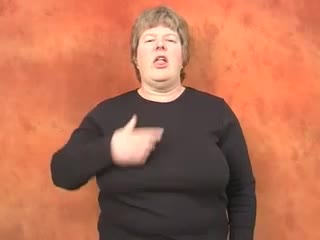
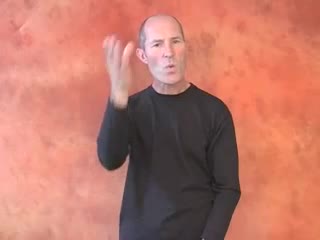
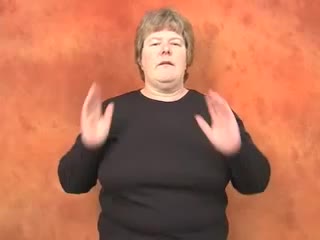
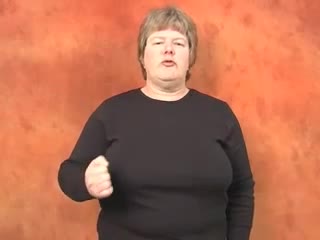
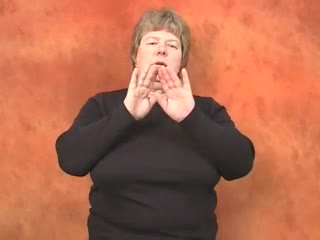
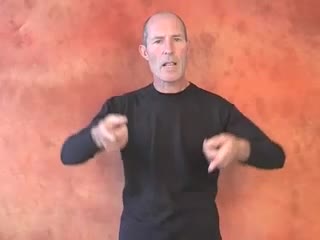
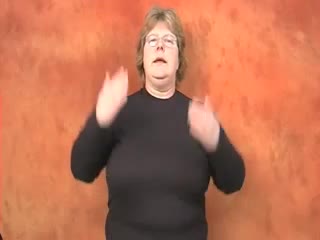
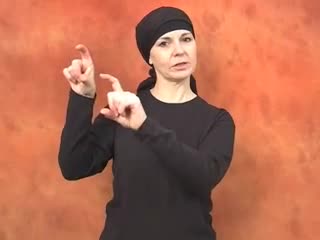
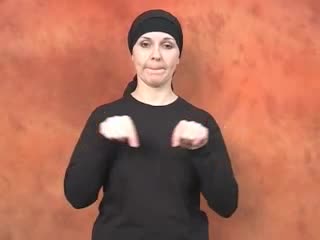
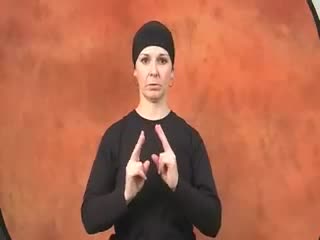
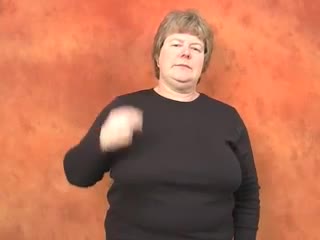
For the dominant hand, you'll form what we call an 'F' handshape. This means your index finger and your thumb gently touch at their tips, creating a small, distinct circle. The remaining three fingers, your middle, ring, and pinky fingers, extend straight upwards and are held slightly separated from each other, giving a clear, structured appearance. Meanwhile, your non-dominant hand takes on a flat 'B' handshape; here, all your fingers are extended fully and pressed together, with your thumb tucked neatly alongside your palm.
Step 2: Hand Placement and Location
You'll begin by holding your non-dominant hand steady in front of your body, positioned roughly at your mid-chest height. Your palm should face directly upwards, creating a stable, horizontal plane. The dominant hand, already in its 'F' shape, starts its journey positioned just above and slightly forward of your non-dominant hand. Imagine it hovering a few inches above the waiting palm, ready to descend.
Step 3: Movement
From its initial position, your dominant 'F' hand executes a single, deliberate downward motion. It travels a short, controlled distance until the outer edge of your extended pinky finger and the side of your ring finger make gentle, yet firm, contact with the open palm of your non-dominant 'B' hand. There's no bouncing or repetition; it's one smooth, decisive action, suggesting something settling into its place.
Step 4: Facial Expression and Mouthing
When you sign "frame support", maintain a neutral and focused facial expression. There's no need for exaggerated emotions, as the sign itself conveys the meaning directly. Alongside the manual sign, it's customary to mouth the English words "frame support" or a simplified mouth pattern that approximates the sound. This non-manual feature is a core linguistic component in BSL, adding clarity and aiding comprehension, especially for new learners or when context might be ambiguous.
Step 5: Palm Orientation
Throughout the downward movement, the palm of your dominant 'F' hand primarily faces towards the ground or slightly towards your non-dominant hand. As it makes contact, the palm maintains this general downward orientation, settling securely onto the upturned non-dominant palm. This specific orientation is crucial because it visually reinforces the concept of something being placed upon or resting against a stable foundation, clearly distinguishing it from signs where the palm might face outwards or upwards.
"frame support" in BSL - Quick Reference Snapshot
- Handshape: Dominant 'F' hand (index/thumb touching, other fingers extended); Non-dominant flat 'B' hand.
- Location: Dominant hand starts above non-dominant hand, which is at mid-chest height.
- Movement: Dominant hand descends to rest on non-dominant palm in a single, controlled motion.
- Facial Expression: Neutral, focused expression.
- Dominant Hand: The hand you typically write with.
- Palm Orientation: Dominant palm faces down/towards non-dominant hand; Non-dominant palm faces up.
5 Memorisation Tricks for the BSL Sign "frame support"
- Visual Mnemonic: Picture the 'F' handshape as a small, intricate piece of a frame, perhaps a corner joint, carefully being placed onto a sturdy shelf. Your non-dominant flat hand becomes that solid shelf, waiting to receive the delicate frame piece, which helps you recall the precise movement and handshapes.
- Muscle-Memory Drill: Try closing your eyes and performing the sign ten times slowly, really feeling the dominant 'F' hand's descent and the gentle contact with your non-dominant 'B' hand. Focus on the distinct sensation of your pinky-side resting, allowing your body to internalise the exact path and pressure of the movement.
- Meaning Connection: Think about the word itself: "frame" implies a structure, often with a precise shape (like your 'F' hand). "Support" means holding something up, which is perfectly represented by your flat, upturned non-dominant hand acting as a base. This mental link reinforces the sign's iconic nature.
- Common-Confusion Tip: Be mindful not to let your extended fingers on the dominant hand splay too widely or curl inward; they must remain relatively straight and slightly apart to maintain the clarity of the 'F' handshape. Many beginners accidentally turn it into a general 'claw' hand, losing the precise "frame" element.
- Daily-Life Practice: Each time you see a picture frame, a window frame, or even a bookshelf providing support, discreetly practise the sign for "frame support". Connect the visual in your environment with the manual sign, strengthening your recall through real-world association throughout your day.
Real-Life Situations to Use the BSL Sign for "frame support"
You'll find many opportunities to use the British Sign Language sign for "frame support" in your daily conversations, moving beyond just talking about literal structures. Imagine discussing the need for a strong framework when planning a new garden shed; you could sign "NEW SHED, FRAME SUPPORT IMPORTANT" placing the sign where the shed's foundation would be. Perhaps you're talking about a friend who's going through a tough time, and you want to express how much you appreciate the emotional backing they're receiving; here, you might sign "FRIEND SAD, FAMILY FRAME SUPPORT GIVE" with a gentle, supportive expression. If you're pondering the structural integrity of an old building, you might ask, "OLD BUILDING, FRAME SUPPORT, STRONG?" using a questioning facial expression and leaning slightly forward to indicate the interrogative nature. You might also use it spatially to indicate where support is needed, for example, pointing to an area of a wall and signing "HERE, NEED FRAME SUPPORT".
Top 3 Mistakes Learners Make Signing "frame support" in BSL
- Incorrect Handshape Execution: A very common error involves learners not forming a precise 'F' handshape with their dominant hand. They might let the index finger and thumb separate too much, or they might curl the extended fingers rather than keeping them straight and slightly spread. This often happens because they're rushing. The correct approach is to ensure a clear, small circle between the index and thumb, with the other three fingers purposefully extended, making the 'frame' element unmistakable.
- Ambiguous Movement and Contact: Some beginners perform the movement too vaguely, either letting the dominant hand hover without making clear contact or doing a repetitive bounce. This lack of a decisive settling action weakens the "support" aspect of the sign. To correct this, focus on a single, controlled downward movement, ensuring the pinky-side of the dominant hand makes a gentle, firm rest upon the non-dominant palm, clearly conveying stability.
- Neglecting Non-Dominant Hand Stability: A third frequent mistake is allowing the non-dominant hand to move or wobble during the sign. Since this hand represents the stable base, any instability detracts from the meaning of "support." Practise keeping your non-dominant 'B' hand absolutely still and flat, palm consistently facing upwards, as your dominant hand descends. This provides the crucial visual anchor for the entire sign.
Fascinating Facts About the BSL Sign for "frame support"
- While specific historical origins for every BSL sign are challenging to pinpoint, signs like "frame support" often develop from iconic representations, where the sign visually mimics the concept. Here, the action of placing something structured onto a stable base is clearly depicted, making it quite intuitive.
- Regional variations within the BSL-using community can sometimes influence the precise angle or height of the non-dominant hand, though the core handshapes and movement for "frame support" generally remain consistent across the United Kingdom. Minor stylistic differences might emerge based on local signing preferences.
- The sign's structure, involving one hand acting as a stable base and the other providing a specific, shaped action, is a recurring linguistic feature in BSL. This duality allows for complex ideas to be conveyed through the interaction of two distinct manual components.
- Interestingly, the 'F' handshape used in "frame support" is also part of the manual alphabet for the letter 'F'. However, in this specific sign, its function isn't alphabetic but rather contributes to the iconic representation of a structured or defined boundary.
- The precise contact point, where the pinky-side of the dominant hand meets the non-dominant palm, is a subtle yet significant detail. This specific interaction between the two hands is essential for distinguishing "frame support" from other signs that might involve similar handshapes but different points of contact or movement patterns.
"frame support" in Deaf Culture - Community and Identity
The concept of "frame support" resonates deeply within Deaf culture, extending beyond its literal meaning to encompass community and identity. Think about the strong social networks and mutual aid that are cornerstones of Deaf communities across the UK. These are the human "frame supports" that uphold individuals, offering understanding, shared experience, and practical help that often isn't available in the hearing world. The sign can metaphorically represent the collective strength derived from a shared language and culture, how individuals find their place within a supportive framework of peers. It speaks to the importance of Deaf clubs, organisations, and events that provide vital "frame support" for mental well-being, social connection, and cultural preservation. For many, finding the Deaf community is like discovering a robust framework after years of navigating an unsupported world, providing a sense of belonging and solid ground.
Example Conversations Using "frame support" in BSL
English: We need a strong frame support for the new greenhouse. - BSL structure: Topic-comment order, spatial reference for "greenhouse", then "strong frame support need".
English: Does this old bookshelf have enough frame support? - BSL structure: Question marker (raised eyebrows), topic "old bookshelf", then "frame support enough?".
English: Her family always gives her amazing frame support. - BSL structure: Pronoun "her", topic "family", then "always amazing frame support give".
English: The artist added a hidden frame support to the sculpture. - BSL structure: Topic "sculpture", "artist add hidden frame support".
English: We must ensure the bridge has proper frame support. - BSL structure: Imperative "must", topic "bridge", then "proper frame support ensure".
Frequently Asked Questions: The BSL Sign for "frame support"
Is there a regional variation for the BSL sign for "frame support"?
Generally, the core handshapes and movement for "frame support" are quite consistent across the UK, meaning you'll likely be understood wherever you go. However, minor stylistic nuances, such as the exact height or the swiftness of the dominant hand's descent, might vary slightly between regions or even individual signers. These are usually small enough not to impede comprehension.
Are there similar signs to "frame support" that I should avoid confusing it with?
Yes, some signs involving a flat non-dominant hand as a base can be similar, so careful attention to the dominant hand's shape and movement is key. For example, signs for "foundation" or "base" might use a flat hand, but the dominant hand would perform a different action, perhaps a broader sweep or a more abstract 'build' motion, not the precise 'F' handshape settling. Always pay close attention to all five parameters of the sign.
Is "frame support" a good sign for BSL beginners to learn early?
Absolutely, learning "frame support" early is a great idea for BSL beginners. It combines common handshapes and a straightforward, iconic movement, making it relatively easy to grasp. Mastering this sign helps build a foundational vocabulary for discussing structural elements and abstract support, which are frequent topics in conversation.
Can children learn and use the BSL sign for "frame support" effectively?
Children can certainly learn and use the BSL sign for "frame support" effectively. The visual nature of the sign often appeals to younger learners, making it easier for them to associate the action with the concept. You might introduce it when building with blocks or describing parts of a toy to make it tangible and relevant to their world.
How does the BSL sign for "frame support" compare to American Sign Language (ASL) equivalents?
Comparing BSL signs to those in other sign languages is fascinating, and you'll often find they are quite different due to distinct linguistic histories and cultural development. While ASL would have its own signs for "frame" and "support," their handshapes, locations, and movements would likely vary significantly from the specific BSL sign described here. Each sign language develops independently.
Signs That Pair Naturally with "frame support" in BSL
- BUILD: This sign, often involving stacking handshapes, naturally pairs with "frame support" as you build a structure that requires such backing. They belong together in discussions about construction or creation.
- STRONG: The sign for "strong," often showing flexed arms, is a perfect companion. You'll often describe a "frame support" as needing to be "strong," linking the concept of stability with inherent power.
- STRUCTURE: Similar to "build," this sign often involves outlining or forming a shape with hands, making it a conceptual relative. You'd use "structure" to talk about the overall design that "frame support" contributes to.
- BASE: Represented by flat hands, "base" is closely related, as a "frame support" often serves as or connects to the fundamental foundation of something. They share the idea of a stable, underlying element.
- HELP: If a "frame support" is needed, it implies assistance or reinforcement, making the sign for "help" a natural partner. You might use it to request or offer aid in providing stability.
- DESIGN: Before implementing "frame support," someone usually "designs" it. This sign, often involving a tracing motion, connects to the planning and conceptualisation phase that precedes physical support.
Building Fluency: How to Practise "frame support" in BSL
To truly embed the sign for "frame support" into your BSL repertoire, consistent and varied practice is your best friend. Start by using the mirror technique: stand in front of a mirror and perform the sign, paying close attention to your handshapes, placement, movement, and facial expression. Ensure your dominant 'F' hand consistently forms that neat circle and your non-dominant 'B' hand remains perfectly still. Try integrating "frame support" into short, imagined BSL conversations about household items, buildings, or even abstract ideas of emotional backing. Don't be shy about filming yourself signing; watching your own BSL provides invaluable feedback, helping you spot any subtle errors and refine your movements for greater clarity. The ultimate step is finding a Deaf conversation partner; engaging with native signers will expose you to natural usage and allow you to receive authentic feedback, truly elevating your signing ability. Remember, fluency comes from consistent, deliberate practice, so keep at it, and you'll master this useful sign in no time!