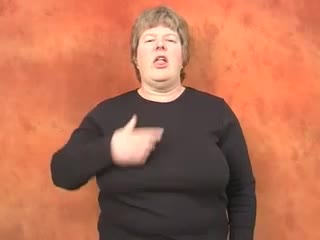
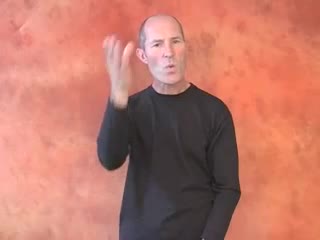
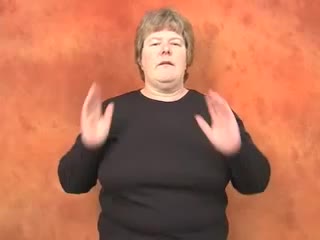
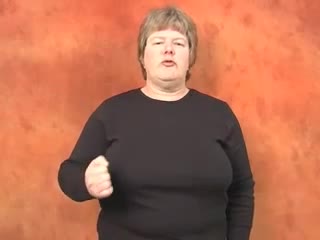
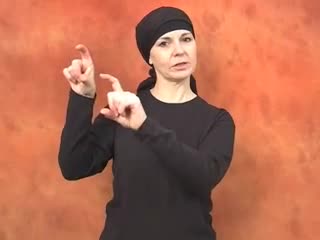
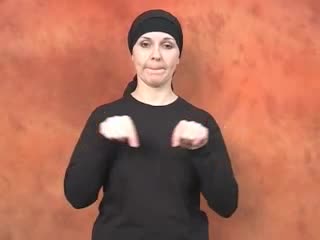
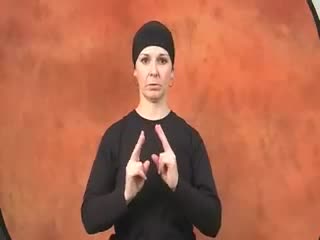
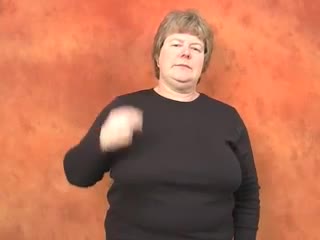
What Is the BSL Sign for "foam"?
Imagine the light, effervescent quality of rising bubbles; that's precisely the visual essence captured by the British Sign Language sign for "foam." This isn't just a simple noun in isolation; it’s a dynamic representation used across many contexts, from the sea's frothy edge to the suds in your washing-up bowl. When you learn foam in BSL, you’re not just memorising a movement; you're connecting with how Deaf people visually describe this common substance. Understanding the BSL sign for foam will unlock a vivid and descriptive layer in your everyday conversations.
How to Sign "foam" in British Sign Language - Step-by-Step
Getting the sign for "foam" just right involves a beautiful blend of handshape, movement, and expression that truly embodies the word's airy quality.
Step 1: Handshape
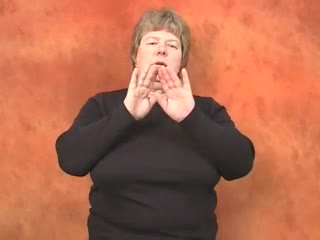
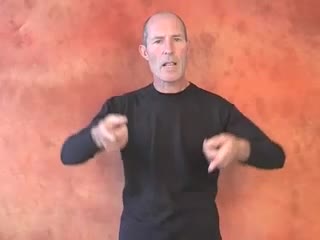
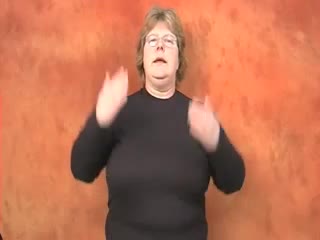
For this sign, you'll want to use both of your hands, adopting a specific, open configuration. Begin by forming what we call a "splayed 5-hand" with both your dominant and non-dominant hands. This means all five fingers on each hand are fully extended and spread wide apart, almost as if you’re trying to catch air. Crucially, allow a very slight, natural curve to your fingers, giving them a relaxed, individualistic appearance, not rigid or stiff. Think of each finger as representing a distinct, separate bubble.
Step 2: Hand Placement and Location
Now, bring your hands together so that your wrists are lightly touching, with your palms initially facing each other. Position this starting point around the lower chest or upper abdomen area of your body. This central, lower placement acts as the origin point, from which the "foam" will visibly expand. It’s important that your hands are not too close to your body, maintaining a comfortable, open stance ready for movement.
Step 3: Movement
The movement for "foam" is perhaps its most descriptive element. From your starting position, gently separate your hands, moving them upwards and slightly outwards in a smooth, expanding arc. As your hands rise, let your fingers wiggle subtly and continuously, mimicking the individual bubbles that make up foam. This wiggling motion should be light and delicate, reflecting the airy texture of the substance. You'll perform this expanding motion once or twice, ensuring a fluid and natural flow.
Step 4: Facial Expression and Mouthing
Non-manual features are absolutely integral to meaning in British Sign Language, and "foam" is no exception. Accompanying the hand movement, you should adopt a gentle, relaxed expression on your face. A slight puff of the cheeks, almost as if gently exhaling air, can wonderfully enhance the visual representation of lightness and effervescence. This subtle mouthing or facial cue underscores the airy, insubstantial nature of foam.
Step 5: Palm Orientation
At the beginning of the sign, your palms will face inward towards each other, creating a sense of containment. As you initiate the upward and outward movement, your palms will naturally rotate slightly, ending with them facing more forward and upward. This shift in orientation is vital; it conveys the upward expansion and the light, outward dispersal of foam, allowing the "bubbles" (your fingers) to be clearly seen as they rise.
"foam" in BSL - Quick Reference Snapshot
- Handshape: Both hands, splayed 5-hand, fingers slightly curved.
- Location: Starts at lower chest/upper abdomen, wrists lightly touching.
- Movement: Hands gently separate, moving up and out in an arc, fingers wiggling.
- Facial Expression: Relaxed mouth, subtle puff of cheeks.
- Dominant Hand: Both hands used symmetrically.
- Palm Orientation: Begins inward, rotates to forward/upward as hands expand.
5 Memorisation Tricks for the BSL Sign "foam"
Here are some neat ways to help that sign for "foam" really stick in your memory.
- Picture your hands as two rising clouds of tiny bubbles. Each splayed finger can be a distinct bubble, expanding and separating as the foam rises, which directly connects to the visual motivation of the sign.
- Engage your muscle memory by repeatedly performing the gentle, upward, and outward expansion movement with the finger wiggle. Focus on the feeling of lightness and fluidity in your wrists and fingers as you execute the motion.
- Think about the inherent qualities of foam itself – it’s light, it expands, and it’s full of air. The sign perfectly embodies this; the expanding motion visually represents the substance growing, while the wiggling fingers signify its bubbly, airy texture.
- A common pitfall is making the movement too forceful or stiff. Remember, foam is delicate, so keep your hand and finger movements soft and fluid, not rigid or abrupt, ensuring the sign conveys true effervescence.
- Incorporate this sign into your daily observations. Whenever you see soap suds, a frothed coffee, or ocean spray, mentally practice the BSL sign for "foam," reinforcing its association with real-world examples.
Real-Life Situations to Use the BSL Sign for "foam"
Knowing the sign is one thing; knowing when and how to weave it into a conversation is another entirely.
- You might describe the "foam" on top of a cappuccino by signing "COFFEE FOAM DELICIOUS" (BSL structure often places the adjective after the noun, and sometimes uses topic-comment structure).
- Imagine asking for "shaving foam" at a shop; you'd likely sign "WANT SHAVE FOAM" (the question might be indicated by a raised eyebrow and leaning forward at the end of the sentence).
- When discussing cleaning, you could sign "SOAP FOAM PLENTY" to indicate lots of suds, using a broad movement for 'plenty' to visually augment the amount of foam.
- Perhaps you're at the beach, commenting on the "sea foam" washing ashore; you'd sign "SEA FOAM ON SHORE" (spatial references like "on shore" are often shown by pointing or moving the sign to represent location).
Top 3 Mistakes Learners Make Signing "foam" in BSL
It’s completely normal to make a few slip-ups when you're first learning, but identifying them helps you improve faster.
- **Overly Stiff Fingers:** Many beginners keep their fingers rigid and straight, missing the subtle wiggling. This happens because they're concentrating so hard on the main movement. The correction is to consciously relax your fingers and allow them to gently flex and extend, creating that realistic bubbly texture as your hands move.
- **Incorrect Starting Location:** Sometimes learners begin the sign too high, perhaps near the shoulders, or too far from the body. This can distort the iconic meaning of rising from a source. The precise adjustment is to ensure your wrists touch lightly at the lower chest or upper abdomen, providing a clear and natural base for the upward expansion.
- **Omitting the Facial Expression:** Forgetting the non-manual features is a common error, often because learners are focused solely on the hands. Without the relaxed mouth or slight cheek puff, the sign loses some of its descriptive power and naturalness. Remember to consciously soften your facial muscles and gently puff your cheeks, which truly completes the visual impression of airiness.
Fascinating Facts About the BSL Sign for "foam"
Every sign has its own unique story and linguistic characteristics, and "foam" is no different.
- The sign for "foam" is highly iconic, meaning its form directly resembles its meaning, visually depicting the physical expansion and bubbly texture of the substance.
- While the core elements of handshape and movement are consistent, slight regional variations might occur in the exact degree of upward arc or the speed of the finger wiggle across different Deaf communities in the UK.
- Interestingly, this sign isn't directly derived from the manual alphabet but is a purely conceptual sign, making it accessible even to very new learners as its meaning is quite transparent.
- Its symmetrical two-handed nature highlights its descriptive power, allowing both hands to simultaneously convey the expansive and rising quality of foam.
- The subtle, continuous finger movement makes "foam" an excellent example of a sign where small, nuanced actions are crucial for conveying accurate meaning and texture in British Sign Language.
"foam" in Deaf Culture - Community and Identity
The concept of "foam" might seem simple, yet its usage within the Deaf community, like all signs, reflects shared experiences and communication patterns. When Deaf people describe the foam on a drink, the suds from washing, or the frothy sea, they're not just conveying information; they're sharing a visual experience, often with a richness that words alone can't capture. The ability to visually depict such a tangible, yet transient, element like foam fosters a deeper connection to the natural world and everyday activities. It's a sign that appears in stories, jokes, and practical daily communication, reinforcing the visual-spatial nature of British Sign Language and its ability to paint vivid pictures.
Example Conversations Using "foam" in BSL
Here are some practical examples of "foam" in context, showing its versatility in British Sign Language.
English: There's too much foam on my beer. - BSL structure: TOPIC-COMMENT: BEER FOAM, TOO-MUCH. (Sign "BEER," then "FOAM," then "TOO-MUCH" with an exaggerated facial expression for emphasis.)
English: Can you get me some shaving foam? - BSL structure: YOU GET ME SHAVE FOAM QUESTION? (The question is indicated by a raised eyebrow and slight lean at the end of the sentence.)
English: The waves left a lot of foam on the sand. - BSL structure: WAVES LEAVE FOAM SAND MANY. (Use spatial signing to indicate "on the sand" by signing "SAND" then "FOAM" slightly above it, moving down.)
English: I love bath foam, it smells lovely. - BSL structure: BATH FOAM LOVE, SMELL GOOD. (Show positive facial expression for "LOVE" and "GOOD".)
English: That fire extinguisher sprays foam. - BSL structure: FIRE EXTINGUISHER SPRAY FOAM. (The sign for "SPRAY" would precede "FOAM" to show the action.)
Frequently Asked Questions: The BSL Sign for "foam"
Is the BSL sign for "foam" used differently in Scotland compared to England?
While the core elements of the BSL sign for "foam" remain highly consistent across the United Kingdom, you might encounter very minor regional differences. These variations are usually subtle, perhaps in the exact speed of the movement or the extent of the finger wiggle, rather than a completely different sign, reflecting local community preferences.
Are there any BSL signs similar to "foam" that I should be careful not to confuse it with?
You'll want to avoid confusing "foam" with signs like "cloud" or "smoke," which also involve expansive hand movements but typically use different handshapes and movement qualities. "Cloud" might use more rounded, slower movements, while "smoke" often involves more wispy, upward spiralling motions. The specific splayed 5-hand and delicate wiggling of "foam" are key differentiators.
Is "foam" a good BSL sign for beginners to learn early on?
Absolutely, "foam" is an excellent sign for beginners! Its iconic nature means it's visually easy to grasp and remember, and it effectively demonstrates how BSL uses movement and handshape to convey descriptive qualities. Plus, it's a common word, making it useful in many everyday contexts.
Can children easily learn and use the BSL sign for "foam"?
Yes, children pick up the BSL sign for "foam" quite readily. The visual representation of bubbles and expansion is very intuitive for them. Encouraging them to sign "foam" while playing with bubbles or during bath time can be a fantastic, engaging way to boost their BSL vocabulary.
How does the BSL sign for "foam" compare to the sign for foam in other sign languages?
While specific handshapes and movements will naturally differ across various sign languages globally, the iconic motivation to represent the airy, expanding quality of foam is often a shared concept. For instance, another sign language might also use an upward, spreading motion, but perhaps with a different initial handshape or a distinct facial cue specific to its linguistic structure.
Signs That Pair Naturally with "foam" in BSL
Building your vocabulary systematically helps connections form more easily.
- **Soap:** Learning "soap" alongside "foam" makes perfect sense, as soap often produces foam, naturally linking these concepts in your mind.
- **Bubble:** "Bubble" is very closely related, as foam is essentially a collection of bubbles, helping you understand the granular components of the substance.
- **Clean:** When you clean, you often use foamy products, so "clean" connects practically to the everyday use of foam.
- **Coffee:** Many coffee drinks feature foam, making this a useful pairing for discussing beverages.
- **Sea:** Sea foam is a natural phenomenon, so pairing "sea" helps contextualise environmental or beach-related conversations.
- **Shave:** "Shave" is a direct application of foam, linking the sign to a personal care routine.
Building Fluency: How to Practise "foam" in BSL
The journey to fluency is a marathon, not a sprint, and consistent, thoughtful practice is your best friend for mastering "foam." Try standing in front of a mirror and watch your hands as you sign "foam," making sure your fingers wiggle just so and your hands expand naturally. Integrate "foam" into your daily conversations; next time you see suds in the sink, sign it aloud to yourself or a practice partner. Film yourself signing this word, then review the footage to catch any stiffness or missed facial expressions that might be subtle. Finding a Deaf conversation partner is invaluable; they'll offer authentic feedback and help you refine your natural rhythm. Don't cram practice; instead, revisit the sign for "foam" a few times each day over several days; this spaced repetition really cements it in your long-term memory. Keep practising, and you'll soon find "foam" flowing effortlessly from your hands.