What Is the British Sign Language Sign for "spanner"?
Picture this: you're working on a project, perhaps assembling furniture or fixing something in the garage, and you need that one specific tool to get the job done. That vital piece of equipment, a spanner, has its own clear and distinctive representation within British Sign Language, bringing this everyday object vividly into conversation. This particular sign serves as your key to discussing tools, repairs, and practical tasks within the Deaf community, enriching your ability to communicate about the physical world around us. Mastering the BSL sign for spanner means you're not just learning a movement; you're unlocking a common topic of discussion.
How to Sign "spanner" in British Sign Language - Step-by-Step
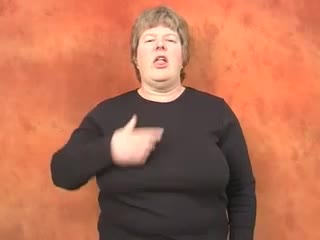
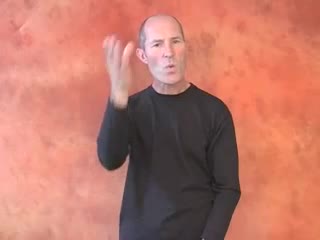
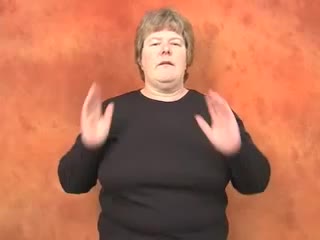
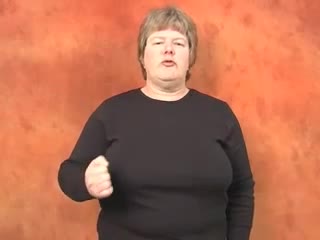
Let's get your hands ready to accurately convey the concept of a spanner, breaking down each element into manageable steps.
Step 1: Handshape
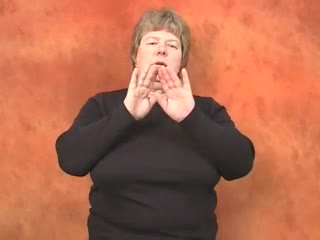
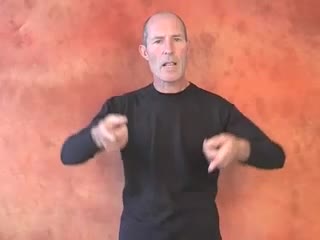
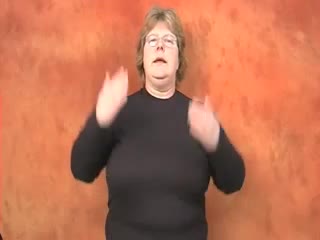
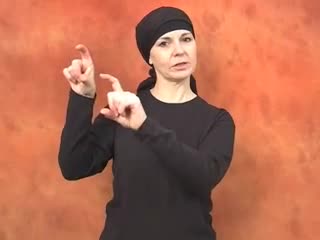
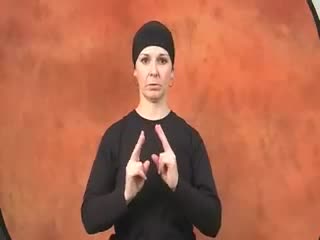
For this sign, you'll use your dominant hand. Start by extending your index finger and thumb, keeping them spread apart. Now, curl your middle, ring, and little fingers down into your palm, holding them securely with your thumb. The crucial aspect here is the open 'L' shape formed by your index finger and thumb, which will represent the jaws of the spanner itself. Ensure your index finger remains straight and firm, while your thumb holds a relaxed but ready position against the side of your palm.
Step 2: Hand Placement and Location
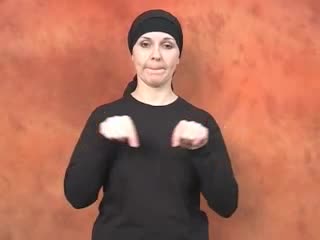
Bring your dominant hand, already in the correct handshape, to the front of your body. Position it in the neutral signing space, which is typically around your chest or stomach level, comfortably in front of you. There's no specific contact point with your body for this sign; instead, think of it as holding an invisible spanner in the air. This central location ensures the sign is clearly visible and easily understood by your conversation partner.
Step 3: Movement
With your hand shaped and positioned, imagine you're gripping the handle of a spanner and turning a nut or bolt. You'll execute a distinct, repetitive twisting motion with your wrist. This movement typically involves rotating your wrist back and forth, as if tightening or loosening something, making two or three small, controlled turns. The movement should be deliberate and clear, reflecting the mechanical action of the tool, not just a casual flick.
Step 4: Facial Expression and Mouthing
While the sign for "spanner" doesn't demand an exaggerated facial expression, maintaining a neutral yet engaged look is generally appropriate. You might subtly purse your lips or show a slight concentration if the context implies a difficult or precise task. Crucially, mouthing the word "spanner" without vocalising it is an integral non-manual feature in British Sign Language; this helps clarify the English equivalent and provides essential lexical information. Always ensure your mouthing aligns with the spoken word to aid comprehension.
Step 5: Palm Orientation
Begin the sign with your palm facing slightly towards your non-dominant side or downwards, as if you're holding the spanner horizontally. As you perform the twisting movement described in Step 3, your palm orientation will naturally shift slightly with the rotation of your wrist. This dynamic change in palm direction is part of the sign's iconic representation, mimicking how you'd manipulate a physical spanner. Maintaining this intuitive palm orientation helps convey the action's realism.
"spanner" in BSL - Quick Reference Snapshot
- Handshape: Dominant hand, index finger and thumb extended in an 'L' shape, other fingers curled.
- Location: Neutral signing space, typically chest or stomach level.
- Movement: Repetitive twisting motion with the wrist, two or three turns.
- Facial Expression: Neutral, possibly slight concentration; mouthing "spanner".
- Dominant Hand: Always the dominant hand performs the sign.
- Palm Orientation: Initially palm faces slightly sideways or down, shifting with the twisting movement.
5 Memorisation Tricks for the BSL Sign "spanner"
Learning new signs can be a delightful journey, and here are some specific tricks to help the sign for "spanner" stick firmly in your memory.
- Visualise the Tool: Really connect your handshape to the object itself. Think of your extended index finger and thumb as the open jaws of an adjustable spanner, ready to grip. This strong visual link between your hand and the tool's form makes the sign instantly recognisable and easier to recall.
- The "Tightening" Drill: Engage in a brief, focused muscle-memory exercise. Sign "spanner" ten times in a row, concentrating on the wrist movement and the feeling of turning. You'll find this repetitive action helps cement the physical sensation of the sign, making it an automatic response.
- Connect to Function: Remember what a spanner does – it turns things. The sign's movement is a direct mimicry of this action. Associating the sign with the function rather than just the object's name deepens your understanding and helps you retain the movement component.
- Avoid the "Gun" Handshape: A common pitfall for learners is to make the index and thumb straight, resembling a toy gun, rather than having them positioned to grip. Ensure your index finger and thumb are angled slightly to suggest an opening, differentiating it from other similar handshapes.
- Daily "Fix-It" Practice: Whenever you see a spanner in real life, or even think about tightening a screw or bolt, perform the sign mentally or physically. Integrating this sign into your daily observations about tools and repairs will naturally reinforce its memory.
Real-Life Situations to Use the BSL Sign for "spanner"
Understanding how to use a sign in context is vital for fluent communication. Here are some practical scenarios where you'll find yourself reaching for the British Sign Language sign for "spanner."
- Imagine you're helping a friend with a bicycle repair; you might sign, "I need a SPANNER, please," indicating your need for the specific tool.
- When describing a recent home improvement project, you could sign, "I used a big SPANNER to fix the leaky pipe," adding detail to your story.
- Perhaps you're discussing different types of tools; you could point to an imaginary wrench and sign, "This is a SPANNER," clarifying the object's name.
- If you're asking about someone's profession, you might inquire, "Do you often use a SPANNER in your job?" turning the sign into part of a question about their work.
Top 3 Mistakes Learners Make Signing "spanner" in BSL
It's completely normal to make a few errors when you're first learning a sign; identifying them early helps you refine your technique.
- Incorrect Handshape: Many beginners inadvertently keep their index finger and thumb too close together or too straight, making it look more like a pointing gesture or a 'gun' shape. This happens because the exact angle and tension in the hand are subtle. The correct approach involves spreading the index finger and thumb slightly, creating a distinct "grip" opening, and ensuring the other fingers are firmly tucked away.
- Missing the Repetitive Movement: Sometimes learners perform only a single twist or a very weak, indistinct movement, rather than the characteristic back-and-forth rotation. This often occurs when focusing too much on the handshape and not enough on the action. To correct this, consciously practise the wrist rotation multiple times, making two or three clear, small turning motions, emulating the continuous action of using a spanner.
- Neglecting Mouthing: A frequent oversight is to sign "spanner" perfectly but forget to mouth the word simultaneously. This can lead to ambiguity, especially with signs that might have similar handshapes or movements in other contexts. The solution is to deliberately practise mouthing "spanner" every single time you execute the sign, making it an integrated, natural part of your communication.
Fascinating Facts About the BSL Sign for "spanner"
Delving into the background of signs often reveals interesting connections and insights into the language itself.
- The sign for "spanner" is highly iconic, meaning it visually resembles the action or object it represents. This makes it intuitively understandable even to those unfamiliar with British Sign Language, as it directly mimes the act of turning a wrench.
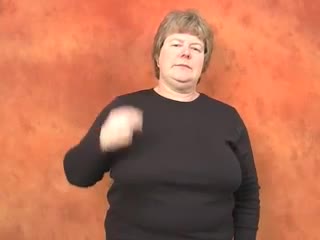
- While the core handshape and movement are widely consistent across the UK, you might observe slight regional variations in the speed or intensity of the twisting motion, a testament to the organic evolution of the language. These minor differences rarely impede understanding within the broader British Deaf community.
- Its strong iconic motivation means this sign is relatively stable and hasn't undergone significant historical changes, unlike more abstract concepts. The action of using a spanner has remained consistent through time, and so has its sign.
- This sign is a one-handed sign, meaning it's performed solely with the dominant hand. Many signs in British Sign Language are one-handed, making them efficient and often easier for beginners to master initially.
- It belongs to a category of "tool signs" in British Sign Language that often directly depict the function or most salient feature of the tool, helping learners build a logical vocabulary group for practical objects.
"spanner" in Deaf Culture - Community and Identity
The way we refer to objects like a spanner within the Deaf community speaks volumes about shared experiences and the importance of practical skills. In Deaf culture, there's often a strong emphasis on self-reliance and community support, where fixing things and lending a hand are highly valued. Discussing tools and repairs through signs like "spanner" facilitates this practical exchange of knowledge and assistance. It’s a sign used in everyday conversations amongst friends fixing a car, or in shared workshops where people might be collaborating on a project. This sign connects individuals through the universal language of making and mending, fostering a sense of camaraderie and shared capability within the Deaf world.
Example Conversations Using "spanner" in BSL
Here are five example sentences to illustrate how the sign for "spanner" can be integrated into everyday British Sign Language conversations.
English: Do you have a spanner I can borrow? - BSL structure: YOU HAVE SPANNER I BORROW?
English: The mechanic used a large spanner. - BSL structure: MECHANIC USE LARGE SPANNER.
English: I need a spanner to tighten this bolt. - BSL structure: I NEED SPANNER TIGHTEN THIS BOLT.
English: Where did you put the spanner? - BSL structure: SPANNER WHERE YOU PUT?
English: This spanner is too small for the job. - BSL structure: THIS SPANNER SMALL TOO FOR JOB.
Frequently Asked Questions: The BSL Sign for "spanner"
Is the BSL sign for spanner difficult for beginners?
Not at all, the sign for spanner is quite accessible for new learners. Its iconic nature, directly mimicking the action of the tool, makes it relatively easy to grasp both the handshape and movement quickly. Many learners find it an enjoyable sign to practise because it feels intuitive.
Are there regional variations for the British Sign Language spanner sign?
While the core elements-the handshape and the twisting motion-remain consistent across the UK, you might observe subtle differences in the amplitude or speed of the movement depending on the region. These minor stylistic variations are a natural part of any living language and won't hinder your communication.
What's the difference between "spanner" and "wrench" in British Sign Language?
In British Sign Language, the sign for "spanner" is generally used for what's known as a "wrench" in American English. The sign itself covers the concept of both, as "spanner" is the common term in the UK. There isn't a separate, distinct sign specifically for "wrench" if you're signing in a British context.
Can children learn the BSL spanner sign easily?
Absolutely, children often pick up iconic signs like "spanner" very quickly because they can easily connect the hand movement to the real-world object and its function. It's a fun and practical sign to teach, helping them to communicate about toys, repairs, or helping grown-ups.
Are there any similar BSL signs I should be careful not to confuse with "spanner"?
One sign learners sometimes confuse "spanner" with is a basic "turn" or "rotate" sign if the handshape isn't precise. The key differentiator for "spanner" is the specific 'L' handshape with the extended index finger and thumb, which signifies the tool itself, rather than just a generic turning action. Always focus on that precise hand configuration.
Signs That Pair Naturally with "spanner" in BSL
Building your vocabulary systematically helps you connect related concepts and use signs more fluently. Here are some signs that naturally cluster with "spanner."
- TOOL: This sign, typically a tapping motion on the palm with a 'T' handshape, is a foundational category word. It links directly as a spanner is a type of tool.
- HAMMER: Mimicking the action of hammering, this sign belongs in the same set of common implements. It helps expand your "workshop" vocabulary.
- SCREW: This sign involves a twisting motion similar to "spanner" but with a different handshape, often using an index finger to represent the screw. It's a natural partner for discussing fasteners.
- FIX/REPAIR: Often signed with two 'F' handshapes coming together, this concept directly relates to the purpose of using a spanner. You'd use a spanner to fix something.
- TIGHTEN: A specific action sign, often a twisting motion with closed fists, which is a direct outcome of using a spanner. It deepens the descriptive power around the tool's function.
- BUILD: Usually signed by stacking handshapes, this general concept encompasses many activities involving tools like a spanner. It connects the individual tool to larger projects.
Building Fluency: How to Practise "spanner" in BSL
Making a sign truly your own involves consistent, thoughtful practice. For the British Sign Language sign for "spanner," start by standing in front of a mirror; watch your handshape carefully, ensuring your index finger and thumb create that distinctive 'L' shape, while your wrist executes the precise, repetitive twisting motion. Try to integrate the sign into your daily musings; whenever you pass a hardware shop or see something that needs adjusting, sign "spanner" to yourself, complete with mouthing. Filming yourself performing the sign can be incredibly insightful; you'll immediately spot any areas that need refining, like whether your movement is clear or if your handshape is consistent. Most importantly, seek out opportunities to use "spanner" in conversation with a Deaf person or a more experienced signer; real-world interaction solidifies your learning and builds confidence. Remember, consistent, spaced repetition, practising the sign for a few minutes each day, will embed it into your visual vocabulary, moving you steadily towards fluency.