What Is the BSL Sign for "drawing board"?
Imagine a space where ideas take shape, where initial thoughts begin their journey towards becoming reality. This is precisely what the British Sign Language sign for "drawing board" communicates. It represents not just the physical object but often the conceptual ground for planning and ideation, making it a truly versatile addition to your vocabulary. Understanding this sign allows you to discuss plans, project stages, or even the need for a fresh start in any conversation. You'll find the BSL sign for drawing board is quite intuitive, visually echoing the very action and object it describes.
How to Sign "drawing board" in British Sign Language - Step-by-Step
Let's break down the movements that bring this significant sign to life in British Sign Language, guiding your hands through each precise action.
Step 1: Handshape
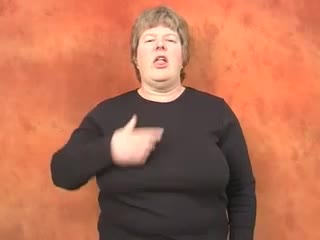
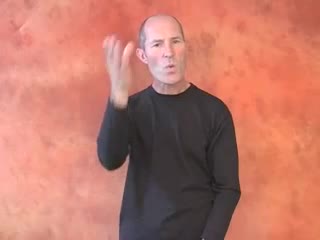
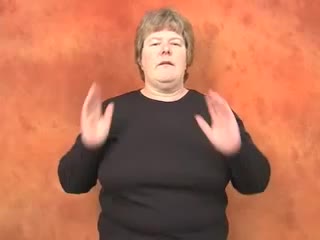
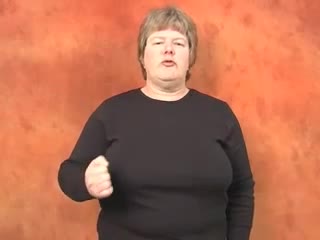
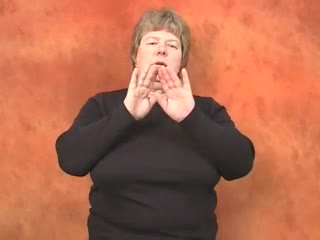
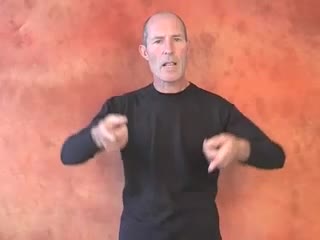
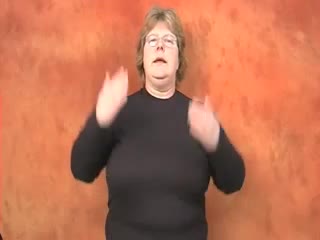
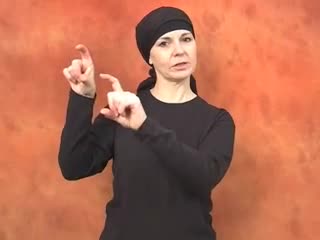
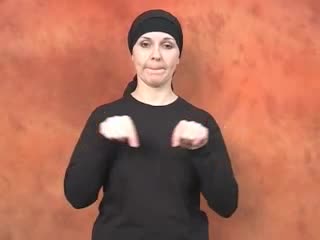
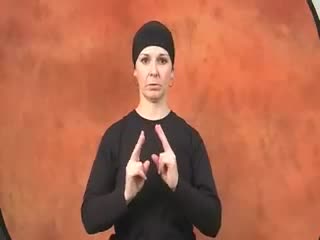
For this sign, your non-dominant hand will form an open, flat handshape, with all fingers extended and held together, including the thumb, presenting a smooth, level surface. This hand remains steady, offering a foundation. Meanwhile, your dominant hand starts by forming an 'X' handshape, where your index finger is hooked or slightly bent, and your thumb rests against the side of that index finger, while other fingers are curled into your palm.
Step 2: Hand Placement and Location
You'll position your non-dominant hand flat, palm facing upwards, in the neutral signing space directly in front of your body, approximately at chest or waist height. This hand effectively creates the 'board' surface. Your dominant hand, in its 'X' handshape, will begin with its hooked index finger resting gently on the palm of your non-dominant hand.
Step 3: Movement
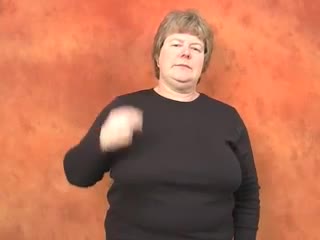
With your non-dominant hand held still, your dominant 'X' hand will make a series of small, rhythmic, short, and slightly diagonal forward-and-back motions across the palm of your non-dominant hand. Picture the action of sketching or outlining an idea onto a surface. This movement is usually repeated two or three times, signifying the act of drawing or planning on the board.
Step 4: Facial Expression and Mouthing
Non-manual features are absolutely essential in British Sign Language; for "drawing board," a neutral yet attentive facial expression typically accompanies the sign. If you're discussing a plan or a new idea, your expression might convey thoughtful consideration. Crucially, mouthing the word "drawing board" (or just "plan" or "idea") clearly, silently shaping the words with your mouth, helps disambiguate the sign and provides vital context, integrating seamlessly with the manual components.
Step 5: Palm Orientation
Throughout this sign, your non-dominant hand maintains a palm-up orientation, creating that stable, horizontal surface for the 'board'. Your dominant hand, as it performs the sketching motion, will have its palm generally facing downwards or slightly towards your body, allowing the hooked index finger to make direct contact and move across the non-dominant palm. This specific orientation helps clearly define the 'drawing' action upon the 'board'.
"drawing board" in BSL - Quick Reference Snapshot
Here's a concise summary for recalling the sign quickly:
- Handshape: Non-dominant hand flat, palm up; Dominant hand 'X' shape.
- Location: Dominant hand sketches on non-dominant palm in neutral space.
- Movement: Dominant 'X' hand makes small, repeated sketching motions.
- Facial Expression: Neutral to thoughtful, depending on context.
- Dominant Hand: Performs the 'drawing' action.
- Palm Orientation: Non-dominant palm up; Dominant palm generally down, index finger making contact.
5 Memorisation Tricks for the BSL Sign "drawing board"
You'll love these handy tips for ingraining the British Sign Language sign for "drawing board" into your memory.
- Visual Mnemonic: Picture your non-dominant hand as a miniature whiteboard or easel, and your dominant index finger as a tiny pen or pencil sketching out a brilliant new concept. This visual association directly links the physical sign to its meaning.
- Muscle-Memory Drill: Practice the motion by actually sketching lightly on your non-dominant palm with your dominant index finger, even when you're not signing the full word. The repetitive, gentle pressure helps your muscles remember the precise movement without conscious effort.
- Connection to Meaning: Think of the sign as literally "drawing" (the dominant hand's action) on a "board" (the non-dominant hand's surface). This direct iconic representation makes the sign's purpose incredibly straightforward to recall and understand.
- Common Confusion Tip: Be mindful not to confuse this with signs for "write" or "plan" which, while related, have distinct handshapes and movements. The 'X' handshape for "drawing board" is quite unique in its sketching action, differentiating it from a simple "writing" movement with an open palm.
- Daily-Life Practice Idea: Whenever you hear someone mention starting a new project or rethinking an idea, briefly perform the sign for "drawing board" to yourself. Integrating it into your mental commentary on daily events reinforces its usage in context.
Real-Life Situations to Use the BSL Sign for "drawing board"
Learning a sign is fantastic, but using it in actual conversation is where the magic truly happens. Here are some situations where you'd naturally use the British Sign Language sign for "drawing board."
- You might use it to suggest a fresh start when a current plan isn't working: "This idea failed, so let's go back to the drawing board." (BSL structure: IDEA FAIL. FINISH. NEW PLAN. DRAWING-BOARD GO.)
- Perhaps you're discussing project development: "We're still at the drawing board stage for the new design." (BSL structure: NEW DESIGN, DRAWING-BOARD STAGE, STILL.)
- It's perfect for indicating a conceptual planning phase: "All the big decisions are currently on the drawing board." (BSL structure: BIG DECISIONS, NOW, DRAWING-BOARD, ON.)
- You could also inquire about progress: "Is the new proposal still on the drawing board, or has it moved forward?" (BSL structure: NEW PROPOSAL, DRAWING-BOARD, STILL? OR FORWARD GO?)
Top 3 Mistakes Learners Make Signing "drawing board" in BSL
Everyone makes a few missteps when learning, and that's completely normal! Here are three common errors with the BSL sign for "drawing board" and how to smoothly correct them.
- Incorrect Dominant Handshape: Many beginners might use an index finger extended straight out (a 'G' handshape) instead of the slightly hooked 'X' handshape. This subtle difference is important because the 'X' suggests a more deliberate, outlining or drafting action, whereas a straight index finger often implies pointing or a simpler stroke. To fix this, consciously curl your index finger slightly inward, letting your thumb rest against its side, achieving that precise 'X' shape.
- Lack of Non-Dominant Stability: Sometimes learners allow their non-dominant hand, which acts as the 'board', to move or wobble during the sign. This can make the sign less clear and visually ambiguous, as the 'board' needs to be a stable surface. The correction is simple: ensure your non-dominant hand remains completely still and flat, creating a solid, unmoving platform for the dominant hand's action.
- Overly Large or Rapid Movement: New signers occasionally make the 'sketching' motion too wide or too fast, losing the nuance of detailed planning. This can make the sign appear rushed or unclear, diminishing its meaning. Focus on small, controlled, rhythmic, and relatively short movements of the dominant hand across the non-dominant palm, as if you're meticulously outlining something.
Fascinating Facts About the BSL Sign for "drawing board"
Dive into some intriguing aspects of the BSL sign for "drawing board" that reveal its depth and cultural resonance.
- The iconic nature of this sign, directly depicting the action of 'drawing' on a 'board', makes it highly accessible for new learners to grasp its meaning quickly.
- While the core elements remain consistent, you might observe subtle regional variations in the speed or exact arc of the dominant hand's movement across different parts of the UK.
- This sign often carries a dual meaning, referring to both the physical piece of equipment and the metaphorical concept of a conceptual planning stage or a fresh start.
- Its structure relies heavily on spatial grammar, using the non-dominant hand to create a physical space (the 'board') where the dominant hand performs an action (the 'drawing').
- The 'X' handshape used by the dominant hand is a versatile one in British Sign Language, often conveying actions of attachment, crossing, or precise manipulation, lending itself well to the detailed nature of drafting.
"drawing board" in Deaf Culture - Community and Identity
The concept of a "drawing board" within the Deaf community, much like in hearing culture, frequently relates to innovation, problem-solving, and the collective effort to create new solutions. It speaks to the ongoing process of development, whether for new Deaf-led initiatives, technological advancements in accessibility, or advocacy campaigns. When Deaf individuals sign about going "back to the drawing board," it often highlights a resilient spirit, a willingness to re-evaluate strategies, and a collaborative approach to overcoming challenges. This sign, therefore, doesn't just represent an object; it embodies a cultural value of perseverance and creative planning crucial for community growth and identity.
Example Conversations Using "drawing board" in BSL
Let's see "drawing board" in action with these practical example sentences, giving you a feel for its use in different contexts.
English: We need to go back to the drawing board with that project. - BSL structure: THAT PROJECT, WE, DRAWING-BOARD, GO-BACK, NEED.
English: Is the new policy still on the drawing board? - BSL structure: NEW POLICY, DRAWING-BOARD, STILL? (Question conveyed by facial expression and slight lean forward).
English: My team is at the drawing board for next year's event. - BSL structure: NEXT YEAR EVENT, MY TEAM, DRAWING-BOARD, AT.
English: Don't worry, we can take this idea back to the drawing board. - BSL structure: WORRY NONE, THIS IDEA, WE, DRAWING-BOARD, TAKE-BACK, CAN.
English: What are your plans for the drawing board stage? - BSL structure: DRAWING-BOARD STAGE, YOUR PLANS, WHAT?
Frequently Asked Questions: The BSL Sign for "drawing board"
Is there a specific BSL sign for "back to the drawing board"?
Absolutely, the sign for "drawing board" is often used in conjunction with signs like "GO-BACK" or "START-AGAIN" to convey the full phrase "back to the drawing board." The context and surrounding signs clarify this idiomatic usage, rather than needing an entirely separate sign for the idiom itself.
Are there any similar BSL signs I should be careful not to confuse with "drawing board"?
Yes, you'll want to distinguish "drawing board" from signs like "WRITE" or "PLAN." While "WRITE" typically uses an open 'B' handshape for the dominant hand to simulate writing, and "PLAN" involves a 'P' handshape moving in an arc, the 'X' handshape and specific sketching movement of "drawing board" are unique and help avoid confusion.
Is the BSL sign for "drawing board" suitable for beginners?
Indeed it is! The sign for "drawing board" is considered quite suitable for beginners due to its clear iconic representation and straightforward handshapes. It's a fantastic sign to learn early on as it helps build foundational understanding of how BSL visually represents concepts.
Can children easily learn and use the BSL sign for "drawing board"?
Children pick up the sign for "drawing board" very well because of its highly visual and tangible nature. Explaining it as "drawing a picture on a flat surface" makes it relatable and fun for younger learners, encouraging them to use it when discussing their own creative projects or ideas.
How does the BSL sign for "drawing board" compare to its equivalent in another sign language?
Signs for "drawing board" can vary significantly across different sign languages. While BSL often employs an iconic representation of sketching on a surface, another sign language might use a completely different approach, perhaps focusing on the "planning" aspect with a more abstract sign, or even using a fingerspelled loanword.
Signs That Pair Naturally with "drawing board" in BSL
Expanding your vocabulary by connecting related signs is a brilliant way to build fluency. Here are some signs that naturally cluster with "drawing board" in British Sign Language.
- PLAN: This sign, often a 'P' handshape moving in a circular arc, obviously links to "drawing board" as it signifies the outcome of the planning process.
- IDEA: A 'I' handshape touching the forehead and then moving up and out, connecting directly to the conceptualisation that happens on a drawing board.
- PROJECT: Two 'P' handshapes circling each other, representing the larger undertaking that often begins its life on a drawing board.
- DESIGN: Two 'D' handshapes moving downwards, often implying the creation or structure that comes from the drawing board stage.
- START-AGAIN: This sign, often two open hands pushing forward, directly relates to the phrase "back to the drawing board" when initial plans don't succeed.
- DEVELOP: Two 'D' handshapes moving upwards and outwards, showing growth and evolution, which is what happens to ideas from the drawing board.
Building Fluency: How to Practise "drawing board" in BSL
To truly make the BSL sign for "drawing board" your own, consistent and thoughtful practice is key. Try standing in front of a mirror and performing the sign, observing your handshapes and movements carefully; paying attention to the details helps refine your technique. Integrate this sign into your daily conversations, perhaps by mentally signing it whenever you encounter a situation involving planning or new ideas. Consider filming yourself signing the word, then review the footage to identify any areas for improvement, just as a professional would. The ultimate goal is to find a Deaf conversation partner; interacting with native signers provides invaluable feedback and natural context, making the sign truly flow. Remember, spaced repetition over several days, rather than intense cramming, will cement this sign into your long-term memory, ensuring you can use it with confidence and clarity.