What Is the BSL Sign for "refuge"?
When you're discussing a safe place, a sanctuary, or a haven from danger, the British Sign Language refuge sign becomes an indispensable part of your vocabulary. This vital sign immediately conveys a sense of shelter and protection within BSL communication, allowing you to express profound human needs and circumstances. Learning the BSL sign for refuge means understanding how to visually represent that fundamental desire for safety, making your conversations richer and more meaningful. It’s a beautifully iconic sign that truly illustrates its meaning.
How to Sign "refuge" in British Sign Language - Step-by-Step
Mastering the action of signing "refuge" involves a series of clear, precise movements that beautifully illustrate the concept of seeking or providing shelter.
Step 1: Handshape
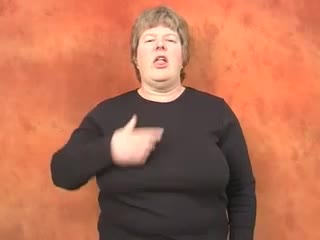
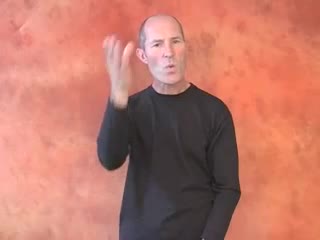
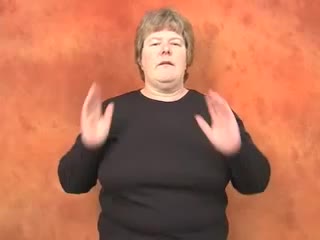
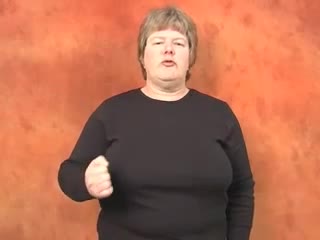
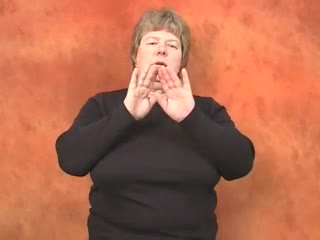
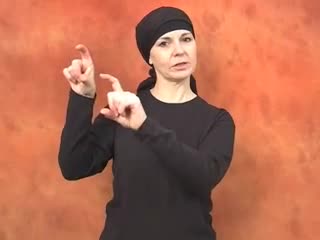
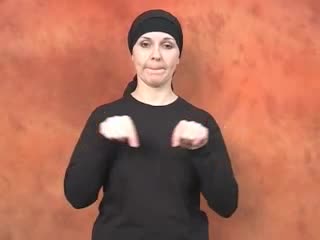
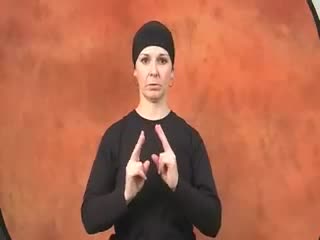
For this sign, you'll prepare both hands. Your non-dominant hand forms a flat handshape: extend all your fingers straight and press them together, keeping your thumb tucked alongside your palm. You'll hold this hand open and relaxed. Now, for your dominant hand, adopt the exact same flat handshape – fingers extended, pressed together, and your thumb resting naturally against your palm.
Step 2: Hand Placement and Location
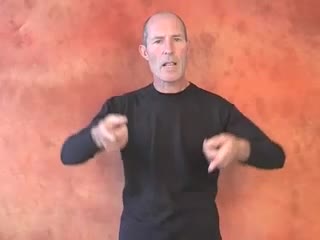
You'll begin by positioning your non-dominant hand flat, with its palm facing upwards, holding it steadily in front of your body, roughly around your mid-chest or stomach area. Next, bring your dominant hand up and place it directly above your non-dominant hand. Initially, there should be a small gap between the two palms, perhaps just a few centimetres of space, preparing for the protective movement.
Step 3: Movement
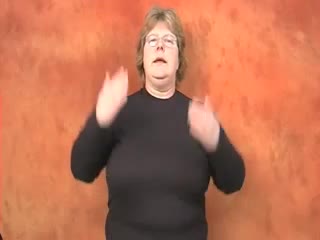
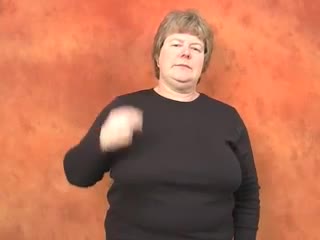
With your dominant hand hovering above, you'll now perform a single, smooth downward motion. Move your dominant hand straight down until it comes to rest gently on top of your non-dominant hand. This action creates a visual representation of one hand covering or shielding the other, much like a roof or an umbrella providing cover. The movement should be deliberate and controlled, not rushed.
Step 4: Facial Expression and Mouthing
Non-manual features are crucial for conveying the full nuance of any BSL sign, and "refuge" is no different. A neutral facial expression often accompanies the sign for "refuge" when simply stating a fact, but if you're discussing a desperate need for sanctuary, a slight furrow of the brow or a look of concern would be appropriate. Conversely, signing about finding refuge might bring a subtle expression of relief or calm. Simultaneously, you should mouth the English word "refuge" clearly, or perhaps "shelter," to further enhance understanding and provide phonetic context.
Step 5: Palm Orientation
Throughout the sign for "refuge," your non-dominant hand maintains a palm-up orientation, acting as the base or the thing being covered. Your dominant hand, however, will have its palm facing directly downwards, poised to descend and cover the non-dominant hand. This downward orientation of the dominant palm is essential, as it directly contributes to the sign's iconic meaning of providing a protective covering or a roof.
"refuge" in BSL - Quick Reference Snapshot
- Handshape: Both hands flat, fingers extended and together, thumbs tucked.
- Location: Dominant hand moves to cover non-dominant hand at mid-chest/stomach height.
- Movement: Dominant hand moves directly downwards to rest on non-dominant hand.
- Facial Expression: Neutral, or expressing concern/relief depending on context.
- Dominant Hand: Performs the covering action.
- Palm Orientation: Dominant palm faces down, non-dominant palm faces up.
5 Memorisation Tricks for the BSL Sign "refuge"
Learning a new sign is always exciting, and these specific tricks will help you anchor the BSL sign for refuge firmly in your memory.
- Visualise a Roof: Picture your dominant hand as a protective roof descending over a vulnerable space (your non-dominant hand). This strong visual mnemonic connects directly to the sign's iconic meaning, making it easier to recall the flat handshape and downward movement. Think of sheltering something precious underneath.
- The "Safe Space" Drill: Practice the movement by consciously thinking, "This is my safe space, this is my refuge." As your dominant hand covers your non-dominant, internalise that feeling of protection and enclosure. Repeat this physical and mental connection several times to build strong muscle memory.
- Connect to Meaning: The act of one hand covering another perfectly embodies the concept of finding or offering shelter, protection, or a safe haven. This direct iconic link means you don't just learn a movement; you understand *why* the sign looks the way it does, deepening your grasp of "refuge British Sign Language".
- Distinguish from "House": Many beginners confuse "refuge" with similar signs like "house" (which typically involves two flat hands forming a roof shape and then vertical walls). Remember, "refuge" focuses on the *act of covering* one hand with another, a singular, downward motion rather than building a structure. This distinction is key for accurate communication.
- Daily Life Association: Whenever you see something being protected or covered-whether it's an umbrella providing rain refuge or a blanket offering warmth-mentally sign "refuge." Integrating the sign into your daily observations strengthens its recall and helps you naturally learn refuge BSL.
Real-Life Situations to Use the BSL Sign for "refuge"
Knowing how to sign "refuge" is just the first step; understanding its application in actual conversations truly brings it to life. Here are some instances where you'd naturally employ this sign.
- Imagine discussing the plight of people displaced by conflict. You could sign, "MANY PEOPLE NEED REFUGE NOW," where "MANY PEOPLE" would be the topic, followed by the sign for "NEED" and then "REFUGE," often with a slightly concerned expression.
- Perhaps you're offering help to a friend in distress. You might sign, "MY HOME IS YOUR REFUGE," using spatial grammar to indicate your home as the place of safety. Here, "MY HOME" would be established, then "YOUR REFUGE" would be signed, possibly with an open, welcoming gesture.
- Consider asking if a community centre provides sanctuary. You'd sign, "COMMUNITY CENTRE, REFUGE, THEY OFFER?" The question mark conveyed by your eyebrows raised, followed by the signs for "THEY OFFER," would clearly articulate your inquiry about what is the sign for refuge in such a context.
- You might describe a historical event where people sought safety. "LONG AGO, PEOPLE SEARCH REFUGE FROM STORM." This demonstrates how the sign can be used in narrative, with "LONG AGO" establishing the timeframe, and "SEARCH REFUGE" illustrating the action of seeking shelter.
Top 3 Mistakes Learners Make Signing "refuge" in BSL
It's completely normal to make a few errors when you're first learning how to sign refuge in BSL; recognising them helps you improve faster.
- Incorrect Handshape: A common error involves using a slightly cupped hand or splayed fingers instead of a truly flat handshape for the dominant hand. This happens because learners might intuitively associate 'cupping' with protecting. The correction is simple: ensure your fingers are extended straight and pressed tightly together, creating a perfectly flat plane, which is essential for the iconic "roof" or "cover" visual.
- Insufficient Movement or Location: Some learners might sign "refuge" by only lightly touching their non-dominant hand or keeping the hands too close initially, diminishing the sense of covering. The sign needs a clear, distinct downward motion from a slight hovering position *onto* the non-dominant hand. Make sure there's a visible space before the dominant hand descends, fully embodying the act of sheltering.
- Missing Non-Manual Features: Neglecting facial expression or mouthing is a frequent slip-up, turning the sign into a mechanical gesture rather than a living part of the language. While the sign itself is clear, the NMFs add crucial context. Always remember to mouth "refuge" or "shelter" and let your expression align with the emotional tone of your message, whether it's concern, relief, or a neutral statement.
Fascinating Facts About the BSL Sign for "refuge"
Delving into the background of a sign can truly enrich your understanding and appreciation for British Sign Language.
- The BSL refuge sign is highly iconic, meaning its form directly resembles its meaning. The action of one flat hand covering another visually represents a roof or a protective barrier, making it intuitively understandable even to those unfamiliar with sign language.
- While the core sign for "refuge" is widely recognised across the UK, subtle regional variations might exist in terms of the exact height the non-dominant hand is held, or the speed of the dominant hand's descent. However, the fundamental handshapes and covering motion remain consistent, ensuring widespread intelligibility within the BSL-using community.
- This sign often appears alongside other related concepts like "shelter" or "protection," sometimes even forming part of a compound sign in specific contexts. Its versatility allows it to seamlessly integrate into discussions about safety, aid, and community support.
- Linguistically, the sign for "refuge" effectively uses spatial grammar. The non-dominant hand establishes a 'base' or 'area,' and the dominant hand performs an action upon it, illustrating a core principle of BSL where space is actively used to convey relationships and actions.
- Interestingly, the simplicity and directness of this sign make it one of the earlier signs many learners pick up, as its visual motivation is so strong. It's a prime example of how BSL efficiently communicates complex ideas through clear, evocative imagery.
"refuge" in Deaf Culture - Community and Identity
The concept of refuge holds a deep and resonant meaning within the Deaf community, extending far beyond a mere physical shelter. For many Deaf individuals, the Deaf community itself serves as a profound place of refuge, a sanctuary from linguistic isolation and societal barriers often encountered in the hearing world. Here, people find shared language, cultural understanding, and a sense of belonging that nurtures identity. Deaf clubs, organisations, and events frequently represent vital spaces where one can truly be themselves, express fully in BSL, and experience the comfort of collective experience. It’s a place where you're not just understood, you're celebrated, embodying the true spirit of what refuge means.
Example Conversations Using "refuge" in BSL
Seeing the sign in action helps you grasp its utility and grammatical flexibility in British Sign Language.
English: We need to find refuge from the storm. - BSL structure: TOPIC (STORM) ESTABLISH, THEN (WE) NEED REFUGE.
English: The charity provides refuge for homeless people. - BSL structure: CHARITY (ESTABLISH) HOMELESS PEOPLE (TOPIC) REFUGE PROVIDE.
English: Is there any refuge available for families? - BSL structure: FAMILIES (TOPIC) REFUGE, AVAILABLE? (eyebrows raised for question).
English: He sought refuge in his friend's house. - BSL structure: HE FRIEND HOUSE (LOCATION) REFUGE SEARCH (past tense implied by context/facial expression).
English: Our community offers a place of refuge. - BSL structure: OUR COMMUNITY (TOPIC) REFUGE PLACE, OFFER.
Frequently Asked Questions: The BSL Sign for "refuge"
Is the BSL sign for refuge suitable for beginners?
Absolutely, the BSL sign for refuge is very beginner-friendly. Its highly iconic nature, directly representing the action of covering or sheltering, makes it quite intuitive to learn and remember. Focusing on the clear handshapes and the single, purposeful movement helps new learners grasp the concept quickly without too much complexity.
Are there regional variations for the British Sign Language refuge sign?
While the core elements of the British Sign Language refuge sign - the flat handshapes and the downward covering movement - are universally understood across the UK, you might encounter minor regional stylistic differences. These could include subtle variations in the starting height of the dominant hand or the exact point of contact. However, these small distinctions won't hinder overall comprehension.
What signs are commonly confused with the BSL refuge sign?
Learners sometimes confuse the BSL refuge sign with "shelter" (which is often very similar or identical), or with "house," which involves two flat hands forming a roof then walls. The key distinction for "refuge" is its singular, downward covering motion over the non-dominant hand, emphasising the act of protection rather than constructing a full dwelling.
Can children easily learn the BSL sign for refuge?
Yes, children can certainly learn the BSL sign for refuge with ease. The visual and tactile nature of the sign, coupled with its direct connection to a tangible concept like covering or safety, makes it highly accessible for young learners. Encouraging them to associate the sign with stories or pictures of safety will further aid their understanding.
Does the BSL sign for refuge have an equivalent in other signing systems?
Many different signing systems around the world have a sign that conveys the concept of "refuge" or "shelter," often utilising similar iconic principles of covering or protecting. While the exact handshapes, locations, and movements might differ significantly between systems, the underlying visual metaphor of providing a safe space is a common linguistic theme across many signed languages.
Signs That Pair Naturally with "refuge" in BSL
Building your vocabulary means understanding how signs connect, creating a richer tapestry of communication. Here are some signs that naturally cluster with "refuge."
- SHELTER: This sign is often identical or very similar to "refuge," as both convey the concept of a safe place. Learning them together reinforces the idea of protection from elements or danger.
- SAFE: Once refuge is found, one feels "safe." This sign (often crossed arms or hands closing in) logically follows, linking the action of taking refuge with the resulting feeling of security.
- HELP: People often seek "refuge" because they need "help." This two-handed sign (dominant fist on non-dominant palm lifting) is crucial for discussing assistance when someone is in distress.
- PROTECT: Closely related, "protect" (often two C-hands forming a barrier or a flat hand moving over another) is the active verb associated with providing refuge. Understanding this helps convey the 'why' behind seeking a haven.
- HOME: For many, "home" (flattened O-hands touching cheek then moving away) is the ultimate refuge. Linking these two signs allows for discussions about secure living spaces and personal safety.
- COMMUNITY: The Deaf "community" itself can be a refuge, a place of belonging. This sign (two C-hands forming a circle) connects the physical idea of shelter to the social and cultural support system.
Building Fluency: How to Practise "refuge" in BSL
Developing fluency in BSL requires consistent practice, and integrating the sign for "refuge" into your routine will make it second nature. Stand in front of a mirror and consciously observe your handshapes, ensuring your fingers are straight and together, and that your dominant hand performs that clear, deliberate downward cover. Don't just move your hands; internalise the meaning, feeling the sense of safety as your dominant hand descends. Try incorporating "refuge" into simple BSL sentences you already know, perhaps describing a pet seeking shelter from rain or a person needing help. A fantastic way to accelerate your learning involves filming yourself signing; watching your own movements helps you spot and correct any subtle inaccuracies. Most importantly, seek out opportunities to converse with Deaf individuals or BSL users; real-time interaction provides invaluable context and feedback, truly bringing your British Sign Language refuge sign to life. Keep practising, and you'll soon be signing "refuge" with confidence and natural ease.