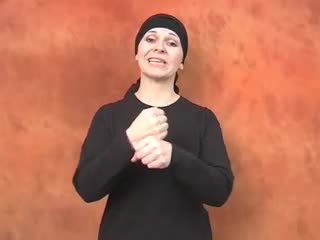
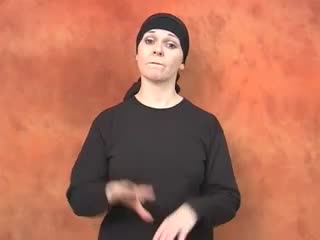
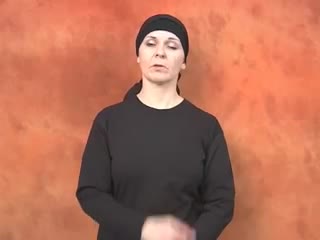
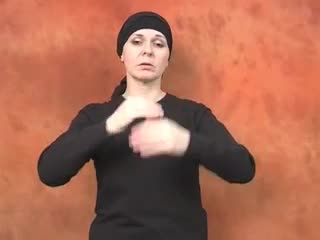
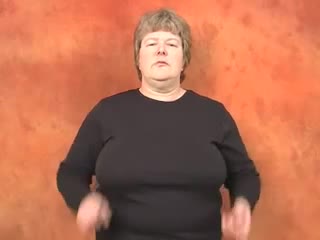
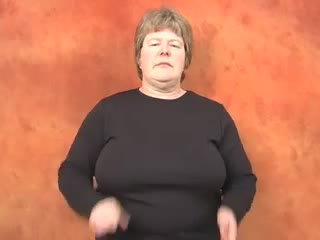
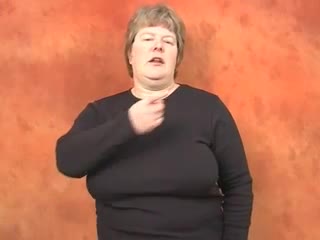
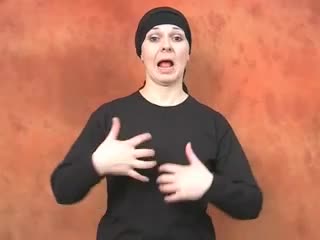
What Is the BSL Sign for "normal"?
Have you ever stopped to consider what "normal" truly means? It’s a fascinating concept, often subjective, yet we use it constantly in everyday conversation. Understanding the BSL sign for normal opens up a whole new layer of expression in British Sign Language normal communication, helping you describe routines, expectations, and observations about life as it typically unfolds. This fundamental sign allows you to articulate when something aligns with the expected pattern, making it an essential addition to your signing vocabulary. You'll discover how to sign normal in BSL, giving you the ability to discuss everything from ordinary situations to standard procedures within the Deaf community and beyond.
How to Sign "normal" in British Sign Language - Step-by-Step
Mastering the precise execution of the sign for "normal" involves attention to several key details, each contributing to its clear meaning in BSL.
Step 1: Handshape
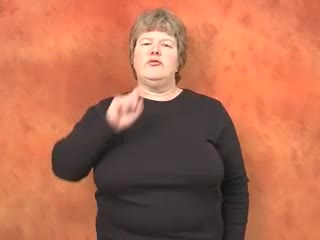
For this sign, you'll begin by forming a specific handshape with your dominant hand. Extend your index finger straight upward, keeping it relatively stiff, while your thumb rests against the side of your palm. Curl your middle, ring, and little fingers gently inwards towards your palm, ensuring they don't stick out. This creates a distinct '1' handshape, sometimes referred to as an index finger handshape, which is quite common in British Sign Language.
Step 2: Hand Placement and Location
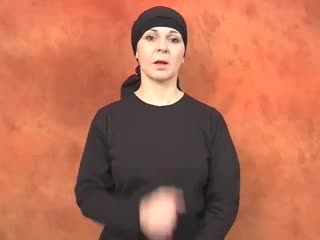
Now, position your dominant hand, with the index finger extended, pointing upward, just beneath your chin. Your palm should face slightly towards you, and your index finger should be quite close to the underside of your jawline. This initial placement is crucial, as it sets the stage for the movement and helps clearly define the sign's starting point within your signing space.
Step 3: Movement
From its initial position beneath your chin, your dominant hand moves downward in a smooth, short arc. As your hand descends, it brushes lightly against your chin before continuing its downward path for a few inches, ending with the index finger still pointing generally forward or slightly downward. This is typically a single, deliberate downward sweep, not a repeated motion, conveying the straightforward concept of "normal."
Step 4: Facial Expression and Mouthing
Non-manual features are profoundly important in BSL, and for "normal," a neutral yet thoughtful facial expression is generally appropriate. You might subtly mouth the word "normal" as you sign, which often aids clarity for both the signer and the receiver, particularly for hearing learners. This mouthing isn't strictly grammatical but offers a helpful visual cue, reinforcing the intended meaning without overshadowing the manual sign itself.
Step 5: Palm Orientation
Throughout the sign, your palm orientation generally maintains a slight inward tilt, facing towards your own body, or directly backward if viewing from the front. As your hand moves downward from the chin, the palm remains angled this way, with the back of your hand facing outward. This consistent orientation helps distinguish "normal" from other signs that might involve a similar handshape but different palm directions, preventing potential misunderstandings.
"normal" in BSL - Quick Reference Snapshot
- Handshape: Index finger extended, other fingers curled (1-handshape).
- Location: Begins beneath the chin.
- Movement: Single, smooth downward arc, brushing the chin.
- Facial Expression: Neutral, perhaps mouthing "normal."
- Dominant Hand: Used exclusively for this sign.
- Palm Orientation: Initially angled slightly inward, remaining consistent.
5 Memorisation Tricks for the BSL Sign "normal"
- Visual Mnemonic: The "Chin Check": Picture your index finger checking under your chin, almost as if you're feeling for what's "normal" or typical for your own body. This tactile memory helps link the location and handshape directly to the concept.
- Muscle-Memory Drill: Repetitive Brushing: Practice the smooth, downward brushing motion under your chin repeatedly, without overthinking it. The more your muscles remember the path, the more naturally the sign for normal will flow when you need it in conversation.
- Connection to Meaning: Grounding Yourself: Think of the downward movement as "bringing something down to earth" or "grounding" it, making it ordinary or standard. This association strengthens the link between the physical action and the abstract idea of normalcy.
- Common-Confusion Tip: Not "Fine": Be mindful that the sign for "normal" starts under the chin, not on the chest like the BSL sign for "fine" or "good." Focusing on that distinct starting point helps you avoid confusing the two similar index-finger signs.
- Daily-Life Practice Idea: "Is this normal?": Whenever you encounter something routine or typical throughout your day, secretly sign "normal" to yourself. Whether it's your morning coffee or a standard bus route, integrating the sign into mundane observations will make it second nature.
Real-Life Situations to Use the BSL Sign for "normal"
- Imagine you're discussing daily routines with a Deaf friend. You might sign, "My morning routine, it's normal," using the sign to describe your usual activities. This highlights an expected sequence of events, reinforcing the idea of a standard day.
- When explaining a common situation that might seem unusual to someone else, you could sign, "For me, that's normal," perhaps shrugging slightly to indicate it's just how things are in your experience. Here, "normal" expresses personal familiarity and acceptance.
- If someone asks about the progress of a project or a person's health, you might respond, "Everything is normal," often accompanied by a reassuring nod. This use confirms that there are no unexpected issues or deviations from the expected state.
- In a question, you might sign, "Is this normal?" with raised eyebrows, indicating curiosity about whether a particular situation aligns with general expectations. The raised eyebrows are crucial for marking it as a 'yes/no' question in BSL grammar.
Top 3 Mistakes Learners Make Signing "normal" in BSL
- Incorrect Starting Location: Many beginners mistakenly begin the sign for "normal" lower down on the chest or too far away from the chin. This often happens because they confuse it with other signs that use a similar handshape in a different area. The correction is to ensure your index finger starts directly beneath your chin, making light contact as it begins its downward movement.
- Lack of Clear Downward Movement: Sometimes, learners perform a vague or minimal movement, or they might even forget the downward brush altogether. A clear, distinct downward arc from the chin is essential for the sign to be correctly understood. Practice exaggerating the movement slightly at first to embed the correct trajectory into your muscle memory.
- Confusing Handshapes or Palm Orientation: It's not uncommon for new signers to inadvertently alter the handshape, perhaps by letting other fingers extend slightly, or by rotating the palm outwards too much. This can change the meaning or make the sign unclear. Focus intently on maintaining the precise index-finger-only handshape and keeping the palm angled slightly towards you throughout the entire motion.
Fascinating Facts About the BSL Sign for "normal"
- The sign for "normal" in BSL is often considered an iconic sign because its movement from the head downwards can be conceptually linked to "bringing something down to a standard level" or "making sense of it." It's like taking an idea from your mind and aligning it with common understanding.
- While the core sign remains consistent across the UK, you might observe very subtle regional variations in the speed or emphasis of the downward stroke, much like accents in spoken English. These nuances are usually minor and don't impede understanding, but they add character to local signing styles within the BSL-using community.
- Historically, the concept of "normal" has interesting parallels in sign languages, often involving a sense of alignment or returning to a baseline. This BSL sign exemplifies how abstract concepts are often visually represented through simple, evocative movements related to the body or common actions.
- This sign is a single-handed sign, meaning it primarily uses your dominant hand, which is typical for many foundational adjectives in British Sign Language. Its simplicity makes it relatively easy for beginners to learn, yet its importance in conversation is immense.
- The specific handshape, an extended index finger, is versatile in BSL, appearing in many different signs and as part of the manual alphabet. Learning this handshape well for "normal" provides a strong foundation for mastering other signs that share this common component.
"normal" in Deaf Culture - Community and Identity
The concept of "normal" within the Deaf community often carries layers of meaning, reflecting experiences that diverge from the hearing majority. For many Deaf individuals, their way of life – using BSL, attending Deaf schools, participating in Deaf clubs – is their normal, not a deviation. When the BSL sign for normal is used in these contexts, it reinforces a shared understanding of experiences and expectations unique to Deaf culture. It can signify an acceptance of Deaf identity as a natural and valid way of being, rather than framing it through a medical or deficit lens. Discussions about what is "normal" in a Deaf context often highlight the richness of BSL and the vibrancy of the community, celebrating distinct traditions and communication methods that are deeply rooted in their collective identity.
Example Conversations Using "normal" in BSL
English: Is your family life normal? - BSL structure: FAMILY LIFE YOUR NORMAL? (Topic-comment structure with question indicator)
English: It's perfectly normal to feel nervous. - BSL structure: NERVOUS FEEL NORMAL, YES. (Emphasising the normalcy of the feeling)
English: That's not normal for him. - BSL structure: THAT HIM NORMAL NOT. (Negative construction, placing "NOT" after the sign)
English: He acts very normal today. - BSL structure: TODAY HE ACT NORMAL. (Simple declarative, describing current state)
English: What's a normal day like for you? - BSL structure: DAY NORMAL FOR YOU WHAT-LIKE? (Asking for a description of typical routine)
Frequently Asked Questions: The BSL Sign for "normal"
Is the BSL sign for normal the same throughout the UK?
While the fundamental BSL sign for normal is widely understood across the United Kingdom, you might encounter very minor regional differences in its execution, such as a slightly varied speed or emphasis. These variations are generally subtle and reflect regional dialects in BSL, much like accents in spoken English. The core handshape, location, and movement remain consistent enough for clear communication everywhere.
Are there any similar signs I should avoid confusing with "normal" in BSL?
Yes, learners sometimes confuse "normal" with the BSL sign for "fine" or "good," which also uses an extended index finger. The key distinction is the starting location: "normal" begins under the chin, while "fine" typically starts lower down on the chest or stomach. Paying close attention to the precise starting point and movement trajectory will help you avoid this common mistake.
Is the BSL sign for normal suitable for beginners?
Absolutely, the BSL sign for normal is an excellent sign for beginners to learn early on. Its single-handed nature, straightforward handshape, and distinct movement make it relatively easy to pick up. Mastering this sign provides a solid foundation for understanding more complex BSL grammar and concepts, making it a valuable addition to any new signer's vocabulary.
Can children learn and use the BSL sign for normal effectively?
Children can definitely learn and use the BSL sign for normal very effectively. Its clear visual cues and simple motor action are well within a child's developmental capabilities. Teaching children this sign helps them communicate about routines, expectations, and observations in their daily lives, enriching their expressive and receptive BSL skills.
How does the British Sign Language normal sign compare to the equivalent in other sign languages?
Comparing the British Sign Language normal sign to equivalents in other sign languages like American Sign Language (ASL) reveals fascinating differences in how cultures conceptualise and depict "normalcy." While BSL uses a downward sweep from the chin, ASL's sign for "normal" often involves two flat hands moving towards each other, representing two things coming together to be "even" or "standard." This highlights the unique linguistic and cultural motivations behind sign forms in different communities.
Signs That Pair Naturally with "normal" in BSL
- TYPICAL: This sign, often involving a similar concept of regularity, frequently appears alongside "normal" to further emphasise something that is characteristic or representative. Both signs help describe expected patterns.
- ROUTINE: When discussing daily habits or established sequences of events, "routine" and "normal" naturally fit together. You might describe your "normal routine" for emphasis.
- STANDARD: Signifying an accepted level or quality, "standard" works well with "normal" to talk about benchmarks or common expectations. They both touch on the idea of conformity.
- USUAL: This sign directly relates to what is customary or frequently done. Pairing "usual" with "normal" helps to describe customary situations or actions.
- DIFFERENT: Understanding "normal" often means understanding its opposite. "Different" serves as a natural counterpoint, allowing you to discuss variations from the norm.
- EXPECT: When you expect something to be a certain way, you're often anticipating it to be "normal." This sign helps frame the context of normal expectations.
Building Fluency: How to Practise "normal" in BSL
To truly embed the BSL sign for normal into your active vocabulary, consistent and varied practice is key. Start by using a mirror to observe your handshape, placement, and movement, ensuring your index finger forms correctly and makes that precise brush under your chin. Try integrating "normal" into simple BSL sentences throughout your day, perhaps describing your "normal commute" or asking a friend, "Is this normal?" for small, everyday things. Don't hesitate to film yourself signing; watching playback offers invaluable insights into areas you might need to refine, helping you catch subtle differences in your movement or handshape. Most importantly, seek out opportunities to practise with Deaf individuals or experienced signers, as their feedback and natural conversation flow will dramatically enhance your fluency. Consistent repetition, spaced over several days, will solidify this sign, allowing you to use "normal" with natural confidence in your BSL conversations.