What Is the BSL Sign for "hard"?
Are you ready to explore one of British Sign Language's most versatile and frequently used signs? You've come to the perfect place to master the BSL sign for hard, a concept that stretches across many meanings in English, from "difficult" to "firm" or "tough." Grasping this particular sign opens up countless communicative possibilities, allowing you to discuss challenges, describe textures, or express resilience with crystal clarity. This foundational gesture is an absolute must-know for anyone serious about connecting effectively within the Deaf community, providing a robust tool for expressing nuanced ideas. Here at SignDeaf.com, we believe understanding the practical application of each sign is just as crucial as learning its form, and the British Sign Language hard sign offers a brilliant example of this linguistic depth.
How to Sign "hard" in British Sign Language - Step-by-Step
Let's get your hands moving with the precise instructions for forming this essential BSL sign, ensuring you convey its meaning accurately every time.
Step 1: Handshape
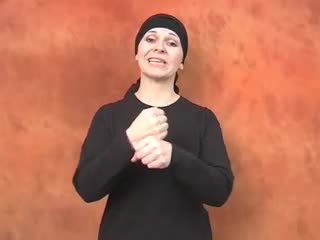
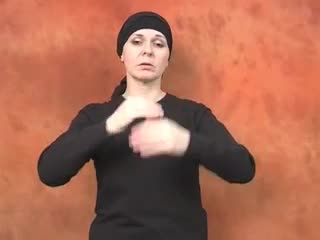
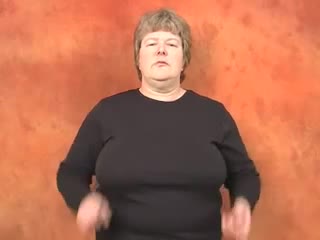
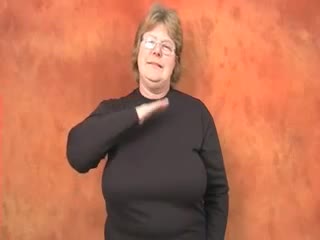
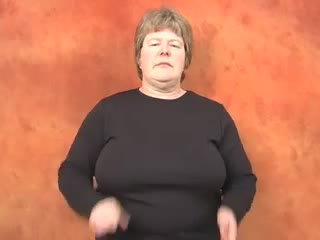
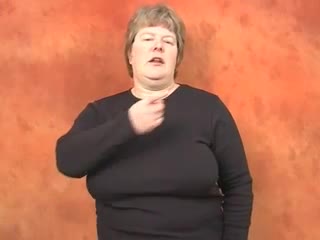
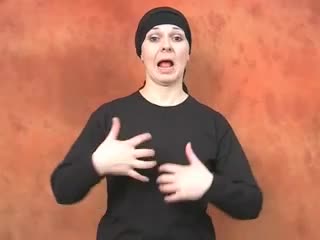
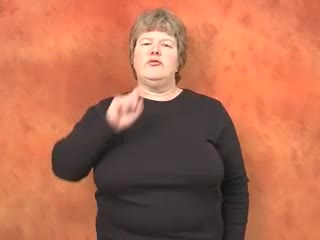
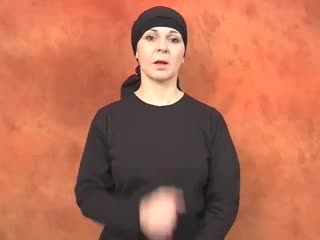
For your dominant hand, you'll want to form a tight fist, known as an 'S' handshape in many sign languages, with your thumb neatly tucked over the fingers. Meanwhile, your non-dominant hand should create a flat, open palm, extending all fingers together and keeping the thumb alongside the palm.
Step 2: Hand Placement and Location
Now, position your non-dominant hand with its palm facing slightly upwards or towards you, held comfortably in front of your body at about chest height. Bring your dominant fist close to your non-dominant hand, preparing for the action that defines this specific BSL gesture.
Step 3: Movement
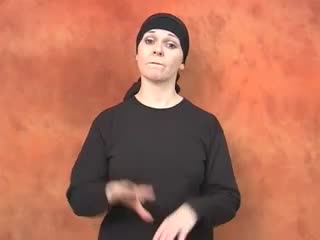
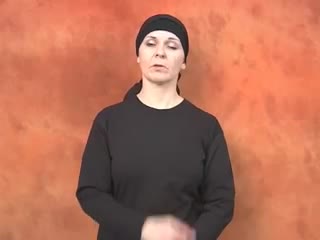
With your dominant 'S' hand, make two distinct, firm strikes against the open palm of your non-dominant hand. The movement is sharp and deliberate, conveying a sense of impact or resistance with each tap.
Step 4: Facial Expression and Mouthing
Non-manual features are paramount in British Sign Language, so for "hard" (meaning difficult), you'll often see a slight furrowing of the brow, perhaps a tense mouth, or even a subtle "puffed cheeks" expression to truly convey effort. When discussing firmness, a neutral or determined expression usually suffices, while mouthing the English word "hard" provides additional clarity for lip-readers or those learning to associate signs with spoken words.
Step 5: Palm Orientation
Throughout the movement, the palm of your dominant 'S' hand will generally face downwards or towards your non-dominant palm as it strikes. Your non-dominant hand's palm remains facing upwards or slightly towards your body, creating a stable surface for the dominant hand's action. This specific orientation helps reinforce the concept of impact or encountering resistance, which is central to the sign's meaning.
"hard" in BSL - Quick Reference Snapshot
- Handshape: Dominant hand forms a fist ('S' shape), non-dominant hand is an open palm.
- Location: Dominant fist strikes the non-dominant open palm, typically at chest height.
- Movement: Two sharp, deliberate taps of the dominant fist against the non-dominant palm.
- Facial Expression: Furrowed brow for "difficult," neutral for "firm," mouthing "hard" for clarity.
- Dominant Hand: Performs the striking action.
- Palm Orientation: Dominant fist palm faces non-dominant palm; non-dominant palm faces slightly up/towards body.
5 Memorisation Tricks for the BSL Sign "hard"
- Picture yourself knocking firmly on a tough, unyielding surface, just as your dominant fist strikes your non-dominant palm. This visual mnemonic directly links the physical action of the sign to the concept of something being strong or difficult to penetrate.
- Perform the sign repeatedly while focusing on the sensation of impact in your dominant hand, creating a strong muscle-memory drill. This repetitive physical engagement helps cement the movement and handshapes into your long-term memory.
- Connect the sign's two sharp taps to the feeling of encountering an obstacle or a challenging situation, which often requires repeated effort to overcome. This directly relates the sign's form to the common meaning of "hard" as in "difficult."
- Remember that confusing "hard" with "strong" is a common error; "strong" often involves flexing the arm or bicep, whereas "hard" focuses on the impact of the fist on the palm. Pay close attention to the specific contact point and absence of bicep flexion to differentiate these two signs.
- Incorporate the sign into your daily routine by describing everyday objects or tasks as "hard" in your mind or through silent signing. For instance, if you're struggling with a jar lid, silently sign "hard" to reinforce the connection in a practical context.
Real-Life Situations to Use the BSL Sign for "hard"
- Imagine asking a friend about their exam results: "Was the test hard?" You'd sign 'TEST HARD-Q' with an interrogative facial expression, demonstrating how the sign integrates into a question structure.
- Describing a challenging workout to your gym buddy: "Today's training session was really hard." Here, you might sign 'TODAY TRAINING HARD INTENSE' where 'HARD' is followed by an intensifier, showing how signs combine to add emphasis.
- Discussing the texture of an object, perhaps a rock or a wooden table: "This surface feels very hard." Your signing would be 'THIS SURFACE FEEL HARD', indicating a descriptive quality.
- Explaining why you couldn't complete a task: "It was too hard for me to finish." This sentence could be structured as 'FINISH ME CAN'T IT HARD TOO', using BSL's topic-comment structure and incorporating 'HARD' as the reason.
Top 3 Mistakes Learners Make Signing "hard" in BSL
- Mistake 1: Incorrect Handshape. Many beginners mistakenly use an open hand or a 'C' shape for the dominant hand, rather than a firm fist. This error often makes the sign look like "smooth" or "feel," completely altering the intended meaning. The precise correction involves ensuring your dominant hand is tightly closed into a clear 'S' handshape, conveying the necessary solidity and impact.
- Mistake 2: Insufficient or Excessive Movement. Some learners either tap too softly or too many times, diluting the sign's clarity. A single weak tap might not convey the intended "hard" quality, while three or four taps could be misconstrued as emphasis rather than the core sign. You should aim for exactly two distinct, firm taps, each with a deliberate, impactful feel, ensuring the movement is concise and powerful.
- Mistake 3: Neglecting Non-Manual Features. Forgetting the crucial facial expression, especially when "hard" means "difficult," is a frequent oversight. A neutral face with the sign for "hard" often suggests firmness, not challenge, creating ambiguity. When you mean "difficult," always remember to pair the sign with a furrowed brow, conveying concentration or struggle, which adds vital grammatical and emotional context to your message.
Fascinating Facts About the BSL Sign for "hard"
- The iconic motivation behind the sign for "hard" is incredibly clear, visually representing the action of striking a solid, unyielding surface. This direct physical representation makes it quite intuitive for new learners to grasp its core meaning.
- Within different regions of the United Kingdom, you might encounter slight variations in the exact placement or intensity of the 'hard' sign, though the core handshapes and movement generally remain consistent. These subtle regionalisms highlight the natural evolution of British Sign Language across diverse communities.
- This particular sign holds a metaphorical power, as it's not just for physical hardness but also extends to abstract concepts like "hard work" or a "hard decision." Its versatility demonstrates how BSL efficiently conveys complex ideas through concrete actions.
- The sign doesn't directly relate to a letter in the manual alphabet, but its 'S' handshape is a fundamental component found in numerous other BSL signs, making it a valuable building block for your vocabulary. Understanding this common handshape helps unlock a wider range of signs.
- Linguistically, the repetition of the striking movement in "hard" (two taps) is a common feature in BSL to indicate emphasis or to signify a sustained quality. This reduplication contributes to the sign's force and meaning, adding an extra layer of expression.
"hard" in Deaf Culture - Community and Identity
The concept of "hard" resonates deeply within Deaf culture, often reflecting the challenges and triumphs experienced by the community. You'll hear stories shared about the "hard work" involved in advocating for sign language rights or the "hard decisions" faced when navigating a hearing-centric world. The sign itself becomes a powerful visual metaphor for resilience and determination, embodying the collective spirit of overcoming obstacles. It's not just a sign; it often signifies shared experiences, whether it's the effort of learning to communicate or the strength found in community support. When a Deaf person signs 'hard' about a situation, it often carries an implicit understanding of the effort required and the strength drawn from within and from each other.
Example Conversations Using "hard" in BSL
English: Learning British Sign Language is hard but rewarding. - BSL structure: TOPIC (BRITISH SIGN LANGUAGE LEARN) COMMENT (HARD BUT REWARDING)
English: Was your homework hard last night? - BSL structure: TIME (LAST NIGHT) TOPIC (YOUR HOMEWORK) QUESTION (HARD-Q)
English: This maths problem is very hard to solve. - BSL structure: TOPIC (MATHS PROBLEM THIS) COMMENT (HARD SOLVE VERY)
English: The ground outside is hard and frozen. - BSL structure: LOCATION (OUTSIDE GROUND) DESCRIPTION (HARD FROZEN)
English: We had to make a hard choice about the project. - BSL structure: AGENT (WE) ACTION (MAKE) OBJECT (PROJECT CHOICE) ATTRIBUTE (HARD)
Frequently Asked Questions: The BSL Sign for "hard"
Are there regional variations for the BSL sign for hard in the UK?
Yes, while the core handshapes and two-tap movement for "hard" remain largely consistent across the UK, you might observe subtle regional differences in the exact hand placement or intensity of the strike. These minor variations are part of the natural linguistic diversity found within British Sign Language, much like accents in spoken English.
What are some similar BSL signs I should be careful not to confuse with "hard"?
You'll want to avoid confusing "hard" with signs like "strong," which often involves a flexing motion of the bicep, or "difficult," which might use the same core sign but often has a more pronounced facial expression of struggle. Also, "solid" or "firm" are closely related in meaning but can sometimes have slight variations in movement or location depending on context.
Is the sign for "hard" suitable for beginners learning British Sign Language?
Absolutely, the sign for "hard" is a fundamental and highly practical sign that beginners should learn early on in their BSL journey. Its clear iconic motivation and frequent usage in everyday conversation make it an excellent sign for building foundational vocabulary and understanding basic BSL grammar.
Can children easily learn and use the BSL sign for "hard"?
Children typically pick up the sign for "hard" quite readily due to its straightforward handshapes and direct, impactful movement. They can use it to describe everything from tough toys to challenging games, making it a very useful and age-appropriate sign for young learners of British Sign Language.
How does the British Sign Language sign for "hard" compare to its equivalent in other sign languages?
While many sign languages convey the concept of "hard" through some form of impact or resistance, the specific handshapes, movement, and location will differ significantly from British Sign Language. For instance, American Sign Language (ASL) often uses a different handshape and movement for "hard" (difficult) compared to BSL's specific two-tap 'S' handshape onto an open palm.
Signs That Pair Naturally with "hard" in BSL
- WORK: Often paired with 'hard' to express "hard work," linking effort with a task.
- PROBLEM: When something is 'hard,' it frequently presents a 'problem,' naturally connecting these two concepts.
- DIFFICULT: This sign reinforces the meaning of 'hard' when referring to a challenge, deepening the expression of struggle.
- EASY: Learning the opposite sign provides valuable contrast and helps clarify the spectrum of effort involved.
- SOLID: This adjective describes a physical quality that is 'hard,' making them a natural pair for descriptions.
- TRAINING: Often, 'training' involves pushing limits, making it inherently 'hard' and linking physical effort.
Building Fluency: How to Practise "hard" in BSL
Ready to really make the sign for "hard" stick? Start by spending a few minutes each day in front of a mirror, carefully observing your handshapes and the precision of your two taps; this visual feedback is invaluable for refining your technique. Next, challenge yourself to integrate "hard" into your daily BSL conversation practice, even if it's just signing to yourself about the "hard" decision of what to eat for dinner. Consider filming yourself signing the word in different contexts, then reviewing the footage to check your facial expression and clarity. The most effective way to build genuine fluency involves finding a Deaf conversation partner or joining a local BSL group, where you'll get real-time feedback and see the sign used organically. Remember, consistent, spaced repetition over several days will embed this important sign into your memory, helping you sign with confidence and natural ease.