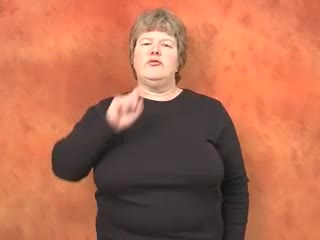
What Is the BSL Sign for "stainless"?
You're looking to understand the BSL sign for "stainless," that wonderful quality of resisting tarnish and remaining pristine, aren't you? This particular sign in British Sign Language captures the essence of a surface that stays clean, unblemished, and free from marks. It’s an adjective that often describes metals, surfaces, or even qualities of durability, playing a practical role in everyday descriptive communication. Mastering the British Sign Language stainless sign will greatly enhance your ability to talk about materials and their properties with precision. You'll find it's a very clear, visually motivated sign that helps convey the idea of something being impeccably clean and resistant to damage.
How to Sign "stainless" in British Sign Language - Step-by-Step
Learning to produce this sign accurately involves a precise sequence of handshapes, movements, and non-manual features.
Step 1: Handshape
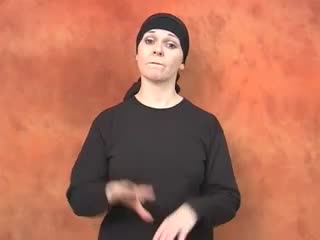
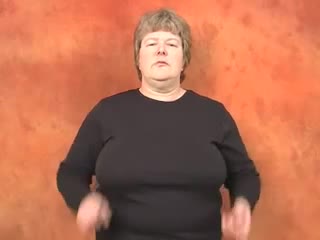
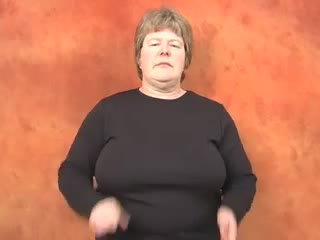
Begin by forming your dominant hand into a flat 'B' handshape. This means all your fingers are held together, straight and extended, while your thumb is neatly tucked alongside your palm. Your non-dominant hand also takes on a flat 'B' handshape, though it will serve as the canvas for the action. Imagine your dominant hand preparing to wipe a surface clean, ready for the motion that signifies a lack of stains.
Step 2: Hand Placement and Location
Position your non-dominant hand so its palm faces upwards, held steady just in front of your body, around waist height. This hand acts as the "surface" that will remain unblemished. Now, bring your dominant hand, already in its flat 'B' handshape, to rest gently on the palm of your non-dominant hand. It should start closer to your non-dominant wrist, preparing to sweep towards the fingertips.
Step 3: Movement
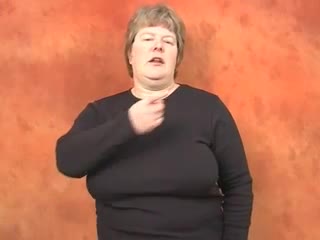
With your dominant hand resting on your non-dominant palm, execute a smooth, deliberate sweeping motion. Move your dominant hand straight across the palm of your non-dominant hand, from the wrist area towards the fingertips, then lift it slightly off the non-dominant hand and return it to the starting position. Repeat this single sweeping motion two or three times, each sweep indicating the removal of any potential mark, leaving the surface perfectly clear. The movement is gentle yet firm, conveying thoroughness.
Step 4: Facial Expression and Mouthing
Non-manual features are absolutely integral to BSL, conveying subtle nuances that mere hand movements cannot. For "stainless," a neutral to slightly positive facial expression, perhaps with a hint of satisfaction or clarity, perfectly complements the sign. You might also subtly mouth the word "stainless" or "clean" while signing, though this is secondary to the hand movements and expression. This provides additional context and reinforces the meaning, enhancing the overall message.
Step 5: Palm Orientation
Throughout the sign for "stainless," your dominant hand's palm will face downwards as it sweeps across your non-dominant palm. Meanwhile, your non-dominant hand's palm consistently faces upwards, providing the stable "surface" for the action. Maintaining these orientations is crucial because it clearly depicts the act of cleaning or confirming a pristine surface. Any deviation in palm direction could alter the sign's meaning, potentially confusing it with other signs that involve similar handshapes but different orientations.
"stainless" in BSL - Quick Reference Snapshot
- Handshape: Dominant hand flat 'B', non-dominant hand flat 'B'.
- Location: Dominant hand sweeps across non-dominant palm.
- Movement: Dominant hand sweeps from wrist to fingertips, repeated two to three times.
- Facial Expression: Neutral to slightly positive, sometimes subtle mouthing of "stainless" or "clean."
- Dominant Hand: Performs the sweeping action.
- Palm Orientation: Dominant palm faces down, non-dominant palm faces up.
5 Memorisation Tricks for the BSL Sign "stainless"
Here are some helpful strategies to help you firmly embed the sign for "stainless" into your BSL vocabulary.
- Visual Mnemonic: Picture a window cleaner diligently wiping away every smudge from a perfectly clear pane of glass. Your dominant hand is the cloth, and your non-dominant palm is the window, now completely spotless. This mental image makes the sweeping motion instantly logical and easy to recall.
- Muscle-Memory Drill: Perform the sign while mentally describing a specific stainless steel object you know well, like a kettle or a kitchen sink. Do it slowly at first, focusing on the smooth, repetitive sweep, then gradually increase your speed, letting your hand remember the sensation of the movement. Consistent repetition builds strong muscle memory.
- Connection to Meaning: Think about the core meaning of "stainless": without stain, utterly clean, unblemished. The sign’s motion directly reflects this by visually "cleaning" the surface of your non-dominant hand. Associate the feeling of a clean, smooth surface with the sign's action every time you practice.
- Common-Confusion Tip: Be mindful not to confuse this sign with simply "CLEAN" which might involve a single, broader sweep or different facial nuances. For "stainless," the repeated, specific sweep and the slightly more deliberate nature of the action truly emphasise the enduring quality of being stain-free. Pay attention to that subtle repetition; it makes all the difference.
- Daily-Life Practice: Make it a game! Every time you encounter a stainless steel appliance, cutlery, or any object described as stainless, pause for a moment and produce the sign. Whether you're in your kitchen, a shop, or just browsing online, actively connecting the word in your environment to its BSL representation is incredibly powerful for retention.
Real-Life Situations to Use the BSL Sign for "stainless"
Understanding how to integrate "stainless" into everyday conversations is crucial for building fluency. Here are a few practical examples.
- You might be at a friend's house, admiring their kitchen, and sign, "YOUR KITCHEN CLEAN SHINY STAINLESS." Here, "stainless" acts as a descriptor after the noun, following a typical BSL adjective placement.
- When discussing buying new kitchenware, you could ask, "PAN STAINLESS YOU WANT?" In this question, the sign for "stainless" precedes the verb "want," showing how BSL often places adjectives before the item they describe in interrogative structures, followed by a raised eyebrow for the question mark.
- If someone is worried about a mark on a new appliance, you might reassure them by signing, "NO WORRY, IT STAINLESS." This uses "stainless" in a declarative sentence, affirming the material's quality and its resistance to discolouration.
- Imagine describing a piece of medical equipment; you could explain, "THIS INSTRUMENT STAINLESS IMPORTANT." Here, "stainless" highlights a key attribute, emphasising its significance for hygiene and durability.
Top 3 Mistakes Learners Make Signing "stainless" in BSL
It's completely natural to make a few errors when you're first learning a new sign, but being aware of common pitfalls can help you correct them quickly.
- Incorrect Handshape: A frequent mistake involves using a relaxed or open '5' handshape instead of the precise flat 'B' handshape. This changes the visual meaning significantly; an open hand might imply an expansive surface rather than a controlled cleaning motion. The correct form requires tightly closed fingers, thumb tucked, conveying that focused, deliberate action of making something spotless.
- Insufficient or Excessive Movement: Some learners either perform only a single, quick sweep, which might be confused with "CLEAN," or they over-repeat the motion too many times, making it look unnatural. The proper BSL sign for "stainless" typically involves two to three distinct, smooth sweeps across the non-dominant palm. Getting this rhythm and repetition just right ensures you communicate the enduring, mark-resistant quality.
- Missing Non-Manual Features: Neglecting the accompanying facial expression or mouthing is another common oversight. Without a neutral or slightly positive expression, or a subtle mouthing of "stainless," the sign can lose its intended emphasis on purity and resilience. These non-manual features are not optional extras; they're vital grammatical components that add depth and clarity to your signed message.
Fascinating Facts About the BSL Sign for "stainless"
Delving into the background and nuances of signs can truly deepen your appreciation for British Sign Language.
- The iconic motivation behind the sign for "stainless" is beautifully clear; it visually represents the act of wiping a surface clean, ensuring no marks remain. This makes it highly intuitive, especially for new learners, as the form directly reflects the meaning.
- Interestingly, while specific regional variations exist for many BSL signs, the core concept and general execution of "stainless" tend to be quite consistent across different parts of the UK. This means you'll likely be understood whether you're signing in London, Manchester, or Glasgow.
- Linguistically, "stainless" functions primarily as an adjective within BSL grammar, often appearing after the noun it describes, similar to how many descriptive adjectives are positioned. This contrasts with English word order, where adjectives typically precede the noun.
- You might notice a relationship between "stainless" and other signs in the BSL lexicon, particularly those related to "clean," "pure," or "smooth." While distinct, they often share visual elements or conceptual links, forming a semantic cluster that helps learners build their vocabulary logically.
- The sign's clear, repetitive motion highlights the lasting quality of being stain-free, rather than just a momentary state of cleanliness. This subtle emphasis on durability and resistance is an inherent linguistic feature embedded within its very movement.
"stainless" in Deaf Culture - Community and Identity
While "stainless" might seem like a purely descriptive term, its use within the Deaf community, like all signs, is woven into the fabric of daily life and communication. It's about describing the world around us with precision, which is fundamental to any language. When we talk about objects that are durable, long-lasting, and resistant to wear, we're discussing qualities valued for their practicality and reliability. For instance, in conversations about home improvements, tools, or even personal items, the ability to clearly sign "stainless" allows for unambiguous descriptions, ensuring everyone understands the material's properties. It enables Deaf individuals to articulate their preferences, needs, and observations about the material world, fostering effective communication and shared understanding within the community. The sign facilitates clear descriptions of robust and easy-to-maintain items, contributing to practical discussions about everyday objects.
Example Conversations Using "stainless" in BSL
Seeing signs in context is the best way to understand their practical application in BSL.
English: Do you have a stainless steel pan? - BSL structure: YOU HAVE PAN STAINLESS? (Topic-comment structure, with 'pan' as the topic, followed by the descriptive adjective and a question marker facial expression.)
English: This knife is stainless. - BSL structure: THIS KNIFE STAINLESS. (Simple declarative sentence, adjective follows the noun, direct and clear statement.)
English: I need a stainless surface for this work. - BSL structure: I NEED SURFACE STAINLESS FOR THIS WORK. (Emphasising the quality of the surface required, spatial grammar indicating location if demonstrated.)
English: That's not stainless, it'll rust! - BSL structure: THAT NOT STAINLESS, IT WILL RUST! (Negative construction, with 'NOT' preceding 'stainless' for negation, followed by a warning.)
English: Her new watch has a beautiful stainless finish. - BSL structure: HER NEW WATCH FINISH BEAUTIFUL STAINLESS. (Descriptive sentence, with multiple adjectives specifying the watch's attributes, demonstrating flexible adjective placement for emphasis.)
Frequently Asked Questions: The BSL Sign for "stainless"
Are there different ways to sign "stainless" across the UK?
While some BSL signs exhibit significant regional variations, the sign for "stainless" is generally quite consistent across the United Kingdom. You might encounter subtle differences in the speed or repetition of the sweep, but the core handshapes, location, and movement are widely recognised. This consistency makes it a relatively straightforward sign for national communication.
What signs might I confuse with "stainless"?
You might initially confuse "stainless" with the sign for "CLEAN" or "SMOOTH." While "CLEAN" shares a similar sweeping motion, it often involves a single, broader sweep, and its facial expression might vary slightly. "SMOOTH" typically uses a flat hand gliding over a surface, but often implies texture rather than stain resistance. Paying close attention to the specific repetition and the precise handshape for "stainless" will help you differentiate them.
Is "stainless" a good sign for beginners to learn?
Absolutely, "stainless" is an excellent sign for beginners! Its visually iconic nature makes it quite intuitive and easy to grasp. The clear handshapes and direct movement help build foundational BSL skills, and it's a practical adjective for describing everyday objects, meaning you'll have plenty of opportunities to practice it.
How would I teach the sign "stainless" to a child?
To teach "stainless" to a child, make it playful! You could point to stainless steel kitchen items like spoons or pots, saying "look, it's
stainless!" Then, encourage them to mimic the wiping motion on their own hand, pretending to clean away imaginary dirt. Emphasise that nothing sticks to it, reinforcing the idea of a perfectly clean surface.
Is this sign understood by signers of other sign languages?
No, the sign for "stainless" in British Sign Language is specific to BSL and its linguistic structure. Just like spoken languages have different words for the same concept, different sign languages around the world have their own unique signs. A signer of another sign language would not inherently understand the BSL sign for "stainless" without prior knowledge of BSL.
Signs That Pair Naturally with "stainless" in BSL
Building your vocabulary thematically helps you create rich, connected conversations. Here are some signs that naturally complement "stainless."
- CLEAN: This is a direct conceptual link; "stainless" implies a state of being clean and resistant to getting dirty. Learning these together reinforces the idea of purity.
- STEEL: Often, when you use "stainless," you're specifically referring to "stainless steel." Pairing these two signs allows for highly specific material descriptions.
- SMOOTH: Stainless surfaces are frequently smooth and untextured. Learning "smooth" alongside "stainless" enables you to add another layer of sensory description.
- SHINY: Many stainless items also possess a reflective, shiny quality. Describing an object as both "stainless" and "shiny" paints a vivid picture for your conversational partner.
- RUST: This sign represents the opposite of "stainless." Understanding "rust" helps you discuss why something being "stainless" is a desirable attribute, preventing decay.
- PURE: Conceptually, "stainless" can extend to the idea of being unadulterated or pure, especially in more abstract contexts. This connection helps broaden your understanding of the sign's potential uses.
Building Fluency: How to Practise "stainless" in BSL
Consistent and varied practice is the key to truly embedding "stainless" into your BSL repertoire. Start by finding a mirror and meticulously performing the sign, paying close attention to your handshape, the exact sweeping motion, and your facial expression. Don't be afraid to adjust until it feels just right. Next, challenge yourself to integrate "stainless" into your daily BSL conversation practice; look around your home and sign it whenever you spot a relevant object, like a kettle, a tap, or a piece of cutlery. Filming yourself practicing the sign is also incredibly helpful; watching your own signing allows you to identify areas for improvement that you might miss in the moment. The most impactful way to build fluency is to find a Deaf conversation partner and use "stainless" in a real-life context; genuine interaction provides invaluable feedback and confidence. Remember to spaced repetition, revisiting the sign over several days, which solidifies it in your long-term memory far more effectively than cramming. You're doing brilliantly, just keep at it!